Patient feedback helps doctors understand what patients experience before, during, and after care. It can improve patient trust, strengthen online reputation, reveal service gaps, support review generation, and help practices make better decisions about communication, scheduling, staff interactions, and overall patient experience.
Summary
Patient feedback is essential because patients often choose doctors after researching online reviews, ratings, and online reputation. The McDuffie Dentistry example shows how a practice with limited online reviews and a weaker online presence used Birdeye’s automated review generation process to increase reviews by 994%, improve its rating from 4.4 to 4.9 stars, and rise into the top five search results for “Dentists in Durham.”
In this blog, we’ll cover why doctors need patient feedback, how reviews, messaging, surveys, and search visibility support patient trust, and how Birdeye helps healthcare practices turn feedback into action.
Table of contents
- Why do doctors need patient feedback?
- Reviews are recommendations, really
- Use messaging to build a credible online reputation
- Positive feedback means more visibility on Google search
- Feedback helps you build strong relationships with patients
- Use surveys to answer your specific questions
- Why your medical practice needs to collect patient feedback constantly
- Frequently asked questions about patient feedback
- Turn patient feedback into action with Birdeye
Why do doctors need patient feedback?
Let’s get real. A decade ago you asked a friend or family member for a recommendation, but today the search for a doctor begins online. Research suggests that over 84% of people now read online reviews before choosing a doctor (Inc.com). Not just that – more than half of patients will not even consider a practice that has negative patient feedback. So, turning your existing customers into regulars or gaining new patients, requires building up a strong online reputation.
In addition to increased revenue for your practice, good patient experience also helps your patients recover. In 2015, Centers for Medicare and Medicaid Services analyzed data from over 3,000 US hospitals. They found that better patient experience translated into favorable clinical outcomes. You can only make your patient experience better with increased patient feedback.
In this article, we’ll discuss some of the benefits that patient feedback can have on your practice.
Reviews are recommendations, really
The first step to a strong online reputation is asking patients for reviews. So how do you get positive reviews? By asking every patient for feedback, reading all that feedback, and taking action based on patient feedback to improve the patient experience.
Patients use both, healthcare-oriented review sites like RateMDs and Vitals, and general review platforms like Google and Facebook. If that sounds like a lot, let me tell you that’s only some of it — your patients might be saying good or bad things about your practice on websites you aren’t even aware of. This can drive away potential customers who are searching for good quality medical services online. Make sure that you are listening to reviews coming from all places and you are responding and acting on it as well.
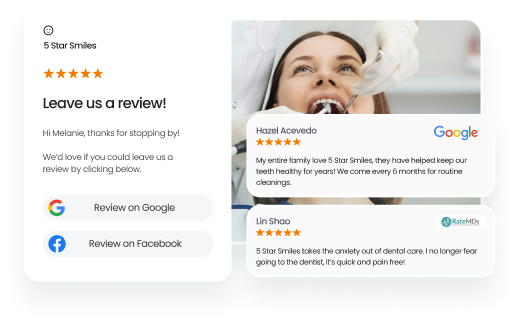
When you go online to find out information about a medical practice, you want to read authentic accounts of current patients. It’s simple: the more patients you ask, the more reviews you get. More reviews mean more social proof to attract prospective patients. Let your patient’s feedback be a testimony to your practice’s high-quality patient care. Not to mention, more reviews only means that any negative reviews you might receive have less impact on your overall rating.
Use messaging to build a credible online reputation
Decisions are made quickly. Imagine this: You are on a doctor/medical practice’s Facebook page during working hours (which, along with all other details, are listed correctly and up to date). You want to know if they can see you at 10 am tomorrow. You message them on Facebook Messenger. Within a few minutes you get a reply that yes, they do have a window available. Would you like to confirm the appointment?
Chances are that most patients would say — YES. This experience tells your patients that you are available, you care, and that you want to make it as easy as possible for them to come to you.
You can greatly enhance the credibility of your medical practice by being connected via messaging. With Birdeye, you can keep all your interactions with patients in one place. Whether it is a patient trying to get in touch with you on Facebook Messenger or questions coming in via Webchat — being unresponsive means losing customers to competitors. Being available to quickly answer questions on appointment availability or a follow-up question will greatly increase the patient experience.
Positive feedback means more visibility on Google search
Review signals have a significant impact on your search engine ranking. Search engines prioritize websites with more frequent activity and fresh, organic content. This is exactly what new reviews are. Unless you want to spend many hours every day writing authentic, new blog content with relevant keywords that potential patients would like to read, reviews are the way to go.
Even then, Google places a higher value on User-Generated Content over content created by the business. Simply put, the more reviews you have, the higher the search ranking your business can expect.
While responding to your patients, remember to follow HIPAA guidelines. The guidelines state that the healthcare provider should respect the patient’s privacy, avoid disclosing the patient’s issue or photos online and take critical issues offline.
Feedback helps you build strong relationships with patients
Everyone wants to know that their doctor is listening to them and is taking personal care. So, think of patient feedback as the start of a conversation and make each conversation count. Think of feedback as a constructive comment to help you serve your patients better.
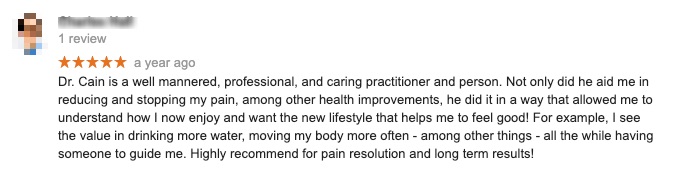
There is more to a positive review than 5 stars. Pay attention to the text in reviews. Understand what exactly makes your patients happy so you can keep providing it. If you are hearing that a particular employee makes the whole experience enjoyable, reward your staff. If you are hearing that the new appointment system is really working, take a bow.
Likewise, negative reviews, although frustrating initially, are extremely valuable if you take action. If your patient didn’t bring the issue to your attention, you might never have known and it might have occurred many more times, steering other patients away. When you take meaningful action to rectify a patient’s complaint, you have the chance to win back their trust.
Think about this: You have a couple of patients mentioning that the healthcare service was great but the music in the lobby area is loud and unpleasant. There is a simple fix to this problem. You can easily make the patient’s experience of visiting your medical practice better. And you also have the chance to let your customers know that you are listening to their complaints.
Use surveys to answer your specific questions
Successful medical practices constantly try to get better. In order to know what you should fix, you need to know what is working and what isn’t. There is a simple way of doing this: send your patients surveys. With Birdeye you can send custom surveys from a single dashboard that also helps you gain insights into the data you’ve received. Use the feedback you receive to make necessary changes.
Using surveys also lets your patients know that you want to keep the channels of communication open. Analyze the survey results to spot trends across time and departments. If a couple of things score consistently low across a wide pool of patients, you need to look into that right away.
Whether it is a standard or a pick-one survey, these surveys will give you valuable insight into your patient’s experience. Use the results to make their experience even better next time.
Why your medical practice needs to collect patient feedback constantly
Earning a 5-star rating from a high volume of reviews is great, but that doesn’t mean you can just sit back and stop caring about patient feedback. Research states that most patients consider reviews older than three months to be irrelevant — so if all your reviews are from last year, many prospective patients might disregard your high rating altogether and choose a competitor with more recent reviews.
As mentioned earlier in this article, patient feedback is also critical to preserving patient loyalty. Patient expectations evolve constantly. So, a continuous stream of incoming feedback helps you stay informed with what your patients want from their healthcare provider.
For a busy practice devoting all their time to caring for patients, consistently collecting feedback from every patient might sound daunting. The good news is that there are solutions on the market that make the whole process easy and automatic. Birdeye, for example, lets you ask patients for feedback, respond to every comment, question, and review from one place, and share success stories to your social media pages — with just a click.
Frequently asked questions about patient feedback
Patient feedback can show where the practice experience needs attention. For example, comments about wait times, front-desk communication, appointment availability, or follow-up instructions can help teams make practical improvements that patients notice.
Healthcare practices can collect feedback through online reviews, post-visit surveys, text messages, email requests, and direct patient conversations. The best approach is to make feedback easy to share and request it soon after the patient interaction while the experience is still fresh.
Responding to reviews shows that the practice listens and takes feedback seriously. In healthcare, responses should stay professional, avoid discussing protected health information, and follow privacy and compliance guidelines.
Surveys help practices ask specific questions about the patient experience, such as scheduling, communication, wait times, staff helpfulness, or provider explanations. Survey results can reveal trends that may not appear clearly in public reviews alone.
Birdeye helps healthcare practices manage reviews, surveys, messaging, and feedback insights from one connected platform. Reviews AI, Surveys AI, Messaging AI, Insights AI, and BirdAI agents help teams collect feedback, respond more consistently, understand sentiment, and prioritize improvements across locations.
Turn patient feedback into action with Birdeye
Patient feedback is most valuable when healthcare teams can collect it consistently, understand what it means, and act on it quickly. For busy practices, that is difficult to manage when reviews, surveys, messages, and online visibility are spread across disconnected tools.
Birdeye helps healthcare practices bring patient feedback, reputation management, messaging, surveys, and search visibility into one connected platform. As the #1 agentic marketing platform for multi-location brands with 100- 10,000+ locations, Birdeye is powered by BirdAI and a unified data platform that helps teams manage patient experience across locations.
Consolidate patient feedback
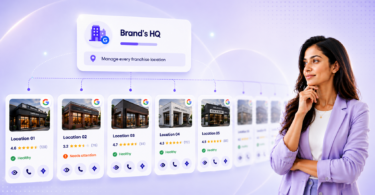
Birdeye helps practices collect and manage feedback from the channels patients already use. Reviews AI supports review generation, monitoring, response, and reporting across 200+ review sites. Surveys AI helps teams collect structured patient feedback, while Messaging AI brings patient conversations from channels such as text, Webchat, Google, and social into one place.
This gives healthcare teams a more complete view of what patients are saying across reviews, survey responses, and everyday conversations.
Reason with patient insights
Patient feedback can reveal patterns that are easy to miss when comments are reviewed one by one. Insights AI helps teams understand sentiment, reputation, and online presence signals so they can identify recurring themes across locations, providers, or departments.
Search AI adds another layer of visibility by showing how practices, providers, and locations appear in AI-generated answers across platforms such as ChatGPT, Gemini, and Perplexity. This helps teams identify gaps related to reviews, listings, citations, FAQs, and local content.
Act with AI agents
Birdeye’s AI agents help healthcare teams reduce manual work while keeping feedback workflows consistent:
- Review Generation Agent identifies the best review source and message, then sends review requests at the right time.
- Review Response Agent drafts personalized, on-brand replies using review sentiment, urgency, tone, and context.
- Review Reporting Agent highlights trends, flags issues, and delivers performance insights across locations.
With Birdeye, healthcare practices can ask for feedback consistently, respond with care, understand patient sentiment, and use feedback to improve the patient experience behind the reputation.
Watch a free demo to see how Birdeye helps healthcare practices collect patient feedback, manage reviews, and turn patient insights into action.

About the Author

Shaifali Parihar
Originally published