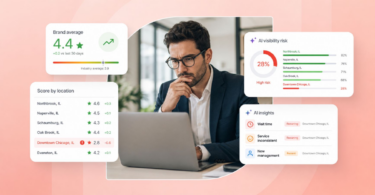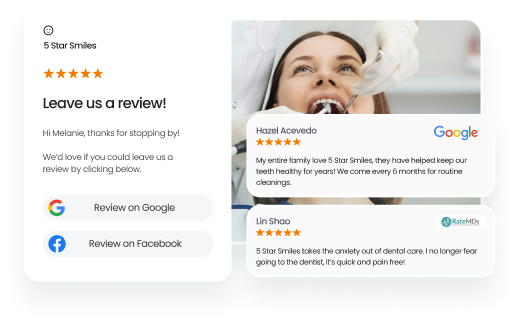
Local reputation management is the discipline of building and protecting trust in each community you serve by managing reviews, listing accuracy, and customer sentiment across local search and key online platforms.
Summary
Local reputation management can make or break growth because it directly influences who gets clicked, called, and chosen. Birdeye’s State of Online Reviews 2025 report shows that 68% of consumers check reviews before engaging, 78% avoid businesses with negative reputations, and 87% won’t choose a business with a recent negative review.

In 2026, the impact is even greater. Review volume continues to rise, and Google now captures 81% of all reviews, making reputation signals central to both search rankings and AI-generated recommendations. A strong local online reputation management strategy helps global multi-location brands improve visibility, build trust faster, and convert more customers by turning reputation into a scalable growth driver across every location.
This blog covers what local reputation management includes, why it matters for local visibility and customer decisions, and seven proven strategies large multi-location brands can use to strengthen trust and drive growth.
Table of contents
What is local reputation management?
Local reputation management is the process of monitoring, improving, and scaling your brand’s perception across every location where you operate. It ensures that when customers search for your brand, each location reflects accurate information, strong reviews, and consistent trust signals.
For global multi-location brands, local business reputation management goes far beyond responding to a few reviews or updating a single listing. It involves managing thousands of customer interactions, listings, and sentiment signals across markets while maintaining brand consistency.
A strong local reputation management strategy includes:
- Review generation and response at scale to build credibility and trust
- Listings accuracy across platforms like Google, Apple, Yelp, and industry directories
- Customer sentiment monitoring across reviews, social, and surveys
- Feedback analysis and action to improve experiences across locations
- Consistent brand presence across search, social media, and local platforms
This is what separates basic reputation management from true local online reputation management. It comes down to unifying data, automating workflows, and maintaining a high-quality brand experience across hundreds or thousands of locations.
In 2026, this has expanded beyond traditional search. According to Birdeye’s State of AI Search 2026 report, AI generative engines have become the primary gateway for customer decisions, shifting discovery from ranked results to AI-generated, citation-backed answers.
That means your local reputation management directly shapes how your brand is described, recommended, and compared, not just whether it appears in search results.
Turn reputation into a competitive advantage
Local reputation marketing is the proactive side of local reputation management. Instead of just maintaining your reputation, it focuses on amplifying positive customer experiences to drive visibility, trust, and conversions across every location.
For global multi-location brands, local reputation marketing ensures that every location contributes to a stronger overall brand presence while still resonating with its local audience.
This includes:
- Promoting positive reviews and testimonials across marketing channels
- Turning customer feedback into high-performing local content
- Highlighting location-specific experiences and outcomes
- Using reviews and ratings to improve click-through and conversion rates in search and ads
When done right, local reputation marketing transforms customer voice into a growth engine. Instead of reputation being a passive outcome, it becomes an active driver of demand generation and brand differentiation.
For large multi-location brands, this means every review, rating, and interaction is not just feedback, it is marketing fuel that strengthens local visibility and builds a more resilient, trusted brand at scale.
Benefits of local reputation management
Local reputation management is a direct driver of visibility and revenue for multi-location brands.
A well-managed reputation creates a compounding competitive advantage that scales across your entire footprint.
Here are the key benefits of local reputation management:
1. Drive higher-quality local demand across every location
A strong local business reputation ensures your brand ranks well in high-intent searches across Google, Maps, and AI-generated recommendations.
Accurate listings, high ratings, and consistent review volume signal trust to both search engines and AI platforms. This increases your visibility for queries like “best dental clinic in Austin” or “top-rated salon near me,” driving more qualified leads to each location.
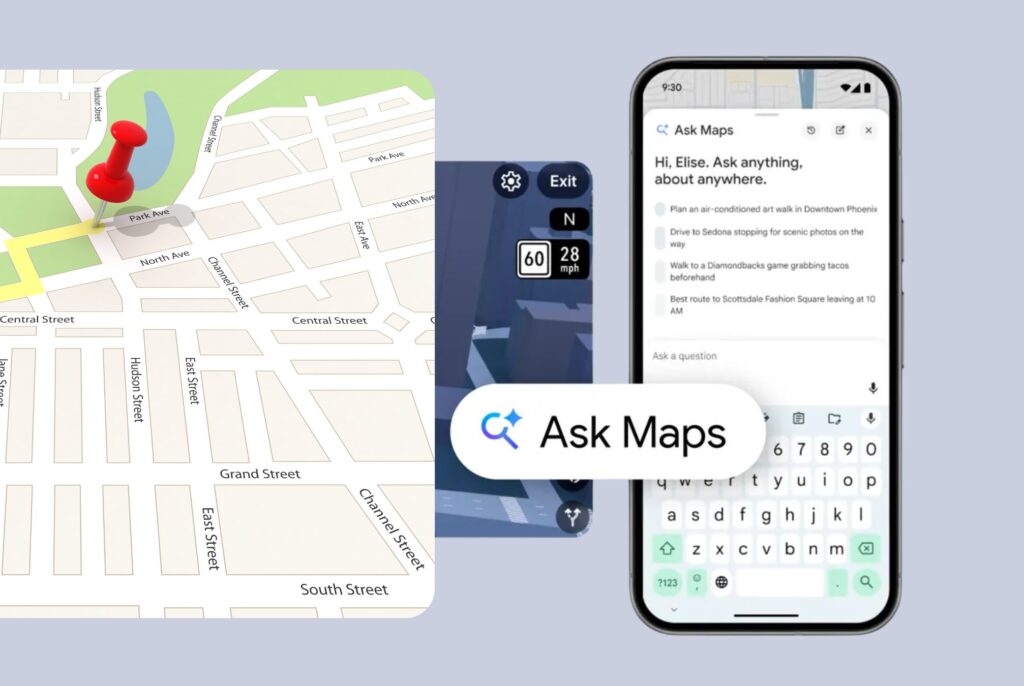
This shift is already visible in experiences like Google Maps’ Ask Maps, where users don’t search; they ask. Instead of scrolling through options, they pose detailed, real-world questions and receive a single, AI-curated recommendation.
These systems pull together reviews, preferences, location context, and real-time signals to answer “Know Before You Go” questions up front, such as where to go, whether it’s worth it right now, and whether it fits specific needs.
In this new reality, your visibility depends on being chosen, not just listed. The decision hinges on trust signals: consistent reviews, strong sentiment, complete and accurate data, and fresh real-world updates.
If your business doesn’t give the AI enough confidence to recommend it, you’re excluded before the user ever considers alternatives.
For global multi-location brands, this means every location becomes a demand-capture point, ensuring growth isn’t limited to top-performing markets only.
2. Increase visibility in search and AI-driven discovery
Local discovery has evolved. Customers no longer just scroll through search results. They rely on AI-generated answers that summarize the “best” options.
Your inclusion in these answers depends heavily on your local online reputation management signals, including:
- Review quality and recency
- Listings accuracy and consistency
- Strength of customer sentiment
Brands that actively manage these signals are more likely to be surfaced, cited, and recommended, while others become invisible.
3. Improve conversion rates with stronger trust signals
Visibility alone is not enough. Customers choose brands they trust.
A strong local reputation built through positive reviews, active responses, and consistent engagement reduces friction in the decision-making process. When customers see recent, relevant, and authentic feedback, they are far more likely to convert.
At the same time, the stakes are rising. According to Forrester’s 2026 predictions, one-third of companies will harm customer experience through poorly implemented AI self-service, eroding trust and weakening brand perception.
For large multi-location brands, this creates a clear divide: those who actively manage reputation signals build trust and convert more customers, while those who don’t risk losing both visibility and credibility.
4. Build a consistent and trusted brand experience at scale
One of the biggest challenges in local business reputation management is maintaining consistency across hundreds or thousands of locations.
Without a structured approach, brand perception becomes fragmented:
- Some locations appear highly rated and responsive
- Others look inactive or unreliable
Local reputation management ensures that every location reflects the same level of quality, responsiveness, and trust, reinforcing your brand across all markets.
5. Turn customer feedback into actionable insights
Every review, survey response, and customer interaction contains valuable signals about what is working and what is not.
With the right approach to local reputation marketing, brands can:
- Identify recurring issues across locations
- Spot regional trends and performance gaps
- Prioritize improvements that impact customer experience
For enterprise brands, this transforms reputation from a passive metric into a real-time feedback system for operational and marketing decisions.
6. Strengthen competitive positioning in local markets
In highly competitive markets, small differences in ratings, response rates, or review volumes can significantly influence customer choice.
Local reputation management helps brands:
- Outperform competitors in local rankings
- Maintain stronger ratings across locations
- Respond faster and more effectively to customer concerns
Over time, this creates a durable advantage where your local business reputation consistently outperforms competitors, market by market.
7. Scale reputation management without operational complexity
Managing reputation across dozens or thousands of locations manually is not sustainable.
A modern local reputation management strategy enables:
- Centralized visibility across all locations
- Automated workflows for reviews, listings, and responses
- Consistent execution without increasing operational overhead
This allows large multi-location brands to scale reputation management efficiently, without sacrificing quality or control.
7 best local reputation management strategies
For global brands, local reputation management is not about isolated tactics. It requires a coordinated, scalable system that works across every location, platform, and customer touchpoint.
These seven strategies provide the blueprint for turning local sentiment into a consistent driver of visibility, trust, and performance.
1. Centralize and standardize your business listings
Accurate listings are the foundation of local visibility. Even small inconsistencies in name, address, phone number, or hours can reduce trust signals and hurt rankings.
For brands managing hundreds or thousands of locations, manual updates are not sustainable. A centralized system ensures:
- Consistent NAP data across platforms
- Real-time updates for hours, services, and attributes
- Better alignment with search and AI discovery systems
This is critical as AI platforms increasingly rely on structured, accurate data to determine which businesses to recommend.
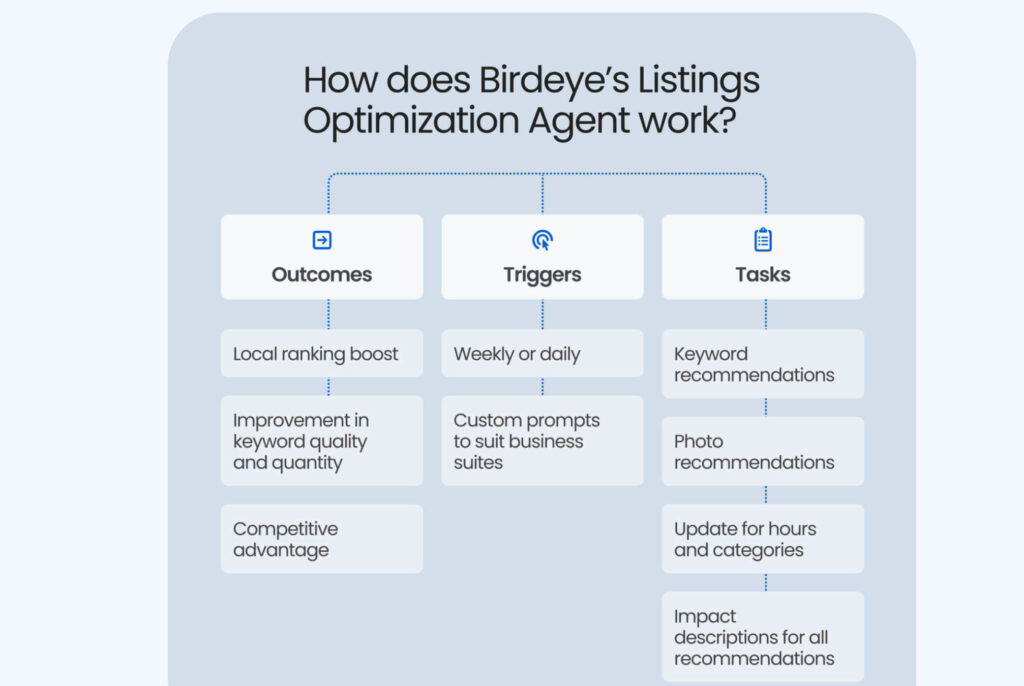
The Birdeye Listing Optimization Agent continuously audits listings, detects inconsistencies, and automates updates across directories, ensuring every location remains:
- Accurate
- Complete
- Ready for discovery
Google Business Profile performance directly shapes local reputation

For large multi-location brands and global multi-location brands, your Google Business Profile is a primary driver of both visibility and trust. Birdeye’s State of Google Business Profile 2026 report shows that profiles with complete information and active review engagement generate significantly more customer actions, like calls, clicks, and direction requests, than inactive or incomplete listings. In other words, stronger profile performance leads directly to a stronger local reputation.
Manage Posts, Reputation, and Reporting across Locations
Want to see the impact of Birdeye on your business? Watch the Free Demo Now.
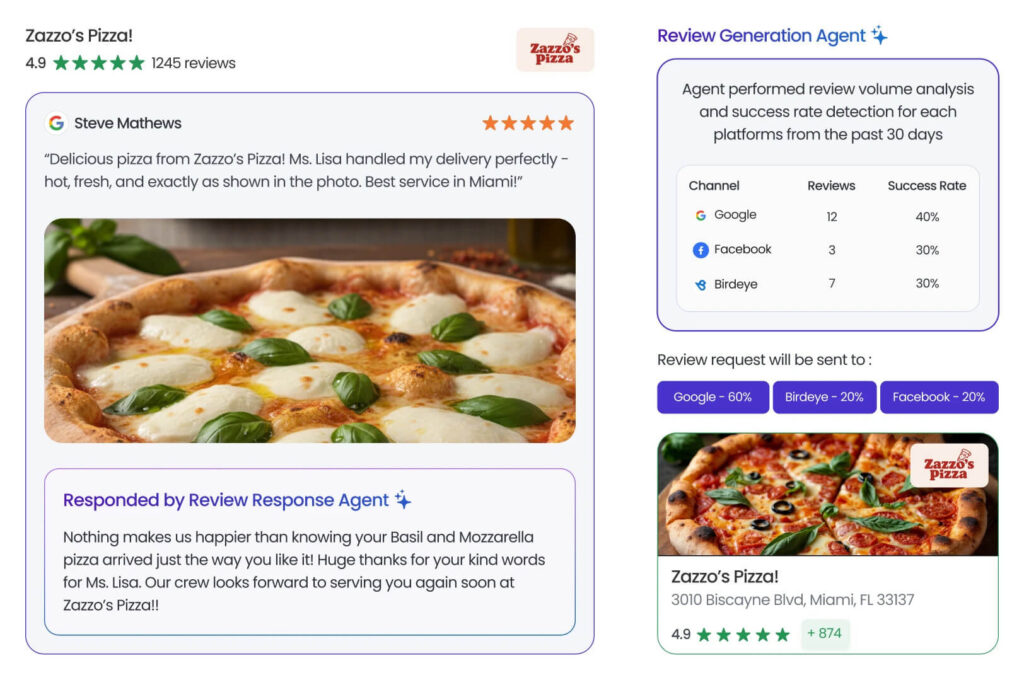
2. Generate a steady flow of high-quality reviews
Review volume and recency are key signals for both search rankings and customer trust.
Instead of relying on passive collection, leading brands proactively generate reviews by:
- Automating review requests after key interactions
- Targeting the right customers at the right time
- Ensuring a steady cadence across all locations
This ensures no location falls behind and every location contributes to overall brand strength. The Birdeye Review Generation Agent intelligently triggers review requests based on real customer interactions, optimizes timing for higher conversion, and ensures every location consistently builds fresh, high-quality reviews.
3. Respond to reviews with speed, context, and consistency
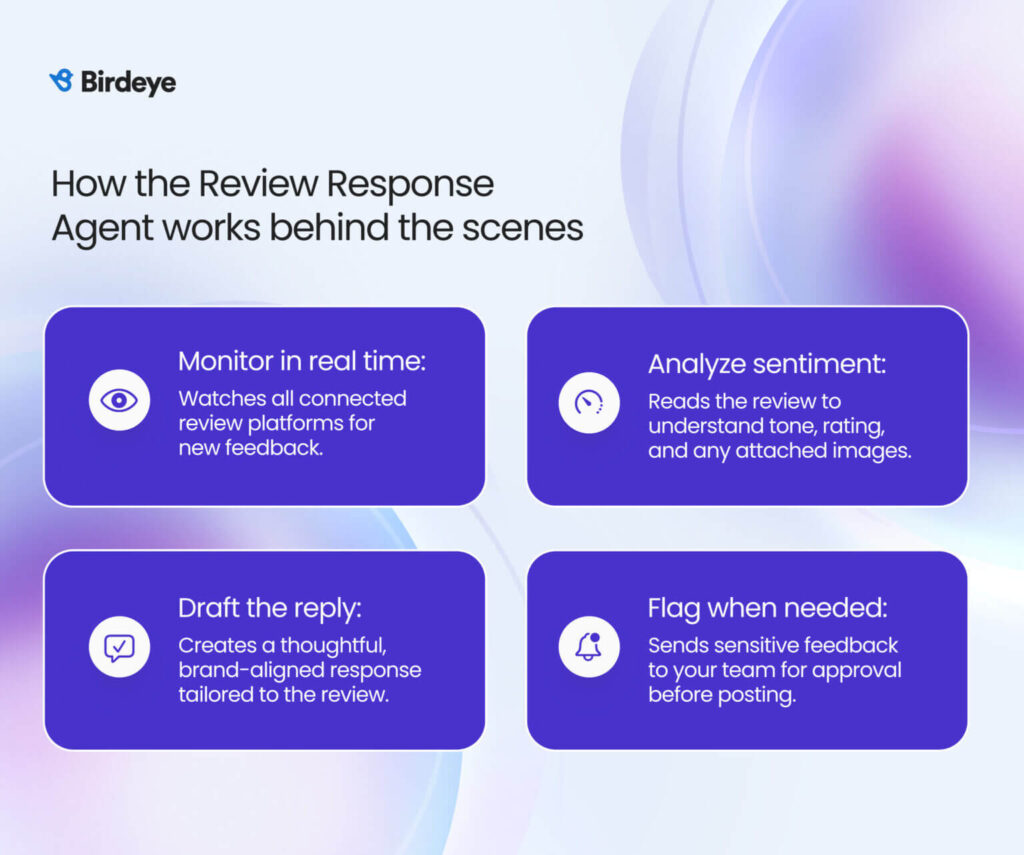
Responding to reviews is a direct driver of perception and local SEO. But at scale, consistency often breaks down. Brands need a system that ensures every reply is:
- Timely across all locations
- On-brand and compliant
- Context-aware based on the customer’s experience
The Birdeye Review Response Agent automates this workflow—prioritizing critical feedback and drafting on-brand responses instantly. This level of automation is why American Pacific Mortgage considers Birdeye ‘foundational’ to their feedback strategy.
“We love Birdeye. We’ve been a client for years and really value our partnership as well as what the platform can do. It’s foundational to have something easy to automate review requests, monitor incoming feedback, and organize it in a way that works for us.”
– Melissa Wright, Chief Sales & Marketing Officer, American Pacific Mortgage
4. Turn feedback into operational and marketing insights
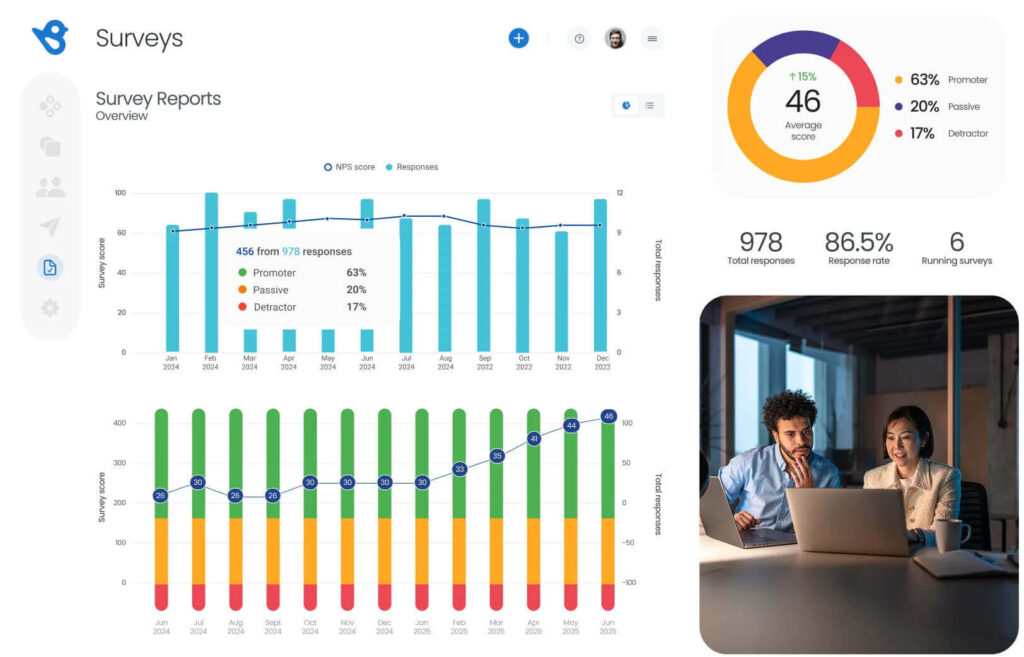
Customer feedback is one of the most valuable and underutilized data sources.
Leading brands move beyond simple collection, using reviews as a diagnostic tool to:
- Identify recurring issues across locations
- Understand regional differences in sentiment
- Improve products, services, and customer experience
The Birdeye Survey AI closes the insight gap by gathering structured feedback at key moments in the customer journey, helping brands uncover deeper insights that reviews alone may miss. Together, surveys and reviews provide a more complete view of customer experience across locations.
5. Optimize for AI-driven local discovery
Local search is evolving beyond traditional rankings. Customers are increasingly relying on AI-generated answers that recommend a single business based on relevance and trust.
To improve visibility in these experiences, brands must strengthen:
- Review quality and sentiment
- Listings completeness and accuracy
- Consistency across platforms
These signals don’t just influence search rankings; they shape how AI engines interpret, rank, and recommend your brand at the location level.
Birdeye Search AI helps large multi-location brands and global multi-location brands track whether each location appears in AI-generated recommendations across platforms like ChatGPT, Gemini, and Perplexity, and identify what’s limiting visibility.
As brands improve the fundamentals that power local reputation, including accurate listings, strong reviews, and consistent engagement, they typically see gains in map pack rankings. They also benefit from stronger visibility in how AI engines summarize and recommend their business.

6. Maintain brand consistency across every location
Inconsistency is the silent killer of global brand equity.
Without clear standards and systems:
- Some locations actively manage reviews
- Others fall behind or remain unresponsive
This creates uneven customer experiences and weakens overall brand trust. Birdeye AI-driven governance ensures every interaction follows brand guidelines while adapting to local contexts, helping maintain a consistent voice across 100-10,000+ locations without slowing teams down.
7. Use AI agents to scale reputation management end-to-end
At the enterprise scale, manual workflows are a bottleneck to growth. Birdeye’s AI agents transform reputation management from a manual task into an intelligent, 24/7 operation. These agents not only monitor reviews and sentiment, but also prioritize high-impact actions and automate the repetitive heavy lifting.
- Operating as a unified ecosystem, Birdeye ensures every location remains perpetually accurate, responsive, and optimized for maximum visibility.
“Birdeye is a positive experience for our customers and us and it’s a profitable way to get our positive reputation out to the public. We honestly feel like it’s grown the business.”
– Kathlyn Smith, Owner & Responsible Master Plumber HEB Plumbing & Sprinkler.
FAQs on local reputation management
You can choose the best reputation management company by evaluating their services. Look for the ability to monitor and manage reviews, brand mentions, listings, competitor activity, and social media.
The four components of reputation management are local listing, review, customer feedback, and social media management.
You can manage a brand’s online reputation using a full-cycle platform like Birdeye to monitor and address reviews, brand mentions, and customer feedback.
The most important local reputation management signals for Google’s map pack include review quality, review recency, and overall rating. Brands that consistently generate fresh, positive reviews and respond to them tend to perform better. Listing accuracy, including correct business information and updated details, also plays a critical role. Together, these signals help Google determine which businesses are trustworthy and relevant for local search queries.
Improving local reputation management outcomes typically takes a few weeks to a few months, depending on your starting point. Brands can see early improvements at the earliest by increasing review volume, responding consistently, and fixing listing inaccuracies. However, building a strong and sustainable reputation across multiple locations requires ongoing effort and consistent optimization over time.
Effective local reputation management for large multi-location brands and global multi-location brands requires a centralized and scalable approach. This includes standardizing listings, generating and responding to reviews across all locations, and monitoring customer sentiment in real time. Platforms such as Birdeye help automate these processes, ensuring consistency, speed, and visibility across thousands of locations.
The best local reputation management tool is one that can manage listings, reviews, and customer feedback at scale while providing actionable insights. For global multi-location brands, Birdeye stands out by combining AI-driven automation, centralized data management, and real-time insights to improve visibility, trust, and customer engagement across every location.
Final takeaway: Reputation now defines who gets chosen
Local reputation management has evolved from a reactive function into a core growth driver for global multi-location brands. It is the vital link between marketing and operations, directly dictating visibility, trust, and performance.
As search evolves, customers are moving beyond scrolling through lists. They are increasingly relying on AI to recommend the “single best option.” As a result, keywords alone aren’t enough. Visibility now depends on how consistently your brand demonstrates trust through verified data and real-time sentiment.
This is the inflection point where brands that treat local reputation management as a system rather than a set of tasks begin to outperform. They show up more often, earn trust faster, and convert more demand at the local level.
Birdeye’s AI agents provide the structure for this success, continuously optimizing listings, generating and responding to reviews, capturing feedback, and improving visibility across both search and AI-driven discovery.
The result is a model where every location becomes a high-performing, trust-building asset, and your reputation turns into a durable competitive advantage that compounds over time.
Book a free demo to learn more about how Birdeye’s agentic marketing platform can help you transform your brand’s marketing efforts.

About the Author

Ruchika Batra
Originally published