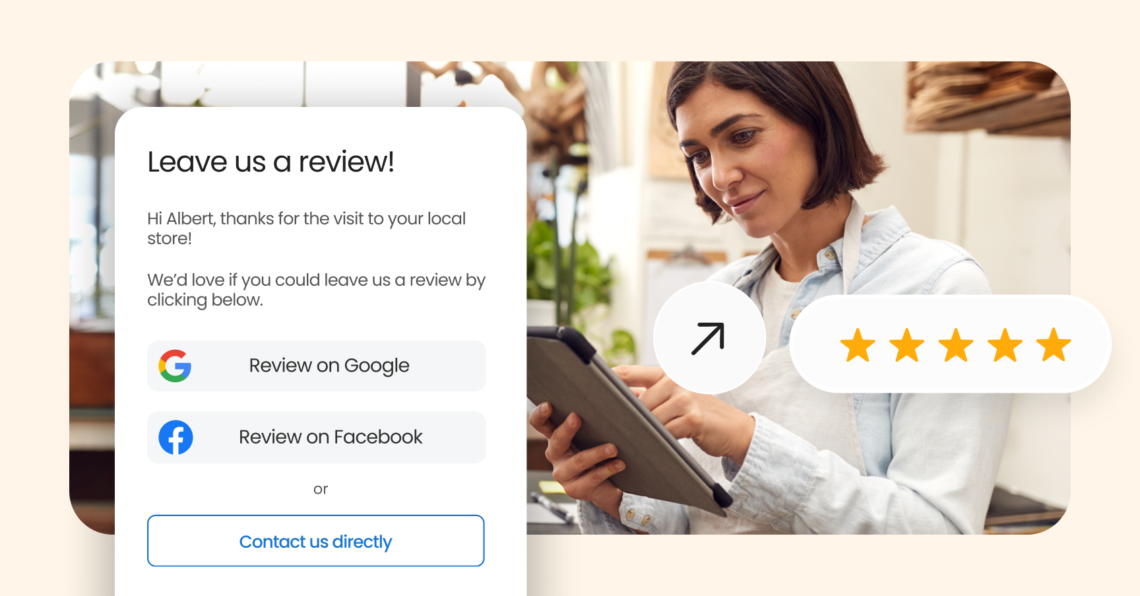
Collecting reviews is harder than ever. Review request trends 2025 show businesses now need multiple follow-ups, smarter timing, and the right channels to turn increasingly selective and distracted customers into active reviewers.
Summary:
According to Birdeye’s State of Online Reviews 2025 report, businesses sent 25% more review requests, with the average review now coming only after 17+ reminders. This highlights a clear shift: consistent follow-ups, multi-channel outreach, and automation are now essential for converting customers and sustaining review growth.
This blog breaks down key review request trends, explains why follow-ups are increasing, compares email and SMS, and offers actionable ways to improve review conversions through automation and smarter outreach.
Table of contents
- The rise in review requests
- Why do customers need multiple review reminders?
- Email vs. SMS: Which is more effective for follow-ups?
- Which industries rely more on review request follow-ups?
- How can automation help you collect reviews efficiently?
- Actionable follow-up tips for businesses to get more customer reviews
- Make follow-ups your secret to more reviews
- Frequently asked questions about review request trends
- How Birdeye Reviews AI simplifies review collection and follow-ups
The rise in review requests
Whenever customers look for a new restaurant or a product online, they always first read the online reviews. That’s why you need to work hard to get more reviews from your customers. According to Birdeye’s report, businesses sent a whopping 25% more review requests in 2024 compared to 2023.
This massive jump shows that businesses now recognize reviews as essential for online visibility and attracting new customers, not just a must-have for maintaining a good reputation.

Why do customers need multiple review reminders?
Even though businesses are asking for reviews more than ever, customers are taking their time to respond. In 2024, businesses had to send an average of 17 reminders to get just one review, up from 16 reminders in 2023.
So, what’s behind this trend?
- Customers are busier: With their inboxes flooded with emails and texts every day, it’s easy for your review requests to get lost in the noise or ignored.
- More selective customers: People now carefully choose where they leave reviews. They don’t review every business they interact with – only the ones that really stand out.
- Complete evaluation of experience: Sometimes, customers want to make sure they’re truly satisfied with a product or service before sharing their thoughts. They might want to test it out for a while or see how it holds up over time.
- Not wanting to share publicly: Some people feel a bit nervous about sharing their opinions publicly. They might worry about what others will think or feel uncomfortable with the idea of their review being out there for everyone to see.
- Forgetfulness and distractions: Even happy customers can forget to leave feedback unless reminded. As life gets busy, things slip through the cracks.
So, the biggest takeaway for businesses like yours is that one review request isn’t enough anymore. You need to understand these reasons to craft friendly, persistent reminders to get noticed and collect those valuable reviews.

Email vs. SMS: Which is more effective for follow-ups?
When it comes to reminding customers to leave reviews, businesses usually rely on two main channels: email and SMS. Each has its strengths and weaknesses.
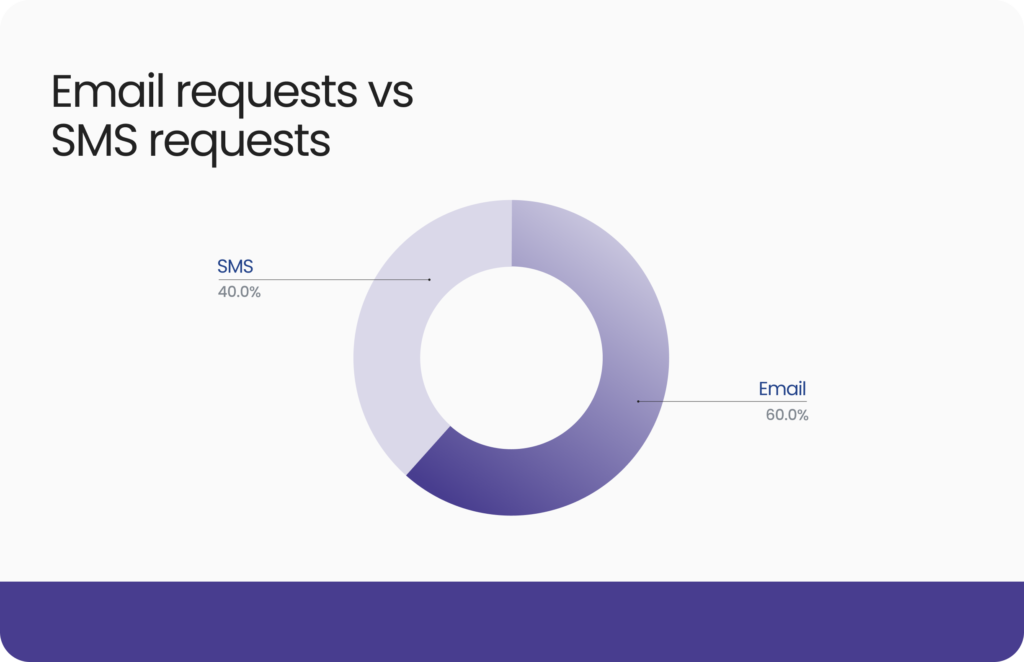
Email is the go-to choice for most businesses, accounting for 60% of review requests. It’s affordable and allows for personalization, so you can write a heartfelt message or add specific details about the customer’s experience.
On the other hand, SMS drives higher engagement, with a 38% response rate compared to 27% for email, even though it’s used for only 40% of review requests.
However, SMS isn’t as effective as it used to be, with click rates slipping from 8% in 2023 to 6% in 2024. This drop could be due to customers getting tired of too many messages or being cautious about spam.
So, what’s the best approach? Using both email and SMS review requests strategically can yield the best results. Email is great for building long-term relationships, while SMS works well for quick reminders that prompt immediate action.
Which industries rely more on review request follow-ups?
Some industries need to remind customers to leave reviews more often than others. Birdeye’s State of Online Reviews 2025 report found that businesses in Beauty & Wellness, Finance, and Real Estate send more reminders than initial requests. But why do these industries rely so heavily on follow-ups?
It all comes down to the nature of their services. Unlike buying a product online, these industries involve more complex decisions and longer-term experiences. Let’s break it down:
- Less urgency: Services in these industries often don’t prompt immediate feedback. Therefore, customers may not feel compelled to leave a review right after a solan visit or financial consultation, as the impact of these services may take time to materialize.
- Complex experiences: Buying a house or investing in a financial product involves a lot of deliberation and consideration. Customers might need time to process their experience before sharing feedback.
- Long evaluation periods: With services like these, customers often wait to see how things play out before deciding whether to leave a review. Follow-ups help ensure that customers eventually share their valuable feedback.
By sending reminders, businesses in these industries can collect more reviews and build a stronger online reputation.

How can automation help you collect reviews efficiently?
Collecting reviews can be a challenge, especially when customers need multiple reminders. Manually sending reminders can be time-consuming and exhausting. That’s where automation comes to the rescue.
Here’s how automation makes review collection a breeze:
- Sends reminders at the right time: Automated software sends reminders when customers are most likely to respond, increasing the chances of getting feedback.
- Personalizes messages: Just because it’s automated doesn’t mean it has to feel robotic! Automated messages can still be friendly, relevant, and personalized to each customer.
- Saves time and effort: Automation does the heavy lifting for your team, ensuring no customer slips through the cracks.
By automating review reminders, businesses can streamline their processes, boost response rates, and better focus on serving their customers.
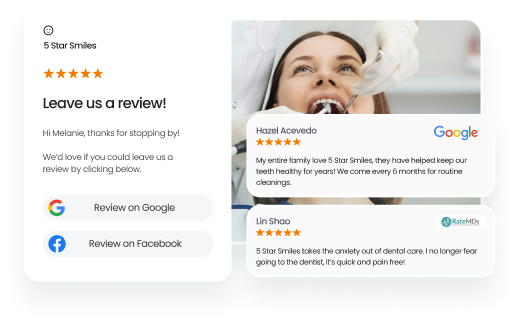
“Getting reviews is so easy, especially with Birdeye’s automated follow-up. Everyone who calls in and finds us online raves about all our five-star reviews! With Bideye, customers can easily put in their review at the click of a button rather than having to find our Google page and find where to click to write a review- this makes more people willing to leave a review. Birdeye Reviews AI has helped us get over 996 reviews!”
— Anna Brant, The Vertical Connection Carpet One
Automate review generation with AI
Want to see the impact of Birdeye on your business? Watch the Free Demo Now.
Actionable follow-up tips for businesses to get more customer reviews
If you’re one of those businesses struggling to get customers to leave reviews, here are a few simple yet effective tips you can use to optimize your follow-up strategy:
- Combine email and SMS: Use SMS for urgent reminders that prompt immediate action, and email for gentle nudges that give customers a bit more time to respond.
- Personlize your message: Address customers by name and mention their specific experience. This shows you care about their feedback and value their opinion.
- Space out reminders wisely: Don’t bombard customers with reminders. Give them enough time to respond without feeling overwhelmed or annoyed.
- Use automation: Use automation tools to streamline your reminder process. This saves time, reduces effort, and ensures consistency.
Tools like Birdeye Reviews AI can simplify the entire review generation process, helping you collect more reviews with less hassle. By following these tips, you’ll be well on your way to building a robust review collection strategy that works for your business.
Make follow-ups your secret to more reviews
In a world where customers are busier than ever, review reminders have become a necessity for businesses to improve their online presence, build trust, and attract more customers. By consistently sending friendly and respectful reminders, you can increase your chances of getting more reviews.
With smart follow-ups like these, you can show your customers that you value their feedback. Paired with automation, this approach not only boosts review collection but also saves time and cuts down on manual work, keeping you ahead of the curve.
Frequently asked questions about review request trends
In 2025, businesses will send more review requests than ever and rely heavily on follow-up reminders. Automation is becoming essential for smoothly and efficiently managing review collection.
Customers today get flooded with messages, making them more selective and slower to leave reviews. This leads to delays and requires businesses to send extra reminders.
On average, businesses needed about 17 reminders per customer in 2024. The best results come from consistent, gentle, and friendly follow-ups.
Businesses should use both SMS and email. SMS works best for quick responses, while email is more effective for ongoing engagement and repeated reminders.
Automation helps by automatically sending timely and personalized review reminders. This reduces manual work, increases customer response rates, and makes collecting reviews easier.
How Birdeye Reviews AI simplifies review collection and follow-ups
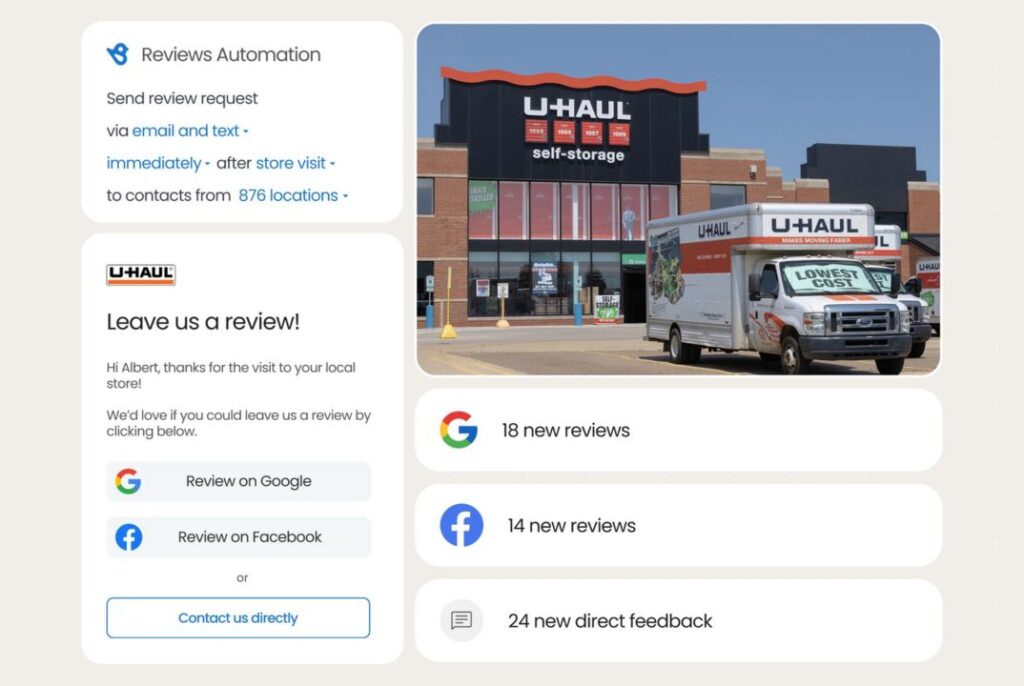
Collecting reviews today isn’t just about sending requests, it’s about timing, relevance, and continuous optimization.
Most businesses rely on one-time automated follow-ups, which often miss the moment when customers are most likely to respond. The result? Lower response rates and missed opportunities to build trust.
Birdeye takes a different approach. Its Reviews AI agents act as a governed extension of your team, automating and optimizing the entire review generation process to ensure every follow-up drives results.
Here’s how Birdeye Reviews AI helps:
The Review Generation Agent: smarter follow-ups that convert
Manual and rule-based follow-ups are inefficient. The Review Generation Agent continuously learns and adapts to identify the best time, channel, and message for every customer interaction.
- Sends requests at the optimal moment based on customer behavior
- Dynamically selects the right channel, SMS, email, and more
- Continuously runs A/B tests to improve follow-up performance
- Adapts messaging to match your brand voice and context
Outcome: More responses from every follow-up. Birdeye customers see an average 128% growth in reviews within the first 90 days, with most maintaining strong 4+ star ratings.
The Review Response Agent: Turn every reply into a trust signal
Getting reviews is only half the job, responding to them is what builds trust and improves SEO.
Generic or delayed responses weaken impact. The Review Response Agent ensures every review gets a timely, personalized, and context-aware reply.
- Generates nuanced responses based on sentiment, location, and customer context
- Maintains consistent brand voice across all locations
- Adds fresh, keyword-rich content that strengthens local SEO
- Operates within brand-safe governance with human-in-the-loop controls
Outcome: Higher response rates and stronger engagement. Birdeye customers achieve an average 71% response rate, improving visibility, trust, and conversions.
Integration with your existing tools
Birdeye integrates with over 3,000 apps, including popular CRMs like Salesforce and HubSpot. This means you can automate review requests within your existing workflows.
Want to know more about how Birdeye can elevate your review management process and enhance your online presence with less effort? Watch our free demo today.
About the Author

Kukil Bora
Birdeye
Originally published