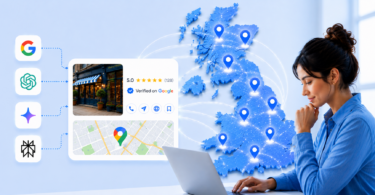
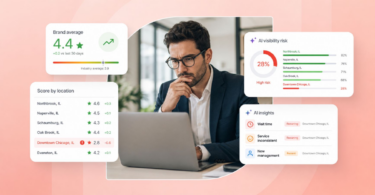
Local SEO tools help brands improve how their locations appear across Google Search, Google Maps, Google Business Profiles, local directories, review sites, and AI-powered discovery. For multi-location brands, the best local SEO software is not just a rank tracker but a central operational layer. It helps teams manage location data, optimize profiles, monitor reviews, track local visibility, compare competitors, and report performance across every market from one place.
Summary
The best local SEO tools in 2026 help brands manage listings, Google Business Profiles, reviews, local rankings, keyword research, and reporting from one place.

For multi-location brands, the right platform should also support governance, location-level insights, regional workflows, and AI search visibility. This blog compares 15 local SEO tools to help teams choose the right option based on scale, use case, and local search strategy.
Table of contents
What are local SEO tools, and why do they matter in 2026?
Local SEO tools manage how a brand’s locations appear across Google Search, Google Maps, Google Business Profiles, local directories, review sites, and other high-intent discovery channels. They equip marketing, operations, and regional teams with the visibility and workflows necessary to drive local search performance across every location.
For a single-location business, local SEO may mean updating one Google Business Profile, responding to a few reviews, or tracking a small set of local keywords. However, for a multi-location brand, the work is much more complex. Every location has its own business information, competitors, reviews, rankings, customer actions, and performance trends..
Without the right local SEO software, teams often rely on manual checks, disconnected spreadsheets, one-off profile updates, and fragmented reporting. That approach does not scale when a brand is managing dozens, hundreds, or thousands of locations.
This is important because local search is directly tied to customer action. Before choosing a location, customers compare profiles, read reviews, check hours, request directions, visit websites, and call businesses from local search results.Birdeye’s State of Google Business Profile 2026 report found that website visits account for 47% of Google Business Profile engagement, direction requests for 38%, and phone calls for 15%. Local search is not just where customers find a business. It is where many of them decide to take the next step.

For multi-location brands, local SEO tools help turn location-level activity into a repeatable workflow. Instead of manually responding to issues, teams can monitor performance, identify gaps, prioritize updates, and maintain consistent local visibility across all markets.
How AI search is reshaping local SEO
AI search is changing what local SEO tools need to measure. Rankings, citations, Google Business Profile optimization, and reviews still matter, but they now feed into a broader visibility system in which AI platforms summarize, compare, and recommend businesses directly within search experiences.
This changes what it means to be visible. A brand needs to appear not only in Google Search or Google Maps. Its location information, reviews, service details, and local pages also need to be clear enough for AI engines to understand and reliable enough to cite.
Birdeye’s State of AI Search 2026 report found that discovery is shifting from traditional rankings to AI-generated, citation-backed answers. The report also found that 80% of brands are cited at least once in AI-generated answers, but only 15% claim the #1 position with their own domain. That gap shows why owned content, accurate profiles, consistent listings, and strong review signals now play a larger role in local discovery.
For multi-location brands, the risk is inconsistency. If one location has incomplete hours, outdated services, weak review coverage, or conflicting directory information, both search engines and AI platforms can present an incomplete picture. Across hundreds or thousands of locations, those small gaps can affect how customers compare and choose.
This is where local SEO tools need to evolve. The best local SEO tools now need to support the full visibility system: owned location pages, Google Business Profiles, local listings, review content, directories, and other trusted third-party citations. These are the sources AI engines use to understand whether a business is accurate, relevant, and credible.
What are the 15 best local SEO tools in 2026?
The best local SEO tools in 2026 are Birdeye, BrightLocal, Semrush Local, Ahrefs, Moz Local, Yext, Uberall, SOCi, Chatmeter, Whitespark, Local Falcon, Local Viking, Localo, SE Ranking, and Google Business Profile. For multi-location brands, Birdeye is the strongest choice because it brings listings, Google Business Profile management, reviews, AI search visibility, reporting, and governance into one platform.
| Tool | Best for | Core local SEO use case | Best-fit team |
| Birdeye | Large multi-location and global brands | Local SEO, Google Business Profiles, listings, reviews, AI search visibility, reporting, and governance | Enterprise teams managing 100-10,000+ locations |
| BrightLocal | Agencies, consultants, and local marketing teams | Local rank tracking, citation management, review monitoring, audits, and reporting | Teams that need local SEO reporting and citation workflows |
| Semrush Local | Businesses and SEO teams using Semrush workflows | Listings management, GBP optimization, Google Maps rank tracking, reviews, keyword research, and competitor analysis | SEO teams that want local SEO connected to broader SEO |
| Ahrefs | SEO teams focused on research and organic visibility | Local keyword research, competitor analysis, backlinks, site audits, rank tracking, and location-page SEO | Teams improving local landing pages and organic search performance |
| Moz Local | Businesses, agencies, and local marketing teams | Listings management, citation consistency, review monitoring, and location data management | Teams focused on foundational local presence management |
| Yext | Brands managing structured location data | Listings management, Knowledge Graph, publisher updates, review workflows, and local visibility controls | Teams that need centralized control over business information |
| Uberall | Brands managing local visibility across channels | Listings, store locators, local pages, reviews, local social, and analytics | Teams that need local presence management plus engagement workflows |
| SOCi | Brands managing local search, reviews, and social | Listings, local search, reviews, social publishing, local pages, and AI-supported workflows | Teams that want local marketing workflows in one platform |
| Chatmeter | Brands focused on reputation and local intelligence | Listings, reviews, sentiment analysis, local SEO tracking, social, and location insights | Teams connecting customer feedback with local performance |
| Whitespark | Local SEO teams and agencies | Citation discovery, citation tracking, local rank tracking, reputation tools, and local SEO services | Teams that need focused citation and ranking tools |
| Local Falcon | Teams tracking Google Maps visibility | Geo-grid rank tracking, Google Maps visibility reports, competitor tracking, and Share of Local Voice | Teams that need map-based ranking visibility |
| Local Viking | Teams managing GBP and map rankings | Google Business Profile management, GeoGrid reports, GBP post scheduling, and review monitoring | Teams that need GBP workflows plus local rank tracking |
| Localo | Teams optimizing Google Business Profiles | GBP optimization, local rank tracking, audits, AI recommendations, review tools, and local reports | Teams focused on Google Maps and profile improvement |
| SE Ranking | SEO teams that need local and broader SEO tools | Local rankings, GBP insights, citation checks, reviews, keyword research, competitor analysis, and reporting | Teams that want local SEO inside a broader SEO platform |
| Google Business Profile | Businesses managing Google presence directly | Free Search and Maps profile management, business information updates, posts, reviews, and engagement | Teams that need basic control over Google Search and Maps presence |
1. Birdeye
Best for: Large multi-location and global brands that need centralized control over local SEO, Google Business Profiles, listings, reviews, AI search visibility, reporting, and governance across 100-10,000+ locations.

Birdeye is an agentic marketing platform for multi-location brands. Unlike point tools that focus only on narrow tasks like rank tracking or citation building, Birdeye provides a full-cycle platform that manages the entire local search journey: getting found, building trust, and converting local intent into revenue.
For enterprise teams, Birdeye replaces a fragmented stack of disconnected tools with a unified system of local intelligence. It connects local SEO execution with enterprise governance, allowing corporate teams to maintain brand standards while giving regional managers the local autonomy they need.
The Birdeye agentic approach: Consolidate, Think, Act
Birdeye transforms multi-location marketing through a proven framework that turns fragmented data into autonomous action:
- Consolidate: Replace a dozen disconnected point tools with one full-cycle platform spanning reviews, listings, social, messaging, and automation. Stop stitching together data across vendors and manage the full marketing flywheel in one place.
- Think: Use local intelligence to stitch customer signals across every location and interaction into a unified profile. This provides the “local truth” needed for smarter, brand-aligned AI execution.
- Act: Deploy marketing agents trained on your brand voice and industry context to automate campaigns, responses, and optimization at scale. AI recommends the action, and you stay in control with final approval.
Built on three strategic pillars
- Full-Cycle Platform: Replace fragmented tools for listings, reviews, and social with one unified dashboard that maintains brand governance across 100 to 10,000+ locations.
- Local Intelligence: Turn location signals into clearer action. Use a single “Birdeye Score” to benchmark every location against local competitors and identify visibility gaps in real-time.
- Marketing Agents: Support high-volume local SEO workflows without adding more manual work. Birdeye’s Marketing Agents help teams move from insights to action by supporting listing updates, review responses, and performance analysis.

Key features:
Listings AI: Manage accurate business information across Google and 100+ sites. Teams can update addresses, hours, services, photos, videos, appointment links, social profiles, and 60+ other fields from a centralized dashboard. It also helps detect duplicate listings, scan profiles for errors, benchmark listing health, and track metrics such as profile views, calls, website visits, messages, and other local engagement signals.

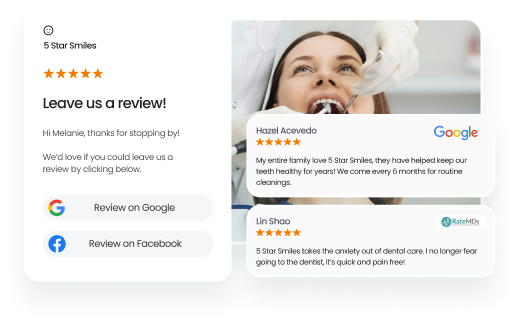
Reviews AI: Generate, monitor, manage, and respond to reviews across 200+ sites. Reviews AI helps teams improve review coverage, response consistency, and reputation signals while keeping responses aligned with brand voice and location-level context. Birdeye’s Online Reviews report also positions Reviews AI as a way for brands to execute review generation, response, and optimization workflows across every location.

Search AI: Measure and improve how the brand appears in AI-generated answers across platforms such as Google, ChatGPT, Gemini, and Perplexity. Search AI helps teams identify brand mentions, citation sources, visibility gaps, competitor performance, accuracy issues, and recommended actions to improve AI search presence.

Insights AI: Track sentiment, reputation, location-level trends, and performance gaps across locations. As a result, teams can understand where local SEO performance is strong, where locations need attention, and which actions should be prioritized.

Pros:
- Unified Customer Profiles: Stitches together signals from reviews, social, and messaging into a single CDP, giving you a true 360-degree view of every local customer.
- Competitive benchmarking: Automatically identifies your true local competitors for every location and benchmarks your performance head-to-head using the Birdeye Score.
- Enterprise-grade governance: Built for complex hierarchies with role-based access (RBAC), SSO, and custom approval loops that ensure brand safety across thousands of users.
- Interoperable ecosystem: Connects seamlessly with your existing stack through 3,000+ pre-built integrations with CRMs, PMS, and POS systems.
- Built for cross-functional teams: As a result, corporate, regional, and local teams can manage workflows with permissions, approvals, and location-level reporting.
- Centralized local SEO management: Helps teams manage listings, Google Business Profiles, reviews, AI search visibility, and reporting from one connected platform.
Cons:
- The breadth of the platform is most effective for brands that have moved beyond point-tool needs and are ready to operationalize local SEO at scale.
- Teams seeking only basic, map-grid rank tracking without execution features may find the platform’s full-cycle capabilities more than they currently require.
G2 rating: 4.7/5 (4,000+ reviews)
2. BrightLocal
Best for: Agencies, consultants, and local marketing teams that need local rank tracking, citation management, review monitoring, audits, and client-ready local SEO reporting.

BrightLocal is a local SEO platform built for teams that need practical visibility tracking, citation workflows, review monitoring, and client reporting. It is especially useful for agencies and consultants that manage local SEO for multiple clients or locations and need a structured way to monitor progress, identify issues, and share results.
Key features:
- Local rank tracking: Tracks local search visibility and rankings, including neighborhood-level visibility through tools such as Local Search Grid and Local Rank Tracker.
- Citation building and tracking: Helps businesses build, clean up, and monitor citations across sites that influence local search visibility.
- Listings management: In addition, it supports business information accuracy and consistency across places where customers search.
- Review monitoring: It also helps teams monitor, manage, and improve online reviews as part of reputation and local search performance.
- Local SEO reporting and insights: Provides reporting, audits, AI Insights, and local SEO data that help teams identify performance trends and next steps.
Pros:
- Strong local rank tracking and local visibility tools, including map-based reporting.
- Useful for agencies and consultants managing local SEO across clients or multiple locations.
- Combines rankings, citations, listings, reviews, audits, and reporting in one platform.
- Offers citation services, managed local SEO services, and API options for different support needs.
Cons:
- Some users report that the interface and range of tools can take time to navigate at first.
- Citation building and some add-on services may create extra costs beyond the core platform.
- Enterprise brands with complex governance, approvals, integrations, or customer engagement workflows may need to compare BrightLocal against broader multi-location platforms.
G2 rating: 4.6/5 (220+ reviews)
3. Semrush Local
Best for: Businesses and SEO teams that want local SEO tools connected to broader Semrush workflows.

Semrush Local is a good fit for teams that already use Semrush and want local SEO capabilities inside a broader search engine optimization workflow. It connects location-based visibility with keyword research, competitor analysis, position tracking, technical SEO, and reporting, making it useful for teams that manage both local and organic search performance.
Key features:
- Google Business Profile optimization: Supports GBP audits, profile optimization, automated posts, photo updates, business descriptions, and AI-assisted review replies depending on the plan.
- Listing management: Distributes business information across 70+ directories and supports duplicate suppression and listing updates.
- Map Rank Tracker: For local visibility tracking, it monitors Google Maps rankings with grid-based reports, competitor views, target keywords, and reporting options.
- Review management: It also centralizes review monitoring, GBP replies, negative review alerts, and competitor review insights on eligible plans.
- Broader Semrush SEO tools: Works alongside Semrush tools for keyword research, competitor analysis, position tracking, on-page SEO recommendations, site audits, and search performance reporting.
Pros:
- Strong fit for teams that already use Semrush and want local SEO capabilities connected to broader SEO, keyword research, and competitor analysis workflows.
- Includes local-specific tools for Google Business Profile optimization, listings, review management, and Google Maps rank tracking.
- Map Rank Tracker helps visualize local rankings and competitor visibility.
- G2 users often praise Semrush for comprehensive SEO insights and all-in-one workflow support.
Cons:
- Semrush Local is priced per location, so costs can increase for businesses managing many locations. Semrush’s current Local plans are Local Base at $30 per location per month and Local Pro at $60 per location per month, with a custom Local Business option for 20+ locations.
- Some advanced local features are available only on higher plans.
- G2 reviewers commonly mention pricing and learning curve as concerns.
G2 rating: 4.5/5 (3,300+ reviews)
4. Ahrefs
Best for: SEO teams that need keyword research, competitor analysis, backlink analysis, rank tracking, site audits, and local landing page optimization as part of a broader local SEO strategy.

Ahrefs is an SEO platform that helps teams research keywords, analyze competitors, audit websites, track rankings, and find backlink opportunities. For local SEO, it is especially useful for strengthening location pages, identifying local keyword opportunities, and understanding how competitors earn visibility in organic search.
Key features:
- Keywords Explorer: Helps teams research search queries, generate keyword ideas, cluster keywords, and review keyword metrics for SEO planning, including local keyword research.
- Site Explorer: Analyzes a website’s organic traffic, backlink profile, paid traffic, AI visibility, competitor keywords, and site structure.
- Site Audit: Audits websites for technical SEO issues, which is useful for identifying problems on location pages, service pages, and local landing pages.
- Rank Tracker: Tracks keyword rankings over time, helping SEO teams monitor organic visibility for local and non-local search terms.
- Content and AI visibility tools: Ahrefs includes tools such as Content Explorer, AI Content Helper, Brand Radar, and Custom Prompts for content research, brand visibility, and AI search monitoring.
Pros:
- Strong platform for backlink analysis, keyword research, competitor analysis, and broader SEO strategy.
- Useful for identifying local keyword opportunities, content gaps, and competitor pages that rank for high-intent local searches.
- Helps SEO teams audit and improve location pages, service pages, internal links, and technical SEO issues.
- Supports broader visibility work beyond traditional SEO, including AI search visibility and brand monitoring features.
Cons:
- Not a dedicated local SEO platform for Google Business Profile management, review management, citation building, or listings distribution.
- Pricing and usage limits may be a consideration for smaller teams or teams that need multiple seats and higher data usage.
- Teams focused on Google Maps rankings, GBP optimization, reviews, or local citations will likely need another local SEO tool alongside Ahrefs.
G2 rating: 4.5/5 (690+ reviews)
5. Moz Local
Best for: Businesses, agencies, and local marketing teams that need listings management, citation consistency, local visibility tracking, review monitoring, and location data management.

Moz Local is a local SEO platform that helps businesses manage location information across online directories, search engines, social platforms, and review sites. It is useful for teams that want to keep business listings accurate, monitor local visibility, and manage location data from one dashboard.
Key features:
- Location data management: Helps teams manage business details such as name, address, phone number, hours, services, images, and other location information from one dashboard.
- Listings distribution and syncing: Supports listing accuracy across directories, search engines, social platforms, and review sites.
- Duplicate and inconsistency checks: Helps identify listing issues that can affect local search visibility and customer trust.
- Review monitoring: Allows teams to monitor reviews across supported platforms and track reputation activity.
- Local SEO insights: Provides reporting and visibility insights to help teams understand listing health, engagement, and local performance.
Pros:
- Helpful for maintaining consistent business information across important local listings.
- Useful for teams focused on citation accuracy and foundational local presence management.
- Reviewers mention ease of use, listing sync, local citation management, and dashboard visibility as positives.
- Can support agencies and in-house teams managing local SEO for multiple locations or clients.
Cons:
- Reviewers have noted that some features may feel limited compared with broader SEO or local marketing platforms.
- Some users mention pricing, onboarding, notifications, or customer support as areas to evaluate before purchase.
- Teams needing deeper Google Maps rank tracking, advanced review workflows, or enterprise-grade governance may need to compare it with more specialized or broader local SEO platforms.
G2 rating: 4.2/5 (470+ reviews)
6. Yext
Best for: Brands that need centralized listings management, structured location data, publisher network updates, review workflows, and local search visibility controls.

Yext is a digital presence platform that helps brands centralize and manage business information across search engines, maps, apps, directories, and other digital channels. For local SEO, it is especially useful for keeping location data consistent, detecting listing issues, managing reviews, and supporting structured brand information.
Key features:
- Knowledge Graph: Centralizes verified brand and location information so teams can manage structured business data from one source.
- Listings management: Helps brands publish and maintain accurate location information across third-party publishers, including search engines, maps, apps, and directories.
- Listings Verifier: Checks live publisher data against the Knowledge Graph to detect errors, duplicates, and publisher overwrites.
- Review management: Supports review monitoring and response workflows, with review generation available as part of Yext’s review capabilities.
- Local search and analytics: Helps teams manage local presence and track engagement across managed digital listings and location pages.
Pros:
- Strong fit for brands that need centralized control over structured location data across many digital destinations.
- Useful for detecting listing errors, duplicates, and publisher overwrites that can affect local search visibility.
- G2 users often highlight centralized business information management, ease of use, quick setup, and support for managing many locations.
- Supports broader digital presence workflows beyond listings, including reviews, pages, search, social, and knowledge management.
Cons:
- Some reviewers mention that pricing or contract structure may be a consideration, especially for smaller teams or simpler use cases.
- Because the platform offers many options and customization capabilities, some users may find setup or administration complex.
- Teams focused mainly on Google Maps grid tracking, local rank tracking, or hands-on citation building may still need a specialized local SEO tool.
G2 rating: 4.4/5 (1,100+ reviews)
7. Uberall
Best for: Brands that need local listings management, store locators, local pages, reviews, local social, and location-level visibility from one platform.

Uberall is a marketing platform that helps brands manage how their locations appear across local search, maps, apps, directories, websites, and customer review channels. For local SEO, it is especially useful for managing location data, improving local pages, monitoring reviews, and supporting customer engagement across markets.
Key features:
- Listings management: Helps brands manage location data across search engines, maps, directories, and other local discovery channels.
- Store Locator and Local Pages: Supports store locator experiences and SEO local pages that help customers find nearby locations and take actions such as getting directions, booking, or reading reviews.
- Review management: Helps teams monitor, manage, and respond to customer reviews across locations.
- Local Social: Supports local social publishing and engagement for brands managing content across multiple locations.
- Insights and analytics: Provides visibility into how customers find and interact with locations, helping teams track local performance and identify areas for improvement.
Pros:
- Strong fit for brands that need listings, reviews, local pages, and local social in one platform.
- Helps teams manage location information and updates across many online destinations from a centralized system.
- Useful for brands that need SEO-optimized local pages and store locator experiences to support local discovery and conversion.
- Reviewers highlight the value of bulk updates, API connections, review management, customer support, and managing many locations from one platform.
Cons:
- Some users mention that the platform can take time to learn because it includes several features and workflows.
- Reviewers have noted occasional sync issues, dashboard glitches, or listing accuracy issues that may require monitoring.
- Teams focused mainly on local rank tracking, Google Maps grid scans, or technical SEO audits may need a specialized tool alongside Uberall.
G2 rating: 4.4/5 (230+ reviews)
8. SOCi
Best for: Brands that need local search, listings, reviews, social media, and location-level marketing workflows in one platform.

SOCi is an AI-powered marketing platform built for brands that manage digital presence across locations. For local SEO, SOCi is most relevant for teams that need to manage listings, improve local search visibility, respond to reviews, publish localized social content, and coordinate location-level marketing activity at scale.
Key features:
- Genius Local Search Agent: Supports local SEO by helping teams improve local search visibility through listing optimization, local search signals, and Google Posts.
- Listings management: Helps teams manage business information across local search channels, maps, and directories.
- Genius Reputation Agent: Supports review monitoring and response workflows with on-brand review responses, escalation, and reputation insights.
- Local pages and locator: Supports search-optimized local landing pages and locator pages that help customers find nearby locations and take action.
- Social publishing and engagement: Helps teams create, schedule, publish, and manage local social content across supported channels.
Pros:
- Combines local search, listings, reviews, social media, and local pages in one platform.
- Useful for teams that want to manage social scheduling and review responses from a centralized dashboard.
- G2 reviewers frequently highlight ease of use, post-scheduling, cross-platform scheduling, and centralized management as strengths.
- Includes AI-supported workflows for local search, reputation, social content, and customer engagement.
Cons:
- Some G2 reviewers note a learning curve due to the platform’s feature set.
- Reviewers have reported occasional posting issues, missing editing features, or limits in social listening and competitor comparison tools.
- Teams focused mainly on local rank tracking, citation discovery, or technical SEO audits may need a more specialized SEO tool alongside SOCi.
G2 rating: 4.5/5 (4,000+ reviews)
9. Chatmeter
Best for: Brands that need local SEO, listings management, review management, sentiment analysis, social media management, and location-level performance insights.

Chatmeter is an AI-powered reputation management and local brand intelligence platform that helps teams manage reviews, listings, local SEO, social media, and customer sentiment from one dashboard. For local SEO, it is most useful for monitoring local visibility, improving listing accuracy, tracking rankings, and connecting customer feedback to location-level performance.
Key features:
- Listings management: Helps teams add and update location information, photos, menus, services, promotions, and other listing details across supported channels.
- Reputation management: Supports review monitoring, response workflows, and tools to improve online visibility and customer trust.
- Sentiment analysis: Uses AI and machine learning through Pulse to identify location-based trends from reviews, comments, photos, and other customer feedback.
- Local SEO rank tracking: Helps brands track local search rankings across locations and understand how proximity affects visibility.
- Social media management: Supports creating, scheduling, posting, and monitoring content across channels such as Facebook, X, Instagram, Google Posts, and LinkedIn.
Pros:
- Helps teams connect review activity, local search visibility, and customer sentiment in one platform.
- Useful for identifying recurring location-level issues from reviews, comments, and feedback trends.
- Supports local teams with listings, review responses, social publishing, and reporting workflows.
- Reviewers often highlight the platform’s ease of use, review monitoring, and customer support as strengths.
Cons:
- Some users mention that technical support or issue resolution can be slower than expected.
- Teams that need advanced Google Maps grid tracking may still require a specialized local rank tracker.
- Since the platform covers several workflows, setup and reporting may require upfront planning to match internal processes.
G2 rating: 4.5/5 (100+ reviews)
10. Whitespark
Best for: Local SEO teams and agencies that need citation discovery, citation tracking, local rank tracking, reputation tools, and local SEO services.

Whitespark is a local SEO software and services company focused on helping businesses improve visibility in local search. It is best known for its Local Citation Finder, Local Rank Tracker, Reputation Builder, citation services, and free tools such as Review Checker, Google Review Link Generator, and Local Ranking Checker.
Key features:
- Local Citation Finder: Helps teams find citation opportunities by identifying where competitors are listed and tracking existing citations.
- Local Rank Tracker: Tracks local and organic rankings across search results so teams can monitor visibility and performance by keyword and location.
- Local Ranking Grids: Monitors local rankings across multiple geographic points and supports map-based visibility reporting.
- Reputation Builder: Helps businesses request customer feedback and reviews through review request workflows.
- Local SEO services: Offers services for citations, listings, Google Business Profile support, and local SEO improvement.
Pros:
- Strong fit for citation discovery, citation tracking, and local rank tracking.
- Useful for teams that want focused local SEO tools instead of a broad marketing platform.
- Helps identify competitor citation sources and local listing opportunities.
- G2 reviewers highlight Whitespark’s ease of use, time-saving citation workflows, and usefulness for local SEO.
Cons:
- More specialized than full local SEO platforms that combine listings, reviews, social, customer engagement, and reporting.
- Teams that need broader workflow management or advanced governance may need additional tools.
- Some reviewers note that the Local Citation Finder interface can feel confusing at first.
G2 rating: 4.6/5 (20+ reviews)
11. Local Falcon
Best for: Teams that need Google Maps rank tracking, geo-grid visibility reports, competitor comparisons, and local search performance insights by keyword and location.
Local Falcon is a local rank tracking platform that helps teams see how a business ranks across different points on a map. It is especially useful for understanding Google Maps visibility, identifying geographic ranking gaps, and tracking how local search performance changes across service areas or nearby neighborhoods.
Key features:
- Geo-grid rank tracking: Tracks local rankings across multiple map points to show how visibility changes by search location.
- Google Maps visibility reports: Helps teams analyze map-based local search performance for specific keywords and locations.
- Competitor visibility tracking: Shows how nearby competitors appear across local search grids and map results.
- Share of Local Voice: Provides a metric for understanding local visibility across the scanned area.
- AI search visibility tracking: Local Falcon says it tracks visibility across Google Maps, Apple Maps, ChatGPT, Google Gemini, Google AI Overviews, Google AI Mode, and Grok.
Pros:
- Strong fit for teams that need visual, map-based local rank tracking.
- Helps identify ranking differences across neighborhoods, cities, and service areas.
- Useful for showing clients or internal teams where a location is gaining or losing Google Maps visibility.
- G2 reviewers often highlight clear reporting, ease of navigation, and actionable local ranking data.
Cons:
- Focused more on local rank tracking than broader listings, review management, or citation workflows.
- Teams that need full local SEO management may need to use it alongside another platform.
- Pricing and usage can depend on scan volume, locations, and tracking needs, so teams should review plan details before choosing.
G2 rating: 4.7/5 (70+ reviews)
12. Local Viking
Best for: Teams that need Google Business Profile management, Google Maps rank tracking, GeoGrid reports, post scheduling, and review monitoring.

Local Viking is a Google Business Profile management and local rank tracking platform. It helps teams schedule GBP posts, manage Google Business Profile properties, track local pack rankings, monitor reviews, and visualize local visibility across geographic grids.
Key features:
- GeoGrid rank tracking: Shows how a Google Business Profile ranks from different points across a geographic area, helping teams understand visibility beyond a single search location.
- Google Business Profile management: Lets users manage multiple Google Business Profile properties from one dashboard.
- GBP post scheduling: Supports scheduling Google Business Profile posts to keep profiles active and updated.
- Local rank tracking: Tracks rankings in local SERPs and the Google Map Pack across desktop and mobile results.
- Review management: Pulls Google Business Profile reviews into the dashboard, allowing users to monitor and respond to them from one place.
Pros:
- Useful for teams that want Google Business Profile management and GeoGrid rank tracking in one tool.
- Helps visualize local visibility across neighborhoods, service areas, and map points.
- Supports practical GBP workflows, including post scheduling, review monitoring, and local rank tracking.
- Can be helpful for agencies and local SEO teams that need map-based reporting for Google Business Profile performance.
Cons:
- Focuses mainly on Google Business Profile management and local rank tracking, so teams may need other tools for broader listings, citations, reviews across multiple sites, or customer engagement.
- Does not appear to have a strong presence on major third-party review platforms such as G2, Capterra, or TrustRadius, so public review validation may be limited.
- Teams that need enterprise-grade governance, advanced integrations, or multi-channel local SEO workflows should compare it with broader local SEO platforms.
13. Localo
Best for: Teams that need Google Business Profile optimization, local rank tracking, local SEO audits, AI-assisted recommendations, review tools, and local visibility reporting.

Localo is a local SEO platform designed to help users improve visibility in Google Search, Google Maps, and AI answers. It is especially useful for optimizing Google Business Profiles, tracking local rankings, monitoring competitors, and turning local SEO tasks into a more repeatable workflow.
Key features:
- Local rank tracking: Tracks Google Business Profile positions for selected local keywords and compares visibility against local competitors.
- Google Business Profile optimization: Helps users identify profile improvements and prioritize local SEO tasks with AI-powered insights.
- Local SEO audits and reports: Supports audits and reporting workflows that help users monitor progress and share performance updates.
- Review tools: Offers tools such as Review Poster and AI Google Review Response Generator to support review collection and review response workflows.
- Free local SEO tools: Includes free tools such as Local Rank Checker, Schema Generator, and review-related tools for basic local visibility checks.
Pros:
- Useful for teams focused on Google Business Profile optimization and local Maps visibility.
- Also provides AI-assisted recommendations that can help users prioritize local SEO tasks.
- Includes local rank tracking, competitor visibility checks, review tools, and reporting in one platform.
- Reviewers highlight the intuitive interface, quick onboarding, AI-powered prioritized tasks, and reliable local rank tracking.
Cons:
- Best suited for Google Business Profile-focused local SEO rather than broader listings management across many directories.
- Teams that need deeper citation management, review management across many sites, or advanced governance may need a broader local SEO platform.
- Some users may need time to understand how to apply the platform’s recommendations within their local SEO workflow.
G2 rating: 4.9/5 (130+ reviews)
14. SE Ranking
Best for: SEO teams that need local rank tracking, Google Business Profile insights, citation tracking, review monitoring, keyword research, competitor analysis, and broader SEO reporting in one platform.

SE Ranking is an SEO platform that supports keyword research, rank tracking, competitor analysis, website audits, backlink monitoring, content optimization, and local SEO. For local SEO, its Local Marketing Tool helps teams manage location-based visibility through local rankings, Google Business Profile insights, citation tracking, review monitoring, and local performance reporting.
Key features:
- Local Marketing Tool: Provides location-based data, review monitoring, citation tracking, and local audience insights for local SEO workflows.
- Google Business Profile integration: Connects with Google Business Profile so teams can manage business information, monitor rankings, analyze performance, and schedule GBP posts from SE Ranking.
- Local rank tracking: Tracks keyword rankings by specific locations, including cities and ZIP codes, to help teams monitor local search performance.
- Citation and listing checks: Scans local directories to identify missing, inconsistent, or inaccurate NAP details and suggests updates to improve listing accuracy.
- Broader SEO toolkit: Includes keyword research, competitive research, technical audits, backlink analysis, content tools, automated reporting, and white-label reporting options.
Pros:
- Combines local SEO tools with broader SEO capabilities such as keyword research, competitor analysis, website audits, and backlink tracking.
- Useful for teams that want to manage local rankings, GBP insights, citations, reviews, and organic SEO performance from one platform.
- Supports local rank tracking by city or ZIP code, which helps teams monitor visibility in specific markets.
- Reviewers often highlight SE Ranking’s value for money, rank tracking, SEO reporting, and overall feature set.
Cons:
- Teams looking for deep Google Maps grid tracking may still prefer a dedicated local rank tracking tool.
- Some advanced local marketing features, such as scheduled GBP posts and higher keyword limits, are tied to specific Local Marketing plans.
- Some reviewers note that its backlink or database depth may not match larger tools in every use case.
G2 rating: 4.8/5 (1,500+ reviews)
15. Google Business Profile
Best for: Businesses that need a free way to manage how their locations appear on Google Search and Google Maps.

Google Business Profile is Google’s free profile management tool for businesses with storefronts or service areas. It helps businesses manage key information on Google Search and Maps, including hours, contact details, photos, posts, offers, reviews, and other customer-facing profile details.
Key features:
- Search and Maps profile management: Lets businesses manage how they appear on Google Search and Google Maps at no charge.
- Business information updates: Supports updates to address, hours, contact information, photos, and other profile details.
- Posts and updates: Allows businesses to share announcements, offers, events, and updates directly on their Business Profile.
- Review management: Lets businesses view and respond to customer reviews that appear on Google Search and Maps.
- Basic profile engagement: Helps customers take actions such as visiting the website, getting directions, calling, or learning more about the business from the profile.
Pros:
- Free and essential for managing local visibility on Google Search and Google Maps.
- Gives businesses direct control over core customer-facing details such as hours, contact information, photos, posts, and offers.
- Helps customers find, compare, contact, and visit nearby businesses from Google’s local search experience.
- G2 reviewers often highlight ease of use, local visibility, profile updates, reviews, and performance insights as key benefits.
Cons:
- Not a full local SEO platform for broader listings distribution, citation management, local rank tracking, or cross-platform reporting.
- Profile updates, user-suggested edits, or synchronization changes may require ongoing monitoring. G2 reviewers have mentioned occasional delays and update issues.
- Review management can be challenging because fake, low-quality, or policy-violating reviews may still require manual reporting and follow-up.
G2 rating: 4.6/5 (390+ reviews)
The right choice of a local SEO tool depends on whether a brand needs a point solution or a connected platform. For multi-location and enterprise teams, this is where Birdeye stands apart.
What should brands look for in local SEO software?
To select the best local SEO tools, we evaluated each platform against the capabilities that matter most for brands managing local search visibility in 2026. This included Google Business Profile management, listings, and citation accuracy, local rank tracking, keyword research, review management, reporting, multi-location workflows, integrations, and AI or automation capabilities.
The same criteria should guide brands in choosing local SEO software. The right platform should do more than track rankings. It should help teams manage the full local search workflow, from business listing accuracy and Google Business Profile performance to reviews, reporting, and AI search visibility.
A strong local search engine optimization platform should help answer operational questions such as:
- Are all location profiles accurate, complete, and compliant with brand standards?
- Which locations are gaining or losing visibility in local search?
- Where are listings inconsistent, duplicated, or incomplete?
- Which locations need more reviews, faster responses, or stronger sentiment?
- Which local keywords are driving traffic, calls, directions, appointments, or bookings?
- How is local SEO performance changing by region, market, business unit, or location?
In other words, the best local SEO software should not leave teams with more dashboards to interpret. It should help them understand what is happening, why it matters, and what to do next.
With that foundation in place, evaluate each platform against the capabilities that matter most.
Google Business Profile management
Look for software that can manage business information, categories, attributes, photos, services, hours, links, posts, and other customer-facing profile details across thousands of locations.
Listings and directory accuracy
Local search depends on consistent business information across Google, map apps, review sites, local directories, and industry platforms. The software should help detect missing, duplicate, or inconsistent listings before they affect customer trust or visibility.
Local rank tracking
A strong local SEO tool should show how locations rank for priority keywords across Google Search, Google Maps, and local search results. Teams should be able to compare performance by location, region, and keyword.
Review management
Reviews influence trust, conversion, and local visibility. The right software should help teams generate reviews, monitor feedback, respond consistently, and track review performance across locations.
Birdeye’s State of Online Reviews 2026 report found that review volume grew 30.7% in 2025, Google accounted for 79.4% of reviews per location, and approximately 79.8% of reviews included written comments. That makes review management part of both reputation and local search performance.
Reporting and insights
Enterprise teams need reporting that shows what is working, what is changing, and where action is needed. The software should make it easy to identify high-performing locations, underperforming markets, visibility gaps, and priority next steps.
Multi-location workflows
For large brands, local SEO also involves corporate, regional, and local teams. Look for permissions, approvals, governance controls, and workflows that help teams make updates without losing brand consistency.
Integrations
The platform should connect with systems teams already use, such as CRM, POS, EHR, marketing automation, customer experience, and reporting tools. This helps reduce manual work and makes location data easier to manage.
AI search visibility
As AI discovery grows, brands should also evaluate whether the software can help monitor how they appear in AI-generated answers, identify citation gaps, and improve the sources AI engines use to understand each location.
The strongest platforms do more than report on problems. They help teams act with clearer priorities, stronger workflows, and better location-level visibility.
FAQs about local SEO tools
Regular SEO tools focus on broader search engine optimization tasks such as organic rankings, backlinks, technical SEO, and content performance. Local SEO tools focus on location-based visibility, including Google Business Profile performance, Google Maps rankings, local listings, reviews, citations, and local search results.
The best local SEO tools for multi-location brands are platforms that combine visibility tracking with execution. They should help teams manage listings, Google Business Profiles, reviews, reporting, workflows, and local performance across every location. Birdeye is a strong fit for enterprise brands because it connects these workflows in one platform.
Yes. Local SEO tools can help improve Google Maps visibility by identifying issues that affect local performance, such as incomplete Google Business Profiles, inconsistent listings, missing reviews, weak local keywords, duplicate listings, or limited location-level reporting.
Free tools such as Google Business Profile and Google Search Console are useful starting points. However, they are usually not enough for brands managing multiple locations, reviews, listings, rankings, and reporting across different markets.
Reviews influence customer trust, local visibility, and conversion. Review volume, rating quality, response activity, and sentiment help brands understand location performance and improve customer confidence.
For multi-location brands, Birdeye is a strong choice for Google Business Profile management because it helps teams manage profile information, improve completeness, monitor listing accuracy, and track performance across locations.
Brands should review local SEO performance monthly and run deeper audits quarterly. High-change industries or brands with many locations may need more frequent checks for listings, reviews, Google Business Profiles, and local rankings.
Birdeye helps teams improve local SEO performance by identifying gaps across listings, Google Business Profiles, reviews, AI search visibility, and location-level reporting. Teams can prioritize actions and manage improvements across locations from one platform.
Improve local SEO performance across every location with Birdeye
Local SEO performance now depends on how accurately and consistently every location appears across Google Search, Google Maps, local directories, review sites, and AI discovery.
That requires more than visibility into problems. Teams need a way to act on them.
Birdeye helps teams identify issues across listings, Google Business Profiles, reviews, local visibility, and location-level performance, then prioritize the actions that matter most.
See where your local SEO performance stands today.
Run a free local SEO audit with Birdeye to see where your locations stand, where gaps exist, and what needs attention next.

About the Author

Shaifali Parihar
Originally published