![[Feature image] 7 enterprise marketing automation tools designed for multi-location growth](https://birdeye.com/blog/wp-content/uploads/Feature-image-7-enterprise-marketing-automation-tools-designed-for-multi-location-growth-1140x596.png)
Enterprise marketing automation is the discipline of using a unified, AI-driven system to manage customer engagement, reputation, and growth across multiple locations, teams, and channels with governance, scale, and measurable outcomes.
Summary
Enterprise marketing automation has moved beyond campaigns and workflows to become a foundational system for enterprise growth. In 2026, organizations depend on it to unify customer data, automate high-impact actions, and coordinate teams across locations while maintaining trust, compliance, and consistency. At the same time, platforms like Birdeye bring reviews, listings, messaging, social, and insights into one connected enterprise environment, earning sustained recognition on G2 (27 consecutive quarters [Spring 2019–Fall 2025]) for leadership in online reputation management and enterprise marketing.
This blog covers why enterprise marketing automation matters today, its core benefits and fundamentals, the tools enterprises rely on, and how Birdeye supports multi-location growth, all with a focus on turning performance into measurable business outcomes.
Table of contents
- Why enterprise marketing automation matters in 2026
- What are the benefits of enterprise marketing automation?
- Why enterprise marketing automation falls short at scale
- What modern enterprise marketing automation must deliver
- Seven enterprise marketing automation tools used by large organizations
- FAQs for enterprise marketing automation
- Conclusion
Why enterprise marketing automation matters in 2026
Enterprise marketing automation now shapes how large organizations manage growth, governance, and customer experience across locations. What once focused on campaign execution has evolved into a system for decision support and operational consistency, replacing older marketing automation enterprise approaches built solely on email workflows and lead scoring.
Enterprise-scale organizations generate customer signals at volumes and velocities that manual processes cannot handle. These signals continuously influence reputation, visibility, and revenue, including:
- Review volume and sentiment shifts.
- Listing accuracy across search and maps.
- Social engagement and public feedback.
- Messaging conversations across channels.
- Search visibility and AI-driven brand mentions.
- Survey responses are tied to customer experience.
For enterprise teams, the challenge is no longer collecting this data but acting on it consistently. An enterprise marketing automation platform brings these signals together so decisions are based on a unified view of the customer, not fragmented inputs across teams or regions.
According to the Birdeye State of Online Reviews 2025, online review volume grew 13% year over year, with Google accounting for 81% of all reviews, reinforcing reviews as the most dominant, continuously updating signal enterprises must operationalize, not manually monitor.
Governance expectations also continue to rise. Enterprises must manage consent, approvals, audit trails, and data accuracy across regions while maintaining brand consistency. This is where enterprise marketing automation enforces standards at scale, enabling local teams to operate confidently within approved boundaries instead of relying on ad hoc processes.
AI-driven discovery further raises the stakes. Customers increasingly form opinions before a click or call, based on how brands appear in AI-generated answers and search results. As a result, the components of enterprise marketing automation now extend beyond campaigns to include reputation management, local search accuracy, customer feedback analysis, and AI-powered insights.
Together, these capabilities define what the best enterprise marketing automation software must support to enable consistent, enterprise-scale growth in 2026.
What are the benefits of enterprise marketing automation?
Enterprise marketing automation helps large organizations grow without creating friction across teams, locations, or systems. Instead of relying on manual coordination or disconnected workflows, automation brings structure, speed, and accountability to how enterprises engage customers and measure impact.
Maintains consistency across locations
As organizations scale, consistency becomes harder to protect. Automation establishes shared rules for messaging, approvals, and execution so every location operates from the same standards. At the same time, local teams retain flexibility within defined boundaries, reducing brand drift without slowing execution.
This level of control is difficult to achieve with manual processes or basic marketing automation enterprise setups.
Acts on customer signals faster
Customer expectations move faster than internal teams can react manually. Reviews, feedback, messaging, and engagement signals change constantly. Automation ensures these signals trigger timely actions instead of sitting in dashboards waiting for review.
This is where understanding “what is enterprise marketing automation” is becomes practical; it is not just about collecting data, but more about responding at the right moment.
Reduces manual work while preserving oversight
Automation removes repetitive tasks from daily operations, allowing teams to focus on decisions that require judgment. However, it does not eliminate accountability. Approval flows and routing rules ensure sensitive actions still receive the right level of review.
This balance between speed and control defines effective enterprise marketing automation features, especially in regulated or customer-sensitive environments.
Strengthens governance and compliance
Managing consent, approvals, and data accuracy across regions introduces risk when handled manually. Marketing automation embeds these requirements into everyday workflows so teams comply by default rather than through extra checks.
For leadership teams, this governance layer is often a deciding factor when evaluating an enterprise AI marketing automation platform.
Makes performance easier to explain
Enterprises need to understand how marketing efforts translate into outcomes. Automation connects execution to measurable results, such as calls, leads, and engagement trends. This visibility helps teams move beyond activity tracking and focus on what actually drives growth.
It is also a key reason organizations look beyond basic marketing automation tools when evaluating the best enterprise marketing automation software.
Supports smarter decision-making at scale
With consistent data and shared reporting, leaders gain a clearer picture of what works across locations and markets. Automation supports faster alignment between marketing, operations, and leadership, reducing guesswork and improving planning.
Over time, this clarity turns automation into a long-term growth enabler rather than a tactical solution.
Why enterprise marketing automation falls short at scale
Many enterprise marketing automation initiatives struggle not because the technology is inadequate, but because organizations treat automation as a set of isolated activities rather than a connected system. As enterprises expand across locations and teams, automation often surfaces deeper operational gaps instead of resolving them.
Fragmented data limits impact
Enterprise marketing automation depends on connected customer signals. In reality, reviews, listings, social engagement, messaging, CRM records, and feedback often live in separate systems. When these signals remain disconnected, automation cannot deliver consistent or relevant experiences. Teams send mixed messages, business information becomes outdated, and customer journeys break across locations. Disconnected signals also slow sales process automation, because teams cannot route leads, trigger follow-ups, or track outcomes reliably.
Research from 2025 shows that 46% of organizations say scattered customer data across unintegrated systems weakens their ability to engage and support customers, underscoring how fragmentation directly undermines enterprise marketing automation outcomes.
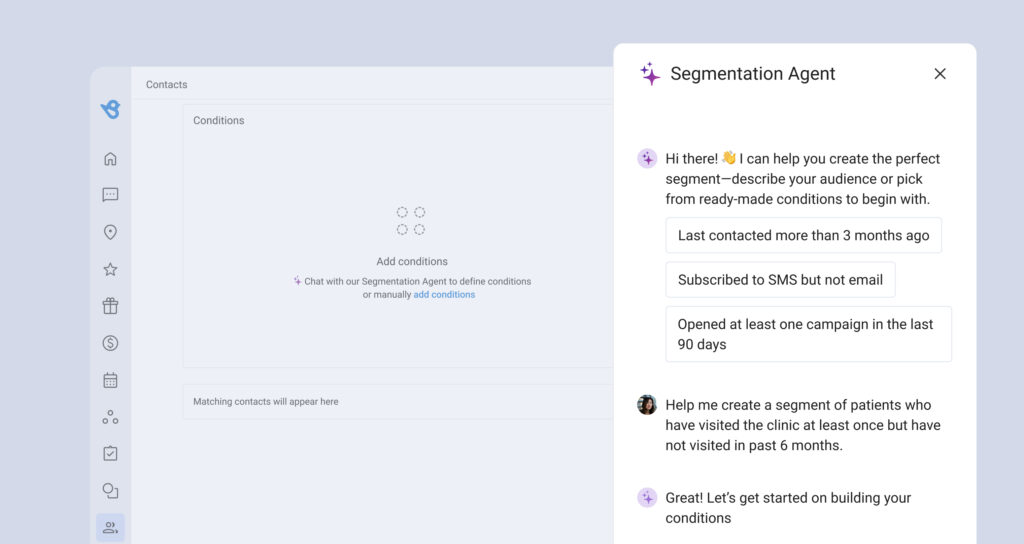
Pro tip: Birdeye addresses this challenge by bringing reviews, listings, messaging, surveys, and social signals into a unified environment. The Birdeye Contact Segmentation Agent continuously builds audiences based on real customer behavior, enabling more accurate follow-up without relying on static lists.
Lack of governance creates operational drag
Enterprise marketing automation requires shared ownership and standards. Without clear governance, teams build automations independently, using different rules, assumptions, and approval processes. Over time, this leads to duplicated workflows, conflicting actions, and reporting that leadership cannot rely on.
Instead of reducing effort, automation introduces additional layers of manual oversight as teams attempt to reconcile inconsistencies after the fact.
Speed without judgment erodes trust
Automation increases speed, but speed alone does not create good experiences. When automated actions ignore urgency, emotion, or context, customers feel processed rather than supported. This is especially damaging during complaint resolution, service recovery, or high-value interactions where trust matters most.
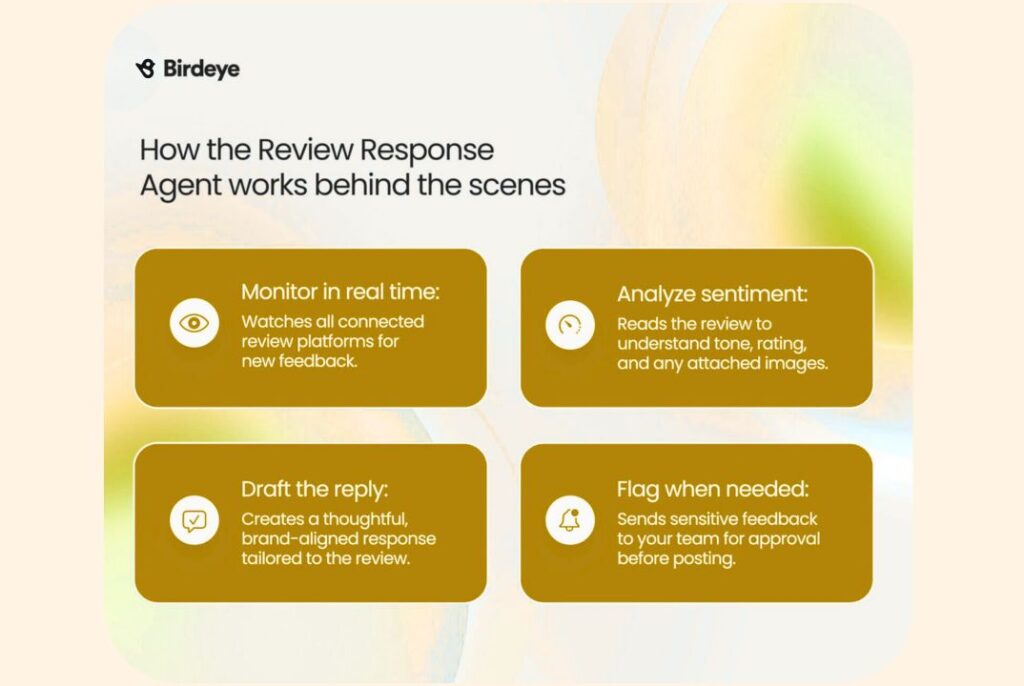
Pro tip: Birdeye maintains this balance through AI-assisted responses paired with human oversight. The Birdeye Review Response Agent drafts replies based on sentiment and urgency, while priority cues ensure sensitive issues reach the right owner before action is taken.
Compliance complexity grows with scale
As enterprise marketing automation expands across regions, managing consent, approvals, audit trails, and data accuracy becomes more difficult. When these controls are added late, organizations increase legal and reputational risk. AI-generated actions without oversight further amplify this exposure.
Effective enterprise marketing automation enforces standards by design, embedding governance into everyday workflows rather than relying on manual checks.
Common patterns that limit results
- Channel-focused execution without a unified customer view
- Independent automations built without shared rules or accountability
- Static workflows that fail to adapt to live customer signals
Together, these challenges explain why many organizations struggle to realize the full value of enterprise marketing automation, even after significant investment.
What modern enterprise marketing automation must deliver
To succeed at scale, enterprise marketing automation must operate as a connected system rather than a collection of disconnected tools. Leading organizations design automation around shared data, governed execution, and AI-driven action that supports both efficiency and trust.
From static workflows to always-on growth.
Want to see the impact of Birdeye on your business? Watch the Free Demo Now.
Build on a unified enterprise data foundation
Effective enterprise marketing automation platforms start with a single, reliable view of the customer across locations and channels. Reviews, listings, messaging, social engagement, surveys, and CRM data must flow into one model so automation reflects reality, not partial signals.
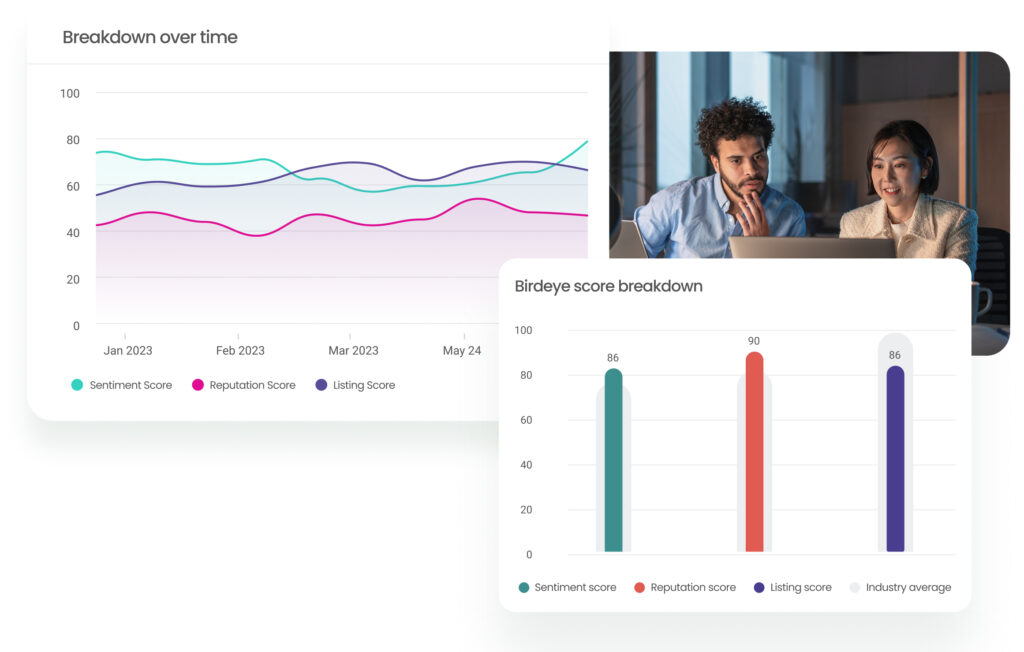
Birdeye enables this foundation by syncing customer interactions across more than 3,000 integrations. The Listings Optimization Agent keeps location data accurate across Google, Apple, Yelp, and industry directories. At the same time, Birdeye Insight AI connects sentiment shifts to calls, clicks, leads, and revenue so teams understand what drives results.
According to Birdeye State of Google Business Profile 2025, a fully verified Google Business Profiles generated 4× more website visits, along with a 12% increase in phone calls and a 10% increase in direction requests, proving that accurate, governed data isn’t operational hygiene, it’s a growth lever.
Melissa Cameron, SVP of Customer Acquisitions, National Storage Affiliates (NSA) shares:
“One of the big reasons why we decided to partner with Birdeye was to leverage Insights. Birdeye helps shed some light on reasons for churn, so we continually work towards lowering risk and increasing retention.”
Shift from rules-based workflows to AI-driven execution
Traditional marketing automation enterprise systems rely on static “if–then” logic that breaks as customer behavior changes. Modern automation uses AI to prioritize actions, adapt messaging, and guide teams toward outcomes, rather than manual rule maintenance.
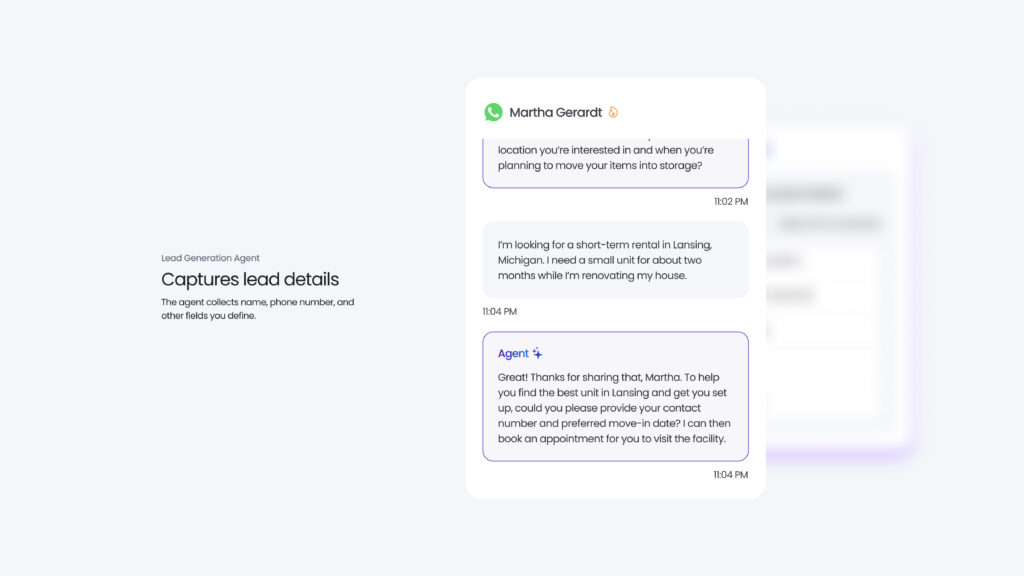
Birdeye’s AI agents support this shift. The Review Generation Agent triggers review requests at the right time, and the Birdeye Lead Generation Agent automatically captures and qualifies inbound demand. Together, these agents reduce manual effort while improving relevance.
Balance speed with trust and human oversight
Enterprise automation must move fast without sacrificing credibility. High-volume tasks benefit from automation, but sensitive moments still require human review. Systems that blend AI assistance with approval workflows protect both the brand and the customer relationship.
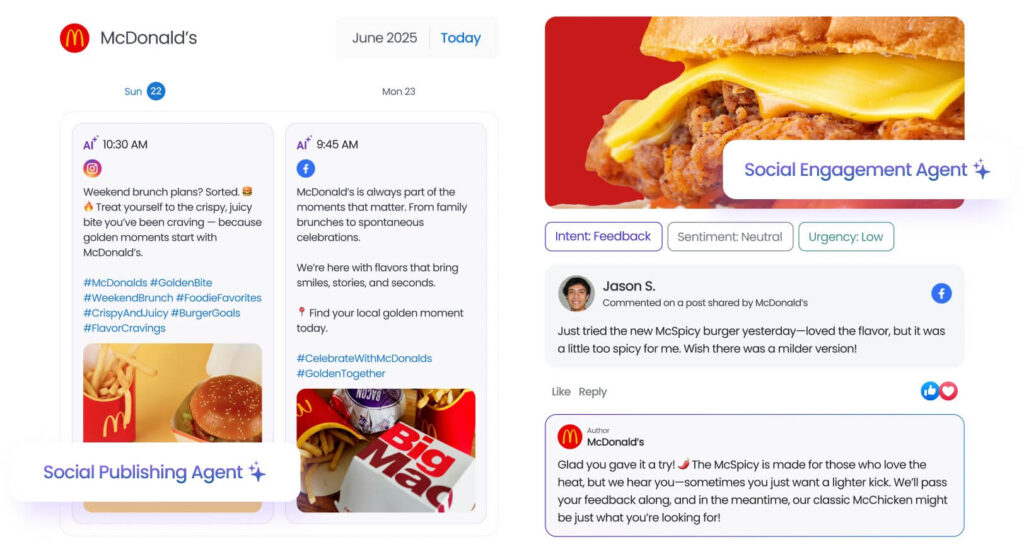
Birdeye applies this balance through role-based access, approvals, and smart routing. The Social Publishing and Engagement Agents localize approved content and surface sensitive comments to the right owner, while Birdeye Messaging AI keeps conversations moving without removing human judgment.
Embed governance and compliance into every workflow
Automation should enforce standards by design. Consent handling, audit trails, and publishing controls must be built into workflows, so distributed teams operate consistently across regions.
With enterprise governance features and centralized controls, Birdeye allows teams to scale safely. From listings updates to AI-generated responses, actions follow approved rules, protecting accuracy, compliance, and brand consistency.
Expand automation beyond campaigns into visibility and intelligence
Modern enterprise marketing automation features extend into search visibility, competitive intelligence, and continuous insight generation. Automation now supports how brands appear in AI-driven discovery and how leaders make decisions.
Birdeye Search AI shows how answer engines describe the brand, which citations they trust, and what actions improve visibility. While the Birdeye Reporting Agent explains performance changes in plain language, helping teams move from data to action faster.

Seven enterprise marketing automation tools used by large organizations
Enterprise marketing automation tools determine how effectively large organizations scale customer experience, protect brand consistency, and convert demand across locations. At enterprise scale, automation is not about running more campaigns. It is about connecting data, decisions, and execution across teams while maintaining governance, compliance, and trust.
Large organizations require enterprise marketing automation software that can handle real-time customer signals, support multi-location operations, and integrate deeply with complex technology stacks. The tools below are widely adopted because they move beyond channel-based automation and support the full scope of enterprise marketing automation, from reputation and visibility to engagement and performance measurement.
Below are the enterprise marketing automation platforms most commonly used by enterprises, starting with Birdeye.
| Tool | What is best for | Enterprise strengths | Primary gap |
| Birdeye | Multi-location customer experience automation | Unifies reviews, listings, messaging, social, surveys, search, and insights; AI agents drive action; strong governance and compliance | Not designed as a campaign-only email tool |
| Salesforce Marketing Cloud | Campaign orchestration at scale | Advanced journeys; deep Salesforce CRM integration | Limited native reputation and local visibility management |
| Adobe Marketo Engage | B2B demand generation | Lead scoring, ABM, long-cycle funnel automation | Campaign-centric; minimal CX and location data |
| HubSpot Enterprise | CRM-led automation | Unified CRM, marketing, sales, and service | Less depth for large multi-location brands |
| Braze | Real-time engagement messaging | Event-based personalization; mobile-first workflows | Focused on digital engagement, not local CX |
| SAP Emarsys | Commerce-driven personalization | AI-powered lifecycle and loyalty marketing | Requires mature data teams and the SAP stack |
| Oracle Eloqua | Complex B2B orchestration | Strong security, compliance, and controls | Longer implementation and time to value |
Birdeye: Enterprise marketing automation that keeps experience, trust, and growth aligned
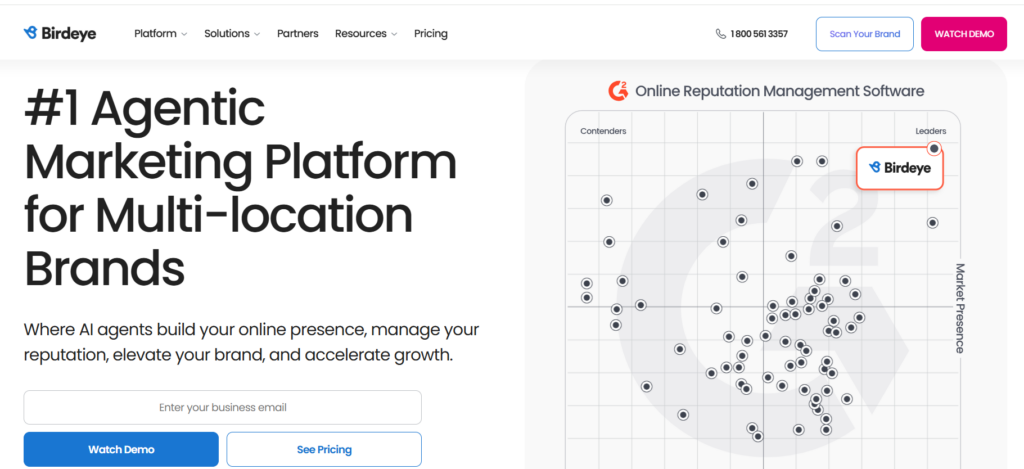
Birdeye is an enterprise marketing automation platform purpose-built for multi-location organizations that need to manage customer experience, reputation, and growth in one governed system.
- Unifies reviews, listings, messaging, social, surveys, search visibility, and insights across all locations.
- Reviews AI analyzes sentiment at scale and surfaces themes, while AI agents draft on-brand responses and send review requests at the right moment.
- Listings AI audits profiles, fixes gaps and duplicates, and pushes approved updates across Google, Apple, Yelp, and industry directories.
- Messaging AI centralizes SMS, web chat, Google, and Facebook conversations with smart routing and suggested replies.
- Surveys AI converts feedback into themes, insights, and next steps using branded templates and automated analysis.
- Competitors AI monitors share of voice, ratings, and emerging trends, with plain-language explanations of performance changes.
- Enterprise-grade governance with role-based access, approvals, audit trails, and compliance controls.
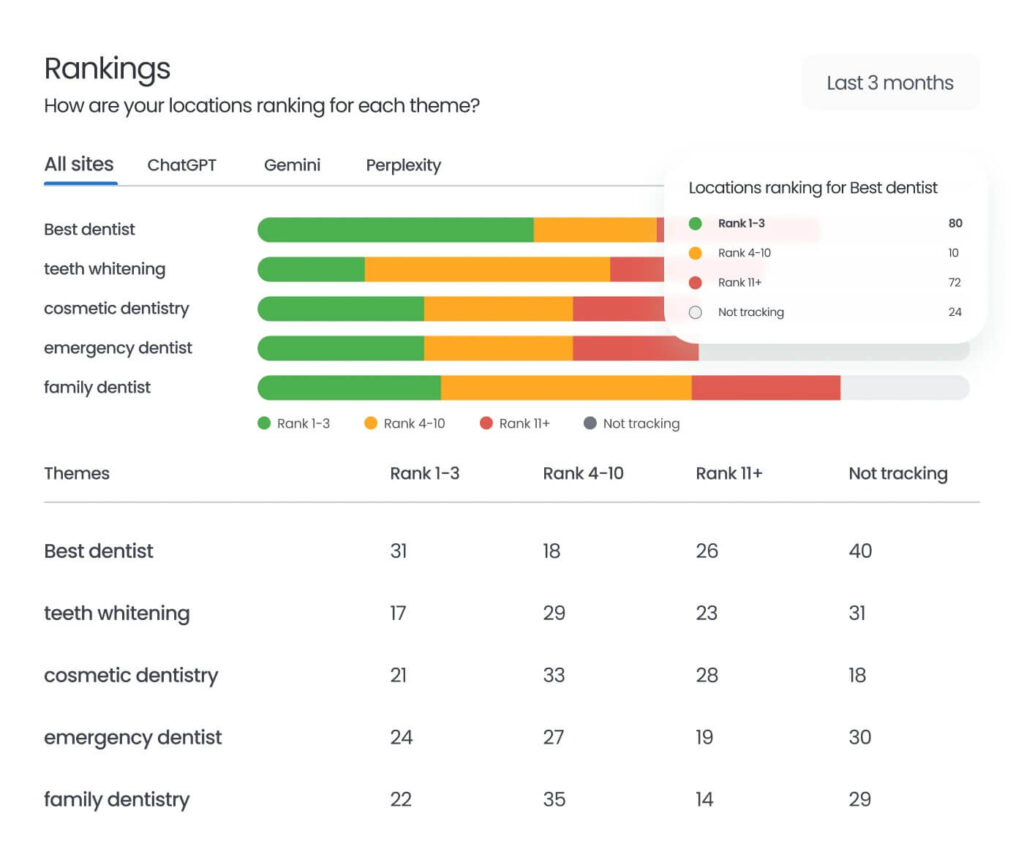
- Birdeye Search AI helps multi-location brands manage Generative Engine Optimization (GEO) by showing how AI engines like ChatGPT, Perplexity, and Gemini describe the business, which sources they trust, and which actions improve visibility in AI-driven answers.
- 3,000+ integrations with CRM, EMR, POS, ads, and analytics tools.
- Designed specifically for multi-location and franchise environments.
FAQs for enterprise marketing automation
Enterprise marketing automation is a system that connects customer data, AI-driven actions, and governed workflows across locations and teams. Unlike basic automation, it supports scale, compliance, and measurable outcomes for large organizations.
Traditional marketing automation enterprise tools focus on campaigns and workflows. Enterprise marketing automation platforms unify reputation, listings, messaging, social, and insights so automation reflects the full customer experience, not just one channel.
The key components of enterprise marketing automation include unified customer data, AI-driven execution, governance and approvals, multi-location orchestration, compliance controls, and outcome-based reporting.
Essential enterprise marketing automation features include real-time data unification, AI agents for prioritization and response, role-based access, audit trails, integrations, and support for reputation and local visibility at scale.
It ensures timely, consistent, and context-aware interactions across channels while freeing teams to focus on complex or high-trust moments. Automation improves reliability without sacrificing human judgment.
AI shifts automation from static rules to adaptive decision-making. AI agents prioritize actions, generate insights, and guide teams toward outcomes, reducing manual work and improving relevance.
The best enterprise marketing automation software supports governance, AI-driven execution, reputation management, and multi-location scale in one platform. Birdeye is designed specifically for this use case, connecting experience signals to outcomes leaders can trust.
Conclusion
Enterprise marketing automation is no longer about running more campaigns with fewer people. It has become a system for managing growth, trust, and customer experience across locations and teams. Enterprises that rely on fragmented tools and rules-based workflows struggle to keep pace with AI-driven discovery, rising customer expectations, and increasing operational complexity.
Modern enterprise marketing automation tools connect data, AI, and governance into a single operating model. This approach reduces friction, improves consistency, and gives leaders clear visibility into what drives performance. By unifying reputation, listings, messaging, social, insights, and intelligence, platforms like Birdeye help enterprises move from reactive execution to outcome-driven growth.
Explore how Birdeye brings Search AI, governance, and customer experience together to support confident, multi-location growth.

About the Author

Sudeepta Bora
Originally published




![[Feature image] The Best Marketing Platforms for Multi-Location Brands](https://birdeye.com/blog/wp-content/uploads/Feature-image-The-Best-Marketing-Platforms-for-Multi-Location-Brands-375x195.png)