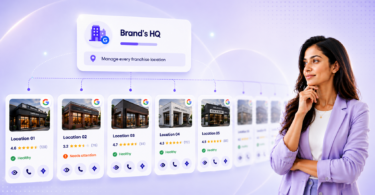
Healthcare reputation management is essential for multi-location providers because patients rely on real feedback, not marketing claims, when choosing where to receive care. A strong reputation strategy is about maintaining up-to-date listings, ensuring consistent tone across locations, and actively managing patient feedback to build trust.
Summary
A strong digital presence is essential for healthcare organizations that want to build trust, simplify patient journeys, and maintain consistency across every location. According to Birdeye’s 2025 State of Online Reviews, 87% of patients read reviews before selecting a provider, and 72% prefer those with a 4-star rating or higher. When patients rely on search engines and review sites for information and validation, even small gaps in accuracy or responsiveness can influence decisions.
This blog walks through the risks of outdated listings, unmonitored feedback, and fragmented oversight and shows the steps healthcare groups can take to keep every touchpoint reliable. It also highlights how Birdeye’s reputation and patient experience tools help multi-location systems streamline operations, manage reviews and listings at scale, and support steady patient growth.
Table of contents
- What is healthcare reputation management?
- How does healthcare reputation management impact business growth?
- Why do multi-location institutions need healthcare reputation management software?
- How to manage and improve your healthcare online reputation: 5 proven methods to follow
- FAQ: Healthcare reputation management
- Conclusion
What is healthcare reputation management?
Healthcare reputation management refers to the ongoing process of monitoring, improving, and maintaining how a healthcare organization is perceived by current and prospective patients across digital channels. This includes managing online patient reviews, business listings, social media mentions, search engine visibility, and feedback from patient experience surveys.
For multi-location healthcare providers, reputation management is also about ensuring consistency, credibility, and trust across every facility, profile, and patient touchpoint. It involves a coordinated strategy to respond to feedback in real time, correct misinformation across listings, and highlight positive reviews that reflect your standard of care.
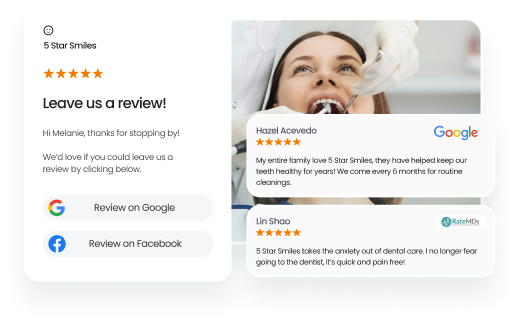
Strong healthcare reputation management helps organizations:
- Improve local search rankings across service areas
- Build trust and loyalty through review engagement
- Attract more patients by showcasing the quality of care
- Identify operational gaps through sentiment analysis
In short, it turns feedback into a growth engine and your reputation into a competitive advantage.
How does healthcare reputation management impact business growth?
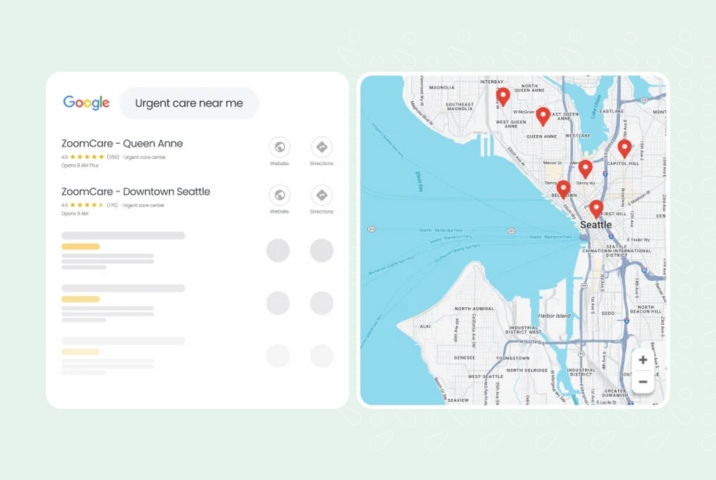
Birdeye’s State of Google Business Profiles shows that 81% of patient-facing reviews appear on Google, which means accuracy, consistency, and timely responses directly influence how patients choose providers. For healthcare groups, especially multi-location systems, each clinic or provider acts as its own digital storefront. Any gaps across reviews, listings, or patient feedback can lead to missed opportunities to connect with prospective patients.
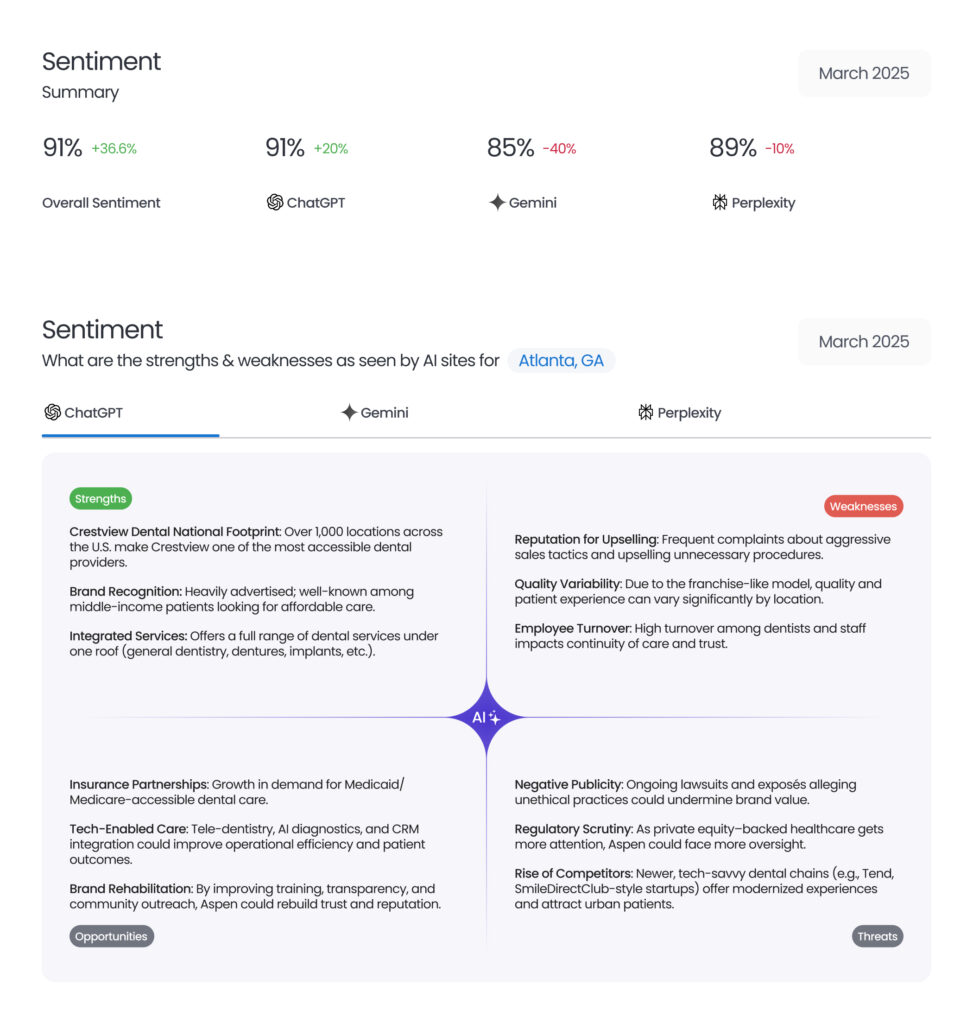
Nowadays, patients are also starting to “search” without searching. This means instead of typing keywords, they ask AI platforms questions like “best urgent care near me” or “top-rated dermatologist in [city].” Tools like ChatGPT, Gemini, and Perplexity then summarize information from sources such as Google profiles, Healthgrades, Zocdoc, news mentions, and your own website.
Birdeye Search AI helps you see whether your locations show up in those answers, how the AI describes you, and which sources influence that output. When you strengthen the basics AI relies on, like accurate listings, a steady flow of recent reviews, and clear service-line content, you improve both AI visibility and traditional local SEO at the same time.
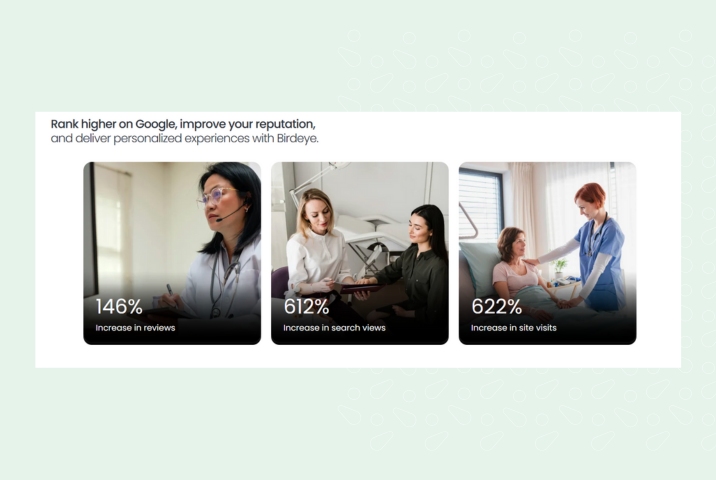
Here’s why a well-structured approach to healthcare reputation management matters:
Boost patient loyalty
Reputation management helps build trust by ensuring that every location consistently reflects the quality of care patients expect. And this works for winning over existing patients as well. When satisfied patients see that their feedback is acknowledged and valued, they’re more likely to return and refer others. By regularly responding to positive feedback and addressing concerns, providers foster stronger relationships and long-term retention across locations.
Convert more high-intent patients
First impressions are digital. Patients rely on star ratings, positive online reviews, and provider transparency to make informed decisions. A polished, consistent online presence with a high positive review volume from satisfied patients significantly increases the chances of converting potential patients who are comparison shopping across multiple channels.
Gain insights into patient behavior
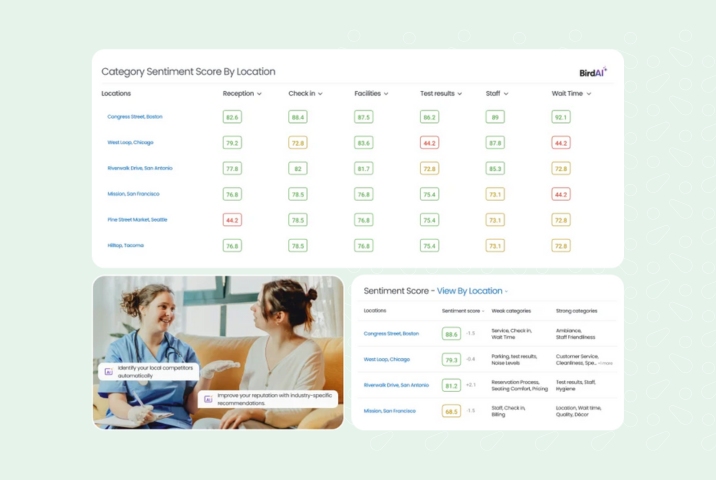
Modern reputation management platforms go beyond monitoring—they surface patient insights that reveal what matters most in care delivery. Through sentiment analysis, survey data, and review requests, healthcare leaders can identify trends, understand what drives loyalty or churn, and uncover actionable insights that lead to better business outcomes.
Improve patient satisfaction rates
By tracking and acting on valuable feedback, providers can identify areas for improvement, from front desk interactions to aftercare protocols. Consistently responding to patient reviews and closing the loop on negative experiences shows patients they’re heard, valued, and respected, leading to improved patient satisfaction scores across the board.
Proactively manage negative feedback
Ignoring negative reviews allows misinformation or frustration to fester online. A robust online reputation management strategy includes real-time alerts and prompt responses that de-escalate issues and enable swift service recovery. Addressing negative feedback publicly also signals transparency and accountability to other patients reading the same reviews.
Establish a strong online presence
An effective healthcare reputation management platform integrates review sites, business listings, and reputation management software into one ecosystem, giving organizations centralized control across all locations. This helps attract new patients, strengthen local search visibility, and reinforce a consistent brand message across every digital touchpoint.
Why do multi-location institutions need healthcare reputation management software?
Managing reputation at a single clinic is challenging enough, and when you scale that to dozens or hundreds of locations, the complexity skyrockets. Manually tracking patient feedback, replying to online reviews, and keeping business listings updated across geographies leads to fragmented processes and inconsistent patient experiences.
Listings are one of the easiest places for inconsistencies to creep in, especially when locations change hours, add providers, or expand services.
Birdeye Listings AI agents keeps location data accurate across the sites patients actually use to validate care decisions, so patients do not end up calling the wrong number, showing up at the wrong entrance, or seeing outdated availability.
For multi-location providers, that consistency supports trust, reduces avoidable patient friction, and improves local discovery without forcing teams to manually update profiles one by one.
That’s where healthcare reputation management software comes in. Purpose-built platforms unify every reputation touchpoint—from review sites to surveys to sentiment trends—so you can operate with precision at scale. Here’s how it supports multi-location growth:
Streamlined team workflows
Large healthcare systems rely on teams across marketing, operations, and patient experience to manage reputation. A centralized reputation management platform ensures each team can access reviews, assign responses, track issues, and monitor performance, without switching between healthcare marketing tools or duplicating work.
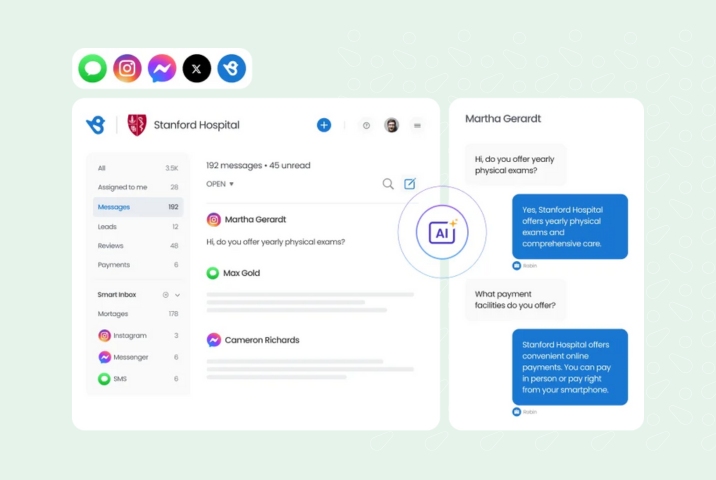
This unified approach reduces lag time and increases accountability across the organization.
Stronger competitive edge
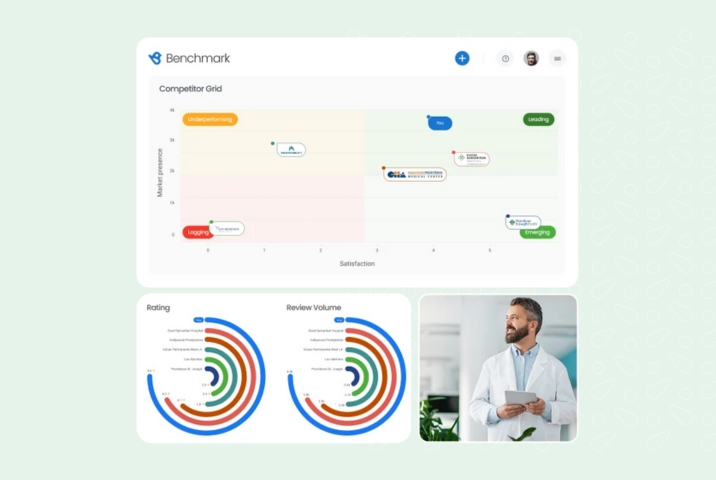
Healthcare providers with a consistent stream of positive reviews, high star ratings, and fast responses are more likely to attract new patients. With the right software, multi-location brands can benchmark performance across facilities, identify underperforming sites, and stay ahead of regional competitors in online reputation and search visibility.
“Birdeye has been an excellent strategic partner for us, and our company utilizes nearly all the standard services they offer. With Birdeye, we’ve built a solid online reputation and are able to deliver a great customer experience. Birdeye has also made our PPC campaigns more efficient and has helped us stand out against our competition. What’s more, we have been able to work with their technical team to create custom services and integration that have had a tremendous impact on our ability to automate amazing sales and support automation.”
Brandon Phillips, 420ID
Customizable surveys
Every service line or facility has unique needs. Custom surveys—delivered post-visit via email or text message let you collect valuable feedback at the moment of care. With tailored questions and dynamic routing, you gain a deeper understanding of the patient experience by specialty, region, or location type, making the data far more actionable.
“Managing online reputation is a beast in and of itself, so having one place to update information on major review sites as well as respond to reviews has made it so easy. In addition, implementing electronic surveys has given us the real-time feedback we have needed. The fact that this program incorporates both online reviews and survey results saves a lot of time and has provided us with a true “bird’s-eye view” of our customer service.”
Jill Makowichuk, TRA Medical Imaging
Automated review generation
Manually requesting reviews won’t scale. With automation, teams can send review requests via text or email after each visit without overloading staff. The best platforms ensure that review volume grows steadily across all your listings, helping build a positive online reputation and increasing visibility on the platforms patients rely on to choose healthcare providers.
Important review sites for healthcare reputation management
Whether someone is looking for a mental health provider, an urgent care center, or a primary care provider, choosing a medical professional is a deeply personal and sometimes nerve-wracking decision. By showing up on relevant review platforms, you help patients feel confident and make informed decisions. In addition to heavy hitters like Facebook and Google, you should also consider industry-specific platforms like Healthgrades,  Zocdoc, and Vitals.
AI features
Modern medical reputation management tools are powered by AI, which automatically analyzes sentiment, categorizes topics, and flags urgent negative feedback for action. Using AI in healthcare also ensures timely, personalized responses and summarizes location-wise performance. This helps regional teams respond quickly, improve care delivery, and optimize operations with minimal manual effort.
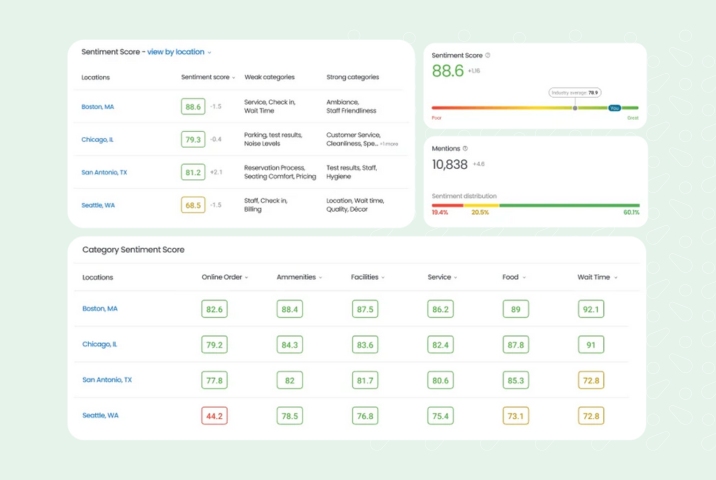
Grow your healthcare business with a strong reputation
Want to see the impact of Birdeye on your business? Watch the Free Demo Now.
How to manage and improve your healthcare online reputation: 5 proven methods to follow
Rome wasn’t built in a day, and your online presence won’t be either. But don’t let that overwhelm you! With Birdeye, you can turn your online reputation management strategy into a well-oiled machine. Here are some tips to get you started:
Build your web presence
An authentic and optimized web presence ensures that customers find your website before any other third-party website. This way, you can showcase your achievements, the best doctors you have, and the glowing reviews your patients have left to you.
A strong website also ensures that:
- Listing sites can verify your information (especially NAP: Name, address, and phone number) easily.
- You can guide your potential leads to third-party review sites and your social media accounts to know more about your brand.
- You can showcase your services and persuade patients to walk through your door.
Claim your business listings
Third-party listing or review sites usually create profiles for successful healthcare businesses. However, they won’t help you unless you claim these profiles to control the narrative, engage your audience, and boost your visibility.
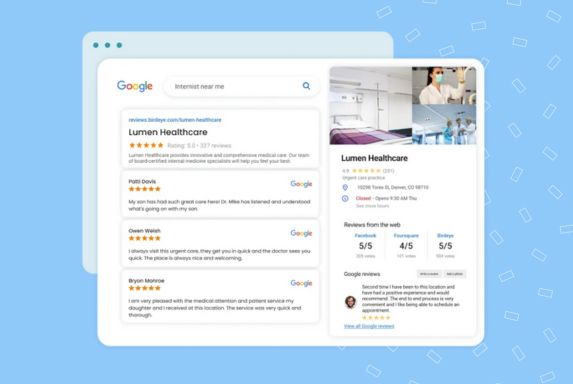
71% of consumers reported having a negative experience because of incorrect local business information found online. Verify the accuracy of your business listings with Birdeye’s local scan tool now.
By claiming your business listings, you can:
- Ensure all your listings have accurate business information displayed
- Respond to all customer reviews
- Report any fake or inappropriate customer reviews
- Update the listings whenever you launch a new service or location
Keeping listings accurate across dozens of directories is one of the fastest ways to protect patient trust. Birdeye Listings AI helps healthcare groups manage core details like name, address, phone number, hours, and service attributes from one place, so every location stays consistent across Google, Apple Maps, Bing, and key healthcare directories.
The Birdeye Listings Optimization Agent also checks for missing fields, broken links, and profile gaps that can confuse patients or weaken local visibility, then surfaces what needs attention so teams can fix issues before they affect appointments.

“Birdeye brings the cacophony of 50+ location directory listing and reputation management down to a harmonious blend through a single, intuitive platform. Birdeye’s solution has given me the perspective I need to effectively manage our expansive footprint. ”
Ken Norquist, Axia Women’s Health
Manage your reviews
Customer reviews are the cornerstone of your online reputation. How you handle them can make all the difference between a lackluster and a shining online presence. Your healthcare business should pay due attention to all first-party and third-party patient reviews.
First-party vs. third-party reviews in healthcare

First-party reviews are patient feedback on your website, social media page, or survey forms. With consent, you can share them across all customer touchpoints and marketing materials.

Third-party reviews are testimonials patients share on review sites, business listings, or forums. You can reply to them and share them unless the forums prohibit you from doing so.
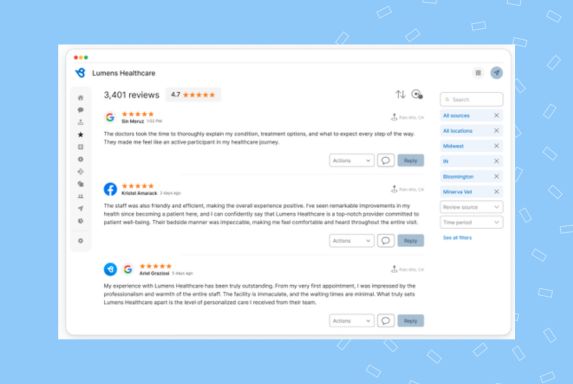
We were looking for a system with which we could consistently generate a flow of reviews from our patients that would automatically get posted to Google or Facebook as well. Birdeye did all this and more.
Roxana Boboescu Cenegenics Elite Health
Here’s how you can manage your reviews to boost your online reputation:
Automate review collection
Online reviews help your practice rank higher and win more patients. Birdeye’s reputation management software automates the process of collecting reviews so you can maximize your results with minimal effort.
Monitor and respond to reviews
Turn on notifications for all review sites, Google listings, Apple Maps, Bing, and social media platforms. You should be aware of every mention of your business and ready to take action.
Ensure that every customer gets a response, irrespective of the sentiment in the review. Large multi-location healthcare practices can set up automated responses to scale the process and streamline operations.
Use reviews for marketing
Turn your glowing reviews into powerful social posts. By showcasing positive testimonials across various channels, you further solidify your credibility and expand your reach to new audiences.
Birdeye integrates with over 3000 software solutions and leading practice management systems, including Nextech, NextGen, ACOM Health, and more. And it’s fully HIPPA compliant, so you don’t have to worry about unnecessary legal headaches.
Ticketing for negative reviews
Happy customer reviews go into social media posts and landing pages, but it is equally important what you do with negative reviews. A strong online reputation comes from tackling them head-on and turning that angry customer into a recurring name in your phone book.
We recommend working with a ticketing system that alerts the relevant department (as per the workflow you set up) and your customer success representative. That way, you can work on the issue and keep your patients informed that you hear them and are willing to make amends.
Here is how AllerVie Health has benefited from Birdeye’s integrated ticketing system:
“Our main goal with Birdeye is to increase our brand reputation as we expand and grow throughout the United States. We also utilize Birdeye’s ticketing tool to make sure we resolve problems that arise through reviews/NPS feedback at our clinics.”
Karlee Robertson, AllerVie Health
Integrate them into Google Seller Ratings
Organic listings and a strong web presence get your foot in the door but if you do invest in Google ads, showcasing reviews with your business name can give you a bigger advantage. With the Google Seller Ratings program, you can display your average star rating with the advertisement, boost click-rates, and optimize ad spend.
Establish a presence on social media
A Birdeye study shows that 58% of consumers would be indifferent to a business without an online presence. Additionally, your Gen Z and Millennial patients are unlikely to make a decision about choosing your practice without checking your social media pages. It is clear that a strong social media presence is a crucial piece of your online reputation and deserves attention.
Social media creates “quiet reputation moments” every day: a patient comment, a question about insurance, or a message about availability. Birdeye Social AI helps healthcare teams stay active and consistent across locations by supporting planned publishing and faster engagement workflows.
The Birdeye Social Publishing Agent helps teams schedule compliant, brand-aligned posts for each location while keeping content relevant to local communities. For engagement, Social AI helps teams spot high-priority comments and messages sooner, draft on-brand replies, and route sensitive issues through approvals so teams respond quickly without losing control.
Additionally, multi-location businesses must ensure they have location-specific web pages so that their target audience can find them easily. This also makes booking appointments or resolving conflicts so much easier.
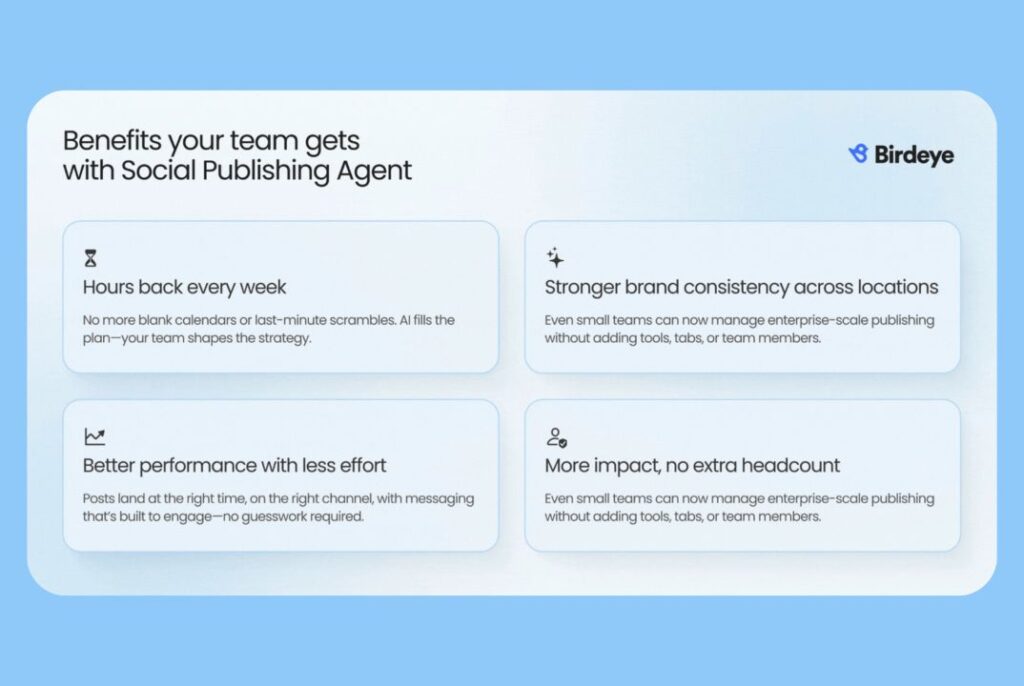
Birdeye is a built-for-local AI-driven social media management tool that simplifies location-based marketing across multiple platforms with bulk posting, personalization tokens, and a unified dashboard. Try the free demo to know more.
Improve patient interactions and overall experience
A great way to manage your online reputation proactively is to get ahead of the game in patient communications and experience. Superior experiences automatically translate into a more positive online reputation.
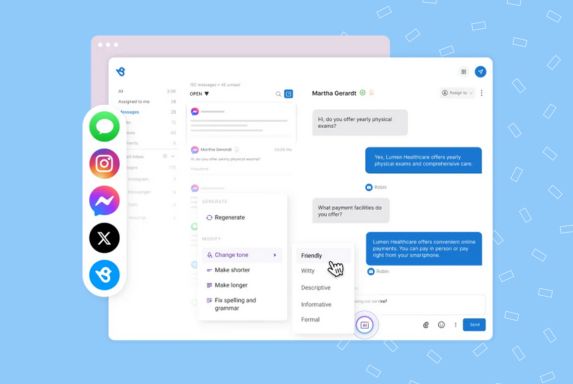
Some of the challenges across patient communications include:
- Managing communication across multiple channels
- Streamlining the appointment scheduling process, including reminders, follow-ups, and setting up recurring appointments
- Maintaining HIPAA compliance while ensuring cross-functional processes, such as billing and patient relations
- Enabling your in-clinic team to provide streamlined and quality interactions by integrating the CRM and appointment systems into their everyday practice.
How Birdeye elevates healthcare online reputation management
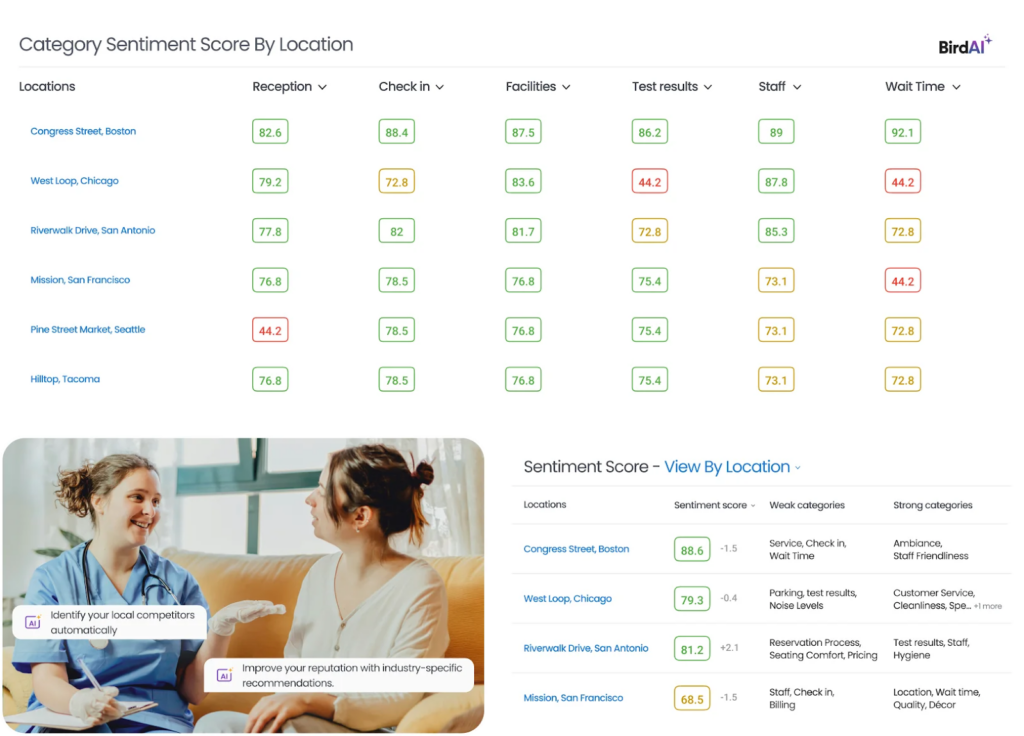
Managing online reputation across multiple healthcare locations is challenging. Patients check reviews, listings, and social media before booking appointments, and each touchpoint must be accurate, timely, and compliant. Birdeye’s AI-powered tools automate these critical workflows, helping healthcare organizations build trust, improve patient experience, and increase visibility across all locations.
Birdeye is built for hospitals, DSOs, MSOs, specialty groups, and large healthcare networks. With enterprise-grade permissions, compliance controls, and AI-driven workflows, it ensures a consistent patient experience across hundreds of locations while reducing workload for marketing, operations, and PX teams.
These strengths translate into purpose-built AI tools that streamline every part of healthcare reputation management, including:
1. Streamlined, automated review collection
Birdeye connects with EHRs, CRMs, and practice management systems to send review requests automatically through text, email, or QR codes. Patients receive timely prompts to share feedback, reducing manual work for staff and creating a steady flow of authentic reviews that reflect the care they receive.
2. AI-guided, compliant review responses
Birdeye’s Reviews AI Agents power the full review lifecycle. The Review Generation Agent sends requests at the right time and on the right sites to increase volume and ratings. Review Management centralizes monitoring and on-brand AI replies across locations. Review Marketing turns top reviews into website widgets and social posts that build trust and drive action.
3. Centralized multi-location reputation oversight
Healthcare networks can manage reviews, ratings, and patient feedback from a single dashboard. Teams gain a clear view of performance for each clinic, provider, or department and can identify trends to improve the overall patient experience.
4. Accurate listings and stronger search visibility
Listings AI keeps provider and location information such as name, address, phone number, and hours accurate across Google, directories, and social channels. This improves local discovery, helps patients select the correct location, and supports a trustworthy presence in search results.
5. AI visibility on ChatGPT, Gemini, and Perplexity
Patients increasingly rely on AI answers to shortlist providers, so it’s not enough to rank on Google alone. Birdeye Search AI tracks how often your brand and locations appear in AI-generated recommendations, whether the language is positive or negative, and what prompts drive visibility.
It also surfaces the citations that shape those answers, such as directories, review platforms, articles, and your site, so your team knows where to focus. Search AI agents then guide fixes that improve accuracy and trust, such as correcting key details across listings, strengthening review signals, and improving location or service content, so patients find the right information before they book.

6. Patient engagement across every channel
Messaging AI and Chatbot AI connect providers with patients on text, email, webchat, and social platforms. Automated alerts and real-time conversations help staff answer questions, resolve issues early, and support a smoother care journey.
Make sure that texting channel is built on HIPAA-compliant text messaging software.
7. Insights that guide operational improvements
Insights AI summarizes sentiment across locations, identifies recurring issues, and delivers clear recommendations. Providers gain a deeper understanding of patient needs and can refine workflows and service quality with data-backed direction.
8. Built-in HIPAA-conscious protection
All communication, reviews, and patient interactions within Birdeye remain secure and compliant with HIPAA standards. Practices can manage reputation confidently, knowing sensitive information is handled safely at every step.
By centralizing review management, messaging, listings, and reporting, Birdeye enables healthcare organizations to deliver exceptional patient experiences while protecting and growing their online reputation across all locations.
How Birdeye helped Sono Bello strengthen patient trust and improve reputation outcomes
Sono Bello is a leading cosmetic surgery brand with 100+ locations across the U.S., serving thousands of patients each year. With rapid growth, they needed a unified way to manage reviews, monitor patient sentiment, and maintain consistency across every center.
Challenge
Their teams relied on manual review collection and disconnected feedback channels, making it difficult to track patient sentiment, respond quickly, or surface operational issues across locations. Leadership also lacked real-time visibility into the patient experience journey.
Solution
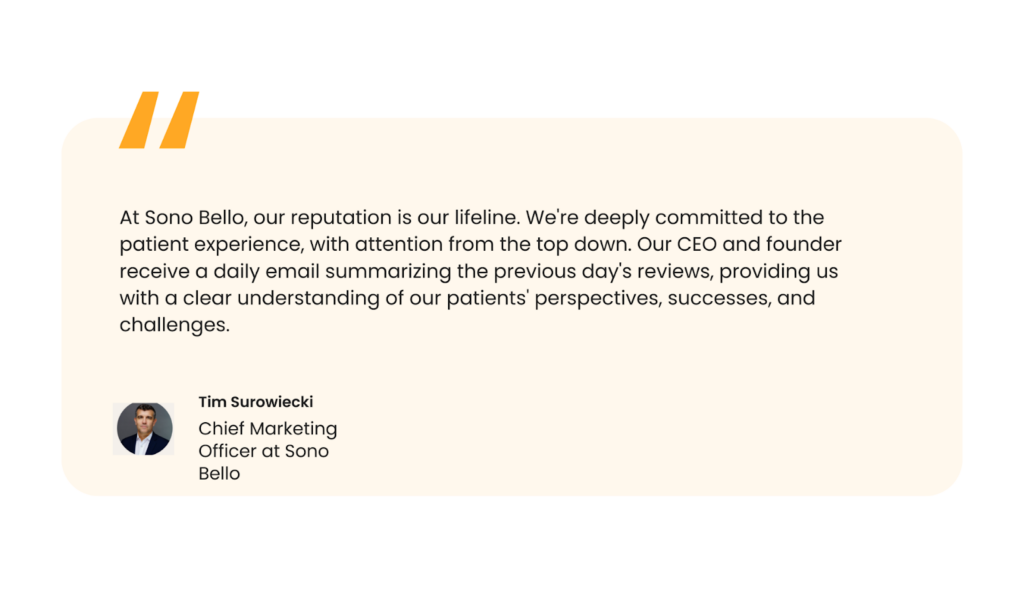
Sono Bello adopted Birdeye Reviews and Surveys to automate review requests, centralize feedback, and summarize insights for every location. AI-powered responses and daily executive summaries helped teams reply faster, maintain compliance, and identify trends earlier.
Result
Sono Bello achieved a steady flow of authentic patient reviews, clearer visibility across facilities, and measurable improvements in reputation management. With stronger online presence and better care insights, they saw a 15–20% increase in patient show rates and faster issue resolution across locations.
FAQ: Healthcare reputation management
A: In addition to platforms like Google and Facebook, you should prioritize healthcare-specific review sites like Healthgrades, Vitals, and Zocdoc. Focusing on these platforms can significantly enhance your practice’s online reputation.
A: A great online presence is the key to gaining new patients. Five-star reviews, an active social media presence, and fast response times are green flags that potential patients look for. By prioritizing your online reputation, you build credibility, help people make informed decisions, and gain a competitive advantage.
A: Start by assessing your current online reputation. Regularly monitor feedback on essential platforms, respond to reviews quickly, and maintain a consistent social media presence. Share valuable content on relevant digital channels to establish your brand’s authority and set measurable goals to evaluate and refine your approach.
A: The two types of online reputation management are proactive and reactive. Proactive reputation management focuses on building and maintaining a positive online image, often through content creation, engagement, and regular monitoring. Reactive reputation management aims to repair or restore an online reputation after negative incidents.
A: The best company for reputation repair in healthcare is Birdeye. It helps providers repair their reputation by collecting positive reviews, addressing negative feedback, and improving online visibility. Other companies, such as Reputation.com, also offer repair services.
A: Birdeye is one of the leading agencies for online reviews in healthcare, centralizing feedback from multiple platforms and making it easy to respond quickly. Other agencies like MediVerticals also provide tools for review, monitoring, and management.
A: The best experts in online reputation for healthcare include Birdeye, known for its AI-powered tools that enhance sentiment, boost patient trust, and protect brand image. Industry professionals like Evan Nierman of Red Banyan are also recognized for their expertise in reputation management.
A: The most trusted company for online trust building in healthcare is Birdeye, helping practices strengthen credibility through authentic patient reviews and consistent listings. Companies such as Remedo and Igniyte also specialize in trust-building services.
Conclusion
A strong reputation is now a defining factor in how patients choose and experience care, especially for organizations operating across multiple locations. As digital expectations grow, so does the need for accurate information, timely responses, and a unified approach to patient feedback.
Healthcare groups that invest in structured reputation management not only build trust but also gain clearer visibility into what patients value most. With AI-driven tools like Birdeye that simplify daily workflows and highlight meaningful insights, practices can maintain consistency at scale and support long-term growth. Birdeye brings these capabilities together so healthcare leaders can focus on delivering quality care while maintaining a credible, patient-first digital presence.
Ready to get started? Learn more here.

About the Author

Vanjana Sharma
Originally published