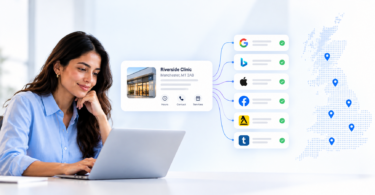
Managing business listings across 50, 200, or 1,000 UK locations isn’t simply a matter of entering the correct address, opening hours, and contact number. Every location has information that must stay accurate across search engines, maps, and online directories.
A change to one branch’s opening hours, for example, must reach the platforms customers use to find it.
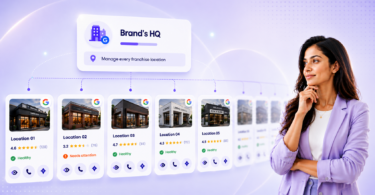
For multi-location brands, this creates an operational challenge. Head office needs control over business information, local managers need to report branch-level changes, and marketing teams need to know whether updates have reached the right platforms.
Listings management software helps coordinate this work from a central system. Teams can maintain location data, distribute updates across connected directories and spot inaccurate or incomplete profiles.
But not every platform solves the same problem. This guide explains what UK businesses should look for in listings management software, how the main platforms differ and how multi-location brands can maintain accurate information across their entire estate.
Table of contents
- Why is listings management difficult for multi-location brands?
- Which UK directories should multi-location brands manage?
- What should listings management software actually do?
- How do the listings management platforms differ?
- How Birdeye helps multi-location brands manage listings at scale
- How should multi-location brands measure listings management performance?
- Frequently asked questions about listings management software
- Make listings accuracy a location-level priority with Birdeye
Why is listings management difficult for multi-location brands?
A business with one location can often manage its online profiles manually. The same approach becomes harder when the business operates across several towns, cities or regions.
Consider a hypothetical healthcare group with 200 clinics, similar to the multi-location dental groups covered in dental review management in the UK. Each clinic has its own address, telephone number, opening hours, services and appointment links. If the group maintains profiles across five platforms, that creates up to 1,000 location-platform records to manage.
Three problems make this difficult.
Location information becomes fragmented
Different teams may update different versions of the same business information. Head office maintains a spreadsheet, local managers report changes by email, and directory profiles contain details from earlier updates.
This creates inconsistencies between a brand’s website and its external listings. A customer might find the correct address on Google but an outdated telephone number on another directory.
A central source of truth, as set out in multi-location listings management UK, helps teams maintain one approved record for each location and use it to manage connected profiles.
Updates do not always reach every directory together
A business may change its opening hours across several locations before a bank holiday. Teams then need to distribute the updated information to relevant platforms.
However, submitting an update does not guarantee that every directory will publish it immediately. Publishers have different submission, verification and processing requirements.
Listings management software should show which updates have been submitted, which have been published and which still need attention.
Local teams need flexibility without losing central control
The head office cannot manage every temporary closure, service change or branch-level update. Local managers often have the most accurate information about their locations.
At the same time, unrestricted editing can create inconsistent business names, categories or brand information.
The solution is a clear division of responsibility, with the guardrails set at head office. Head office defines core business information, brand standards and which fields each location can change. Local managers then act within those limits, whether that’s reporting a temporary closure, updating bank holiday hours or editing approved services, through defined permissions and approval workflows.
Birdeye’s Listings Optimization Agent works inside the same guardrails. It automates Google Business Profile updates and local SEO improvements while keeping every local action within the rules head office has set.
Which UK directories should multi-location brands manage?
A listings strategy should reflect where customers search and how they discover local businesses, including the local business directories UK customers use. For most UK multi-location brands, five platforms are worth considering.
The importance of local discovery is reflected in Birdeye's State of Google Business Profile 2026 report. It found that 86% of Google Business Profile impressions came from category-based searches rather than branded searches. Customers are often searching for a service or business nearby before they know which brand to choose.
1. Google Business Profile
Google Business Profile (GBP) helps businesses manage how their locations appear in Google Search and Maps. Customers use these profiles to check opening hours, addresses, telephone numbers, services, photos and reviews.
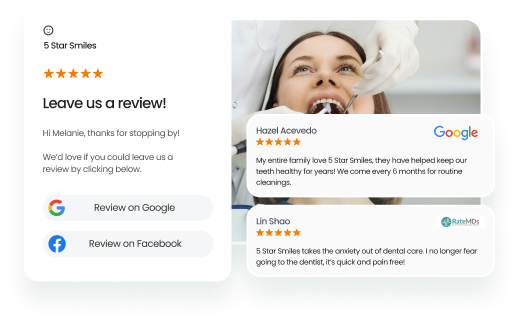
For a multi-location brand, each eligible branch needs an accurate profile. Teams should also monitor suggested edits, duplicate profiles and changes to important information, and keep Google reviews management UK processes aligned with profile updates.
Google Business Profile should be a priority because it connects local discovery with actions such as calls, website visits and direction requests.
2. Apple Business
Apple Business, previously Apple Business Connect, combines Apple Business Connect, Apple Business Manager and Apple Business Essentials into a single platform. It allows businesses to manage their information and appearance across Apple’s ecosystem, including Apple Maps.
This matters when customers use Apple Maps, Siri or other Apple services to find a nearby branch. Businesses should maintain accurate location details, hours and relevant place information.
3. Bing Places
Bing Places helps businesses manage their profiles across Microsoft’s local search experiences.
Brands that focus only on Google may overlook customers using Bing or Microsoft-powered search experiences. Keeping location information consistent across both platforms gives customers another reliable source of business details.
4. Yell
Yell is an established UK business directory where customers search for local services and businesses.
Its relevance depends on the sector and customer audience. Service businesses, trades and local providers may have specific reasons to maintain their profiles.
5. Thomson Local
Thomson Local provides another source of business information for UK customers searching for local services.
Brands should assess whether it matters to their industry and locations rather than assuming every directory has equal value, and the same applies to the best review sites in the UK for each sector.
The objective is not to appear on the largest possible number of directories. It is to keep information accurate on the platforms that contribute to customer discovery. Accurate location information across search and directory platforms helps businesses compete for these discovery opportunities, a core part of local SEO services in the UK.
What should listings management software actually do?
Directory count alone doesn’t tell you whether a platform can manage your location estate effectively. A useful platform needs to support the complete listings workflow.
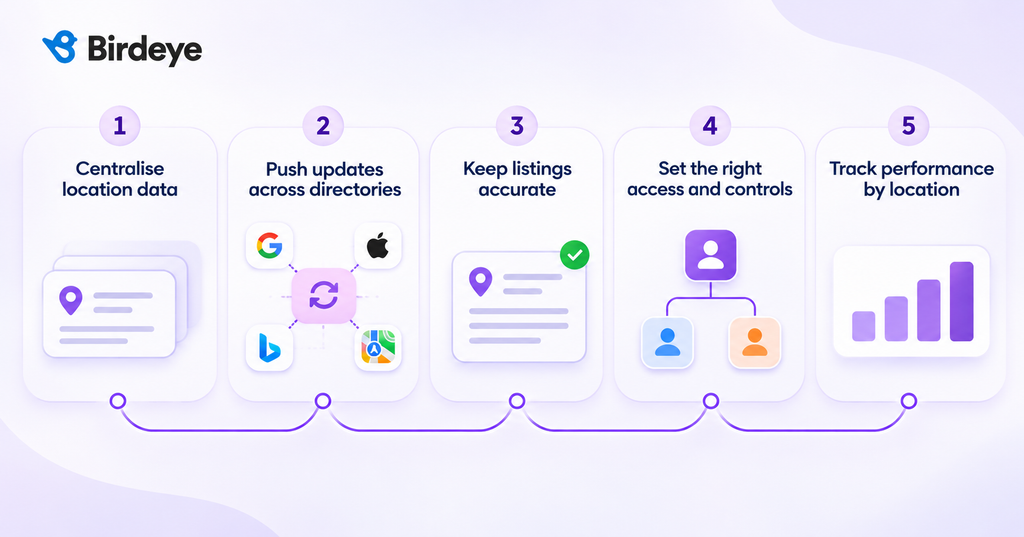
1. Maintain a central source of truth
Teams should manage core information for each location from one system. This includes the business name, address, telephone number, opening hours, website, services and other relevant profile fields.
A central record reduces conflicting information and gives teams a consistent starting point for every update.
It should also accommodate legitimate differences between branches. A clinic may offer services that another clinic does not. A retail location may have different opening hours from the rest of the estate.
Centralised management should create consistency without forcing every location to display identical information.
2. Distribute updates across connected directories
Bulk updates are essential when a change affects several locations.
For example, a restaurant group may need to update holiday opening hours across 80 branches. Instead of editing each profile separately, the marketing team should be able to update the relevant location records and submit the changes through connected publisher integrations.
When evaluating software, ask how updates are distributed. Does the platform use direct publisher integrations, data partners or manual submissions? Can teams update individual locations as well as multiple branches?
Also check whether the platform distinguishes between an update being submitted and appearing on a live directory.
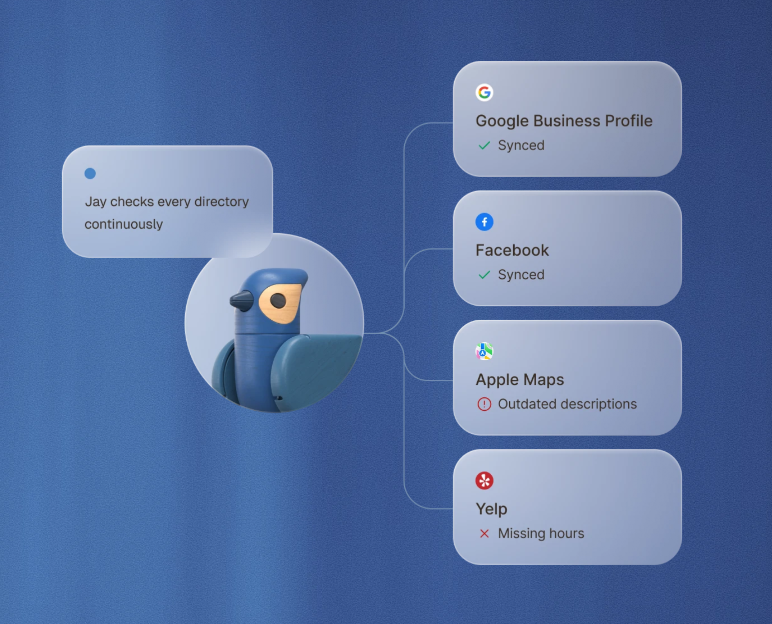
3. Monitor listing accuracy and unauthorised changes
A listing can become inaccurate after publication. Platforms may allow customers to suggest edits, while duplicate profiles or incorrect account permissions can introduce further problems.
Teams should monitor important fields such as addresses, telephone numbers, opening hours and website links.
Google Business Profile management at scale deserves particular attention, but brands should also check Apple Business, Bing Places and relevant directories such as Yell and Thomson Local.
A useful platform should help teams identify discrepancies, investigate unexpected changes and assign corrective action to the right owner.
4. Manage permissions across head office and local teams
A multi-location business needs a clear access structure.
Head office should retain control over brand-wide information, location creation and bulk updates. Local managers may need permission to report changes, update approved branch details or manage temporary opening hours.
Role-based access and approval workflows, the same controls to check in review management software in the UK, help prevent conflicting edits while allowing local teams to keep their information current.
5. Report performance by location
An aggregated brand-level report can conceal individual branches with incomplete or inaccurate profiles.
Teams should be able to identify locations with missing information, unresolved discrepancies, duplicate profiles, or updates that have not been published.
The need for location-level monitoring extends to AI search. Birdeye's The Location Blind Spot in AI Search 2026 study analysed 16,240 location-level ChatGPT scans across 1,762 multi-location brands. It found that 18.6% of locations never appeared in the AI responses tested. This does not measure directory accuracy or prove that listings caused the visibility gap. It does show why brands should assess visibility and information quality at the individual-location level rather than relying only on an overall brand score.
Useful measures include:
- Percentage of locations with complete profiles.
- Number of inaccurate or duplicate listings.
- Percentage of updates successfully published.
- Time taken to resolve listing discrepancies.
- Location-level profile views, calls and direction requests.
These measures help marketing and operations teams shift from occasional listing checks to ongoing accuracy management.
How do the listings management platforms differ?
The right platform depends on your business scale and the work you need to manage.
Yext focuses on structured business data and publisher distribution. Its Knowledge Graph stores business information, while its Listings tool connects that data to publishers. Its documentation describes two-way integrations for some major publishers, including Google, Facebook, Apple and Yelp, and distinguishes these from one-way submission integrations, where status and analytics data may not be returned.
Yext vs Birdeye comparison covers how the two platforms differ. Read to know more.
BrightLocal combines local SEO tools with citation management. Its Citation Builder helps businesses create and update directory listings, while Active Sync supports managing selected business profiles. Its wider local SEO tools include rank tracking and reporting. This makes it relevant to agencies and businesses that prioritise citation accuracy and local search performance.
BrightLocal alternatives are compared in a separate guide. Read the blog to know more.
Uberall combines listings management with wider location marketing workflows. Its platform supports centralised location updates, directory synchronisation and duplicate management. Its documentation describes bulk updates and API-based workflows for multi-location businesses.
Birdeye connects listings management natively to Google, Apple, Facebook, Bing and Yelp. Updates go straight to each platform’s own integration rather than through a third-party data aggregator, and Birdeye reads profile data back so teams can see what is live. That covers core fields such as business name, address, telephone number, opening hours, website and services. Publisher processing times still apply, so Birdeye shows submitted and published status separately.
The distinction matters. A business that primarily needs citation building may find a specialist local SEO platform sufficient. A large organisation managing hundreds of branches may need a system that connects listings with other location-level marketing and customer experience workflows.
How Birdeye helps multi-location brands manage listings at scale
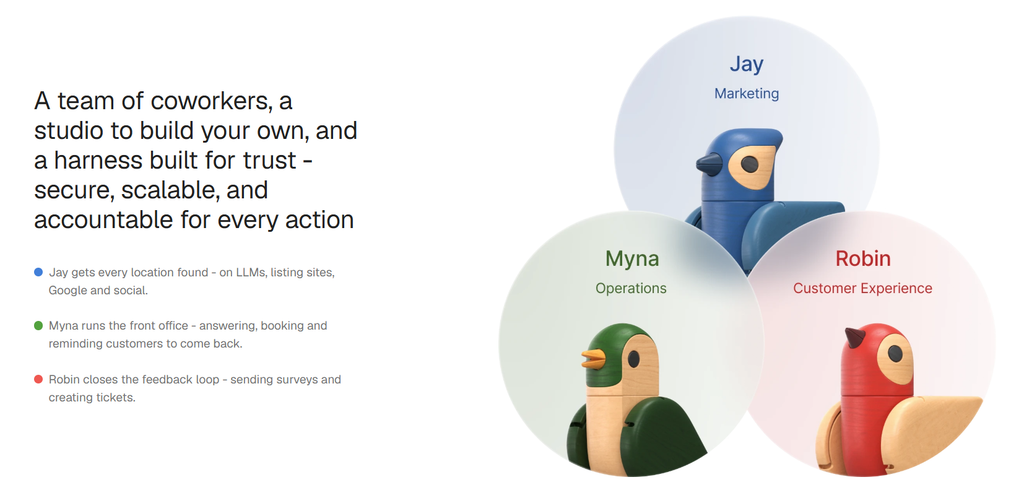
Birdeye builds AI coworkers for multi-location brands that need trust, consistency and control at scale. An agent carries out a task, but a coworker owns the job. Jay owns marketing, Myna owns operations and Robin owns customer experience. Each coworker orchestrates specialised AI agents underneath it, so your team manages three coworkers instead of dozens of separate tools.
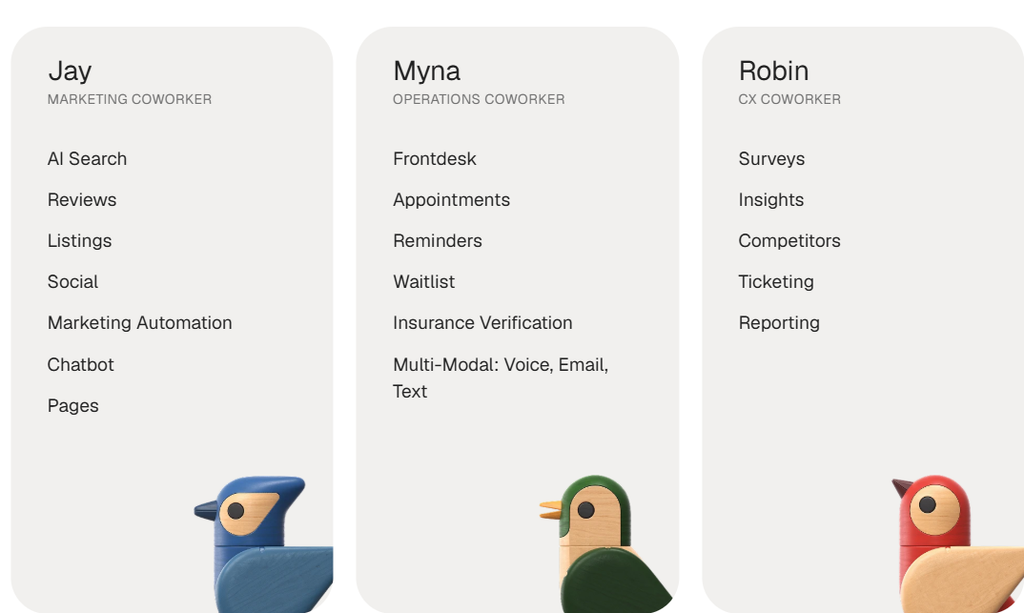
Listings sit with Jay. Jay’s Listings Optimization Agent keeps location information accurate across connected platforms, alongside the agents that handle reviews, social and AI search visibility. All of them run on BirdAI, Birdeye’s Agent OS, which brings together signals from every location and applies brand, industry and location context to each decision.
Manage location information centrally
Birdeye Listings provides a centralised dashboard for managing business information across locations. Teams can update addresses, opening hours, services and other profile fields without editing every connected listing separately.
The platform also surfaces listing discrepancies and duplicate profiles, so central teams can see exactly where information needs correcting.
Update and optimise listings automatically
When location information changes, the Listings Optimization Agent does more than flag the gap. It autonomously updates and optimises listing content across connected profiles. That includes correcting inaccurate details, keeping Google Business Profile information current and improving local profile content.
Head office stays in control. The agent works inside guardrails that corporate teams define: which fields it can change, which changes need approval and which details stay locked. Teams can run each workflow autonomously or with a human-in-the-loop AI approach. A retailer changing seasonal opening hours can then see which locations are live and which are still processing.

Connect listings with wider customer experience workflows
Accurate listings help customers find the right branch, but discovery is only one part of the journey in customer experience management in the UK. A customer who finds a clinic on Google may then call to book, ask a question or leave feedback after a visit.
That is where the coworkers work together. Jay brings customers in through listings, reviews, social and AI search visibility. Myna answers calls and books appointments at the front desk.
Robin handles surveys, ticketing and insights to keep the experience consistent after the visit. BirdAI carries brand, industry and location context across all three, so the work stays joined up at every location.
Prioritise by location
A centralised view shows which locations have incomplete profiles, inconsistent information or unresolved issues. Instead of treating every branch equally, teams can focus on the locations with the most significant discrepancies and track whether corrective work is complete.
This is particularly useful for franchise networks, which face the challenges covered in Google Business Profile for franchises.
Birdeye is built for UK franchises that want to manage listings and reputation consistently across 100-10,000+ locations without losing sight of local performance. Role-based access, tiered approvals and location-level reporting give head office visibility across independently operated sites without managing every branch-level task.
Data protection and UK GDPR
UK buyers also need to know how location and customer data is handled. Birdeye maintains strict UK GDPR compliance and secure data processing terms, so brands can manage listings, reviews and customer messages across their estate with clear data protection commitments.
How should multi-location brands measure listings management performance?
A listings management programme should measure both information accuracy and the operational work required to maintain it.
Track four areas.
- Profile coverage: Measure how many locations have claimed, verified and complete profiles on priority platforms. Report coverage separately for Google Business Profile, Apple Business, Bing Places and relevant UK directories.
- Data accuracy: Check whether business names, addresses, telephone numbers, opening hours and services match the approved source of truth. Record discrepancies by location and directory.
- Update performance: Measure how many updates were submitted successfully, how many appeared on live profiles and how long unresolved changes took to fix. Keep publisher processing time separate from the platform’s submission time.
- Customer actions: Monitor profile views, website visits, calls and direction requests where platforms provide the data. Compare results by location and over time.
Birdeye's State of Google Business Profile 2026 report found that website visits accounted for 47% of Google Business Profile engagement, direction requests for 38% and calls for 15%. These figures show why profile accuracy matters beyond search visibility: customers use listings to take action.
Frequently asked questions about listings management software
The best listings management software depends on your business size and the work you need to manage. Yext focuses on business data management and publisher distribution. BrightLocal offers citation management and local SEO tools. Uberall combines listings synchronisation with location marketing. Birdeye suits multi-location and franchise brands that want to manage listings alongside reviews, marketing, and customer experience workflows.
Listings management software provides a central system for maintaining business information across connected directories and search platforms. Teams update location details such as addresses, telephone numbers and opening hours, then submit those changes to supported publishers. The platform helps track update status and identify profiles that need attention. Publication times depend on the individual directory.
Most UK businesses should assess their presence on Google Business Profile, Apple Business and Bing Places. Depending on their industry and customer audience, they may also need listings on Yell and Thomson Local. The right selection depends on where customers search and which directories are relevant to the business.
Yes. Listings management platforms can support bulk updates across multiple locations and connected directories. The exact process depends on the provider and publisher integration. Businesses should check whether the platform supports bulk edits, individual location updates and status tracking. They should also verify that submitted changes appear on live profiles.
The best listing management tools depend on how many locations you manage and what else you need alongside listings. Birdeye suits multi-location and franchise brands that want listings, reviews and customer experience in one platform, with native integrations to Google, Apple, Facebook, Bing and Yelp. For a broader comparison, see our guide to local listing management tools.
Make listings accuracy a location-level priority with Birdeye
Managing listings across hundreds of locations requires more than a directory submission tool.
The right listings management software should help teams keep information accurate across Google Business Profile, Apple Business, Bing Places, and relevant UK directories. It should also show whether updates have reached their destination and help resolve discrepancies before they affect customers.
This is particularly useful for franchise networks. Birdeye is built for UK franchises that want to manage listings and reputation consistently across 100–10,000+ locations without losing sight of local performance, giving head office visibility across independently operated sites without managing every branch-level task.

About the Author

Shruti Dugar
Birdeye
Originally published