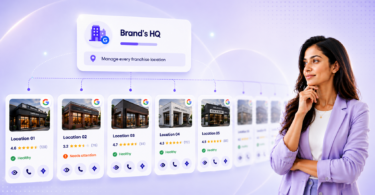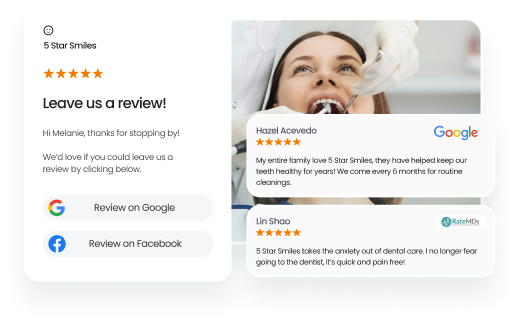
Online review management now directly impacts revenue, local SEO visibility, and customer trust for large multi-location brands. When thousands of reviews shape how your brand appears across Google and AI-driven search, weak review management is no longer just a reputation issue—it’s a direct constraint on growth.
Summary

For enterprise brands, this directly shapes how every location performs across search, discovery, and conversion. Increasingly, these platforms don’t just rank businesses; they summarize them, using reviews as a primary signal to shape how your brand is described, compared, and recommended.

In fact, according to Birdeye’s State of Online Reviews 2025, Google now accounts for 81% of all online reviews; this influence is heavily concentrated on a single platform that feeds both traditional and AI-driven search experiences.

This shift raises the bar. Brands that invest in online review management and Google review management software can improve local rankings, increase conversion rates, and reduce paid acquisition costs. Brands that don't risk losing visibility at every location.
This guide breaks down how enterprise review management works, how to build a scalable online review management strategy, and how to choose the best review management tool to drive measurable business outcomes.
Table of contents
- What is review management?
- How does a review management system work for large multi-location brands?
- Why is managing online reviews important for enterprise brands?
- How to develop an online review management strategy for global brands?
- What are the best practices for managing online reviews at scale?
- How to choose the best review management software for enterprises?
- Frequently asked questions about review management
- Step into the world of smarter review management with Birdeye
What is review management?
Review management is the process of monitoring, proactively responding to reviews, and learning from customer feedback across platforms. For enterprise brands, this goes beyond basic customer review management. It requires a structured review management strategy, the right review management software, and AI agents that help teams manage reviews at scale without losing brand consistency.
Why does review management matter for enterprise brands?
For enterprise brands, review management is no longer a support function. It directly influences how every location ranks, converts, and is perceived across Google and AI-driven search.
At scale, the challenge is consistency. Thousands of reviews across hundreds of locations create fragmented customer experiences, inconsistent responses, and missed insights. Without a structured system, teams either move too slowly or lose control of brand voice.
A strong enterprise review management strategy solves this by turning reviews into a growth engine:
- Higher conversion rates: Consistent responses and strong ratings reduce hesitation and improve customer trust at the moment of decision
- Stronger local SEO: Review volume, freshness, and response rates directly impact how each location ranks on Google
- Operational efficiency at scale: AI agents help generate reviews, draft responses, and surface insights while teams maintain control through approvals
Enterprise brands that treat review management as a system, not a task, gain a measurable advantage in visibility, trust, and acquisition efficiency.
Effortlessly Manage and Respond to Customer Reviews with Birdeye Review Management
Want to see the impact of Birdeye on your business? Watch the Free Demo Now.
How does a review management system work for large multi-location brands?
A review management system for large multi-location brands integrates directly with your enterprise stack to automate feedback collection and analysis. It leverages purpose-built AI agents to process massive volumes of data, ensuring strict brand governance and actionable insights across 1,000+ locations. This approach turns unstructured public feedback into measurable operational priorities.
But managing reviews at an enterprise scale is fundamentally a complex data and governance challenge. Legacy tools rely on manual sorting and siloed workflows, which inevitably lead to missed feedback, delayed responses, and brand inconsistencies.
This is exactly where Birdeye’s Agentic Marketing Platform restructures the operational workflow. Its enterprise platform centralizes this effort by integrating with 3,000+ CRMs, directly with your core stack, including Salesforce, SAP, ServiceNow, and Snowflake. This bidirectional integration ensures customer experience data flows freely between your CRM, localized operations, and marketing platforms, creating a true closed-loop feedback mechanism.
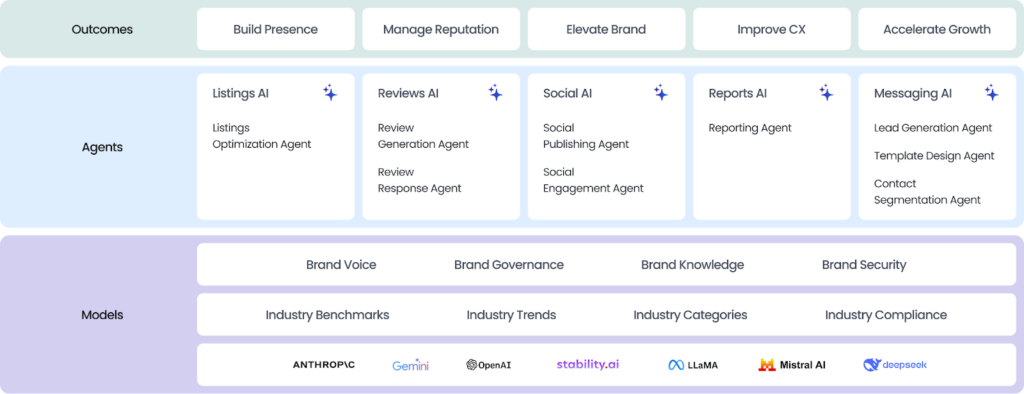
Moving beyond simple generative AI, Birdeye deploys specialized AI agents that act as a governed, intelligent extension of your workforce.
Built on granular local intelligence and trained strictly on your corporate brand voice and compliance guardrails, Birdeye’s Review AI agents autonomously execute the full review lifecycle:
- Review Generation Agent: Continuously tests timing, channels, and message templates to optimize review requests dynamically based on location-specific conversion data.
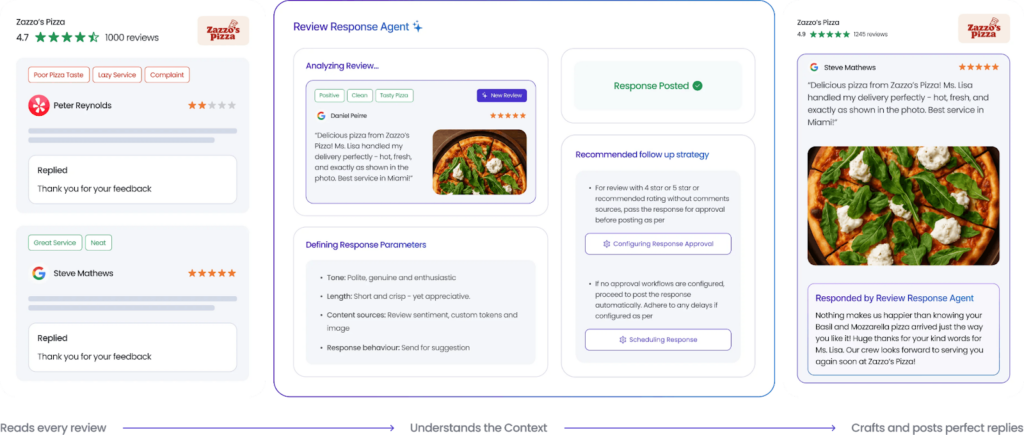
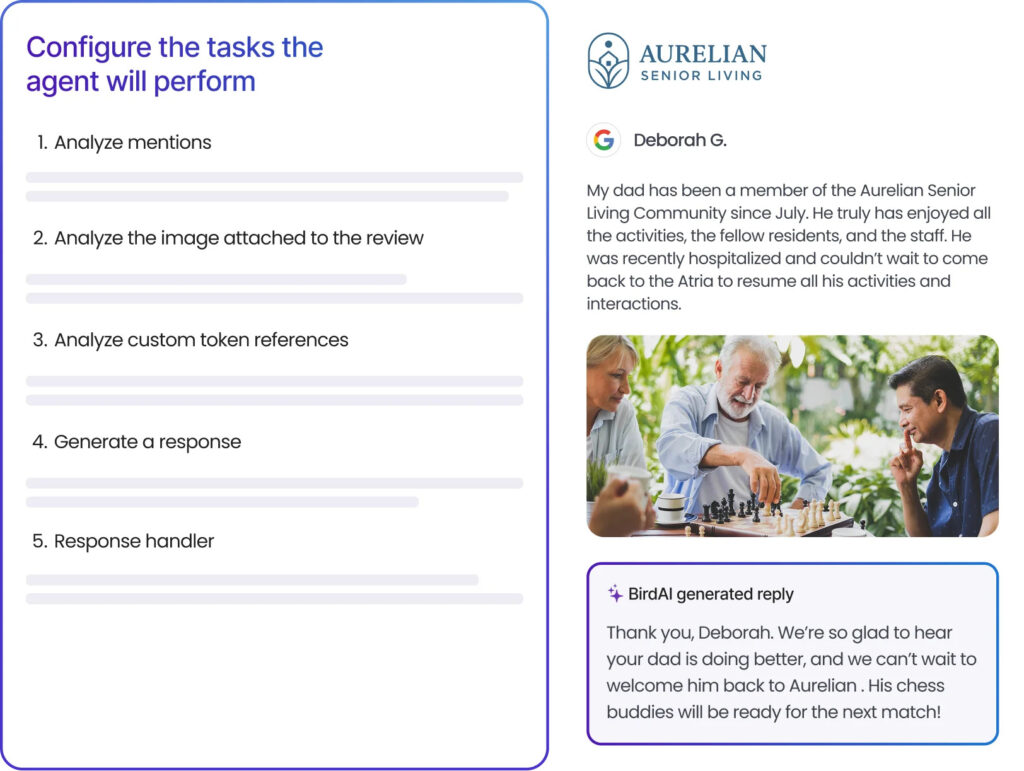
- Review Response Agent: Drafts empathetic, on-brand, and legally compliant replies, automatically routing complex escalations through predefined corporate approval workflows.
- Review Reporting Agent: Turns millions of unstructured data points into readable, executive-level insights without requiring manual spreadsheet analysis.
By automating the execution layer, teams stop drowning in manual writing and data entry. Instead, they focus on resolving systemic operational flaws and driving high-impact improvements in the customer experience.
Why is managing online reviews important for enterprise brands?
Managing online reviews directly protects retained ARR and reduces churn by resolving customer issues before they escalate. It also powers local SEO, ensuring your locations rank when customers search. For enterprise brands, review management turns passive feedback into active revenue retention.
At scale, online reputation directly influences market share. Each review shapes how your brand is perceived across locations. Prompt, consistent engagement sets the public narrative and signals operational maturity.
According to a 2025 PwC Global Consumer Insights Pulse Survey, over 70% of consumers say trust in a brand directly influences their purchase decisions, with online reviews playing a critical role in shaping that trust.
Let’s explore the top reasons why managing online reviews is important for brands:
1. Rank better in Google local search results
Effective review management improves how each location appears in search. Review volume, recency, ratings, and responses all influence rankings.
Higher Google review ratings and consistent engagement increase credibility. This improves visibility in Google search and Maps, driving more high-intent traffic.
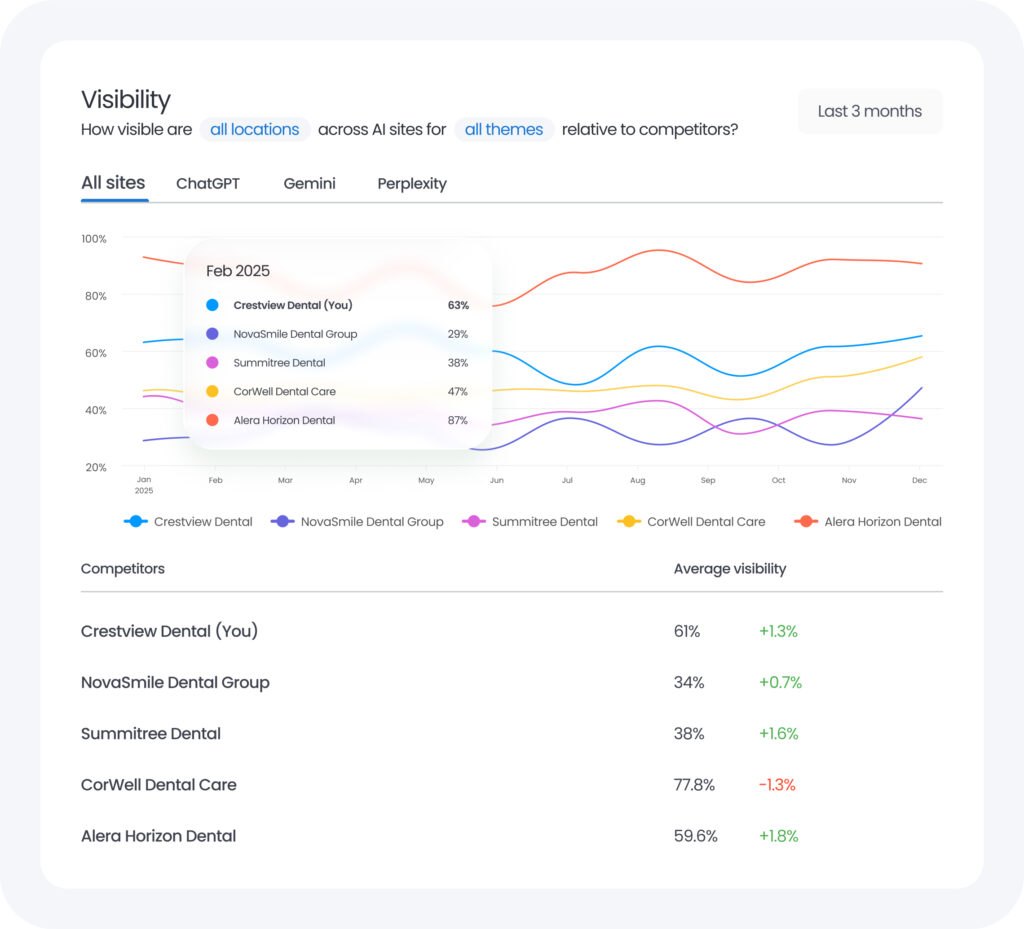
Search behavior is also shifting. Customers now ask AI platforms questions like “Which company is best for X near me?” Birdeye Search AI helps multi-location brands track how often they appear in AI-generated answers, how they’re described, and what might be holding them back.
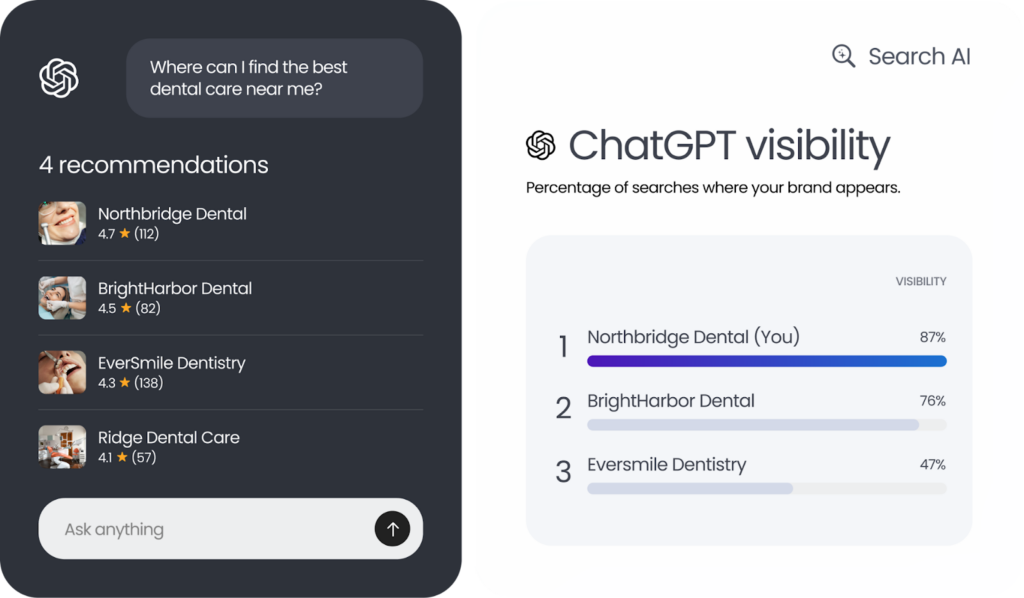
The same fundamentals apply. Strong ratings, accurate listings, and fresh reviews improve both AI-driven discovery and traditional local SEO performance.
2. Improve conversion rates on paid and organic channels
Customers don’t decide based on ads alone. They read reviews, compare ratings, and evaluate how brands respond before choosing where to buy.
Strong online review management ensures your best customer experiences are visible across channels. This includes Google ads, social media, email, and website content.
When reviews are consistently showcased, they reinforce trust at the moment of decision and improve conversion rates across both paid and organic channels.
Our customers, their stories:

Being able to monitor and respond to reviews appropriately in a timely manner through Birdeye is a game changer. The recommended AI responses are definitely helpful when we've run out of ways to say thank you.

- Meghan Bingham, Senior Operations Manager at Valley Vet Care
3. Reduce advertising spend
Customer reviews serve as a continuous stream of user-generated content. They build trust without requiring additional ad spend.
By strengthening your presence across listing platforms with fresh, credible reviews, brands can attract demand organically and reduce reliance on paid campaigns.
4. Address customer concerns
At scale, unresolved feedback becomes a systemic risk. Negative reviews across multiple locations can quickly impact brand perception.
Review management software enables teams to monitor feedback, respond quickly, and resolve issues before they escalate. The Birdeye study mentioned above found that 85% of consumers chose not to engage with brands that had negative reviews in the past year.
With structured workflows, automated responses, and integrated ticketing, brands can standardize how issues are handled across locations while maintaining quality.
5. Build trust in the market
Customer reviews are one of the most credible forms of social proof. They reflect real experiences and influence how new customers evaluate your brand.
Responding to reviews, especially negative ones, shows accountability and reinforces your commitment to customer experience. Over time, this builds trust across markets and locations.
6. Accelerate user-generated content production
Generating consistent, high-quality user-generated content is a challenge for large multi-location brands. Reviews solve this at scale.
Each review adds fresh, relevant content that can be reused across marketing channels. This strengthens brand credibility, improves engagement, and supports conversion across the funnel.
AI online reputation management software ensures that this content is continuously generated, identified, and distributed so that every location benefits.
Our customers, their stories:

“The Birdeye team assisted us in creating tailored triggers for feedback requests, ensuring a seamless process that doesn't inconvenience our customers. We've seamlessly integrated these digital requests with our manual, in-person requests to achieve a well-balanced mix of feedback.”

- Melissa Cameron, SVP of Customer Acquisitions, National Storage Affiliates
How to develop an online review management strategy for global brands?
A global review strategy relies on aligning enterprise-specific KPIs with automated, closed-loop feedback mechanisms. It requires strict governance and cross-location analytics to maintain compliance and protect brand voice. Structuring this effectively empowers local teams while giving the corporate full oversight.
Deploying a strategy across 100-10,000+ locations requires a systematic approach. Follow these steps to build a scalable foundation:
1. Define clear business goals
Businesses know why online reviews matter, but identifying what you want to achieve with your strategy is key. Some of the common goals are:
- Increase positive reviews by encouraging satisfied customers to leave feedback.
- Address negative reviews: Create a plan to resolve complaints and turn unhappy customers into loyal ones.
- Enhance brand reputation: Use customer feedback to build credibility and trust across multiple locations.
- Improve review volume on niche sites: Consistently request reviews on popular, high-traffic sites for greater impact.
2. Assign responsibility across locations and central teams
Multi-location businesses handle a high volume of customer feedback, making it essential to assign review management roles at both the individual location and corporate levels.
This way, local managers can focus on responding to reviews, tracking negative reviews, and improving the customer experience, while the corporate team can focus on ensuring consistency, tracking performance, and managing analytics.
3. Monitor reviews across key platforms
Identify key platforms where your customers leave reviews. Ensure you build a presence, request reviews, and track all feedback you receive here. Some of the key platforms to monitor online reviews include:
- Google Business Profile (formerly Google My Business, GMB) and Facebook business pages, which are popular online review platforms across industries
- Industry-specific review sites like Zocdoc (for healthcare reviews), Angi (for home services), and OpenTable (for restaurants)
4. Standardize responses with flexibility
Consistency builds trust, but rigid responses feel impersonal. Define response frameworks for positive, neutral, and negative reviews while allowing room for personalization. AI agents can draft responses aligned with brand guidelines, while teams review and approve before publishing.
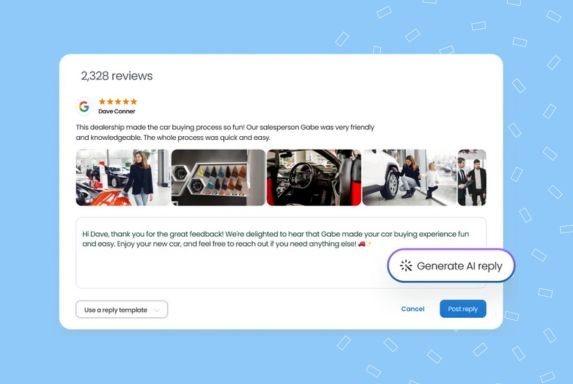
This ensures speed, quality, and consistency across locations.
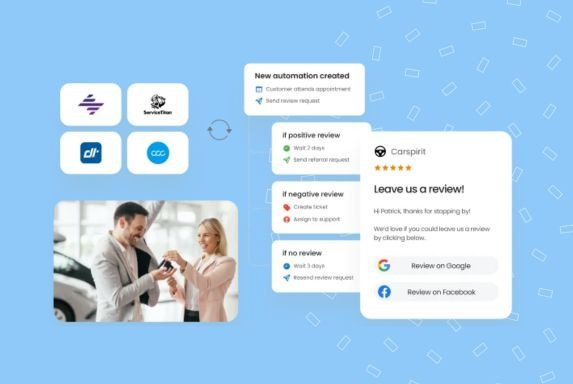
5. Encourage customers to leave reviews
Ensure every team member is part of the review generation campaign and knows to actively request reviews. Making it easy for customers to share their experiences is equally vital. Some of the best ways to encourage customer reviews are to:
- Send follow-up emails or texts with a link to the review platform.
- Include QR codes on receipts or at checkout to increase offline conversion.
- Offer a seamless review process via your website or app.
6. Regularly analyze reviews
Identify trends and patterns in customer feedback to:
- Address recurring issues quickly to prevent further complaints
- Highlight positive trends in your marketing materials
- Identify what your customers expect from your business and tweak solutions accordingly
What is the best review management system for businesses?

The best review management system for businesses is Birdeye. It combines review generation, monitoring, response automation, review marketing, and analytics into one platform.

Unlike basic tools, Birdeye’s agentic marketing platform is trusted by leading multi-location brands globally, as it integrates with CRM and POS systems to help them collect more reviews effortlessly and provide actionable insights to improve the customer experience.
What are the best practices for managing online reviews at scale?
Review management doesn’t fail because teams don’t know what to do. It fails because systems break under volume, inconsistency, and lack of visibility.
The best-performing brands focus on removing these failure points:
Eliminate location-level silos
When each location manages reviews independently, brand perception becomes fragmented.
Top enterprise brands enforce shared visibility across all locations. This ensures leadership can see performance gaps, identify outliers, and intervene before issues spread.
Control brand voice across thousands of responses
At scale, inconsistency becomes visible.
Different tones, response styles, and quality levels across locations weaken trust. Leading brands define guardrails for tone, escalation, and resolution while allowing controlled flexibility.
The goal is not uniformity. It’s recognizability.
Prevent negative feedback from compounding
One unresolved issue can repeat across locations.
Enterprise teams focus on identifying patterns early. If multiple locations receive similar complaints, it signals a systemic issue, not a local one.
Acting early prevents reputation damage from scaling.
Shift from reactive to predictive review management
Most teams respond after feedback appears.
Top brands anticipate it. They analyze trends, identify risk areas, and address operational gaps before they show up in reviews.
This reduces the volume of negative feedback over time.
Align review management with customer experience teams
Review data is often isolated within marketing.
Enterprise brands connect it with CX, operations, and support teams. This ensures feedback leads to real changes, not just responses.
When review insights influence decisions, customer experience improves across locations.
Measure performance beyond ratings
Star ratings alone do not reflect performance.
Leading brands track response quality, resolution time, sentiment trends, and location-level consistency. These metrics give a more accurate view of reputation health.
Design systems that scale without adding headcount
Manual effort does not scale with review volume. Brands build workflows in which automation handles repetitive tasks, while teams focus on decision-making and the customer experience.
This allows growth without proportional increases in operational cost.
Managing online reviews at scale is less about doing more and more about removing friction.
Our customers, their stories:

We have found that using the platform and methodology that Birdeye provides, it's  taken us from 50 to 950 reviews in just two years.

- Steven Greer, COO, Genesis Counseling
How to choose the best review management software for enterprises?
Choosing the right review management software is not about feature checklists. It is about selecting a system that fits your enterprise stack, scales across locations, and supports long-term growth without adding operational complexity.
Here’s how enterprise brands evaluate review management platforms:
1. Prioritize integration with your enterprise stack
Review data should not live in isolation. The right platform integrates with systems like CRM, POS, customer data platforms, and support tools. This ensures every review is tied to real customer interactions and can inform broader business decisions.
2. Open API extensibility
Reputation data is a critical business signal. Ensure the platform offers robust, developer-friendly APIs that can push real-time review sentiment, ratings, and location data directly into your enterprise stack—including your CRM, POS, or data lake. This prevents data silos and allows reputation signals to trigger automated business actions.
3. Outcome-based scalability
Avoid “one-size-fits-all” models or platforms that charge solely by seat count. For multi-location brands, the most effective pricing structures are tiered and outcome-focused—aligned with the number of locations or the specific goals (such as review growth or ranking improvements) you need to achieve.
4. Enterprise security & governance
In regulated industries like healthcare and finance, security is non-negotiable. At a minimum, verify that the platform is SOC 2 Type II compliant. For global operations, look for GDPR support, and for healthcare providers, ensure the platform is HIPAA-ready. This ensures that AI-driven automation never compromises data privacy or brand governance.
5. Compare platforms based on fit, not features
Different platforms solve different problems.
- Qualtrics and Medallia focus heavily on Voice of Customer (VoC) programs and survey-driven insights
- Sprinklr focuses on omnichannel experience management and social listening
- Birdeye focuses on multi-location reputation, reviews, and local experience management
| Feature / Capability | Birdeye | Qualtrics | Medallia | Sprinklr |
| Core focus | Local SEO, AI-driven reputation, and review agents | Broad experience management (XM) | High-end CX and internal signals | Social listening and unified social CX |
| Enterprise stack integrations | 3,000+ integrations, like (Salesforce, Snowflake, SAP) | Deep (Extensive ERP/CRM connections) | Deep (Broad CX/CRM integrations) | Deep (Social networks, major CRMs) |
| AI capabilities | Agentic Marketing Platform (Task-executing AI agents) | Predictive AI and text analytics | Sophisticated speech and text analytics | Conversational AI and social sentiment |
| Modularity & deployment | Composable platform, custom ELAs, fast deployment | Complex, lengthy deployment cycles | Heavy, custom-built deployments | Complex, highly tailored social deployments |
| Primary outcome | Drives local conversion, ARR retention, and GEO/SEO | Maps broad customer journeys | Identifies deep operational CX flaws | Protects brand equity on social media |
Frequently asked questions about review management
Businesses can’t delete Google reviews directly. However, they can flag a review and report it to Google or request that the customer take it down.
Review management directly influences local SEO through review volume, recency, ratings, and response rates. Search engines use these signals to rank locations, making consistent review generation and timely responses critical for visibility.
Birdeye is the best-of-breed enterprise platform that integrates with your existing systems, scales across multiple locations, and provides governance through workflows and approvals.
Yes, Birdeye provides a centralized review management dashboard that consolidates feedback from Google, Facebook, Yelp, industry-specific platforms, and more. This single-view dashboard allows teams to monitor sentiment, filter by location, assign responses, and track KPIs. For multi-location businesses, it eliminates the complexity of logging into multiple platforms and ensures review handling is efficient and uniform across all sites.
The fastest way to handle reviews is by using automation. With Birdeye Reviews AI, businesses can automate review requests, receive instant notifications for new feedback, and use AI-generated response templates to reply quickly. This ensures no review goes unnoticed, and responses stay professional and on-brand, even at scale.
The best tool for managing multi-site reviews is Birdeye. It allows multi-location businesses to monitor, respond to, and analyze reviews from all locations in one centralized dashboard. With features such as review responses, automated review requests, sentiment analysis, and competitor benchmarking, Birdeye ensures consistency across all branches. Businesses can also track performance by location, making it easier to spot issues and replicate success at scale.
Step into the world of smarter review management with Birdeye
For enterprise brands, review management is no longer just about responding to feedback. It shapes how your brand is discovered, evaluated, and chosen across every location.
At scale, disconnected tools and manual workflows break down. Inconsistent responses, missed insights, and slow execution start to impact visibility, customer trust, and revenue. What works for a few locations does not hold up across hundreds or thousands.
Birdeye brings this into a single system.
It connects review generation, monitoring, response, and analytics across all locations, powered by AI agents that draft responses, while teams stay in control through approvals. Instead of managing reviews in fragments, teams operate with a unified view of performance, sentiment, and opportunities.
The next step is to assess whether your current approach can support this level of consistency and scale.
If review management still depends on manual effort or disconnected tools, it will limit growth. A system designed for large, multi-location brands ensures every location performs to the same high standard, every time.
Watch a free demo to know more.

About the Author

Avtar Madan
Avtar Madan
Originally published