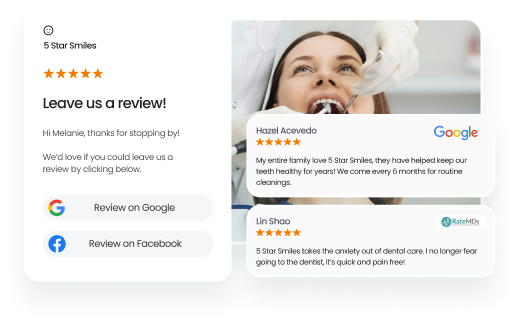
A review aggregator is a platform that collects and displays customer reviews from multiple sources in one place. Review aggregators help customers compare opinions, ratings, and experiences before choosing a product, service, or local business. For brands, these platforms are important because they influence reputation, visibility, trust, and customer decisions across the buying journey.
Summary
Customers rarely rely on one source before making a decision. They compare reviews across Google, Amazon, Trustpilot, G2, Capterra, Angi, Foursquare, and other platforms to understand whether a brand is credible, reliable, and worth choosing.

Review aggregators make this process easier by bringing customer opinions together. They give buyers a broader view of public sentiment and help brands build social proof, strengthen online reputation, support local visibility, and influence customer behavior.
In this blog, you can learn how to effectively tap into online reviews’ persuasive power to grow your business.
More reviews
More revenue
Want to see the impact of Birdeye on your business? Watch the Free Demo Now.
Table of contents
What is a review aggregator?
Review aggregators are online platforms that display user-generated reviews from various sources in one place. They act as centralized hubs of opinions, enabling consumers to access a wide range of feedback on products, services, businesses, and more.
These platforms aggregate reviews from individual websites, social media platforms, forums, and other sources to give users a comprehensive overview of what others think about a particular offering. It then displays those as aggregated reviews.
All these allow consumers to gauge the authenticity of the business quickly.
With hundreds of brands, consumers want to make well-informed decisions before spending their hard-earned cash. Such aggregate reviews sites help them quickly spot reputed businesses.
How do reviews aggregators work?
The functioning of review aggregators is relatively simple. Advanced algorithms crawl the internet, seeking reviews related to specific entities. These entities could be anything from a movie to a restaurant to a tech gadget.
Once the reviews are collected, they are organized and displayed in an easy-to-read format. Most review aggregators offer sorting and filtering options, allowing users to customize their search based on criteria like ratings, recency, or helpfulness.
Benefits of review aggregators
Staying on top of your brand’s online reviews will be mission-critical to winning over consumers. Reviews aggregator can help:
- Convince those on-the-fence buyers into a purchase.
- Persuade customers to buy your product over potential alternatives.
- Assure consumers of the quality of your product or services.
- Serve as word-of-mouth recommendations to broader audiences.
- Assist with in-house reputation management and customer service.
Improve reputation management
Review aggregators are essential for effective online reputation management and establishing a trustworthy relationship with your customers. These websites have already established trust with consumers, and by being here, you can also improve your online reputation.
As review aggregators solicit reviews from many of your customers, you get an accurate snapshot of your reputation, making management easier.
Generate social proof
If a potential customer is on the fence about purchasing from your brand, social proof can help convince them to convert. Positive reviews from past clients establish trust and help new customers feel comfortable doing business with you.
Impact customer behavior
Online reviews are vital for influencing consumer behavior. 68% of the time, consumers check online reviews before engaging with a local business.Reviews aggregators help you take control of your online reputation so potential customers see your business in the right light.
For example, you can build customer loyalty in the long run by effectively responding to negative reviews. And you learn valuable insights about how to improve your products or services.
Boost SEO
Review aggregator sites are an excellent tool for improving local SEO, especially if you run a local business. They provide fresh user-generated content to boost your and search engines’ rankings. For example, replying to Google reviews will improve your brand’s search engine visibility, resulting in more local customers finding your products/services.
Unbiased assessments
Because review aggregators strive to maintain objectivity by compiling diverse reviews from various sources, users make more impartial judgments. Trust-worthy review aggregators provide insights from real customers who have used the products or services, giving potential buyers a better understanding of what to expect.
Limitation of review aggregators
While they provide valuable insights, it’s essential to consider these limitations when interpreting review aggregator ratings.
Too much reliance on third-party vendors
Online review platforms can create a situation where customers overly depend on the opinions and ratings provided there. This may become a problem if the vendors post fake positive reviews or sabotage competitors with negative reviews.
Increase in fake reviews
Review aggregators are super-vulnerable to brand bias and even fake reviews. Fake or inauthentic reviews can mislead potential customers and unfairly represent your business in a negative light.
Not an accurate representation of all customers
These aggregated reviews may only partially represent all customers, as only a few buyers leave reviews on such platforms. These may be people with strong opinions or experiences they want to share.
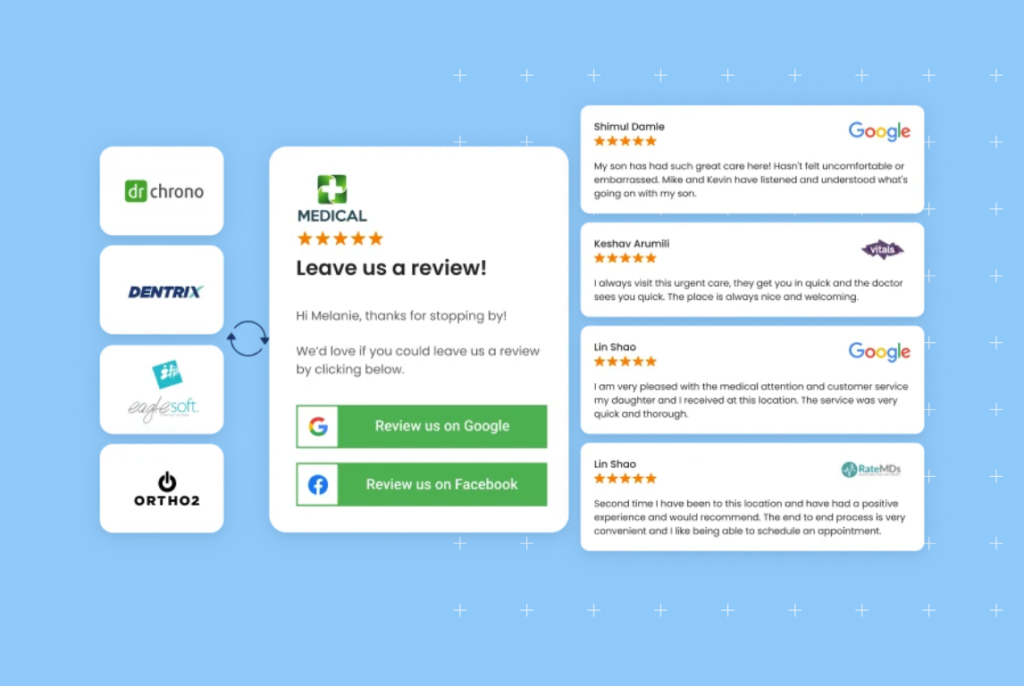
You can counter this by working with a tool like Birdeye Review to send automated review requests and encourage all customers to review you on all popular reviews sites.
Increase in fake reviews
Review aggregators are super-vulnerable to brand bias and even fake reviews. Fake or inauthentic reviews can mislead potential customers and unfairly represent your business in a negative light.
Important review aggregators for your business in 2023
Businesses like yours need multiple platforms to collect and review online customer reviews. Check out the following review sites for a well-rounded business reputation online.
Google Business Profile
Google Business Profile (formerly known as Google My Business) puts your business on Google Maps and ensures it shows up in local search results. It’s free, and it can help drive visibility to your business. The more Google reviews you receive on this profile, the higher your rank will be in those search engines’ results pages.
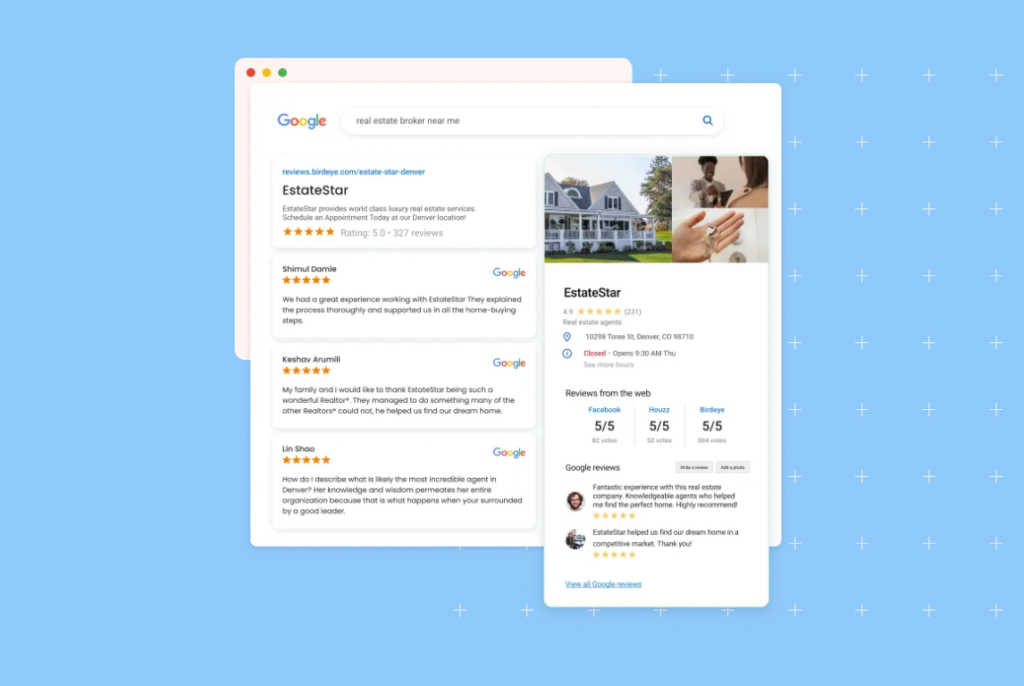
Businesses can also add their details, including business location, hours, and phone number. You can claim your Google Business profile and collect reviews as an established brand.
Simply invite your customers to leave a review on Google every time they purchase. Make sure you respond to Google reviews, as this shows you value the feedback and encourages more people to share their experiences.
Amazon
Amazon product reviews are probably some of the most popular and well-trusted customer feedback insights. These reviews will convince potential clients to purchase your products when they’re positive. And the more Amazon reviews you have, the higher your chances of increased conversions.
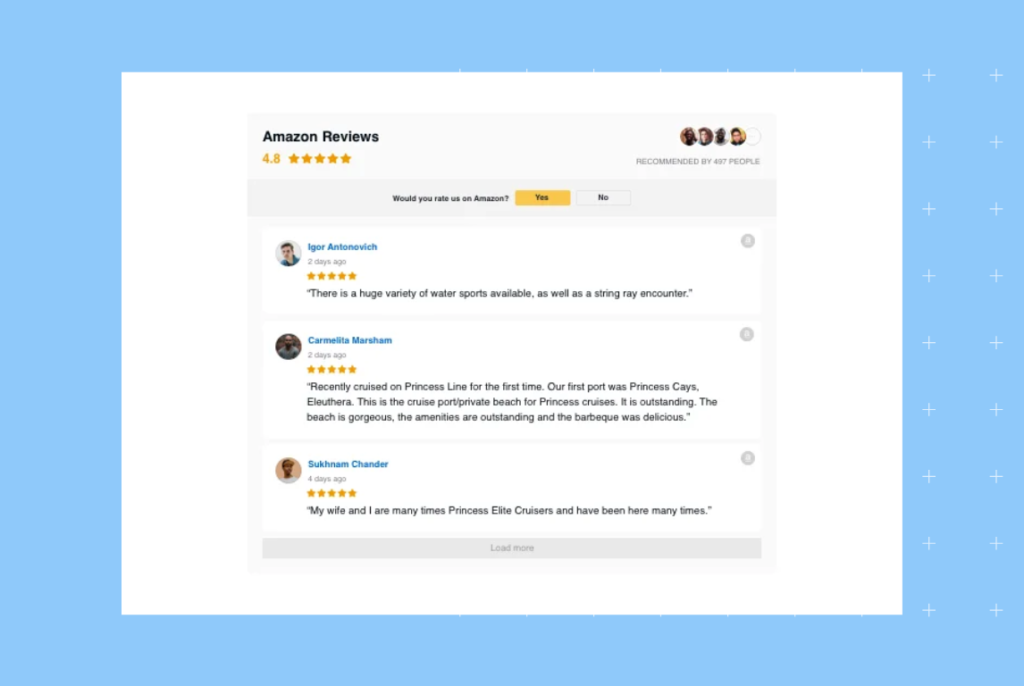
While Amazon automatically asks buying customers for seller or product feedback following a purchase, you can also personalize the review request to encourage clients to leave a review. Send your email or social media message shortly after receiving your product while the shopping and buying experience is still fresh in their minds.
And when a customer writes a bad review, act quickly and respond to their concerns calmly and empathetically. Your potential customers will see the steps you value customer experiences and take to turn a dissatisfied customer into a happy one.
Trustpilot
Trustpilot is another online community connecting consumers and businesses via reviews.
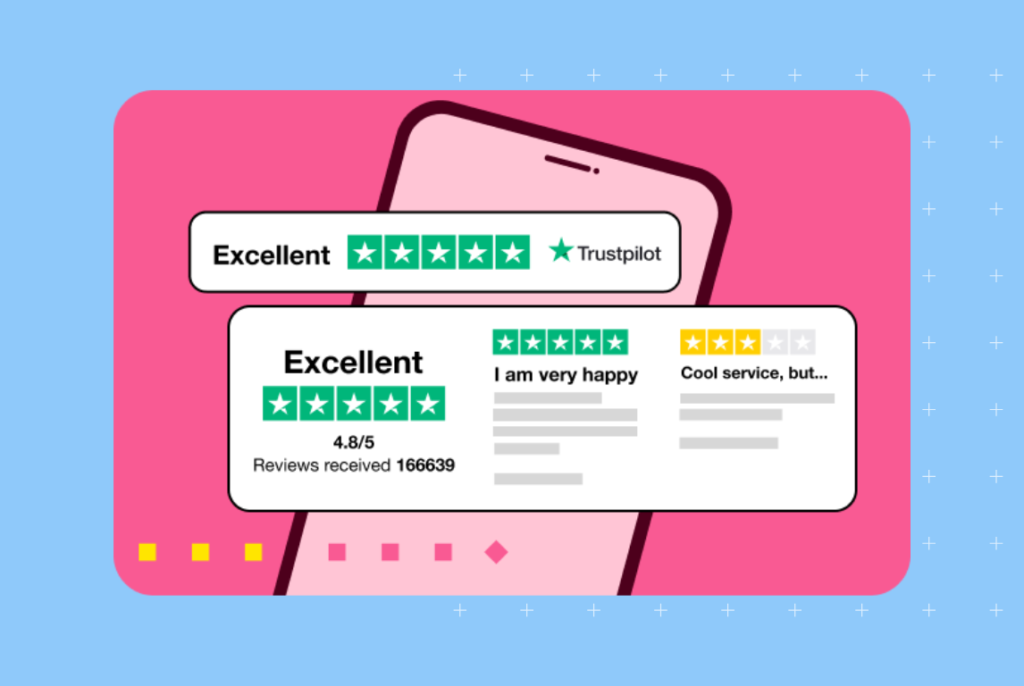
Companies use this review website to gather constructive feedback to improve customer service. And consumers can check your brand’s Trustpilot score to see recommendations for your brand. So anyone searching your business will immediately see all the aggregated reviews and then decide if they can trust your brand or not.
Use Trustpilot as a prompt for customers to review your business. You can send up to 100 monthly invitations with the free Trustpilot plan. Remember to personalize the email to boost responses. Another option is to add a ‘Trustbox’ to your website that shows your reviews and encourages customers to leave a Trustpilot review.
Foursquare
While Foursquare is best known for its check-in feature, it allows businesses to claim their listings and interact with customers. Brands can invite customers to rate their business and leave tips (reviews) about their experiences for others. It’s popular with local businesses like restaurants, dental practices, and other venues.
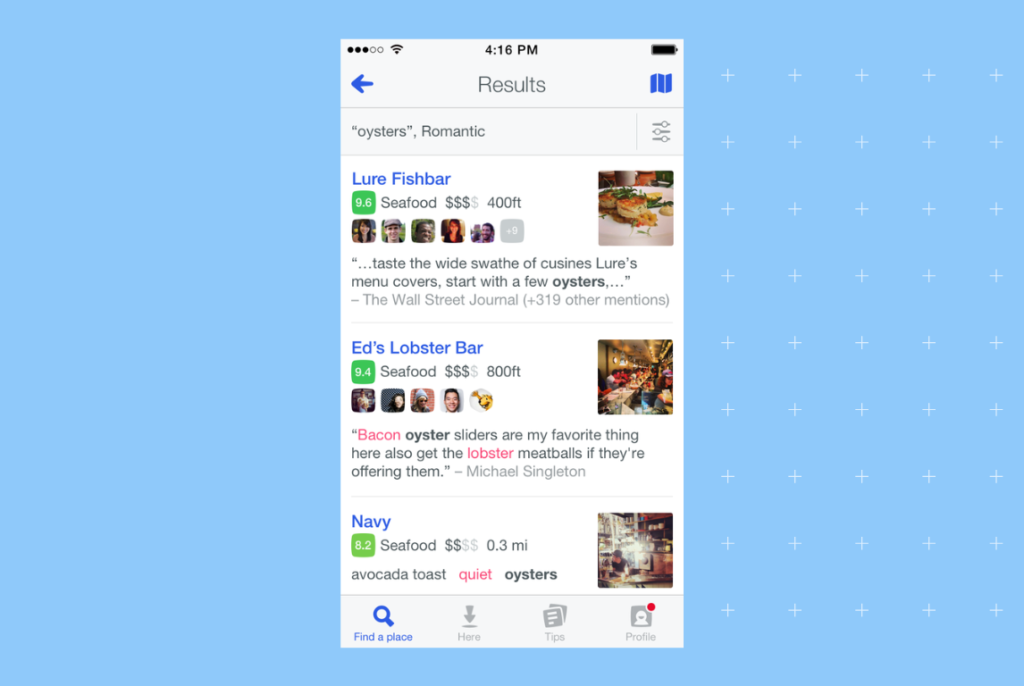
Claiming your Foursquare listing allows you to manage your online presence and interact with your most loyal customers. After all, if clients publicly share their visit to your store, they must have had a positive experience.
Capterra
Capterra is a great online space for business owners to discover and compare the best software solutions that fit their needs. However, Capterra’s most notable feature is its review system.
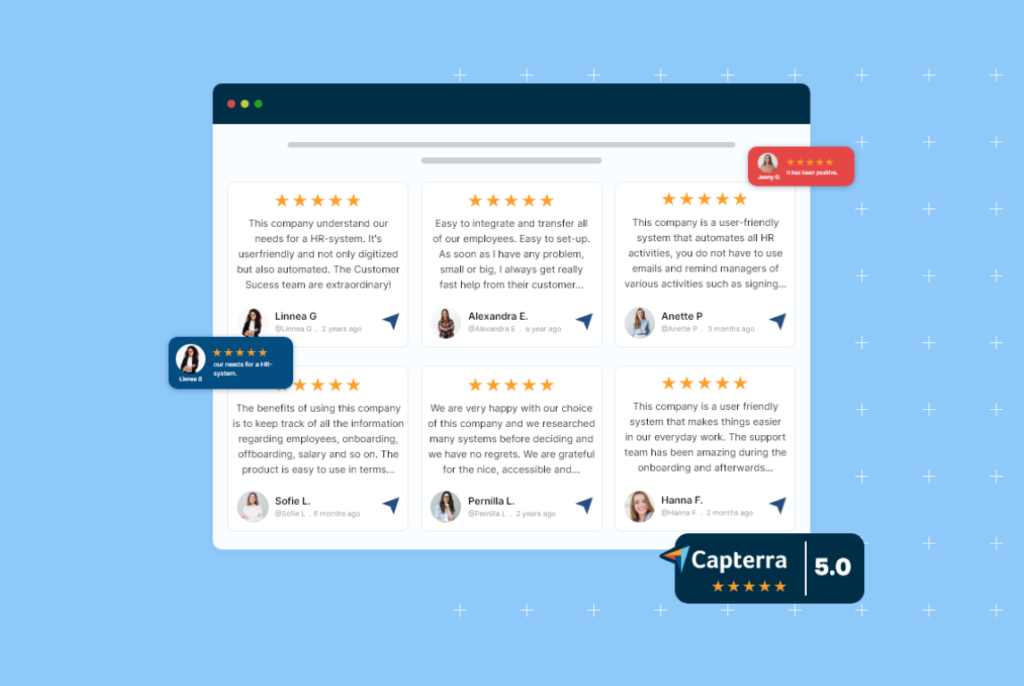
It allows people who have used or are currently using a particular software to leave reviews and share their experiences. These reviews can enhance your brand’s credibility and reputation in a big way, thus building trust among potential buyers.
G2
G2 is a peer-review platform that is more focused on software service providers. It is also an excellent channel to learn what your buyers say about your offerings.
Companies can claim their listing on G2 to gather and display user reviews. G2 also has an annual best software award recognizing the top 100 software products. Getting into the list is a bottom-line-boosting feat for any software company.
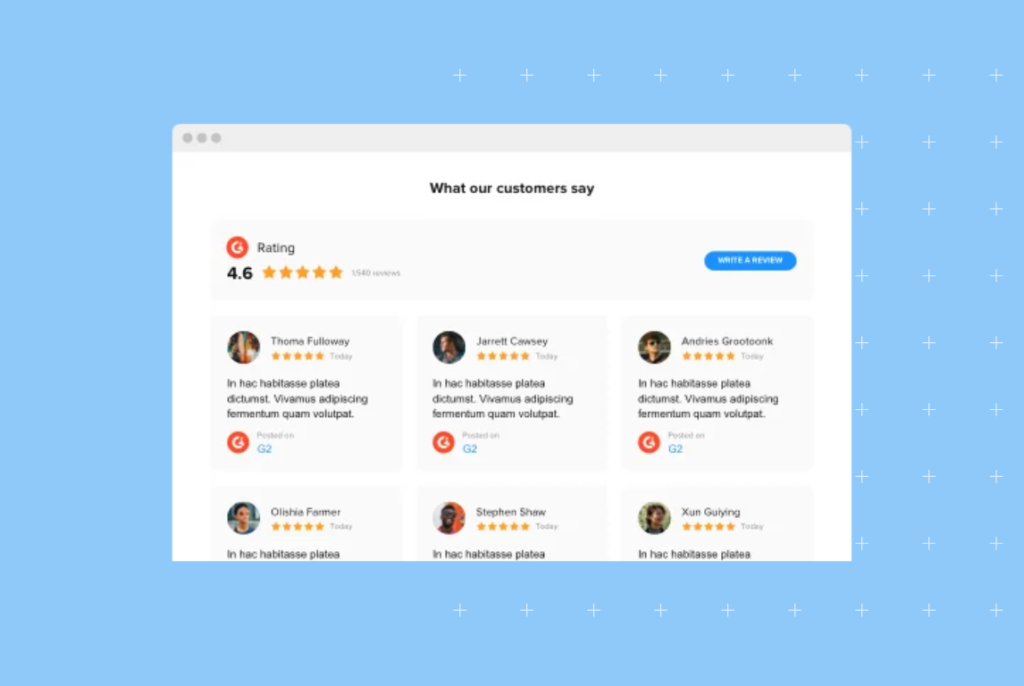
The easiest way to promote your G2 presence is to ask for reviews. Put a G2 banner on your website, linking customers to your profile for feedback. You can also share your favorite comments across your email campaigns to prompt clients to review your brand.
Don’t forget to incentivize them with a discount or a gift card to keep those reviews flowing. Lastly, commit to answering reviews and questions posted on your G2 profile. These inform your buyers that you listen to their feedback.
Angi
Angi (formerly Angie’s List) is another great reviews aggregator website for gathering accurate feedback about customers’ experiences with your business. Those who want to write reviews for a local company or contractor on Angi’s list must pay a membership fee. This helps ensure legitimate and honest feedback.
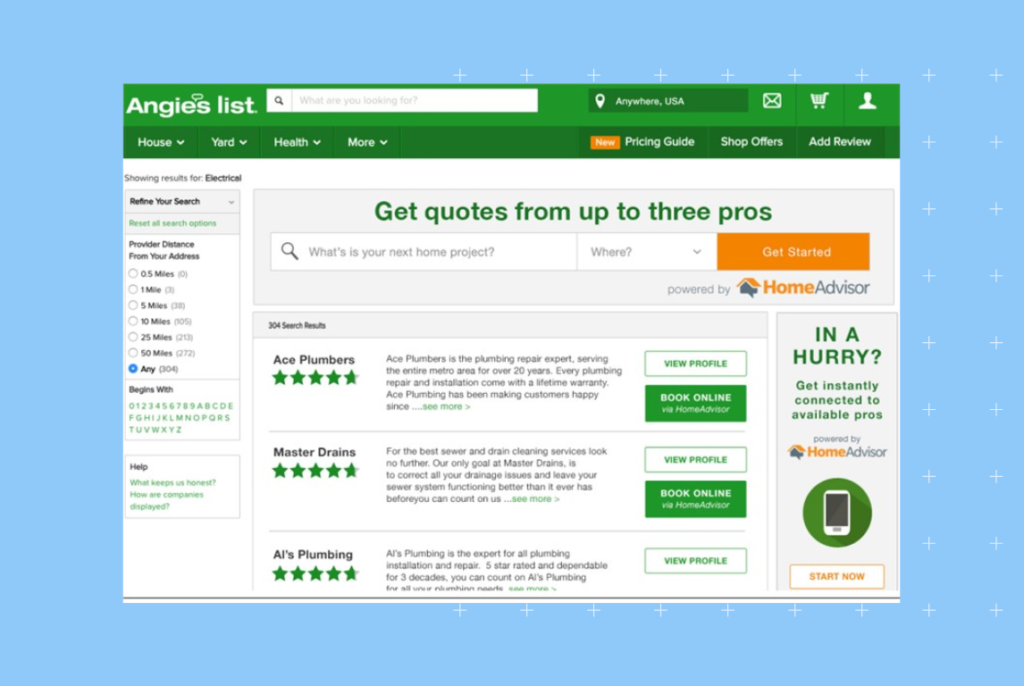
So it makes sense to claim your business profile on Angi as this will enable you to respond to user reviews and interact with clients. Thank your clients for writing glowing reviews.
You’ll also find that staying in touch with satisfied customers can help you gain endorsements and referrals to grow your business.
FAQs about review aggregators
Review aggregators allow for a centralized place for businesses to collect and respond to customer reviews across multiple sources. This also helps brands gain insights to improve their offerings.
Review aggregators scoop up and analyze reviews from various online channels and present them in a way that makes them easier to understand.
Some popular examples of review aggregator sites include Google Business Profile, Trustpilot, and G2.
Rotten Tomatoes is probably among the best and most widely-used movie review aggregation websites. IMDb and Letterboxd also tally movie reviews as aggregators.
Review aggregators employ advanced algorithms and human moderation to detect and remove fake reviews.
Review aggregators can influence consumer decisions by providing valuable insights, but consumers should also consider their preferences and needs.
Review aggregators prioritize user privacy and often allow users to post reviews anonymously or with pseudonyms to protect their identity.
Bring review aggregator visibility under control with Birdeye
Review aggregators give customers a place to compare opinions. They do not give enterprise brands a way to manage what those opinions mean across every location.
That is the gap Birdeye closes.
For brands managing 100 to 10,000+ locations, the real challenge is not appearing on one review aggregator. It is knowing how reputation changes across markets, which locations are losing trust, which reviews deserve a response, and which customer stories should be used in marketing.
Birdeye is the #1 agentic marketing platform for multi-location brands. It gives enterprise teams a connected way to manage reviews, listings, reporting, review marketing, and AI search visibility from one platform.
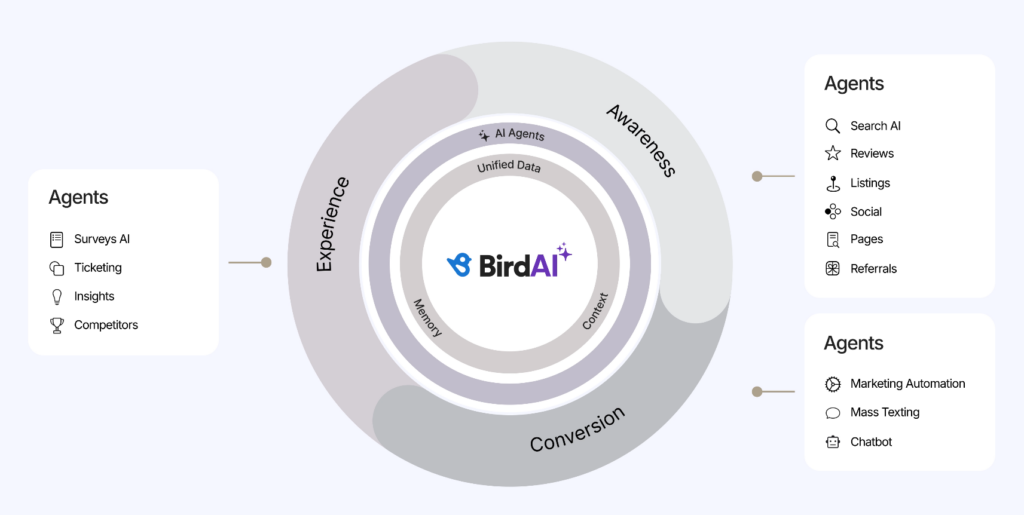
Make every review site visible
Review aggregators spread customer feedback across many platforms. Google may show one pattern. Trustpilot may show another. G2, Angi, Facebook, and niche sites may tell a different story.
Reviews AI brings review activity from 200+ review sites into one system. Corporate teams can see ratings, review volume, sentiment, and response needs across locations without relying on manual platform checks.
This gives brands a cleaner view of public reputation across the channels customers already trust.
Turn scattered reviews into location intelligence
A review aggregator shows feedback. Birdeye shows what to do with it.
Review Reporting helps teams track Reputation Score, review volume, response rate, sentiment trends, and competitive benchmarks across locations.
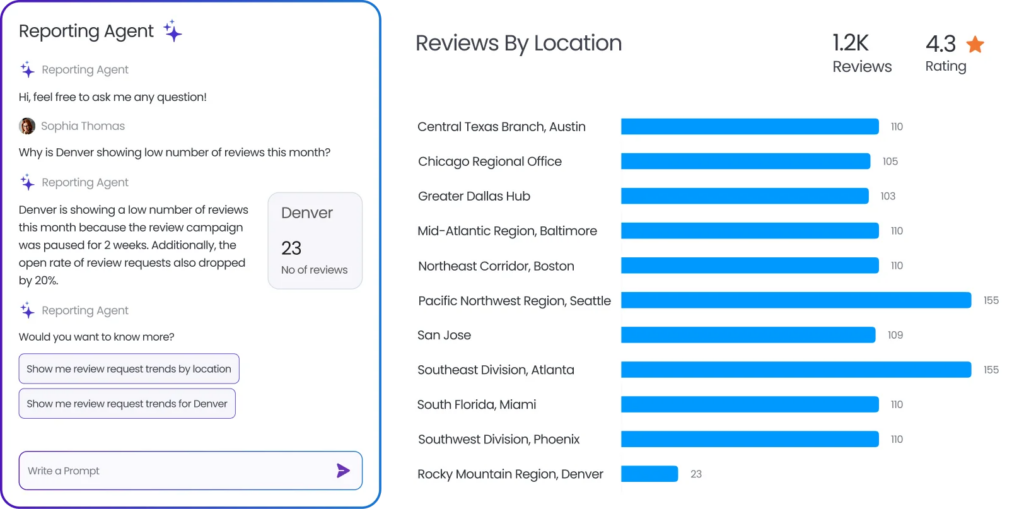
The Review Reporting Agent surfaces performance gaps and recurring issues, so leaders can identify which locations need attention and where the brand is gaining trust.
For enterprise teams, this turns aggregated reviews into operating insight.
Keep the data behind reviews accurate
Reviews do not work alone. Customers also judge a brand by the details around the review: address, hours, phone number, services, photos, and location information.
The Listings Optimization Agent identifies missing details, profile errors, duplicate listings, and optimization opportunities.
This matters because inconsistent location data can weaken trust before a customer even reads the review.
Use customer proof beyond aggregator pages
Strong reviews should not remain trapped inside third-party platforms.
Review Marketing helps brands turn customer feedback into social posts, website widgets, review summaries, microsites, and search-facing assets. This gives enterprise teams a governed way to bring customer proof into the channels they control, while keeping messaging consistent across locations.
Understand how reputation appears in AI search
Customers are also using AI platforms to compare brands, locations, and services. Search AI shows how a brand appears across AI-generated answers on platforms such as ChatGPT, Gemini, and Perplexity.
It tracks visibility, citations, sentiment, and business information accuracy. It also surfaces recommended actions tied to reviews, listings, citations, FAQs, and local content.
With Birdeye, review aggregators become more than places where customers leave feedback. They become part of a connected reputation system. Brands can monitor every signal, correct weak points, activate strong reviews, and understand how reputation influences discovery across traditional and AI-powered channels.
Watch a demo to see how Birdeye helps multi-location brands manage reputation across review aggregators, listings, and AI search.

About the Author

Ruchika Batra
Originally published