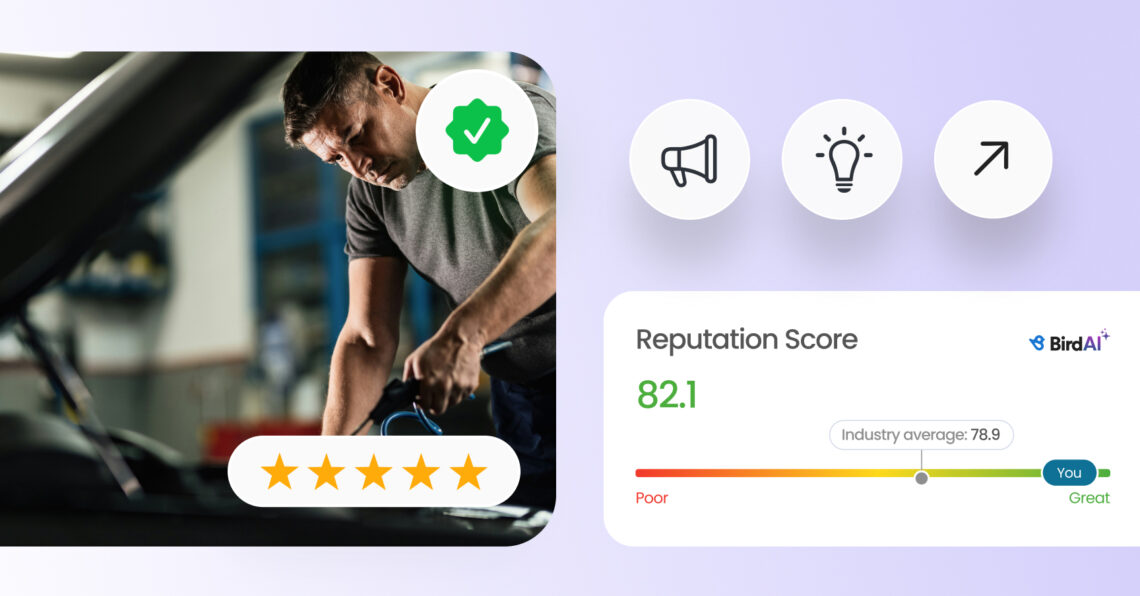
Automotive reputation management isn’t about looking perfect online — it’s about proving you’re a trustworthy automotive business where customers doubt almost everything.
Summary
Think about how people shop for cars today. They don’t start with a showroom visit — they start with Google, review sites, YouTube walkthroughs, and group chats where someone’s cousin swears by a particular dealership “because they treated him right.” By the time a buyer steps onto your lot, they’ve already judged your star rating, scanned your responses, checked how active you are on social media, and formed a gut feeling about whether you’re worth their time.

That’s the new buying journey — unconventional, emotional, and heavily influenced by what people say about you across the internet.

This blog breaks down how dealerships can take control of that narrative rather than chase it.  We’ll explore what modern buyers actually look for, the specific moments when trust is won or lost, the channels you can’t afford to ignore, and how the Birdeye Agentic Marketing Platform provides multi-location dealership groups with the enterprise-grade infrastructure to unify operations, analyze local intelligence, and deploy autonomous marketing agents to scale trust flawlessly.
Table of contents
- What is automotive reputation management?
- Why a strong reputation is a growth engine for dealerships
- How to boost your auto dealership’s online reputation
- How to build a high-trust reputation for your auto business
- Reputation management for multi-location dealerships
- FAQs on reputation management for automotive businesses
- Birdeye: The top automotive reputation management software for your business
What is automotive reputation management?
Automotive reputation management is the practice of shaping, monitoring, and improving how your dealership is perceived across the entire customer journey — online and offline. It includes your reviews, responses, listings, social presence, customer feedback, and your consistency in delivering on your promises.
Now here’s the bigger truth: most people don’t walk into a dealership with a neutral opinion. They walk in carrying every review they’ve read, every warning from a friend, and every stereotype the industry has built over decades.
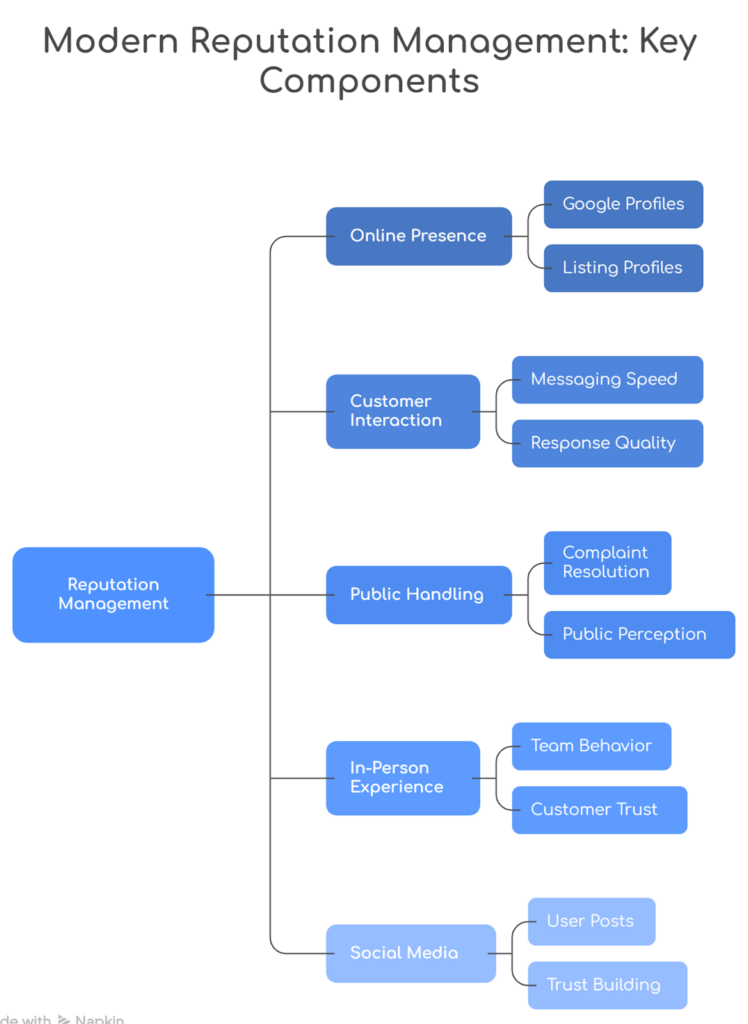
Reputation today isn’t just a “reviews thing.” It’s:
- How accurate and consistent your Google and listing profiles are
- How fast you reply when someone messages you
- How you handle complaints publicly
- How your team treats customers once they walk in
- What people post about you on social platforms
- Whether buyers feel they can trust you before meeting you
Shoppers now make most of their decisions before they ever step onto your lot. They compare, they doubt, they research, and they arrive at a formed opinion based on what they saw online.
As per Birdeye’s State of Online Reviews 2025, Google hosts nearly 87% of all automotive reviews, making it the primary place where customers form their first impression long before they visit your dealership.
Why a strong reputation is a growth engine for dealerships
Your real competition isn’t the dealership across the highway, it’s the customer’s doubt. Most shoppers assume every dealership is the same until something proves otherwise. A strong reputation cuts through that noise instantly. When buyers see consistent reviews, honest responses, and real proof of good experiences, their hesitation drops, and your dealership becomes the safer, smarter choice.
Here’s how a high-trust reputation powers growth:
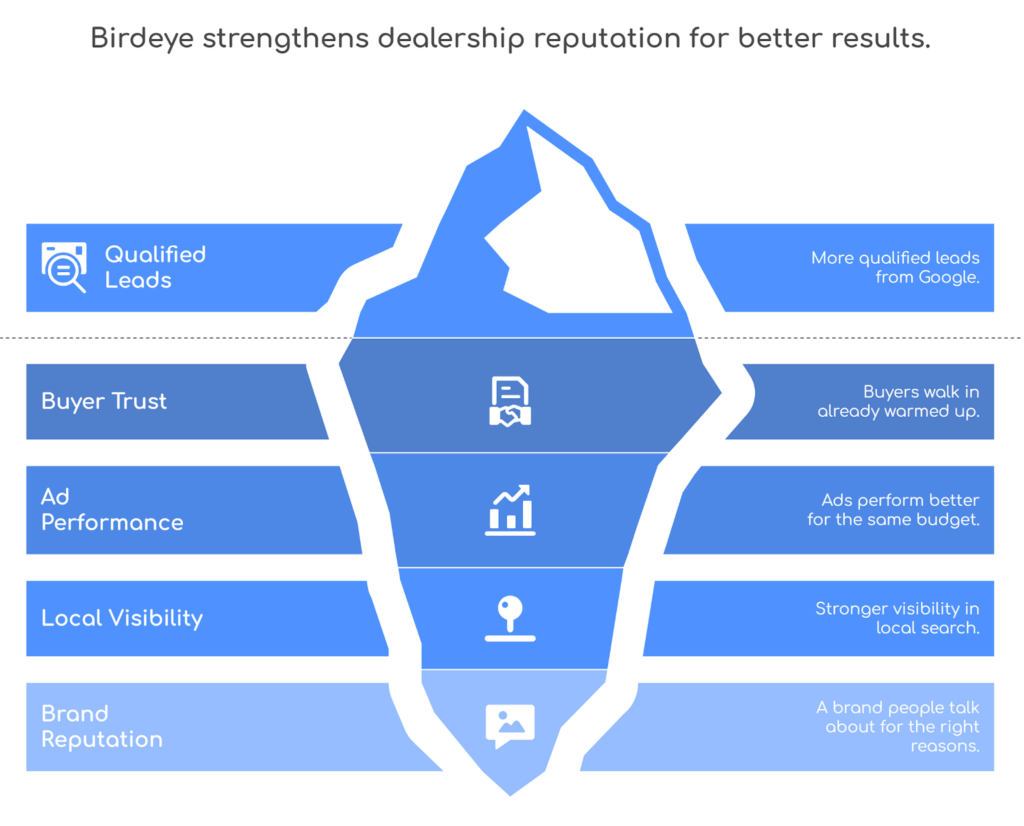
✔ More qualified leads from Google and marketplaces
When shoppers compare dealerships on Google, Cars.com, CarGurus, or Edmunds, they’re looking for signals of safety and reliability — not just price. A dealership with a consistently strong review profile attracts serious, high-intent buyers.
Where Birdeye strengthens this:
Birdeye’s brand-trained Review Generation Agent works in the background to keep reviews flowing, improve ratings across priority sites, and respond instantly with context-aware replies.
✔ Buyers walk in already warmed up
A good reputation shortens the emotional distance between you and the customer. They walk in feeling like they “kind of know you already.” Maybe they saw how respectfully you handled a complaint online. Maybe they read a testimonial that matched their situation. Whatever it is, they come in with fewer walls up — and when a buyer trusts you early, conversations move naturally instead of feeling like a negotiation.
Where Birdeye strengthens this:
Review Response Agent helps maintain that trust by replying to every review across locations with empathy, accuracy, and your brand voice. Shoppers notice the consistency — and it reinforces the sense that they’re dealing with a customer-first dealership.
✔ Your ads perform better for the same budget
When your ads carry a strong star rating and recent reviews, they stop looking like ads and start functioning as proof. Pairing those trust signals with the right car dealership advertising ideas can improve click-through rates, lower CPLs, and drive more qualified showroom visits.
Where Birdeye strengthens this:
Birdeye automatically routes fresh reviews to your Google Business Page’s car dealership page and other platforms, and Agents help populate review snippets you can repurpose in ads, landing pages, and social. The stronger your reputation signals, the stronger your ad performance.
✔ Stronger visibility in local search and map pack
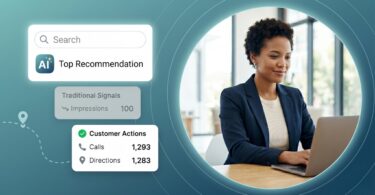
As per Birdeye’s State of Google Business Profile 2025, each new review correlates with roughly 80 website visits, 63 direction requests, and 16 calls — clear proof that reviews directly drive showroom traffic. Local SEO is heavily reputation-driven now. Google wants to show businesses that are active, responsive, and trustworthy. If your ratings are strong, your listings are accurate, and your profile gets regular activity, Google sees your dealership as a reliable option for local shoppers and pushes you higher.
Where Birdeye strengthens this:
Our autonomous Listings Optimization Agent continuously enforces your brand’s automotive marketing guidelines governance by scanning your Google, Apple, Facebook, and auto-marketplace listings for gaps, errors, or inconsistencies — and auto-corrects them within your guardrails.
How Search AI is reshaping automotive reputation management
Car buyers are no longer just typing “Honda dealer near me.” They are asking detailed questions:
- “Which Toyota dealership in Dallas has the best customer service?”
- “Most trusted used car dealer near me with easy financing?”
- “Where should I service my BMW in Phoenix with honest pricing?”
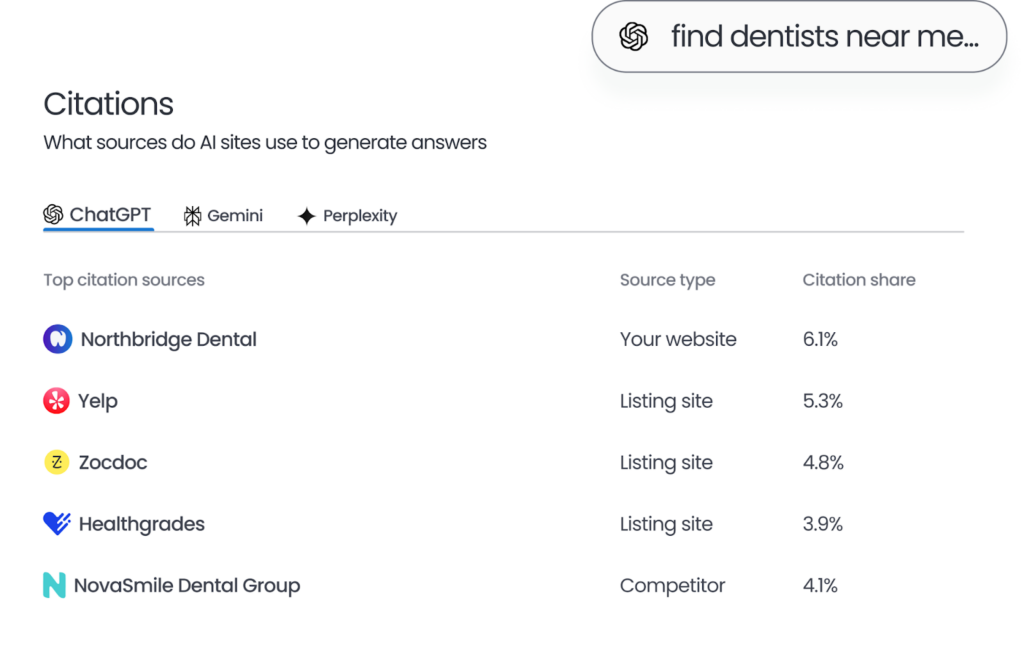
Search engines and generative AI platforms now analyze your reviews, sentiment, response patterns, and listing consistency before recommending you.
They don’t just rank dealerships. They summarize them. To stay competitive in these evolving discovery journeys, dealerships need to understand how AI search visibility for automotive dealerships directly impacts which brands are recommended and why.
If your reviews mention slow paperwork, pushy sales tactics, or poor communication, that language can surface in AI-generated answers. If customers consistently praise transparency and service quality, that narrative gets amplified instead.
Where Birdeye Search AI strengthens your dealership
Backed by deep local intelligence, Birdeye Search AI acts as an enterprise-wide data layer that transforms how conversational engines interpret your dealerships. Instead of just monitoring mentions, it gives you the infrastructure to:
- Track conversational share of voice: See exactly where your dealership groups surface across ChatGPT, Gemini, Perplexity, and Apple Intelligence.
- Analyze intent patterns: Map hyper-local shopper prompts like “most trusted used car dealer near me with easy financing” to specific showroom locations.
- Surface regional sentiment: Understand the exact review themes and customer sentiment patterns driving AI summaries of your local branches.
- Deploy autonomous fixes: Instantly resolve broken data signals and coordinate updates across auto marketplaces and local mapping platforms.
✔ A brand people talk about for the right reasons
A strong reputation doesn’t stop at the sale. Buyers share their experiences in group chats, WhatsApp family circles, and community forums. One good experience can ripple outward and bring in customers you never directly marketed to. In an industry where people rely heavily on personal recommendations, becoming “the dealership people trust” pays off long after the buyer drives off your lot.
Where Birdeye strengthens this:
Birdeye’s Social AI Agents help dealerships highlight real customer moments, repurpose reviews into posts, and keep each location active on social — ensuring your happiest customers are the stories people keep seeing and sharing.
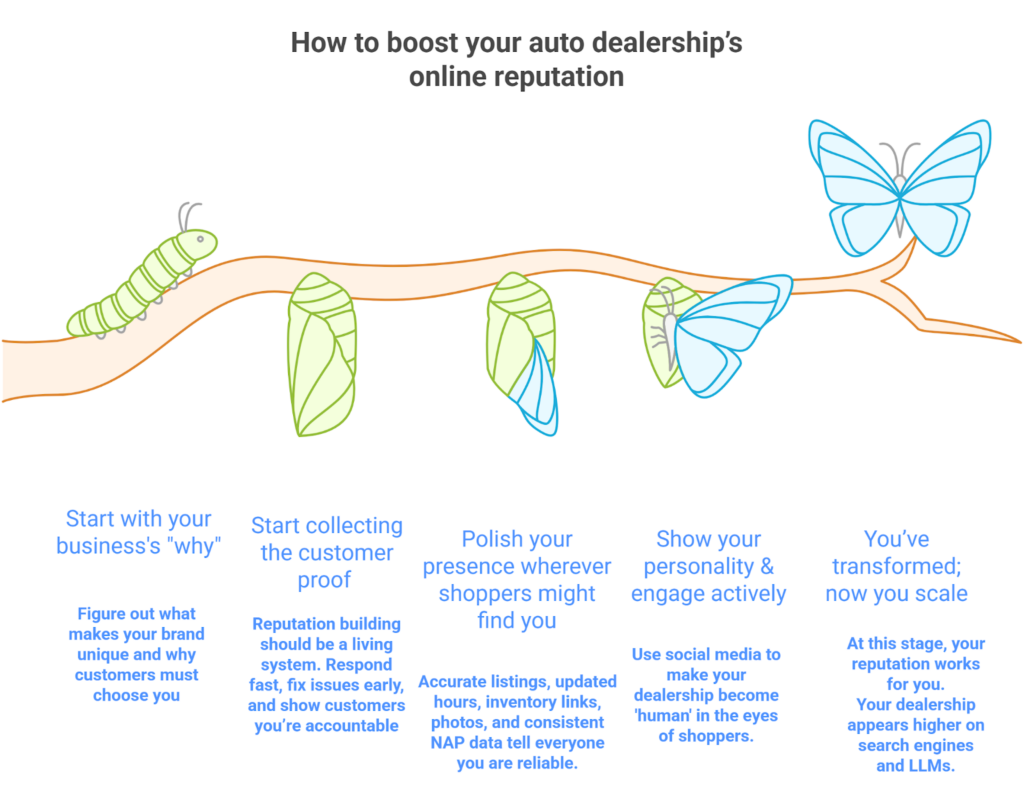
How to boost your auto dealership’s online reputation
While reviews play a huge role in online reputation management for an automotive business, your online presence is more comprehensive than that. To optimize it, you must leverage various channels — you want to show up positively wherever your target audience may be looking for you.
. Here are the channels that matter most and how to win on each.
- Reviews: Your biggest trust signal
- Listings: Your foundation for local visibility
- Social media: Your modern-day storefront
- Customer feedback: The behind-the-scenes truth
We’ll explore each of these tactics in detail below.
Reviews: Your biggest trust signal
Customers don’t just skim star ratings — they look for patterns, tone, and how you treat people when things go wrong. This is the heart of automotive online reputation management.
What matters most to shoppers
- A high volume of recent reviews (not just old ones)
- How consistently you respond
- Whether you handle frustration with professionalism
- Real stories from customers who sound like them
What your dealership needs to do
- Ask every customer for a review — no exceptions
- Send review requests the same day the sale or service ends
- Use SMS + WhatsApp + email for higher response rates
- Respond to all reviews: positive, neutral, and negative
- Turn positive reviews into social posts for added reach
The Birdeye advantage
Birdeye autonomous Review Generation Agent and Review Response Agent handle the full lifecycle of customer feedback automatically and:
- Auto-detect new customers and send review requests at the perfect time
- Prioritize sites like Google, DealerRater, Cars.com, and Edmunds based on gaps
- Auto-write on-brand, personalized responses using context + sentiment
- Manage reviews across all your locations from one dashboard
- Convert top reviews into website widgets and social posts in one click
This means more reviews, faster responses, and a stronger reputation — without burning out your team.
Listings: Your foundation for local visibility
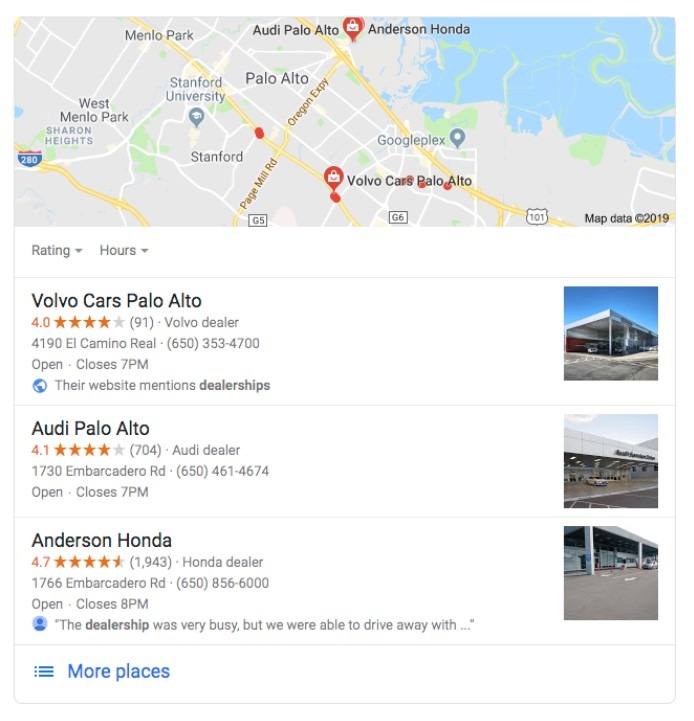
Your listings on the top car review sites are often the first impression buyers get — and they rely on them heavily when comparing dealerships.
Why listings matter
- They influence whether you rank in the local map pack
- Google cross-checks your information across these sites
- Inconsistent info signals low trust in both Google and buyers
- Many shoppers skip websites and click directly from listing sites
What your dealership needs to do
- Keep Name, Address, Phone (NAP) consistent everywhere
- Update holiday hours, service specials, and inventory links regularly
- Add high-quality exterior and interior photos
- Monitor auto-specific listing sites like:
- Cars.com
- CarGurus
- DealerRater
- Edmunds
- SureCritic
- Carwise (for service/repair)
- AutoMD
The Birdeye advantage
Birdeye Listings Optimization Agent serves as an always-on digital assistant that synchronizes coordinates and operating hours across 80+ high-authority platforms:
- Continuously scan Google, Apple, Yelp, Facebook & auto directories for errors
- Fix incorrect or outdated info automatically within your brand guardrails
- Identify ranking opportunities using real keywords and competitor analysis
- Ensure your location details stay accurate across every high-value directory
So every digital doorway to your dealership stays polished, consistent, and conversion-ready.
Social media: Your modern-day storefront
Before visiting, buyers check your social pages to see what type of business you are. They’re looking for signs of trust and personality — not just promotions.
What customers look for
- Real customer photos and delivery moments
- Quick responses to messages
- Honest posts about service, maintenance, and buying tips
- A dealership that feels active and approachable
What your dealership needs to do
- Post consistently (3–5 times a week is enough)
- Share reviews, behind-the-scenes moments, and car delivery photos
- Use Reels/short videos to build trust quickly
- Respond to all DMs across locations (centralized tools help)
- Avoid only posting promos — it feels pushy
The Birdeye advantage
Birdeye Social Publishing Agent and Engagement Agent handle multi-location publication workflows, keeping local feeds active while triaging comments and incoming inquiries instantly:
- Auto-create on-brand posts using reviews, trends, and local themes
- Schedule content at peak engagement times for each location
- Auto-respond to comments and DMs with human-like messaging
- Monitor multi-location engagement from one unified inbox
Customer feedback: The behind-the-scenes truth
Reviews are public. Feedback is private — and incredibly valuable for improving your operations.
Why feedback matters
- It exposes problems early, before they become negative reviews
- It shows you where customers struggle during the buying process
- It helps fix service issues that affect loyalty
What your dealership needs to do
- Send quick post-visit surveys
- Track recurring themes (slow paperwork, test drive wait times, etc.)
- Resolve issues through a ticketing process
- Use sentiment insights to understand what customers actually feel
The Birdeye advantage
Birdeye Insights AI + Reporting ensures you never miss a warning sign:
- AI identifies patterns like “slow finance process” or “poor delivery updates”
- Auto-flags urgent or high-risk feedback
- Sends issues straight to team members as tickets
- Gives multi-location leaders a clear view of what’s improving — and what’s not

Boost the reputation of your car dealership
Want to see the impact of Birdeye on your business? Watch the Free Demo Now.
How to build a high-trust reputation for your auto business
If you’re sending lots of review requests, chances are, you’re going to get some bad reviews. It happens to even the best businesses.
So what can you do when you get a bad review? If you have reason to believe the review is fake, you can report it. Sites like Google and Facebook will remove a review if they see it came from a customer who isn’t on their list.
Most of the time, a great response is the best way to deal with a bad review. Here’s a three-step process for dealing with an angry customer review.
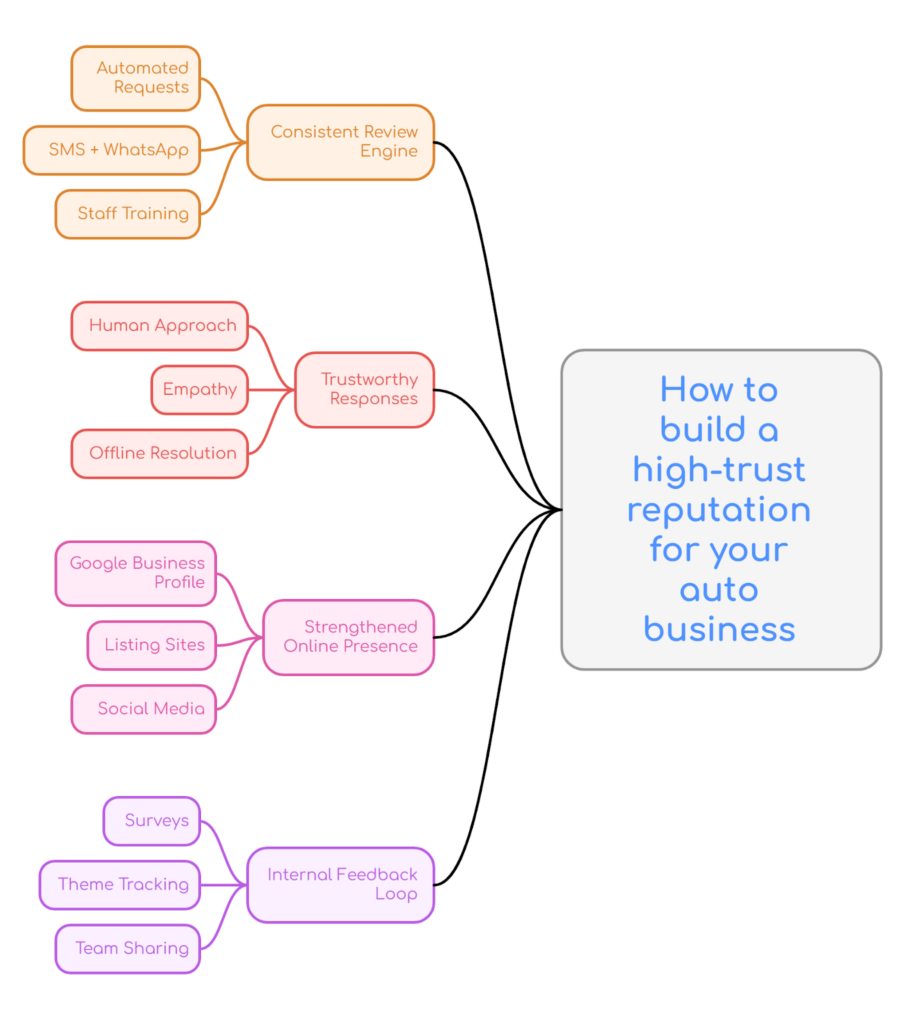
Step 1: Create a consistent review engine
To master automotive reputation management strategies, you need a predictable system — not random, one-off requests.
What consistency looks like
- Every customer gets a review request
- Requests go out the same day
- Your team follows one process, not ten different versions
- Nothing depends on someone “remembering”
How to set it up
- Use automated review requests tied to your CRM/PoS
- Send via SMS + WhatsApp for maximum response
- Include direct links to Google, Facebook, and auto-specific sites
- Keep the message short, friendly, and personal
- Train staff to verbally warm customers up before the ask (“We’d love a quick review if you had a good experience today.”)
Why it works
When review collection becomes automatic, your reputation grows without effort — and you always look fresh and active to shoppers.
Step 2: Respond as a business that people trust
Your responses say as much as your reviews do. Buyers read them to understand your attitude, professionalism, and honesty.
How to respond well:
- Keep it human, not scripted
- Thank happy customers personally
- Address negative experiences directly
- Show empathy before explanation
- Move complicated issues offline quickly
How to handle negative reviews:
- Don’t argue — acknowledge
- Don’t over-explain — resolve
- Don’t ignore — learn from it
- Don’t panic — buyers judge tone, not perfection
When to request removal:
- Fake reviews
- Reviews from non-customers
- Irrelevant or inappropriate comments
Pro tip: A thoughtful response to a bad review can build more trust than a generic 5-star rating.
Here’s a template you can use with your customers to address negative feedback.
Thanks for bringing (issue/problem that the customer experienced) to our attention. While we typically pride ourselves on doing everything we can to make our customers happy, it’s clear that we fell short here. I want to make sure that you get the attention you deserve as a valued customer. Give me a call at (phone number) when you have the chance.
Step 3: Strengthen your presence everywhere buyers look
Your dealership can’t rely on one channel anymore. Customers bounce between Google → listing sites → social media → your website → WhatsApp messages.
Your must-have visibility checklist
- Google Business Profile fully updated
- Same NAP across all listing sites
- Auto-specific profiles active (Cars.com, CarGurus, Edmunds, DealerRater)
- Fresh photos of your showroom, inventory, and service bay
- Weekly posts for updates and offers
- Clear call-to-actions (Call, Directions, Chat)
Make your online presence feel consistent
If your Google profile looks five-star but your Facebook page is a ghost town, customers get suspicious. Consistency reinforces professionalism.
Read more: For dealerships operating in the UK, explore our 2026 guide to reputation management for car dealers in the UK for a closer look at building trust and visibility across reviews, listings, search, and social media.
Step 4. Build an internal feedback loop
A great reputation on the outside requires a great process on the inside.
How to build a feedback culture
- Send quick surveys after service, sales, and test drives
- Track themes (pricing transparency, delivery time, staff behavior)
- Use ticketing to flag urgent issues
- Share insights with sales + service teams
- Celebrate good customer experiences to set the standard
Reputation management for multi-location dealerships
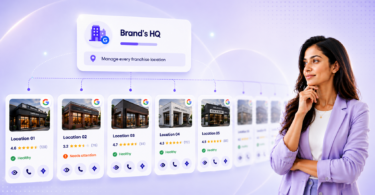
Managing reputation for one dealership is work. Managing it for five, ten, or fifty locations is a completely different challenge — and a huge opportunity if done right.
Multi-location car dealers face more complexity than single stores: more staff, more customer interactions, more listings, more reviews, and more places where mistakes can slip through. But they also have the power to build a regional reputation that smaller competitors simply can’t match.
Here’s how to stay consistent at scale without losing control.
✔ Centralize oversight without micromanaging
Corporate teams need visibility across all locations — not to babysit, but to ensure each branch reflects the same brand promise.
What to centralize
- Review monitoring (all locations, one dashboard)
- Templates for responses
- Brand guidelines for tone, messaging, and escalation
- Listing accuracy across every site
What to leave local
- Personalized review responses
- Quick replies to DMs and questions
- On-the-ground customer problem-solving
- Capture of local stories, photos, and wins
This balance keeps your brand unified while allowing each location to stay human and authentic.
✔ Standardize the review process across all stores
Inconsistent review practices create uneven reputations across locations. One store might look like a hero while another appears neglected.
What multi-location dealerships need
- One review request system for all branches
- Automated triggers tied to CRM/service logs
- Shared templates for negative-feedback handling
- Visibility into which stores respond consistently and which don’t
This prevents “good store / bad store” impressions and keeps your brand credibility intact.
✔ Maintain clean, consistent listings everywhere
Every location must have accurate and aligned information — or customers lose trust instantly.
Your multi-location listings checklist
- Same naming style across all stores
- Identical formatting of addresses, phone numbers, and hours
- Updated inventory and service details
- High-quality photos for each branch
- Verified profiles for all locations
A single incorrect listing causes confusion, missed calls, and dropped leads — especially when customers compare multiple branches of the same brand.
✔ Centralize messaging + social without losing the local touch
Multi-location dealers get flooded with DMs, inquiries, service questions, and comments. If this isn’t centralized, some customers get ignored.
What actually works
- One inbox for all messages across locations
- Assign conversations to the right store instantly
- Local teams respond, corporate monitors
- Consistent brand tone with room for personal touch
Centralization prevents dropped leads, but local teams keep conversations authentic.
✔ Real insights from aggregated feedback
One of the biggest advantages of multi-location groups is data.
You see trends faster.
What aggregated feedback can reveal
- Which locations have repeated complaints
- Which advisors or salespeople consistently earn praise
- Where bottlenecks occur (delivery, paperwork, service wait times)
- What customers love most about your brand
- How sentiment changes month to month
This allows leadership to act early — long before reviews turn into reputation damage.
✔ Scale confidently with the right tools
At a multi-location scale, spreadsheets and manual monitoring fall apart quickly.
Centralized reputation platforms (like Birdeye) solve this by giving you:
- One dashboard for all reviews
- Automated review requests
- Location-specific insights
- Unified social + messaging inbox
- Listing management for every store
- Role-based access for local teams
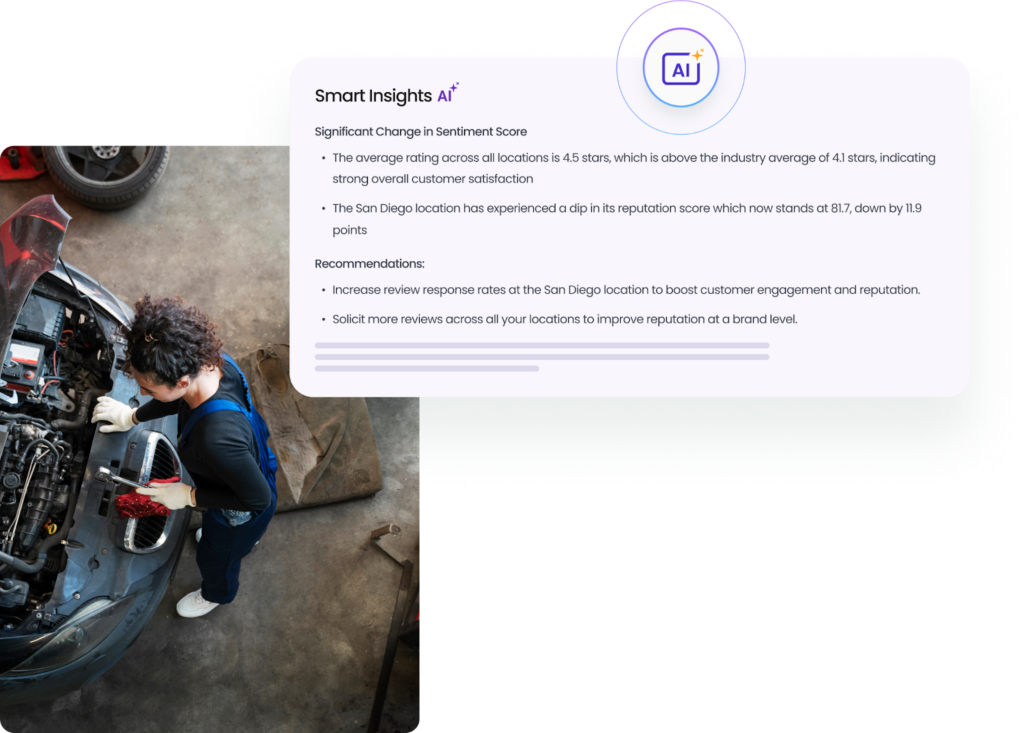
It’s not about replacing people — it’s about empowering them to deliver a consistent reputation experience across every branch.
Read more: How to choose the best reputation management company
FAQs on reputation management for automotive businesses
Customers look for a solid reputation in auto repair shops to believe they are working with a trustworthy brand. A strong online presence, glowing reviews, and active customer communication channels can help establish trust.
The best software is the one that helps your dealership collect reviews automatically, manage listings, monitor every customer touchpoint, and respond quickly from one place.
Most auto dealers choose Birdeye because it covers everything: automated review requests, listing accuracy, social media management, unified messaging, surveys, and multi-location oversight. It’s built specifically for local businesses — including dealerships, so it solves the real problems dealers face daily, not just the generic ones.
You can manage reputation at scale by centralizing visibility but keeping responses local. Here’s what that looks like in practice:
One dashboard to monitor reviews across all locations
Automated review requests for every branch
Shared response templates and brand guidelines
Consistent listings for each dealership
Unified inbox for all DMs, messages, and questions
Clear ownership: local teams reply, corporate oversees consistency
The safest way is also the simplest:
Ask every customer
Ask immediately after the sale or service
Send the request through SMS or WhatsApp with a direct link
Keep your message short and personal
Never offer incentives — no discounts, gifts, or rewards
Never filter customers or “ask only the happy ones”
Google wants honest, organic reviews. A consistent, automated review request process is completely allowed — and it’s the fastest way to grow.
Reputation is one of the biggest ranking factors in local search. Google looks at:
Your average star rating
How often do you get new reviews
How quickly you respond
Whether your listings are accurate
Whether your profiles are active
Dealerships with better reviews and more consistent activity show up higher in the local map pack, get more clicks, and attract more foot traffic. Reputation isn’t just about trust — it’s a direct SEO advantage.
Automotive reputation management software helps dealerships track, manage, and improve how customers perceive them across the entire buying and ownership journey.
It typically includes:
Automated review collection
Review monitoring + response tools
Listing management across dozens of sites
Social media publishing and message handling
Customer surveys and sentiment insights
Reporting for multi-location oversight
Birdeye: The top automotive reputation management software for your business
Siloed workflows, fragmented dealership tools, and manual review monitoring slow down regional automotive groups, leaving open doors for data inconsistencies and missed leads. Point solutions simply cannot handle enterprise complexity.
Birdeye is the top choice for global brands to manage their reputation because it lets you improve the customer experience, boost customer loyalty, and increase revenue from a single dashboard. Powerful integrations with 3,000+ CRM tools and review sites make it easy to grow your business across multiple channels.
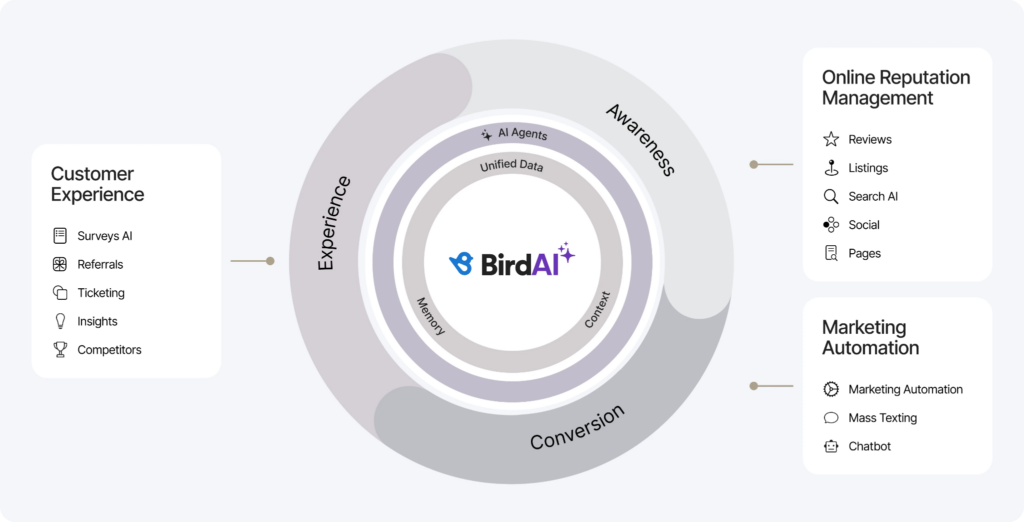
Birdeye’s full-cycle agentic marketing platform eliminates the operational overhead of managing local reputation. Birdeye gives multi-location automotive dealership groups total corporate governance over their regional footprint. Driven by advanced local intelligence and autonomous marketing agents, Birdeye helps brands turn digital discovery into predictable showroom traffic across every location.

About the Author

Shruti Dugar
Birdeye
Originally published