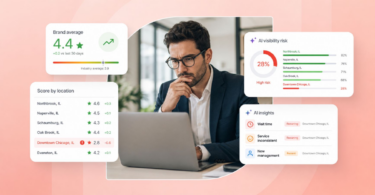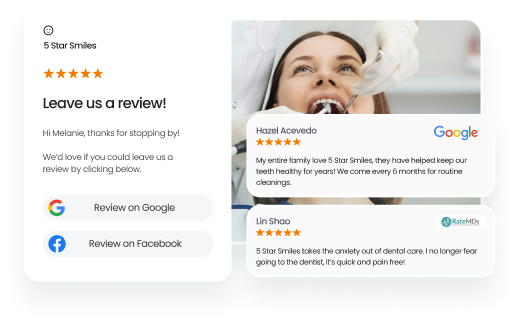
Business reputation management in 2026 is how brands shape and maintain public perception across reviews, search, social media, and AI-driven discovery. It directly affects trust and purchase decisions before customers engage.
Summary
Business reputation management is a continuous system in which every review, rating, social mention, and customer interaction shapes how a brand is perceived online and summarized by AI-driven platforms. Businesses that actively manage their online reputation improve customer trust, strengthen visibility in AI and traditional search, reduce reputation risks, and create better customer experiences across every touchpoint.
This blog explains what business reputation management is, why it matters for brand growth, and how organizations can set up a structured approach to strengthen trust, improve visibility, and maintain a consistent brand presence across channels.
Table of contents
- What is business reputation management
- Why business reputation management matters in 2026
- What are the best business reputation management strategies that work in 2026
- How to build a business reputation management plan
- What are the 3 best tools for business reputation management (2026)
- What are some business reputation management best practices
- What are the emerging trends in business reputation management (2026)
- FAQs about business reputation management
- Unified reputation management at scale with Birdeye
What is business reputation management
Business reputation management is the strategic process of monitoring, influencing, and maintaining how customers, stakeholders, search engines, and AI platforms perceive a company across reviews, ratings, listings, social media, and online experiences.
For example, a dental practice notices declining appointment bookings despite stable website traffic. A review audit reveals repeated complaints about scheduling delays and poor communication. Instead of treating reviews as isolated issues, the clinic updates its scheduling workflows, responds publicly to customer concerns, and implements automated review requests after each appointment.
Over time, positive reviews increase, customer sentiment improves, and the clinic regains visibility in local search results. This demonstrates how managing business reputation directly impacts customer trust and business performance.
Why business reputation management matters in 2026
According to Gartner, 61% of consumers question the reliability of the information they use to make decisions, making consistent and credible reputation signals more important than ever. Moreover, as customer discovery and decision-making are increasingly influenced by reviews, AI search, and online sentiment, reputation management has become a core driver of business growth.
Here’s why online business reputation management is critical in 2026:
Improves visibility in AI and search
AI tools like OpenAI ChatGPT, Google Gemini, and Perplexity AI prioritize businesses with strong ratings, recent reviews, and consistent sentiment. According to Birdeye’s State of AI Search 2026 report, only 15% of brands secure the top position in AI-generated answers, underscoring the importance of reputation management for visibility.
Protects against real-time reputation risks
Negative feedback and public complaints spread faster than ever. Businesses can no longer afford delayed responses or inconsistent communication. Birdeye research found that business response rates increased from 63% to 73%, showing a clear shift toward active monitoring. Businesses that respond quickly can address issues earlier, reduce escalation, and protect customer trust.
Builds trust that drives revenue
Customers increasingly rely on reviews to evaluate businesses before making decisions. According to Birdeye’s State of Online Reviews 2026 report, review volume grew 30.7% year over year, highlighting the growing influence of customer feedback. A strong online reputation builds confidence during the decision-making stage and directly impacts conversions.
Turns feedback into business improvements
Customer reviews provide valuable insight into operational gaps and customer expectations. Today, 81% of reviews include written comments, giving businesses richer feedback to analyze. These insights help teams identify recurring issues, improve customer experience, and make more informed business decisions.
Strengthens competitive positioning
Customers often compare businesses based on ratings, review quality, and online presence before choosing where to buy. According to Birdeye’s State of Online Reviews 2026 report, Google accounted for 79.4% of reviews per location in 2025, underscoring the importance of reputation for visibility and customer trust. Businesses with stronger reputation signals are more likely to earn attention in both traditional search and AI-driven discovery experiences.
Supports long-term growth and brand value
Reputation influences how businesses are represented across digital and AI platforms. According to Birdeye’s State of AI Search 2026 report, 80% of brands are cited at least once in AI search results. Consistent reputation management enhances credibility, supporting retention and long-term growth.
In 2026, reputation management directly impacts how businesses are discovered, trusted, and chosen.
What are the best business reputation management strategies that work in 2026
Managing online business reputation requires a structured system across reviews, listings, social platforms, customer engagement, and AI visibility.
Here are nine proven business reputation management strategies with real-world examples.
1. Centralize business review monitoring across platforms
Customers leave reviews and feedback across Google, social platforms, business directories, and industry-specific sites. Monitoring these channels separately often leads to missed feedback and inconsistent responses. A centralized reputation monitoring system helps businesses track reviews, identify sentiment shifts early, and respond faster across platforms.
Example: Amazon centralizes customer feedback across seller ratings, reviews, and support channels to identify product and service issues faster.
2. Standardize review response guidelines
Consistency plays a major role in customer trust. Businesses should establish clear standards for response tone, escalation handling, response timelines, and crisis communication to ensure every customer interaction reflects the brand consistently across teams and locations.
Example: Marriott International uses standardized response protocols across hotel brands to maintain consistent guest experiences globally.
3. Strengthen local SEO through accurate listings management
Accurate business listings directly impact customer trust, local SEO, and AI-driven visibility. Businesses should regularly audit key information such as business name, address, phone number, hours, and website URLs to maintain consistency across platforms. Use Birdeye’s free local SEO audit tool to instantly identify and fix listing gaps before they hurt your rankings.
Example: McDonald’s maintains consistent, up-to-date listings across its global locations. Accurate hours, menus, and contact details help customers find nearby outlets easily and reduce friction.
4. Build a proactive review generation system
A steady flow of recent reviews signals that a business is active, trusted, and consistently delivering customer value. Businesses should automate review requests at key customer touchpoints and encourage detailed feedback to maintain fresh and relevant reputation signals.
Example: Uber prompts riders and drivers to rate and submit feedback immediately after each trip, creating a continuous stream of fresh reviews.
5. Use sentiment analysis to identify recurring issues
Modern business reputation management goes beyond collecting reviews. Businesses now use sentiment analysis to uncover recurring complaints, service gaps, and customer experience trends that can guide operational improvements across teams and locations.
Example: Netflix uses customer feedback analysis to improve platform usability and content experiences.
6. Manage brand perception on social platforms
Customer perception is increasingly influenced by social engagement, testimonials, reviews, and public interactions across digital channels. Businesses that actively engage audiences, respond quickly, and showcase authentic customer experiences build stronger credibility and trust online.
Example: Zomato actively engages customers through conversational social responses and real-time customer interaction. This approach helps the brand stay relatable and responsive.
7. Create a reputation crisis management framework
Reputation risks can escalate quickly through viral complaints, operational failures, or negative publicity. Businesses should establish clear crisis communication workflows, escalation paths, and approval structures before issues arise so teams can respond quickly and consistently during high-risk situations.
Example: Samsung managed the Galaxy Note 7 battery issue by issuing public statements, recalling devices, and communicating updates globally. The structured response helped rebuild customer trust over time.
In a nutshell, effective business reputation management in 2026 depends on clear, focused strategies that cover monitoring, engagement, accuracy, and improvement. When each area works together, businesses build trust and maintain a strong and reliable online presence.
How to build a business reputation management plan
A strong reputation management strategy requires clear ownership, structured workflows, continuous monitoring, and measurable goals.
Here’s a step-by-step framework for building a scalable business reputation management plan.
Step 1. Audit your current reputation baseline
Start by reviewing how your business appears across search results, review platforms, and social media. Look at ratings, recent feedback, and overall sentiment trends. Identify recurring issues, strengths, and gaps such as outdated information or unanswered reviews. This creates a clear starting point for improvement.
Step 2. Define goals tied to business outcomes
Set specific goals that connect reputation to measurable outcomes. Focus on metrics such as average rating, review volume, customer sentiment, or response time. Tie these goals to outcomes like conversions, retention, or customer satisfaction. Local businesses with ratings around 4 stars tend to earn significantly more clicks than lower-rated competitors.
Step 3. Prioritize high-impact platforms
Identify the platforms that influence customer decisions in your industry. This often includes Google, Facebook, Yelp, and industry-specific review sites. Focus your efforts on a small set of high-impact channels instead of spreading resources too thin. This helps your team stay efficient and consistent where it matters most.
Step 4. Build a structured feedback and response workflow
Define how your team should collect, manage, and respond to customer feedback across different scenarios. Businesses should automate review requests at key customer touchpoints to maintain a steady flow of fresh feedback and identify recurring issues faster. Establish clear expectations for response time, tone, escalation paths, and when conversations should move offline for resolution.
Step 5. Strengthen your search presence with controlled content
Develop content that accurately reflects your brand, such as customer stories, FAQs, or service pages. Ensure this content appears prominently in search results. This allows you to influence how your business is perceived online.
Step 6. Align teams with customer experience standards
Make online reputation management a shared responsibility across teams. Train staff on communication standards and best practices for customer interaction. Connect feedback insights with operational improvements. Alignment ensures your reputation reflects actual customer experiences.
Step 7. Measure impact and refine continuously
Track performance regularly using key metrics, including sentiment trends, response effectiveness, and customer feedback patterns. Identify what improves perception and what needs adjustment. Continuous tracking helps you stay relevant and responsive.
A strong reputation management plan focuses on clarity, prioritization, and continuous improvement. When supported by relevant benchmarks and consistent execution, this approach helps businesses build trust, improve visibility, and maintain a reliable online presence.
Business Reputation Management Guide
Want to see the impact of Birdeye on your business? Watch the Free Demo Now.
What are the 3 best tools for business reputation management (2026)
Looking for the best reputation management software for your business? Here are a few tools to help you monitor your multi-location business’s reputation management strategy.
1. Birdeye
Best for: Enterprise and multi-location brands
Description:
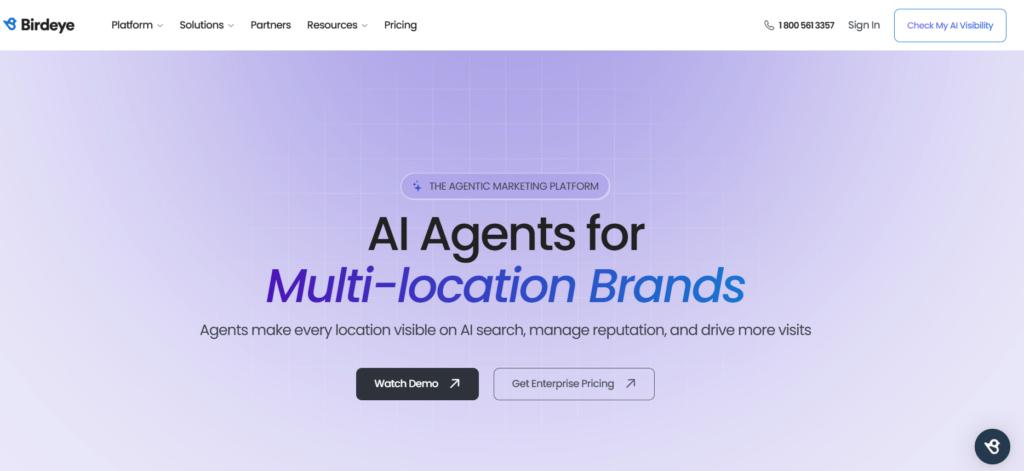
Trusted by global brands like H&R Block, Aspen Dental, and Caesars Entertainment, Birdeye is a full-cycle platform that manages reputation across 100 to 10,000+ locations from a single system. It combines enterprise governance, such as role-based access, audit trails, and permissions, with AI-driven execution. The platform helps multi-location brands manage listings, reviews, customer engagement, AI search visibility, social publishing, and overall reputation in a unified way.
Three core pillars:
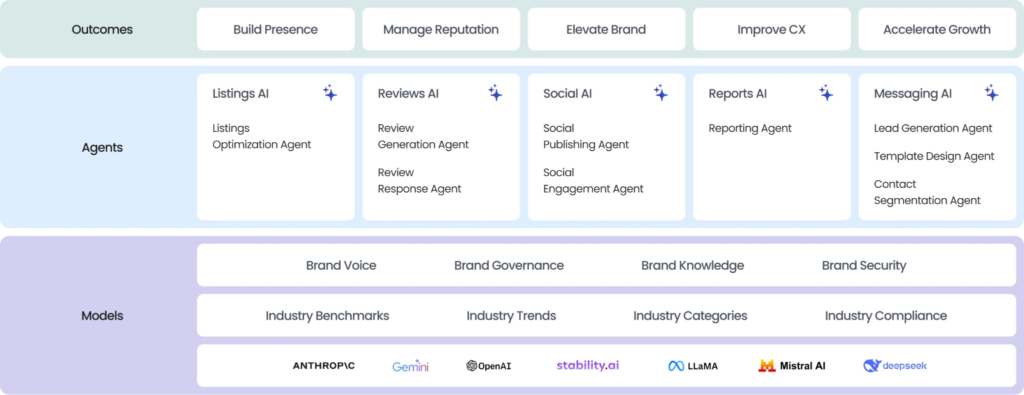
Birdeye supports business reputation management by unifying data, turning it into actionable insight, and enabling automated execution through AI-driven workflows.
Consolidate: unify your reputation data
Birdeye brings together customer data from CRMs, POS systems, and other platforms into a single system. This gives brands a complete view of customer interactions and feedback across all locations. With 3,000+ integrations, teams reduce fragmentation and manage reputation from one place.
Think: understand reputation through context
Birdeye analyzes reviews, feedback, and engagement patterns to highlight sentiment trends and operational gaps. It helps brands understand how each location is performing and where customer experience needs attention. This makes reputation management more data-driven and consistent.
Act: execute reputation workflows at scale
Birdeye automates key reputation tasks, including generating reviews, responding to customer feedback, updating listings, and managing engagement. AI agents execute these actions in line with brand guidelines, helping teams maintain consistency without manual effort.
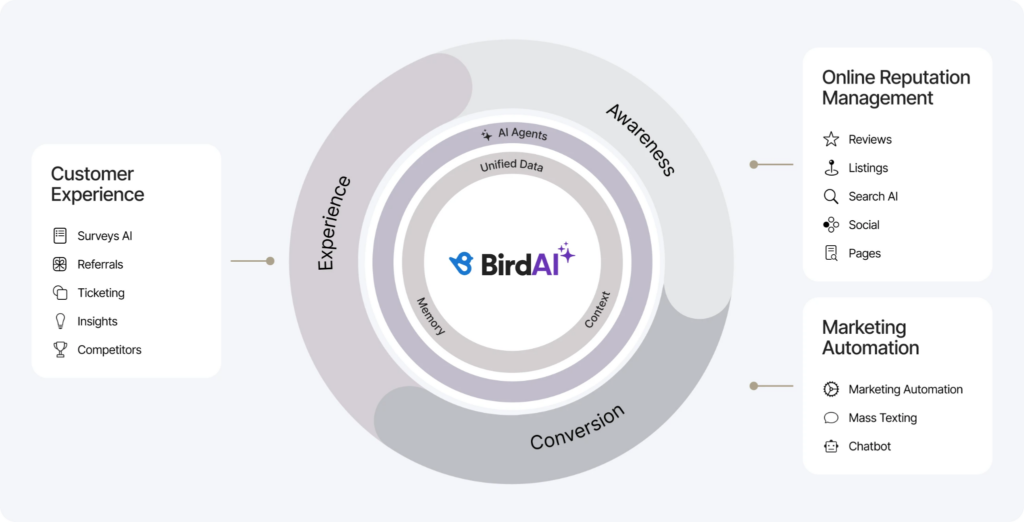
Key capabilities:
- Reviews AI: Manages the complete review lifecycle from a single dashboard. It helps brands increase review volume, improve response speed, and maintain consistency across locations. The Review Generation Agent sends requests at the right time with optimized messaging to improve feedback collection, while the Review Response Agent generates contextual, sentiment-aware replies aligned with brand tone to ensure consistent customer communication.
- Listings AI: Keeps business information accurate and consistent across directories to improve customer discovery. The Listings Optimization Agent continuously monitors listings, detects inaccuracies, and identifies visibility gaps that can impact local search performance. This helps brands maintain reliable information across all locations.
- Search AI: Improves how business profiles appear across traditional search engines and AI platforms such as ChatGPT, Gemini, and Perplexity. It helps brands stay discoverable by strengthening profile accuracy and identifying gaps in online visibility.
- Social AI: Manages brand presence across social platforms through automated publishing and engagement workflows. The Social Publishing Agent creates and schedules localized content to maintain an active presence across locations, while the Social Engagement Agent monitors interactions and helps brands respond consistently to customer engagement at scale.
- Insights AI: Analyzes customer feedback across locations to identify sentiment changes, recurring concerns, and experience gaps. It gives brands a clearer understanding of performance patterns across their entire network.
- Reporting Agent: Generates ready-to-use reports from GBP and performance data using natural language prompts. It helps teams quickly translate data into clear insights for decision-making.
How Birdeye helped Chartway Credit Union strengthen business reputation management
Birdeye helped Chartway Credit Union improve member satisfaction and scale its reputation management efforts across locations. By automating review generation and centralizing reputation workflows, the credit union generated more than 17,000 new reviews while gaining better visibility into customer feedback trends.
With Birdeye’s Reviews AI and competitive benchmarking tools, Chartway streamlined how it collected and responded to member feedback. This gave marketing and operations teams a clearer understanding of customer sentiment across branches and helped maintain a more consistent member experience.
Since implementing Birdeye, Chartway has achieved measurable gains in reputation performance and member engagement:
- Google rating: 4.7 stars, reflecting consistently strong member experiences
- Total Google reviews: 2,000+, a 1,300+ increase since partnering with Birdeye
- New reviews overall: 17,000+ since implementation
- Google profile impressions: 4.6 million total, averaging ~1.5 million annually
- Website visits from Google listings: 1,000+ per month
As Elizabeth Short, SVP of Marketing at Chartway Credit Union, explains:
“Birdeye has been instrumental in helping us scale our reputation management while improving efficiency. The ability to automate review collection and track competitor benchmarks has been a game-changer.”
Elizabeth Short
SVP of Marketing, Chartway Credit Union
The case highlights how enterprise brands can use AI-driven reputation management to increase review volume, monitor customer sentiment, and manage brand consistency across multiple locations from a single platform.
Pros:
- Built for large-scale reputation management across multiple locations with strong visibility and control
- Brings reviews, listings, messaging, and customer feedback into one connected platform
- AI-driven automation focuses on execution, not just analysis
- Expands reputation management into modern AI search and discovery channels
- Handles scale efficiently across hundreds to thousands of locations
Cons:
- The platform is highly configurable, which may require initial setup effort to match specific organizational structures
- Teams may need a short onboarding phase to define roles, permissions, and workflows effectively
Pricing:
Birdeye offers custom pricing based on brand size, number of locations, and selected features. Pricing is not fixed publicly and is tailored to each organization. It helps reduce overall costs by replacing multiple tools with a single unified platform.
Awards:
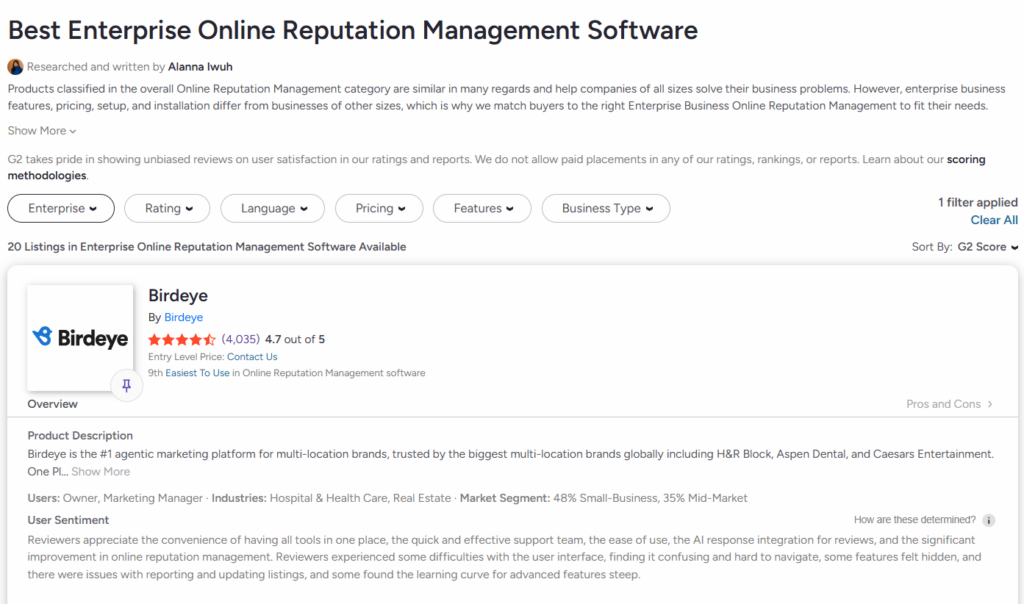
G2 has ranked Birdeye as the No. 1 Enterprise Online Reputation Management Software with a 4.7/5 rating based on 4,035+ reviews.
2. ReviewTrackers
Best for: Businesses managing reviews across diverse locations and customer touchpoints
Description:
ReviewTrackers is a reputation management and customer feedback platform that helps brands collect, monitor, and analyze online reviews from 100+ review sites in one place. It is designed to improve customer experience by giving teams visibility into sentiment, review trends, and service performance across locations. The platform helps brands respond faster, track reputation health, and make informed operational decisions based on customer feedback.
Key capabilities:
- Review monitoring and aggregation: Consolidates reviews from platforms like Google, Facebook, and other major review sites into a single dashboard for easy tracking and response management.
- Review response management: Enables teams to respond to customer reviews from a single interface, helping maintain timely communication and a consistent brand tone.
- Sentiment analysis and feedback insights: Analyze review content to identify customer sentiment, recurring themes, and operational issues that impact experience.
- Competitor benchmarking: Compares review performance with competitors to help brands understand their relative reputation position in the market.
- Reporting and analytics: Provides dashboards and reporting tools to track ratings, trends, and customer feedback performance across locations.
Pros:
- Review aggregation from multiple platforms in one dashboard
- Useful sentiment and trend analysis for customer experience teams
- Helps brands track reputation across locations efficiently
- Simple interface for monitoring and responding to reviews
Cons:
- Limited capabilities beyond review management and analytics
- Less emphasis on broader marketing or engagement workflows
- Advanced customization and integrations may be restricted for some users
3. Podium
Best for: Local service brands
Description:
Podium is a customer interaction and messaging platform that helps businesses communicate with customers via text and centralize conversations in a single inbox. It is widely used by service-based brands to collect reviews, manage customer inquiries, and improve response speed. The platform focuses heavily on SMS-driven engagement and simplifying customer communication across channels.
Key capabilities:
- Unified customer messaging: Centralizes customer conversations from SMS, web chat, and other messaging channels into a single inbox for easier management and faster responses.
- Review generation via SMS: Sends automated text-based review requests after customer interactions to help brands increase review volume.
- Customer engagement tools: Enable real-time communication with customers for inquiries, updates, and support through messaging workflows.
- Payment and transaction support: Allows businesses to collect payments and complete transactions directly via messaging.
- Feedback and reputation tracking: Helps businesses monitor reviews and customer feedback from key platforms in one place.
Pros:
- SMS-based communication and review collection
- Simple unified inbox for customer interactions
- Easy for service-based and local businesses to adopt
- Helps improve response speed and customer engagement
Cons:
- Focuses more on messaging than full reputation analytics depth
- Limited advanced reporting compared to analytics-heavy platforms
- Costs can increase with higher messaging and feature usage
What are some business reputation management best practices
Want to know how to shine in your business reputation management efforts? Here are some best practices businesses should follow in 2026.
1. Build reputation management into daily business operations
Reputation should not be treated as a standalone marketing activity. Businesses should integrate reputation tracking into customer support, operations, leadership reviews, and employee training so that reputation becomes part of everyday decision-making.
2. Prioritize authenticity over reputation manipulation
Customers and AI systems increasingly detect overly scripted reviews, review gating, and unnatural feedback patterns. Businesses should focus on collecting genuine customer feedback and maintaining transparent engagement rather than artificially inflating ratings.
3. Establish governance for multi-location consistency
For multi-location businesses, inconsistent customer experiences can damage overall brand perception. Establishing centralized governance for review responses, listing management, escalation handling, and brand messaging helps maintain consistency across all locations.
4. Monitor reputation trends instead of isolated reviews
Single negative reviews rarely define brand perception. Businesses should focus on broader reputation patterns such as recurring complaints, declining sentiment trends, or changes in customer expectations. Trend analysis provides more meaningful insight than reacting emotionally to individual reviews.
5. Use reputation data to strengthen customer retention
Customer feedback often highlights early warning signs of churn, dissatisfaction, or operational friction. Businesses that use reputation insights proactively can improve retention, strengthen loyalty, and address customer concerns before they escalate into larger reputation issues.
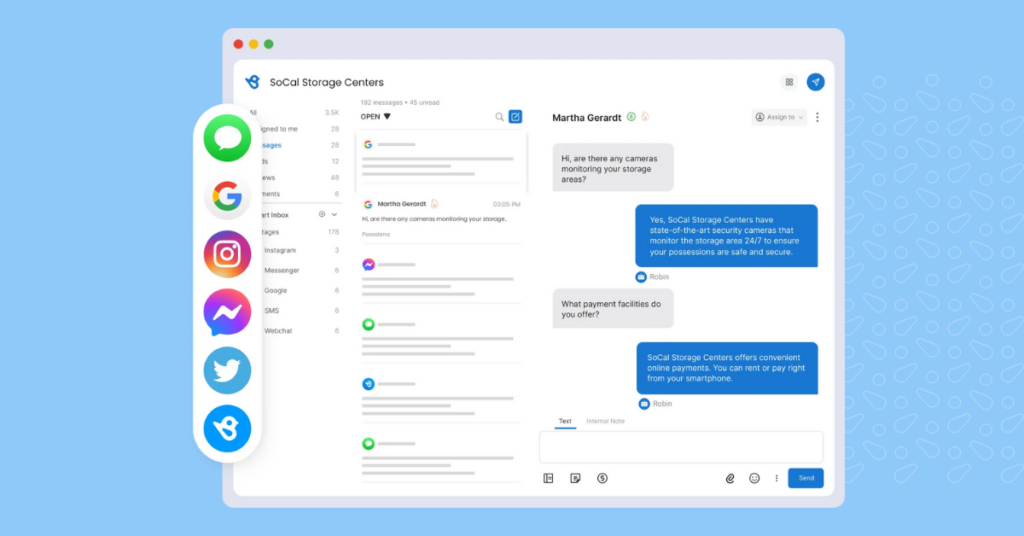
What are the emerging trends in business reputation management (2026)
The world of business reputation management continues to evolve with changes in search behavior, AI engines, and customer expectations. Today, reputation is shaped not only by reviews and social media, but also by how AI answer engines interpret and summarize brand information across the web.
Here are the key trends shaping business reputation management:
1. AI-driven reputation management becomes mainstream
AI now plays a central role in managing reputation at scale. Businesses use it to automate review responses, analyze sentiment, and identify patterns in customer feedback. For example, platforms like Birdeye use AI capabilities such as ‘BirdAI‘ to help businesses manage reviews, generate responses, and track sentiment across locations. This improves consistency and helps teams respond faster with more context-aware messaging.
2. Reputation quality signals matter more than review quantity
High review counts alone no longer define reputation strength. LLM engines now analyze sentiment trends, review depth, recency, and consistency to understand the real customer experience. How a business responds to feedback also plays a key role in shaping this evaluation. Reputation is increasingly judged on authenticity and behavior rather than just star ratings.
3. Real-time reputation monitoring and response expectations
Customer expectations have shifted toward instant acknowledgment and resolution. Delayed responses are often interpreted as poor service or neglect. Businesses are now expected to detect sentiment changes quickly and respond across platforms in near real time. This has increased reliance on AI tools that flag risks as they emerge rather than through periodic monitoring.
4. Reputation management becomes multi-platform by default
Reputation is no longer confined to a single review site or channel. It now exists across review platforms, social media, third-party listings, and even AI-generated summaries. This spread makes consistency critical, as conflicting signals across platforms can distort brand perception. Managing reputation now requires aligning messaging and responses across every channel where customers engage.
5. Employee and creator signals influence reputation more heavily
Brand perception is increasingly influenced by voices beyond official brand channels. Employee experiences, influencer commentary, and customer-shared stories all contribute to public sentiment. These narratives often gain wider visibility through social sharing and are frequently absorbed into AI-driven reputation summaries. As a result, indirect signals now carry significant weight in shaping trust.
6. AI search is reshaping brand perception
Reputation is no longer defined only by review sites. It is increasingly shaped by how AI-driven search platforms summarize and interpret your brand. That means your business reputation management strategy must account for how your brand appears in AI-generated results.
Customers now use AI search tools like ChatGPT, Gemini, Perplexity, and more to get recommendations, comparisons, and summaries before making decisions. These systems analyze reviews, sentiment trends, response behavior, listing accuracy, and third-party content to generate answers.
Birdeye Search AI connects review trends, customer feedback, and online visibility to help businesses understand not just how they are rated, but how they are interpreted when customers search.
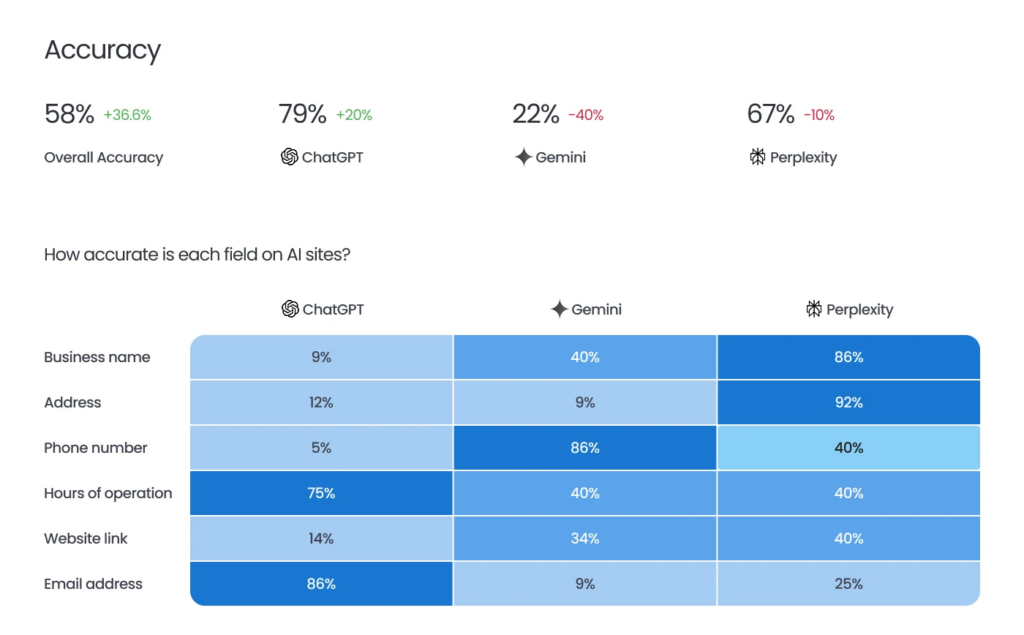
Search AI impacts reputation management by helping brands:
- Understand how their brand is summarized across AI search experiences
- Identify which reviews and signals influence AI-generated recommendations
- Detect outdated or inconsistent listings that weaken credibility
- Monitor sentiment trends that affect visibility in search answers
- Compare perception against competitors in real time
FAQs about business reputation management
Business reputation management is the practice of monitoring and shaping a business’s perception in the online and offline worlds. It involves strategies to handle feedback, promote positive reviews, and mitigate the impact of negative sentiment.
The four components of reputation management typically include monitoring your reputation, responding to both positive and negative feedback, repairing any damage from negative incidents, and building a strong, positive online presence.
The primary objectives of reputation management are to establish and maintain a positive brand image, to increase trust among consumers, and to manage and mitigate the effects of negative content. It’s also focused on promoting brand values and increasing customer engagement.
Reputation can be measured through various metrics such as customer feedback scores, review ratings, social media sentiment analysis, brand mentions, the volume of positive vs. negative press, and customer loyalty indicators like repeat purchases or retention rates.
The cost of business reputation management varies based on company size, needs, and services, typically ranging from a few hundred to several thousand per month. Pricing depends on factors like review volume, platforms managed, and level of monitoring and response support.
Unified reputation management at scale with Birdeye
Birdeye is the #1 agentic marketing platform for multi-location brands. It replaces fragmented marketing tools with AI agents that manage your reputation across hundreds or thousands of locations. It simplifies everything, from gathering and responding to customer reviews to handling feedback from all sorts of places in one neat package.
Birdeye’s smart analytics and reporting capabilities give you a clear picture of what your customers are thinking and feeling. And, this is way beyond just keeping an eye on your reputation; it’s about understanding and shaping it to help your business grow in the long run.
Ready to transform your business reputation management strategy? Watch a demo today to know how Birdeye can pull this off.

About the Author

Vanjana Sharma
Originally published



![[Feature image] Best Reputation Management Platforms for Multi-Location Brands in 2026](https://birdeye.com/blog/wp-content/uploads/Feature-image-Best-Reputation-Management-Platforms-for-Multi-Location-Brands-in-2026-375x195.png)