AI agents for marketing are increasingly responsible for end-to-end task execution. From generating reviews and responding to customers to publishing social content and capturing leads, AI agents now execute entire marketing workflows end-to-end with minimal human intervention.
Summary

As AI adoption grows, the real differentiator is how much responsibility an AI agent can handle without manual oversight. Marketing teams are moving toward agents that can operate continuously, apply rules consistently, and manage outcomes across multiple channels instead of executing isolated actions.
This blog breaks down 10 AI agents for marketing that deliver measurable business results, starting with Birdeye AI Agents built to run critical marketing workflows across reputation, social, and customer engagement.
Table of contents
How do AI agents for marketing drive better results?
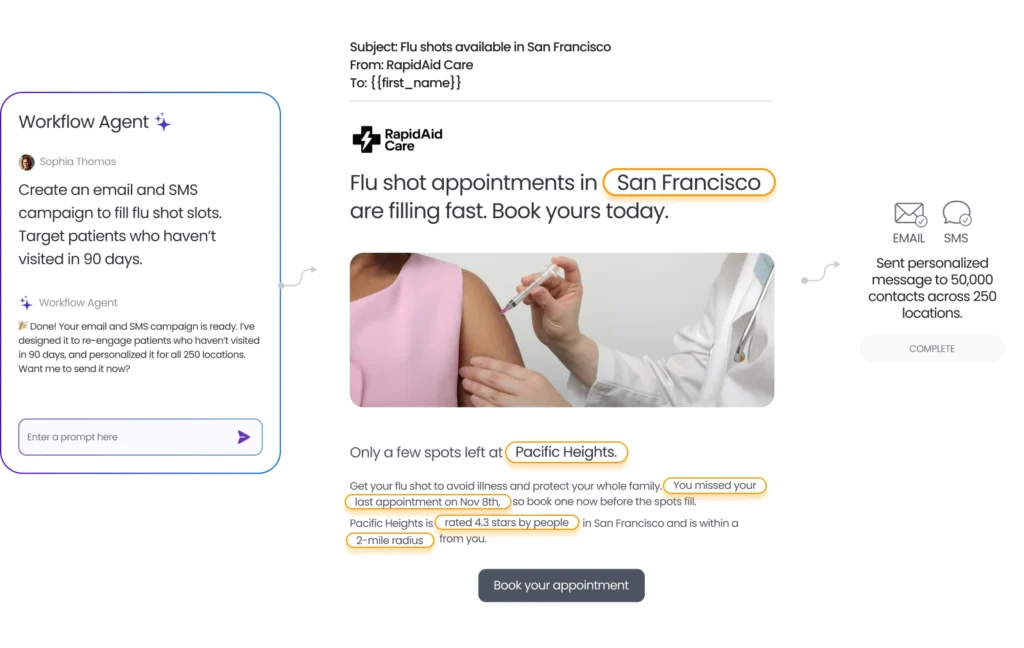
In practice, AI agents go beyond assisting with individual tasks and instead own execution across entire workflows. As a result, they improve operational efficiency and outcomes. By handling complex workflows, personalization, and optimization at scale, these agents increase ROI while also giving marketing teams space to focus on higher-level work.
Here’s how AI agents drive better marketing outcomes in practice:
Hyper-personalization at scale
AI agents analyze large volumes of customer data (behavior, sentiment, location, history, and intent) to deliver highly relevant content, offers, and experiences to individuals, not just broad segments, which improves engagement and response rates.
Autonomous execution across channels
AI agents plan, launch, and manage campaigns across email, social, listings, reviews, and paid channels. They automate scheduling, testing, and follow-ups so campaigns continue running even when teams are offline.
Real-time optimization
AI agents continuously learn from live performance data and adjust targeting, messaging, timing, and spend in real time. This helps marketers capture opportunities and avoid wasted budget as conditions change.
Speed and operational scale
As a result, Agents process data, build segments, and optimize content faster than manual workflows. This allows teams to test more ideas and manage multiple locations and channels without adding headcount.
Deeper customer insights
AI identifies patterns across reviews, messages, social interactions, and engagement data to surface insights that are difficult to detect manually, helping teams make better marketing decisions.
More focus on strategic work
By taking over repetitive, time-consuming, and data-heavy tasks, AI agents free marketers to focus on high-value work such as brand strategy and positioning, creative direction, and long-term planning, where human judgment matters most.
Together, these capabilities explain why AI agents are becoming essential to modern marketing teams. Next, we’ll break down 10 AI agents for marketing that apply these capabilities in real marketing workflows.
Top 10 AI Agents for marketing in 2026
AI agents go beyond task assistance to actively execute, optimize, and manage key marketing workflows. Each one plays a specific role across reputation, content, engagement, operations, and customer experience, helping teams achieve measurable results at scale.
Let’s take a look at the top 10 AI agents shaping modern marketing workflows in 2026:
| # | AI Agent | Core function | Key capabilities |
| 1 | Birdeye AI Agents | Automates the entire customer journey for multi-location brands | AI agents for review generation & response, social publishing & engagement, listings optimization, lead capture, reporting, custom agents |
| 2 | Jasper.ai | Executes end-to-end marketing workflows | Content pipelines, campaign execution, brand voice enforcement, workflow orchestration |
| 3 | Relevance AI | Manages autonomous marketing, sales, and operational workflows | Lead qualification, content creation, CRM enrichment, SEO, customer support, chat/voice/API integration |
| 4 | Zendesk AI Agents | Service and support automation | Automated responses, intelligent ticket routing, predictive insights, workflow integration |
| 5 | HubSpot (Breeze Agents) | Sales & marketing communication automation | Draft personalized emails, content summaries, follow-ups, CRM integration |
| 6 | Salesforce Agentforce | CRM and marketing workflow automation | Automates CRM workflows, predictive insights via Einstein AI, integration across sales, service, marketing |
| 7 | Skott by Lyzr.ai | Autonomous marketing campaign execution | Content creation, campaign planning, SEO insights, workflow orchestration, performance reporting |
| 8 | Claygents (Clay AI Agents) | Research, enrichment, and workflow automation | Build/test/version autonomous agents, web research, CRM enrichment, centralized workflow automation |
| 9 | Drift AI Agents | Automates workflows across sales, marketing, support, and operations | Company Brain, Lead Hunter, Cold Outreach, Content Creator, Newsletter Automator, Web & Inbox Assistants |
| 10 | Zapier AI Agents | Workflow automation across multiple apps | Connect systems, trigger actions, lead routing, reporting, alerts, reduce manual tasks |
1. Birdeye AI Agents
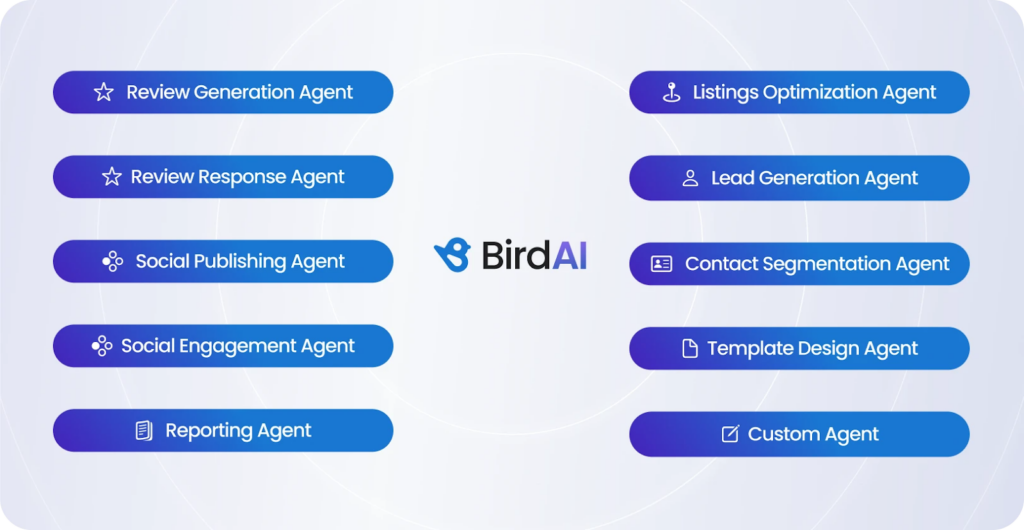
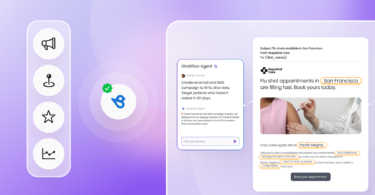
Birdeye AI Agents are purpose-built AI agents designed to execute and optimize customer experience and marketing workflows at scale. Unlike traditional AI tools that assist with isolated tasks, Birdeye’s agents are built for context, autonomy, and outcomes, helping brands manage reputation, social presence, listings, and customer engagement end-to-end without manual effort.
Birdeye leads the pack as the #1 Agentic Marketing Platform for enterprise-focused, large multi-location brands. Trusted by leading global brands, it unifies listings, review management, and social posting to deliver consistent brand presence and seamless customer engagement across 100+ to 10,000+ locations.
Key BirdAI Agents & features:
Consolidate (Full-Cycle Platform)
- Listings Optimization Agent: Analyze business listings and surface high-impact SEO improvements to improve search rankings and local conversions automatically.
- Social Publishing Agent: Fill your social calendar with AI-generated, on-brand posts tailored to each platform and location, saving hours of planning.
- Custom Agent: Build custom agents to solve business-specific challenges and automate workflows using unique data sets and rules.
Think (Local Intelligence)
- Contact Segmentation Agent: Build dynamic customer segments automatically using real-time data and AI recommendations, managed easily through chat-based commands.
- Reporting Agent: Generate actionable insights and tailored reports using simple natural-language queries, eliminating the need to dig through multiple dashboards.
Act (Marketing Agents)
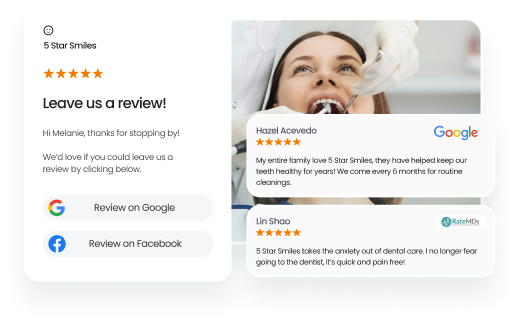
- Review Generation Agent: Sends review requests at the perfect time with optimized messaging to increase response rates and drive higher review volume on the right platforms.
- Review Response Agent: Auto-generate on-brand review replies that understand sentiment, tone, images, and context with full control to edit, approve, or schedule responses.
- Social Engagement Agent: Respond to every message faster using AI-powered triage, routing, and replies to improve response times and customer satisfaction.
- Lead Generation Agent: Qualify leads, follow up instantly, and escalate when needed across channels, ensuring no lead is missed even when you are offline.
- Template Design Agent: Instantly create brand-aligned templates for emails, newsletters, texts, and landing pages with AI-driven prompts and editing.
Why it matters: Birdeye AI Agents help brands automate and scale customer engagement across the entire customer journey, improving review volume, response times, local visibility, lead capture, and operational efficiency while reducing manual workload.
2. Jasper.ai
Jasper.ai is an AI-powered marketing execution platform that puts intelligent AI agents to work across end-to-end marketing workflows. Built as an agent workspace for modern marketing teams, Jasper orchestrates 100+ specialized AI agents and connected content pipelines to turn marketing plans into live execution. It helps teams move faster, maintain brand control, and scale marketing across channels while reducing operational complexity.
Key features:
- AI agents run end-to-end marketing workflows
- Content pipelines help automate the full content lifecycle
- Campaign execution and performance scales across channels
- Built-in brand voice, tone, and messaging controls through Jasper IQ
- Workflow orchestration designed for speed, control, and measurable impact
Why it matters: Jasper.ai enables marketing teams to shift from manual execution to automated, agent-driven workflows, helping them deliver faster results, stay on brand everywhere, and scale marketing efforts with greater consistency and control.
3. Relevance AI
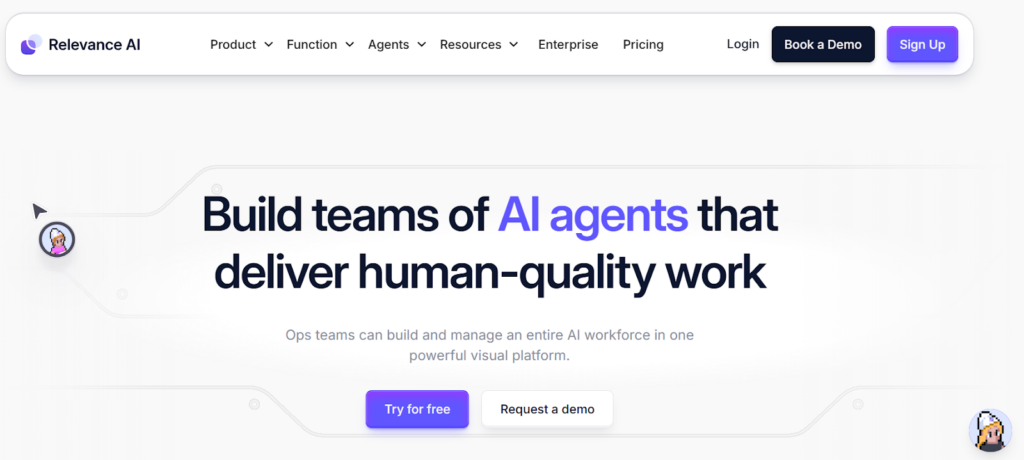
Relevance AI is an AI agent platform that enables teams to build, deploy, and manage autonomous agents that handle marketing, sales, and operational workflows, automating tasks like lead qualification, content creation, CRM enrichment, SEO, and support while learning from data to scale operations with context, brand alignment, and real-time insights.
Key features:
- Build and customize AI agents in seconds by describing the task
- Automate marketing, sales, research, and support workflows
- Capture metadata and context from every agent task automatically
- Schedule, approve, and track agent actions for operational control
- Integrate agents with chat, voice, Slack, and APIs for seamless execution
Why it matters: Relevance AI lets teams deploy true AI agents to run complex workflows autonomously, saving time, boosting efficiency, and keeping brand and data consistent.
4. Zendesk AI Agents
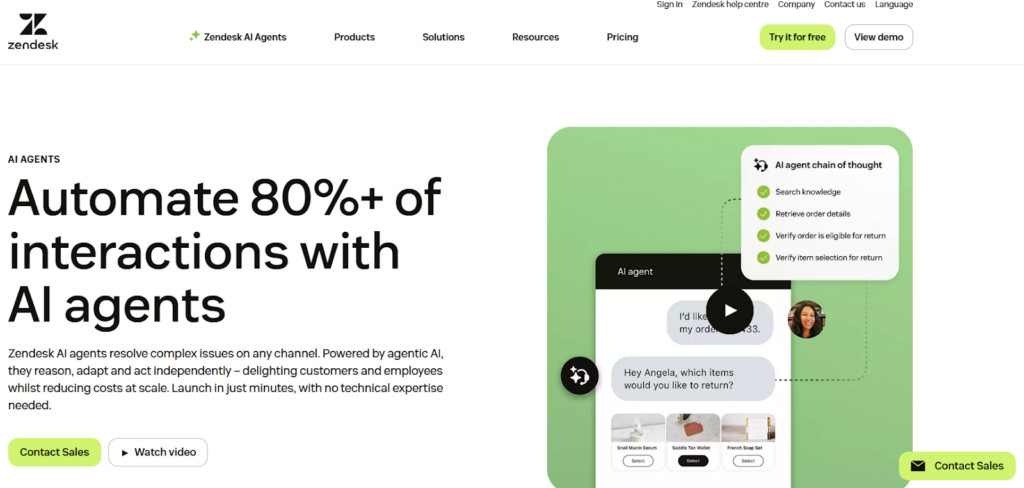
Zendesk AI Agents operate as a service and support agent, helping marketing and customer teams resolve issues faster. By automating up to 80% of customer interactions, this AI agent handles common responses, routes tickets intelligently, and predicts customer needs. This results in faster response times and consistency across support interactions.
Key features:
- Automates responses to common customer queries
- Routes tickets using intent and urgency
- Provides predictive insights for service teams
- Integrates across Zendesk workflows
Why it matters: Zendesk AI Agents help teams deliver timely, consistent support that strengthens customer relationships.
5. HubSpot
HubSpot (Breeze agents) acts as an AI agent within the HubSpot ecosystem, supporting sales and marketing communication. It drafts personalized emails, summaries, and outreach based on CRM data. Breeze helps teams communicate more effectively without manual content creation. It works directly inside existing HubSpot workflows.
Key features:
- Drafts personalized marketing and sales emails
- Uses CRM data for contextual messaging
- Supports content summaries and follow-ups
- Integrates natively with HubSpot tools
Why it matters: HubSpot improves outreach quality and speed while keeping communication aligned with customer context.
6. Salesforce Agentforce
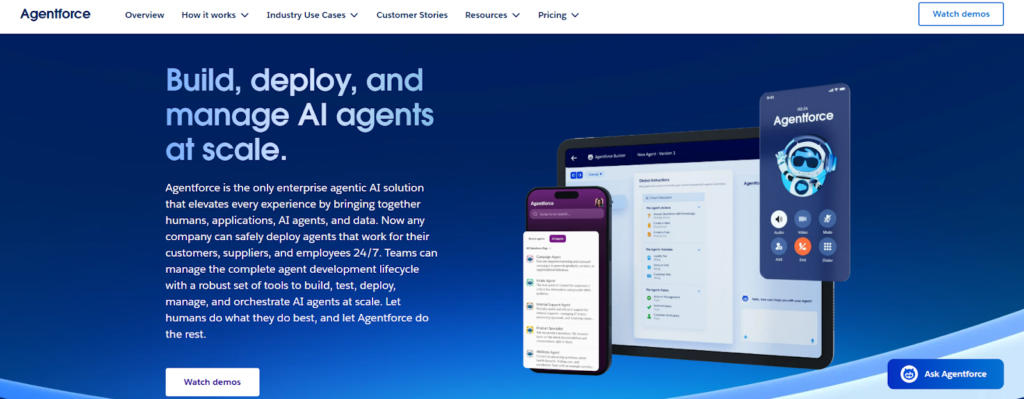
Salesforce Agentforce extends Einstein AI into autonomous agents across CRM, sales, service, and marketing. These agents assist with data analysis, workflow execution, and customer engagement. Agentforce supports large-scale operations that require governance and integration. It helps teams act on insights instead of just viewing them.
Key features:
- Automates CRM-driven workflows
- Supports sales, service, and marketing use cases
- Uses Einstein AI for predictive insights
- Integrates deeply with Salesforce products
Why it matters: Agentforce helps companies scale AI-driven execution while maintaining control and compliance.
7. Skott by Lyzr.ai
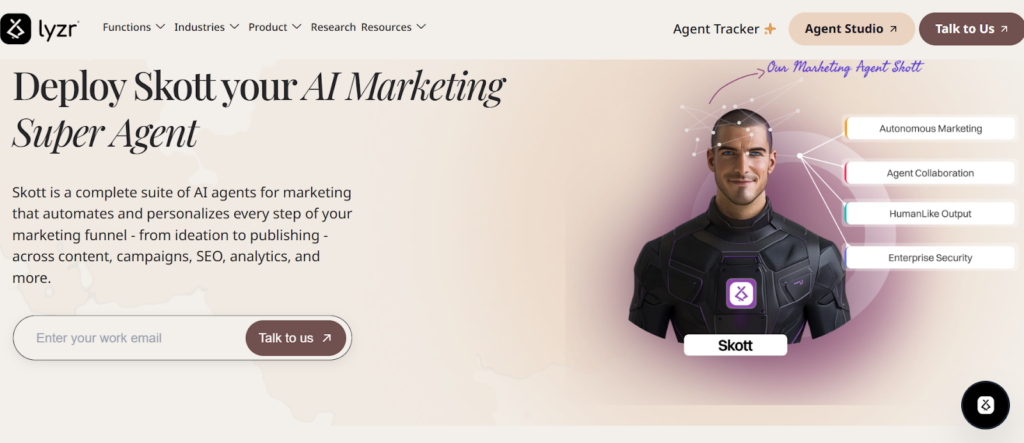
Skott by Lyzr.ai is an AI agent platform designed specifically for marketing teams and growth functions. It provides a suite of autonomous AI agents that plan, create, execute, and optimize marketing workflows with minimal manual input. Skott helps marketers automate core tasks, including content creation, campaign management, SEO, and performance analysis, across channels.
Key features:
- Coordinated AI marketing agents that handle strategy, content, campaigns, and analytics
- Automated generation of blogs, social posts, emails, ad copy, and SEO content
- Campaign execution and workflow orchestration across digital touchpoints
- SEO insights and competitive analysis driven by AI insights
- Performance reporting to measure engagement and campaign effectiveness
Why it matters: Skott by Lyzr.ai helps marketing teams automate campaigns, content, and analytics, saving time while boosting efficiency and impact.
8. Claygents (Clay AI Agents)
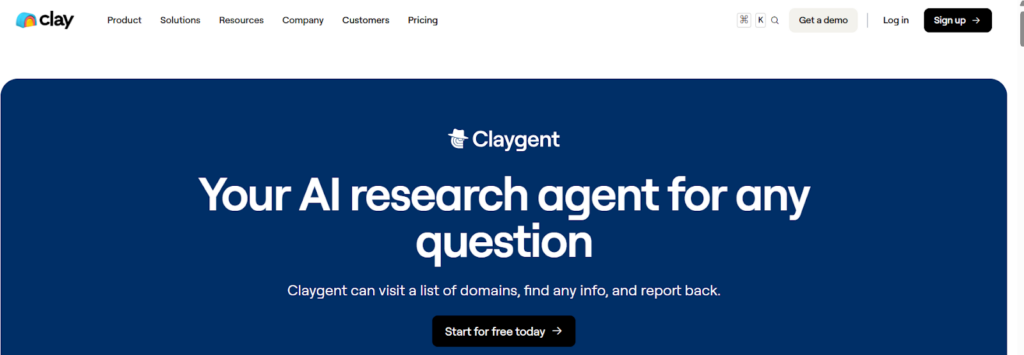
Claygents are autonomous AI agents within the Clay platform that perform research, enrichment, and workflow automation tasks independently. These agents can navigate websites, extract structured information, enrich CRM or prospect data, and execute repeatable processes, all without constant manual input. Claygents can be built, tested, and versioned by teams to run reliably across data and go-to-market workflows
Key features
- Build, test, and version autonomous AI agents (Claygents) for research and enrichment
- Agents autonomously navigate web sources and extract structured information
- Automate data enrichment and prospecting workflows at scale
- Centralized agent management ensures consistency and reusability across tasks
- Integrates with CRM and go-to-market workflows for actionable insights
Why it matters: Claygents let teams deploy true AI agents that automate research and enrichment workflows, reducing manual effort and improving the quality and consistency of go-to-market data.
9. Drift AI Agents
Drift AI Agents are a suite of specialized autonomous AI agents designed to streamline workflows and handle business tasks across functions such as internal knowledge, sales, outreach, content, marketing, engagement, and support. These agents integrate with existing systems to execute complex operations, from personalized outreach to customer interaction, without requiring constant manual effort.
Key features
- Company Brain AI Agent for internal knowledge access, meeting recaps, and training support
- Lead Hunter AI Agent that performs lead data scraping and market research reporting
- Cold Outreach AI Agent for personalized email sequences and optimized inbox handling
- Content Creator AI Agent for content research, draft generation, and visuals
- Newsletter Automator AI Agent to automate newsletters and campaigns
- Web Assistant AI Agent that manages customer inquiries, bookings, and tickets
- Inbox Assistant AI Agent for priority message handling and reply automation
Why it matters: Drift AI Agents empower teams to automate routine and complex workflows across sales, marketing, support, and operations, helping businesses save time, improve consistency, and scale processes without scaling headcount
10. Zapier AI Agents

Zapier AI Agents automate workflows across thousands of marketing and business tools. These agents connect systems, trigger actions, and manage processes without manual intervention. They help teams eliminate repetitive operational work. Zapier AI Agents support complex, multi-tool marketing environments.
Key features
- Automates workflows across connected apps
- Uses AI to determine next actions
- Supports lead routing, reporting, and alerts
- Reduces manual process gaps
Why it matters: Zapier AI Agents keep marketing operations running smoothly across tools and teams.
However, many AI platforms focus on individual marketing tasks. However, Birdeye AI Agents go further by providing fully autonomous, purpose-built execution across marketing and customer experience.
Learn About Top 10 AI Agents for Marketing
Want to see the impact of Birdeye on your business? Watch the Free Demo Now.
How did we evaluate the top 10 AI Agents for marketing tools?
To build this list, we evaluated AI agent products based on how well they move beyond task assistance to own execution and deliver measurable marketing outcomes. Each product was assessed using the following criteria:
1. True agentic capabilities
We prioritized products that explicitly position themselves as AI agents or agentic AI, capable of acting autonomously, not just suggesting actions. This includes the ability to plan, execute, and optimize workflows with minimal human intervention.
2. End-to-end execution
We looked for AI agents that manage complete marketing workflows rather than isolated steps. This includes execution across areas such as content creation, customer engagement, reputation management, lead handling, or reporting.
3. Outcome-driven impact
Products were evaluated on their ability to drive measurable business results, such as increased engagement, improved response times, higher conversion rates, better visibility, or operational efficiency, not just productivity gains.
4. Context awareness and personalization
We assessed whether AI agents use business context, brand voice, customer data, and real-time signals to deliver relevant, personalized actions at scale.
5. Automation at scale
Scalability was a key factor. We favored AI agents that perform reliably across multiple channels, locations, or customer touchpoints without increasing manual effort.
6. Control, transparency, and governance
We considered how much visibility and control teams retain, including review, approval, and customization options, ensuring AI execution remains aligned with brand and compliance requirements.
How to implement AI agents across marketing workflows
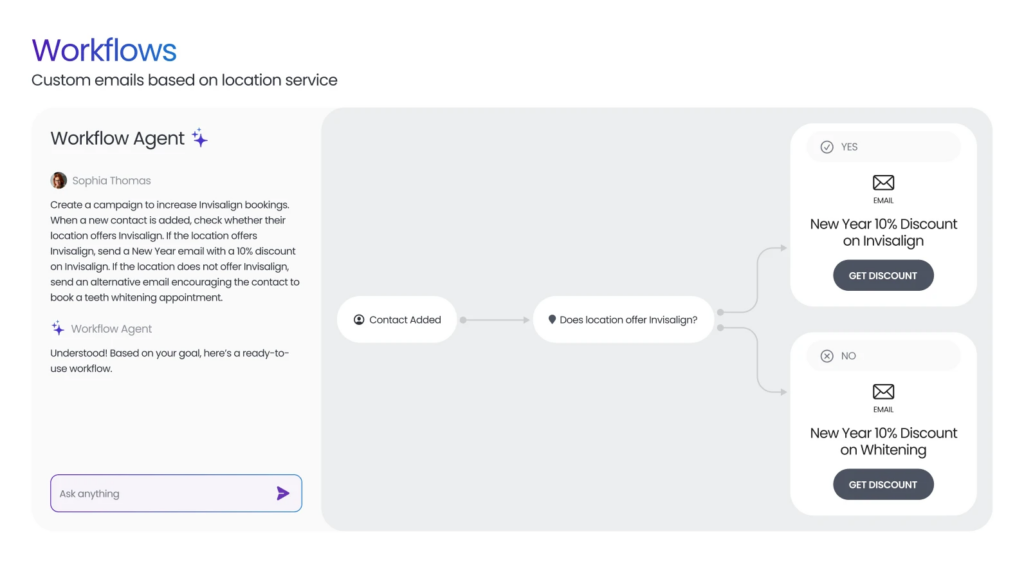
Marketing teams implement AI agents by setting clear goals, building strong data foundations, and maintaining structured oversight. Starting with low-risk tasks and scaling gradually helps ensure long-term success.
1. Strategic planning and foundation
Teams can set AI agents up for success by clarifying ownership, outcomes, and measurement from the start. Clean, unified data allows agents to act accurately and consistently.
- Define clear objectives: Set specific goals such as improving conversion rates, reducing response times, or increasing retention, and link them to measurable KPIs.
- Build a reliable data foundation: Maintain clean, centralized customer data so agents can personalize actions and make accurate decisions.
- Assess organizational readiness: Evaluate AI skills, technical infrastructure, and team readiness for automation before rolling agents into core workflows.
2. Implementation and oversight
Teams must deploy AI agents with structure and safeguards to maintain control and quality. Human oversight plays a critical role, especially during early rollout and high-impact use cases.
- Start small and scale intentionally: Launch agents on low-risk tasks such as content drafting or data analysis, then expand to core workflows.
- Apply a human-in-the-loop model: Review and approve outputs for sensitive campaigns and customer interactions.
- Set clear guardrails: Define privacy rules, access limits, and action boundaries to prevent errors.
- Integrate agents into the marketing stack: Connect agents with CRMs, CDPs, ad platforms, and analytics tools for seamless execution.
3. Continuous improvement and team enablement
Teams improve agent performance by reviewing outcomes and feeding insights back into workflows. Ongoing enablement ensures agents support strategic work rather than replace it.
- Monitor performance consistently: Track ROI, engagement, accuracy, and efficiency, and refine workflows based on results.
- Balance automation with human judgment: Assign agents to execution and data processing while humans lead strategy and creative direction.
- Enforce governance continuously: Audit agent behavior regularly to maintain compliance, accuracy, and responsible use.
By following these practices, teams can deploy AI agents confidently while building a scalable, well-governed foundation for long-term impact.
FAQs
AI agents for marketing are autonomous systems that plan, execute, and optimize marketing tasks based on goals, rules, and real-time data. They handle workflows such as content publishing, customer engagement, review management, and campaign optimization with minimal human input.
Traditional automation follows fixed rules and triggers, while AI agents make decisions dynamically. Agents learn from performance data, adjust actions in real time, and improve outcomes without constant manual intervention.
Yes, when teams apply proper governance. Brands should use guardrails, human review, data privacy controls, and compliance checks to ensure agents act responsibly and stay aligned with brand standards.
Birdeye AI Agents help multi-location brandsmanage reviews, listings, and social engagement consistently across locations. They apply brand rules centrally while responding to local customer signals in real time.
Birdeye Reviews AI Agents manage the entire review lifecycle, from sending review requests to generating contextual, on-brand responses and analyzing sentiment trends. They focus on execution and insights, not just monitoring.
No. AI agents handle repetitive and data-heavy execution, while marketers focus on strategy, creative direction, and decision-making. Teams use agents as digital teammates, not replacements.
Teams often see efficiency gains quickly, especially in content, reviews, and response times. Performance improvements compound over time as agents learn from data and optimize workflows.
See Birdeye AI Agents automate marketing outcomes end-to-end
AI agents will continue shifting from task execution to outcome ownership. Future agents will coordinate across more systems, adapt faster to customer behavior, and support proactive decision-making. Marketing teams will increasingly assign goals rather than manage steps. This will change how campaigns are planned, measured, and optimized.
As adoption grows, differentiation will come from agent quality, governance, and real-world performance. Teams that invest early will build more resilient and efficient marketing operations.
Watch the Birdeye demo to see how BirdAI agents automate marketing outcomes across reputation, social, and customer engagement.

About the Author

Vanjana Sharma
Originally published