Multi-location marketing is the strategy of managing brand visibility, customer engagement, and performance across multiple business locations while balancing central control with local execution. It ensures every location shows up accurately in search, earns reviews, and connects with its local audience, without fragmenting the brand.
Summary
Multi-location marketing enables enterprise brands to scale local discovery, reputation, and engagement across hundreds of locations without losing control or consistency. It connects centralized strategy with localized execution through structured data, automation, and performance tracking at the location level. Birdeye is built to provide this level of execution as the #1 Agentic Marketing Platform for multi-location brands operating 100-10,000+ locations, helping brands win in search, reviews, and customer experience simultaneously.
This article explains what multi-location marketing really means, what success looks like in 2026, and how enterprise brands can operationalize it effectively.
Table of contents
- Summary
- What is multi-location marketing?
- What are the benefits of multi-location marketing for enterprise brands?
- Where does multi-location marketing break down?
- What does a strong multi-location marketing strategy look like in 2026?
- How Birdeye’s Agentic Marketing Platform supports multi-location marketing?
- FAQs about Multi-Location Marketing
- Harness the power of multi-location marketing with Birdeye
What is multi-location marketing?
Multi-location marketing is a coordinated marketing approach where enterprise brands manage visibility, reputation, and engagement across multiple locations by combining centralized brand control with localized execution.
It includes:
- Managing location data across platforms like Google Business Profile
- Generating and responding to reviews at scale
- Publishing localized content and offers
- Tracking performance at both brand and location levels
At its core, it ensures each location is discoverable, relevant, and aligned with the overall brand, without operating in isolation.
What multi-location marketing is not:

1. It’s not a top-down channel checklist where corporate dictates & locations passively execute
2. It’s not full decentralization, where every location behaves like a separate brand
3. It’s not blind localization without governance, data validation, or brand safeguards
4. It’s not duplicating the same campaign across 100+ locations without adaptation
5. It’s not manual coordination across spreadsheets, emails, and disconnected tools
What are the benefits of multi-location marketing for enterprise brands?
For enterprise brands, multi-location marketing is not just an operational necessity, it’s a growth driver that directly impacts visibility, conversions, and customer trust. When executed well, it creates a system where every location contributes to overall brand growth. Here’s how:
1. Improves local search visibility at scale
A structured multi-location strategy ensures every location appears accurately in local search results, maps, and AI-generated summaries, driving more discovery without increasing paid spend. This ensures brands capture demand consistently across markets instead of relying on a few high-performing locations.
2. Consistent brand experience across locations
Centralized governance ensures messaging, tone, and positioning stay consistent, even as locations tailor content for their local audiences. As a result, customers experience the same brand promise regardless of which location they interact with.
3. Higher review volume and stronger reputation
With structured review generation and response workflows, brands can increase review velocity and maintain quality engagement across all locations. This builds trust, which directly influences both local rankings and customer decision-making.
4. Better conversion rates from local intent
Localized content, accurate listings, and strong reviews help convert high-intent searches into actions like calls, visits, and bookings. By aligning with user intent at the local level, brands reduce friction and improve conversion efficiency.
5. Scalable marketing operations
Automation reduces manual work across listings, reviews, and reporting, allowing lean teams to manage hundreds of locations efficiently. This enables enterprise teams to scale without proportionally increasing time, cost, or resources.
6. Data-driven decision making at the location level
Enterprise leaders can compare performance across regions, identify underperforming locations, and optimize strategies based on real data. This creates continuous improvement loops where insights directly inform better local and global decisions.
However, achieving these benefits isn’t automatic. Many enterprise brands struggle to realize this potential due to execution challenges across multiple locations, particularly when adapting to AI in multi-location marketing.
Where does multi-location marketing break down?
Multi-location marketing often fails not because of strategy, but because of execution gaps between corporate control and local reality. These gaps create inconsistencies, inefficiencies, and missed growth opportunities. Here are the most common challenges of multi-location marketing:
1. The central vs local tension
Corporate teams prioritize consistency, while local teams need flexibility. Without clear guardrails, brands either become too rigid or too fragmented. This tension directly impacts performance because localized relevance drives engagement, yet inconsistency weakens brand trust.
McKinsey research shows that 71% of consumers expect businesses to personalize experiences based on local context. When brands fail to balance this, they either lose relevance locally or dilute their identity globally.
2. Inconsistent local execution
Locations may interpret campaigns differently or lack the tools and training to execute properly, leading to uneven customer experiences. This inconsistency creates real business risk because customers don’t differentiate between locations, they judge the brand as a whole.
According to PwC’s Future of Customer Experience survey, 32% of consumers will stop doing business with a brand after just one bad experience, meaning even a few poorly executed locations can impact overall brand perception.
3. Data silos and lack of visibility
Disconnected systems create delays and inaccuracies. Leaders struggle to get a unified view of performance across locations. Without centralized visibility, decision-making slows down, and opportunities are missed.
According to a survey by IBM, nearly 77% of respondents agree that data silos hinder the organization’s ability to perform real-time analytics and make data-driven decisions. In multi-location environments, this often means underperforming locations go unnoticed until revenue is already impacted.
4. Inefficient review management
Manually managing reviews across dozens or hundreds of locations is inefficient and unsustainable, leading to opportunities in both collecting feedback and responding to it. Birdeye State of Online Reviews 2025 report states the average number of reminders needed before a customer submits a review increased from 15.74 to 17.23, highlighting the growing need for consistent follow-ups and automation.
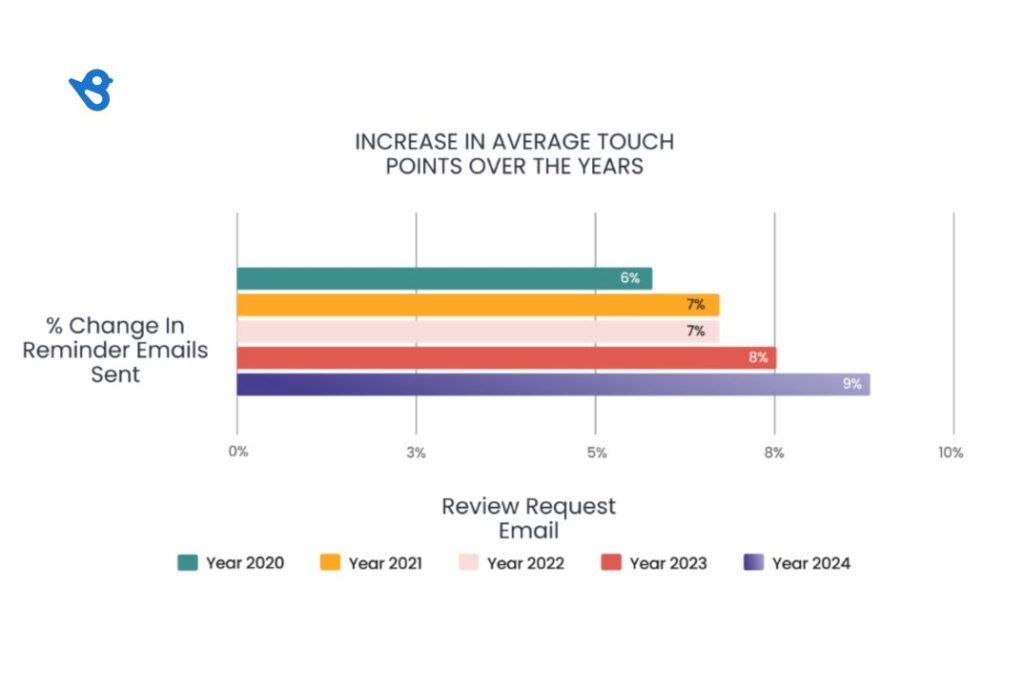
At the same time, review response rates rose by 15%, from 63% in 2023 to 73% in 2024, reinforcing that active engagement is becoming a competitive differentiator. In a multi-location environment, failing to systematize both review requests and responses results in lost visibility, trust, and conversion opportunities at the local level.
5. Fragmented customer experience
Inconsistent listings, outdated information, and delayed responses create friction in the customer journey. This friction leads to lost customers at key decision points. Salesforce reports that 80% of customers consider experience as important as products and services, meaning even small inconsistencies like wrong hours or slow responses can push customers toward competitors.
To overcome these challenges, brands need more than coordination, they need a structured, system-driven approach. That’s what defines a strong multi-location marketing strategy in 2026.
What does a strong multi-location marketing strategy look like in 2026?
A strong multi-location marketing strategy in 2026 is no longer about managing listings, reviews, or campaigns as separate efforts, it’s about integrating them into a unified engine that continuously drives visibility, engagement, and conversions.
At the same time, the rise of AI-driven discovery and increasing customer expectations mean that brands must operate with both centralized control and localized precision.
A strong multi-location marketing strategy in 2026 is built on four pillars:
- Accuracy (data consistency across platforms)
- Visibility (local + AI-driven discovery)
- Trust (reviews, ratings, engagement)
- Scale (automation + centralized intelligence)
1. Centralize and continuously synchronize location data
A strong strategy starts with a single source of truth for all location data, including business information, hours, services, and attributes. This data must be continuously synchronized across search engines, directories, and platforms to maintain accuracy and trust.
In 2026, this is critical because both search engines and AI search platforms rely heavily on structured, consistent data. Any inconsistency can reduce visibility, making real-time updates and centralized control non-negotiable for multi-location brands.
At the same time, Google Business Profile has become a primary decision surface. According to Birdeye’s State of Google Business Profile 2026 report, 76% of businesses now have verified profiles, making accuracy and completeness a baseline requirement. Inconsistent or incomplete data is no longer a minor issue, it directly impacts visibility, trust, and inclusion in both search engines and AI-generated answers.
2. Optimize for high-intent local search and discovery
Winning brands focus on capturing high-intent local searches at the moment of need, especially across mobile and map-based discovery. As per Birdeye’s Google Business Profile study, 86% of Google Business Profile impressions come from category-based (“near me”) searches, not branded searches. This means customers are searching for solutions, not brands.
At the same time, discovery is shifting toward AI. As per Birdeye’s State of AI Search 2026 report, 80% of brands are cited at least once in AI-generated answers, but only 15% secure the #1 position. This creates a new competitive reality: being present is not enough, you need to be the most trusted, structured, and relevant source.
Strong strategies optimize for:
- Location-level pages with clear, structured information
- Service-specific and intent-driven content
- Complete and optimized Google Business Profiles
- Consistent signals across directories and platforms
Because in 2026, visibility is defined by whether AI and search engines choose to surface you at the moment of decision.
3. Build and scale a high-velocity review ecosystem
Trust is one of the most powerful drivers of visibility and conversion in multi-location marketing. A strong strategy treats reviews as a continuous, actively managed system, not a passive outcome. This includes consistently generating new reviews, maintaining quality, and responding in a timely and thoughtful manner across all locations.
In 2026, reviews do more than influence customers, they shape how platforms and AI systems evaluate your brand. High-quality, recent, and well-managed reviews signal credibility, reliability, and relevance.
Brands that scale trust effectively:
- Encourage feedback at every touchpoint
- Respond consistently to build engagement
- Use insights from reviews to improve experience and messaging
This creates a compounding effect where trust drives both visibility and conversions.
Turn reviews into a growth engine with Birdeye Reviews AI

With Birdeye Reviews AI, brands can:
1. Automatically generate reviews across locations
2. Maintain consistent, on-brand responses at scale
3. Identify trends and sentiment from customer feedback in real time
4. Turn reviews into actionable insights that improve customer experience

The result: Faster response times, stronger engagement, and a measurable impact on both visibility and conversions across every location.

4. Balance centralized control with localized execution
Multi-location brands operate in multiple micro-markets, each with unique customer behaviors, competition, and demand patterns.
A strong multi-location marketing strategy balances:
- Centralized governance to maintain brand consistency, compliance, and quality
- Localized flexibility to adapt messaging, content, and engagement to regional needs
This balance allows brands to stay cohesive at the top while remaining relevant on the ground. In addition, local teams or location-level strategies should be empowered to reflect regional preferences, local competition, and community context. Without this balance, brands either become inconsistent or too generic, both of which weaken performance.
5. Implement centralized, real-time performance visibility
As the number of locations grows, so does the complexity of managing performance. A strong multi-location strategy requires centralized visibility across all locations, enabling teams to monitor, compare, and optimize performance in real time.
This includes tracking:
- Visibility across search and discovery platforms
- Engagement metrics such as calls, visits, and interactions
- Reputation signals like reviews and ratings
Without unified insights, it becomes difficult to identify gaps, replicate success, or allocate resources effectively. Centralized intelligence ensures that decisions are data-driven, timely, and scalable.
6. Leverage AI and automation to scale execution
In 2026, scalability comes from embedding AI and automation across listings, reviews, and customer engagement workflows, allowing brands to maintain consistency and responsiveness across hundreds of locations.
Managing hundreds or thousands of locations requires systems that can:
- Keep listings accurate and updated automatically
- Generate and respond to reviews at scale
- Maintain consistent messaging across platforms
- Surface insights and recommend optimizations.
This is why AI adoption is accelerating. According to a Gartner survey, 81% of marketing technology leaders are piloting or implementing AI agents, and 89% expect these initiatives to deliver significant business performance gains. It also highlights that scalable execution is increasingly driven by AI-powered systems, not manual processes.
When these elements work together, multi-location marketing shifts from a fragmented set of tasks to a cohesive growth engine, one that adapts to AI-driven discovery, supports local relevance, and delivers consistent performance.
How Birdeye’s Agentic Marketing Platform supports multi-location marketing?
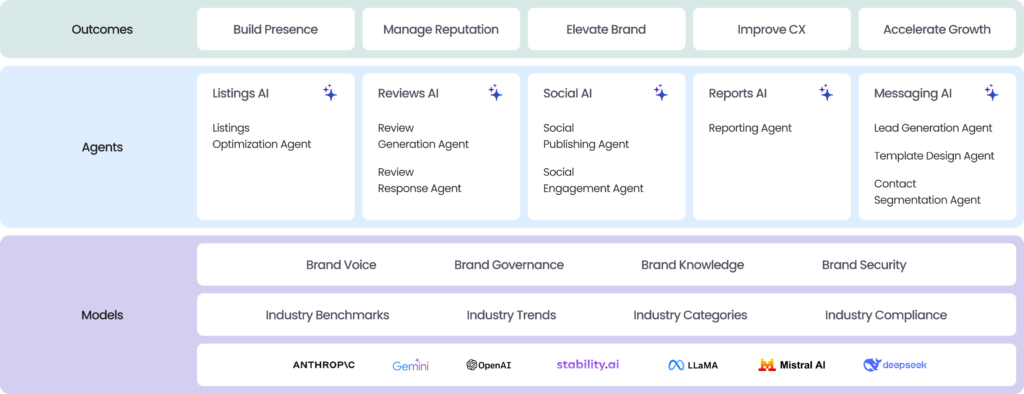
Birdeye is purpose-built for multi-location brands that need to balance centralized control with local execution at scale. Instead of using disconnected tools, it brings listings, reviews, social, messaging, and automation into a single full-cycle agentic marketing platform. This allows brands to manage visibility, engagement, and performance across all locations in one place.
At its core, Birdeye uses agentic AI, which goes beyond assistance to automate and optimize marketing tasks in real time. This helps enterprise teams reduce manual effort while ensuring that every location remains accurate, responsive, and competitive in both local and AI-driven discovery.
1. Consolidate: Unify data, listings, and customer interactions
Multi-location marketing breaks down when data is fragmented. Birdeye solves this by centralizing the foundational elements of local presence.
Listings AI: The Listings Optimization Agent ensures every location is accurate, complete, and optimized across search and directories. By centralizing and syncing data, it eliminates inconsistencies that can hurt local rankings and ensures each location is discoverable in high-intent searches.

Reviews AI: The Review Generation Agent and the Review Response Agent help brands generate, monitor, and respond to reviews across all locations, turning reputation into a measurable growth driver. It ensures consistent engagement and strong ratings, critical for maintaining trust across hundreds of local markets.
2. Think: Turn distributed data into actionable intelligence
Managing hundreds of locations generates massive amounts of data, but without the right system, it’s difficult to act on it.
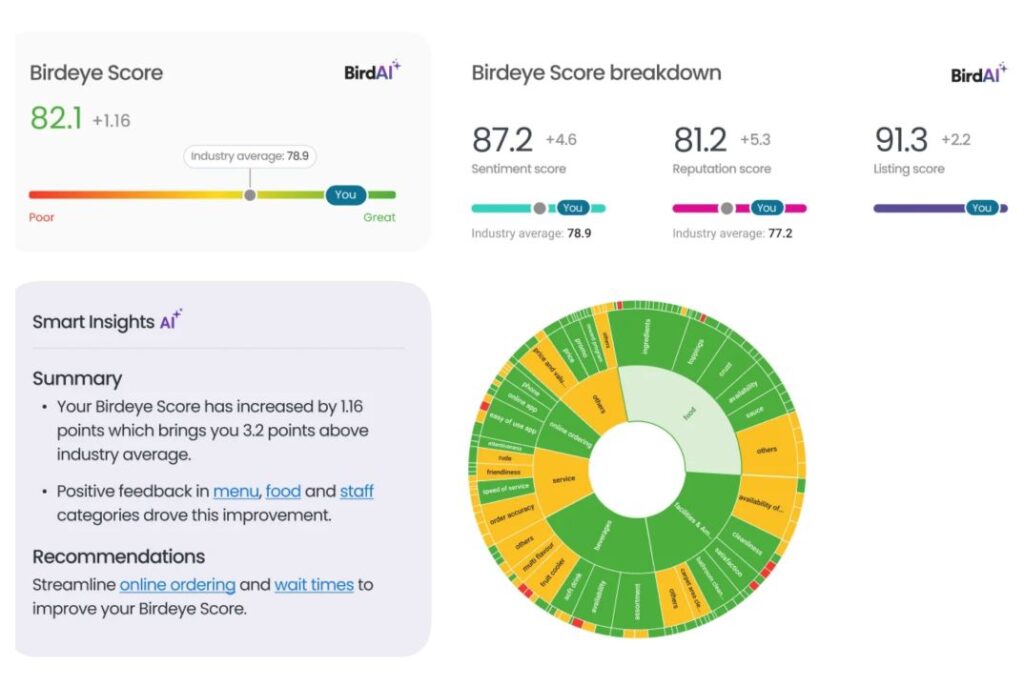
Insights AI: It provides a unified view of performance across all locations, allowing brands to compare, benchmark, and optimize at scale. This ensures multi-location strategies are driven by real data, not assumptions.
3. Act: Execute and optimize at scale with agentic automation
Execution is where most multi-location strategies fail. Birdeye’s agentic AI turns insights into action automatically.
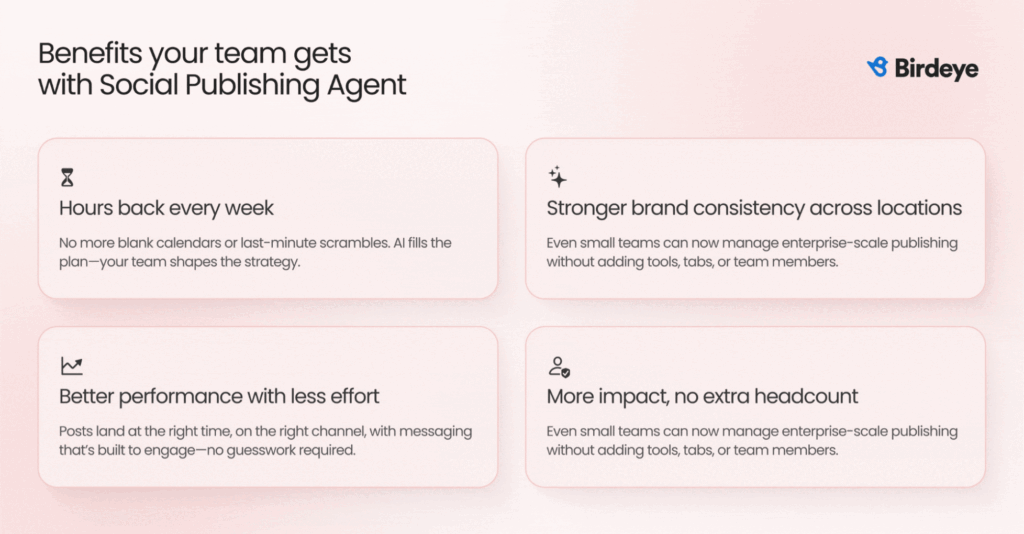
Social AI: The Social Publishing Agent and the Social Engagement Agent allow brands to publish location-specific content while maintaining centralized oversight, solving the core multi-location challenge of balancing consistency with local relevance. Each location stays active and relevant without fragmenting the brand.
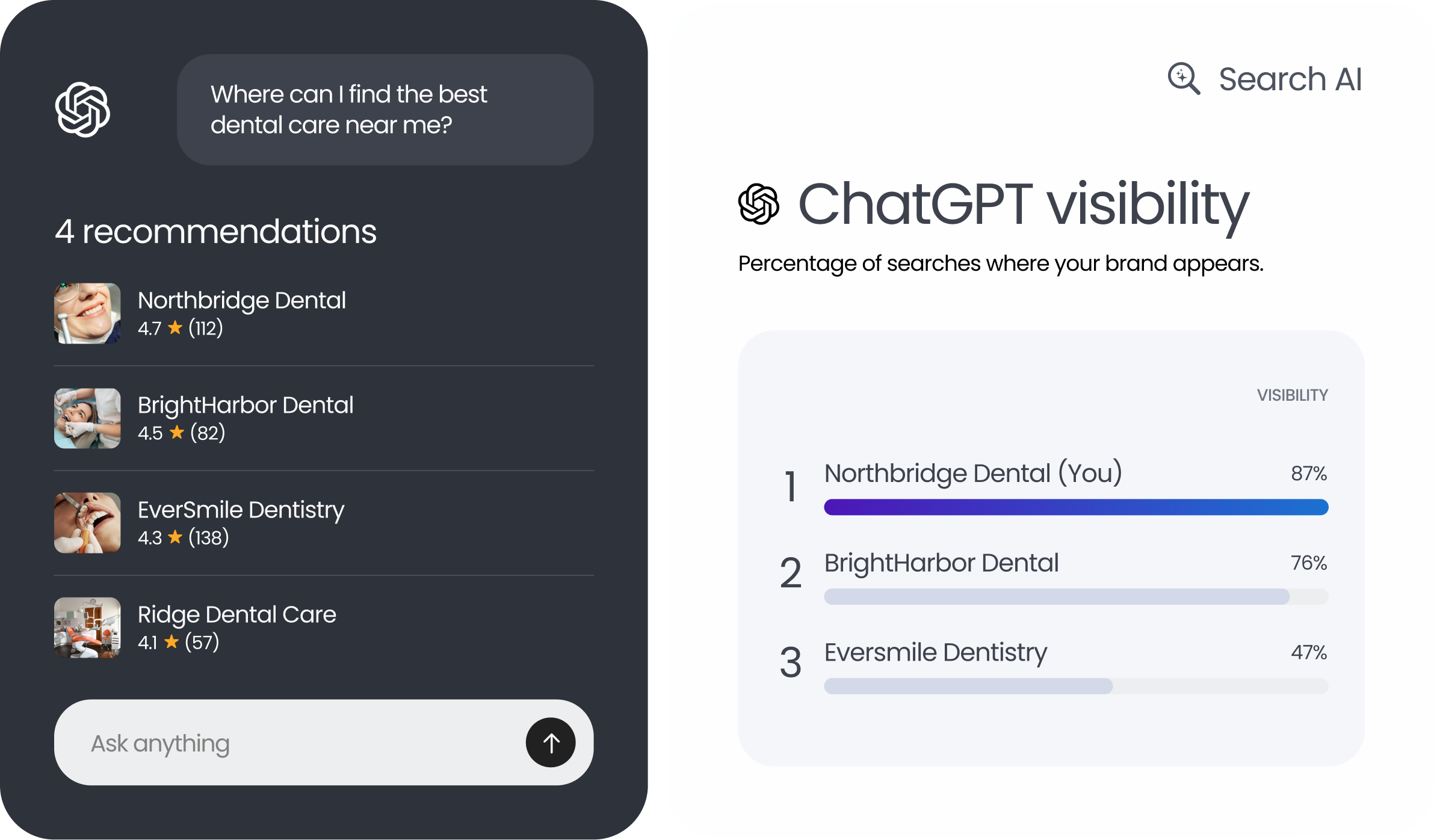
Search AI: It helps brands optimize how each location appears in AI-generated search results across ChatGPT, Gemini, and Perplexity, ensuring they remain competitive as discovery shifts beyond traditional SEO. This is critical for maintaining visibility across all locations in evolving search environments.
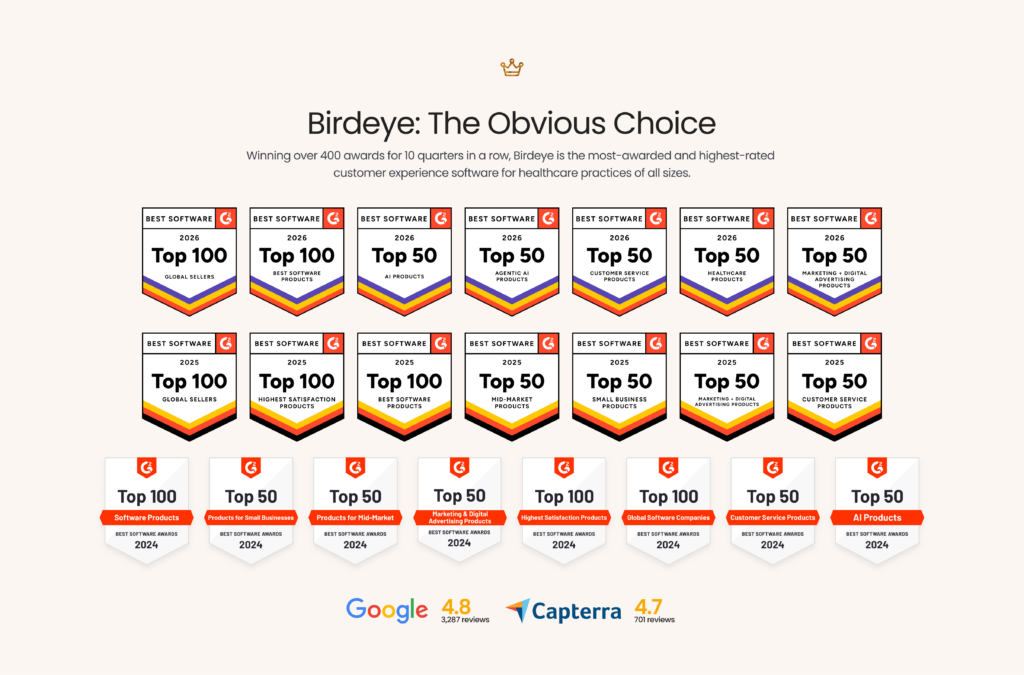
Birdeye’s industry recognition & market leadership
Birdeye’s leadership is rooted in real customer feedback and performance across enterprise use cases.
- Rated 4.7/5 with 3,900+ reviews on G2, reflecting strong customer satisfaction and recognized as the Best Enterprise Online Reputation Management Software
- Recognized as the No. 1 Online Reputation Management Software by Gartner
“Earning a Leader position in a G2 Report is highly competitive and rooted in verified customer reviews. Congratulations to Birdeye for achieving this distinction.”
— Godard Abel, CEO of G2
Recent awards reinforce Birdeye’s position as a category leader, not just in reputation management, but across the full multi-location marketing stack.
- #1 in enterprise across 12 categories in G2’s Spring 2026 reports
- Named in G2’s Best Software Awards 2026 as:
- Top AI Product
- Top Software Company
- Agentic AI Product
- Marketing & Digital Advertising Product
- Earned Winter 2026 leadership recognition across key categories, including:
- Online Reputation Management
- Multi-Location Marketing Platform
- Social Media Suites
- Local Listing Management
- Local SEO
- Experience Management
- Feedback Analytics
- Winner of an AI Breakthrough Award for AI-driven customer experience innovation
Multi-location marketing requires balancing central control, local relevance, and scalable execution, a challenge most tools don’t solve holistically. Birdeye connects every part of the system, enabling brands to optimize each location individually while managing everything centrally, turning complexity into a competitive advantage.
How leading multi-location brands succeed with Birdeye
Real-world results show how multi-location brands translate strategy into execution with Birdeye.
Foundation Partners Group operates across 250+ locations, each requiring accurate information, strong local visibility, and consistent customer engagement. Managing this manually created challenges in maintaining data accuracy and reputation across every location. With Birdeye, they established a centralized system to manage listings and reviews across all locations, ensuring each one stayed accurate, up-to-date, and competitive in local search.
- 7.8 million profile impressions
- 1.6 million website visits
- Centralized updates across locations
- Custom filters by region, segment, and brand
- A stronger source of truth for online profiles
As Gwen Salaza, Director of Field Marketing, Foundation Partners Group, shares:
“Birdeye became our source of truth for online profiles. With hundreds of locations to manage, it allowed us to ensure accurate and consistent information across all platforms, saving us significant time and effort.”
Similarly, D4C Dental Brands operates across 200+ dental locations, where each practice competes in its own local market and must maintain both a strong patient experience and consistent brand standards.
Before Birdeye, managing reviews and patient feedback across so many locations made it difficult to maintain consistency, compare performance, and identify gaps at the individual clinic level.
With Birdeye, D4C centralized review generation, responses, and insights, enabling them to standardize how every location engages with patients while still tracking performance at the local level. This allowed each practice to build a stronger reputation in its own market, while corporate teams gained visibility into what was working across regions.
As Tim Belter, Director of Marketing Strategy D4C Dental Brands, shares:
“Birdeye allows us to track and compare the patient experience at each location. This helps the team maintain high standards of service, identifying strengths in some regions and addressing areas for improvement in others.”
FAQs about Multi-Location Marketing
Multi-location marketing is coordinated marketing across many locations where brands standardize strategy centrally and execute locally within defined guardrails. It includes listings, reviews, localized content, and location-level performance tracking.
Birdeye’s #1 agentic marketing platform helps enterprise brands centralize listings, automate review management, enable localized content, and gain real-time insights across all locations, improving efficiency and performance at scale.
Brands can maintain consistency by defining clear brand guidelines, templates, and approval workflows while allowing locations to customize messaging, offers, and engagement based on local audience needs.
Single-location marketing focuses on one market and audience, while multi-location marketing requires balancing centralized control with localized execution across multiple markets, along with scalable systems and automation.
Harness the power of multi-location marketing with Birdeye
Turn every location into a high-performing growth engine. By combining centralized control with localized execution, brands can improve visibility, strengthen reputation, and drive consistent customer experiences across all markets.
Request an enterprise demo to explore how multi-location brands can use Birdeye’s Agentic Marketing Platform to optimize marketing strategy and achieve greater success across all locations.

About the Author

Somya Yesodharan
Originally published




![[Feature image] The Best Marketing Platforms for Multi-Location Brands](https://birdeye.com/blog/wp-content/uploads/Feature-image-The-Best-Marketing-Platforms-for-Multi-Location-Brands-375x195.png)