Online reputation monitoring is the continuous practice of tracking customer feedback, brand mentions, search visibility, and AI-generated summaries to understand how your business is perceived online across digital channels over time.
Summary
A brand’s reputation is shaped across multiple touchpoints, including review sites, search results, social conversations, and AI-generated summaries. These signals change frequently and vary across platforms, making it difficult for businesses to maintain a complete view of how they are perceived. As a result, important shifts in sentiment or visibility often go unnoticed within fragmented data. A structured reputation monitoring approach helps bring these signals together and helps brands understand how their reputation evolves over time.
In this guide, you will learn what online reputation monitoring includes, why it matters for visibility and trust, the challenges brands face, and how platforms like Birdeye help manage reputation across digital channels.
Table of contents
- What is online reputation monitoring?
- Why online reputation monitoring matters for enterprise brands in 2026
- Online reputation monitoring vs. Online reputation management
- What to monitor: Key channels and signals
- How to monitor your online reputation: Step-by-step
- What are the best online reputation monitoring tools in 2026
- How does online reputation monitoring work for multi-location brands?
- How to monitor your online reputation using Birdeye
- FAQs about online reputation monitoring
- Final thoughts
What is online reputation monitoring?
Online reputation monitoring is the process of tracking customer sentiment and brand mentions across reviews, search results, listings, social media, and AI-generated summaries to protect and improve your brand’s digital presence.
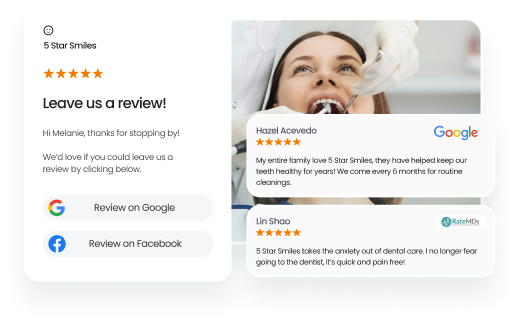
For example, a dental clinic uses online reputation monitoring to track new Google reviews, monitor social media mentions, check how it appears in search results, and review AI-generated summaries about its services. If it notices a sudden drop in ratings or a negative trend in feedback about wait times, it can respond quickly, resolve issues, and improve patient experience before it impacts more customers.
Why online reputation monitoring matters for enterprise brands in 2026
Enterprise reputation spans multiple locations, channels, and AI-generated interpretations, continuously influencing how a brand is understood. Review activity has also grown, with Birdeye’s State of Online Reviews 2025 report noting a 13% increase, reflecting that more customers are actively sharing experiences that shape perception.
This makes structured, always-on reputation monitoring essential to maintain consistency, reduce risk, and keep brand experience aligned at scale.
AI-driven interpretation of brand signals
Generative AI engines interpret patterns across reviews, listings, and third-party content to form a summarized view of your brand. If feedback is inconsistent or unmanaged, these summaries can misrepresent what your business stands for. Reputation monitoring helps teams track how sentiment is being interpreted and address gaps before they shape broader perception.
Revenue tied to experience consistency
Enterprise operations often face variation across locations, services, or teams, which can impact customer confidence over time. Repeated issues, even if small, can influence overall perception and buying decisions. Monitoring highlights these patterns early, allowing businesses to standardize improvements and protect performance across all locations.
Employer brand visibility
Job seekers actively review public feedback to understand workplace culture and credibility. Negative or outdated sentiment can slow hiring efforts and affect how candidates perceive the organization. Reputation monitoring gives teams visibility into these signals, enabling them to address concerns and maintain a strong employer image.
Risk detection in automated interactions
Automation introduces new customer touchpoints where errors or misaligned responses can surface quickly. These experiences often appear in reviews or public discussions, affecting brand perception. Online reputation monitoring helps detect such issues early, enabling teams to refine systems and prevent repeated negative experiences.
Continuous feedback shaping decisions
Customer feedback acts as an ongoing input for decisions across operations, support, and marketing. Without active monitoring, important signals can be missed or addressed too late. Consistent tracking ensures feedback is captured and used to guide timely, informed actions across the enterprise.
While monitoring provides visibility into how a brand is perceived, it is only one part of the broader reputation strategy. To act on these insights effectively, businesses also need reputation management, making it important to understand how the two differ.
Online reputation monitoring vs. Online reputation management
Here is a breakdown of the differences between online reputation monitoring and online reputation management, reflecting how both functions operate in AI-driven search and real-time feedback environments.
| Aspect | Online reputation monitoring | Online reputation management |
| Core value | Delivers real-time visibility into customer sentiment, trends, and emerging risks across all platforms | Ensures consistent engagement and issue resolution that strengthens customer trust over time |
| Strategic role | Provides the foundation for understanding how a brand is perceived across AI search, summaries, and digital channels | Actively shapes brand perception through responses, updates, and ongoing customer engagement |
| High-impact activity | Identifies sentiment shifts, detects anomalies, and surfaces recurring themes from large-scale feedback data | Responds to reviews, resolves issues, updates listings, and manages brand communication |
| AI integration | Uses AI to analyze sentiment, cluster feedback themes, detect anomalies, and surface actionable insights instantly | Uses AI to generate contextual responses, automate workflows, and maintain a consistent brand voice |
| Risk handling | Flags early warning signals, such as spikes in negative sentiment or emerging issues | Addresses and resolves issues to prevent escalation and improve outcomes |
| Search and AI impact | Maintains accurate, real-time signals that influence AI-driven discovery and local search visibility | Shapes how those signals are perceived through responses, engagement, and brand communication |
| Business impact | Helps brands stay aware, proactive, and aligned with changing customer sentiment and search behavior | Helps brands build trust, improve customer experience, and maintain a strong reputation over time |
In practice, enterprise brands rely on monitoring to uncover insights and on management to act on them, making both essential for maintaining visibility, trust, and a consistent customer experience at scale.
What to monitor: Key channels and signals

As customer journeys expand across search, social, and AI-generated answers, reputation is shaped in more places than ever.
The following are the key channels and signals brands need to monitor to maintain accurate visibility and perception in 2026.
Review sites and star ratings
Track review volume, recency, and recurring themes across platforms like Google, Facebook, and Yelp to understand what customers consistently experience. Focus on patterns across locations, services, or teams rather than isolated feedback. These signals directly influence ratings and contribute to how your brand is summarized in search and AI-generated results.
Social media mentions and sentiment
Monitor brand mentions, comments, and conversations to understand how sentiment shifts in real time. Social platforms often surface unfiltered feedback before it appears on review sites, making them an early indicator of shifts in perception. Pay attention to tone, engagement spikes, and trending topics to identify what is driving conversations.
Search engine results (Google, Bing)
Review branded search results to see what customers encounter first. Beyond traditional rankings, track featured snippets and review integrations. Since Google remains the primary gateway for many users, ensuring that business information is accurate in Google Business Profiles is critical for both search performance and trust
AI search visibility (ChatGPT, Perplexity, Gemini)
Evaluate how AI platforms describe your brand when users ask questions or compare options. These systems act as gatekeepers, citing trusted sources to determine brand appearance. The current landscape shows a significant shift: according to Birdeye’s State of AI Search 2026, 80% of brands are cited at least once in AI-generated answers, but only 15% claim the #1 position as their own. Monitoring these responses is vital because AI models favor clear, well-structured content that reduces ambiguity.
Did you know? As AI-generated answers become a key discovery layer, Birdeye Search AI helps track how often your brand appears, shows how AI describes your business, and highlights actions to improve your visibility across platforms like ChatGPT, Gemini, and Perplexity.
News, blogs, and industry forums
Track third-party media coverage and discussion forums to manage your brand’s broader narrative. These external sources influence credibility beyond your owned channels. In sectors like financial services, AI models specifically favor verified institutional sources and platforms like NerdWallet or Bankrate over informal blogs to mitigate risk.
Business listings and directory accuracy
Audit your business information across directories to ensure consistency in name, address, hours, and services. Small discrepancies can reduce trust and cause confusion for both users and AI models. Data-heavy aggregators are particularly important in industries like real estate, where platforms like Zillow and Redfin account for approximately 60% of AI citations, as AI favors aggregators that continuously refresh live inventory.
Customer support interactions and private feedback
Monitor support tickets, chat transcripts, and survey responses to identify issues before they appear in public channels. These interactions often reveal early friction points in the customer journey. Tracking recurring concerns helps teams proactively resolve problems and prevent negative reviews or broader reputation impact.
Constant monitoring of these channels helps you maintain a clear, consistent view of how your brand appears across digital touchpoints, ensuring accurate representation wherever customers search or engage.
How to monitor your online reputation: Step-by-step
Monitoring online reputation works best when each activity is assigned to a dedicated AI agent rather than handled manually. Birdeye’s platform connects each layer of visibility, feedback, and engagement into a single system powered by specialized AI products.
Here’s how brands can set up an effective process to stay informed and respond consistently.
Step 1 – Audit your current online presence
Start by understanding how your business appears across search, listings, and review platforms. Look for inconsistencies in business information, missing profiles, duplicate listings, and gaps in review coverage. This baseline helps identify where your reputation may already be fragmented or underrepresented.
Step 2 – Claim and optimize your review profiles
Customers evaluate your credibility based on what they see first: your ratings, recency, and profile completeness. Ensure all key profiles are claimed, updated, and consistently maintained with accurate details, categories, and visuals.
Birdeye’s Listing Optimization Agent standardize and sync your business information across Google, Apple, Yelp, and more directories. It also help detect and fix inaccurate or missing business information, keeping your listings aligned everywhere. Birdeye’s Review Generation Agent helps you steadily collect fresh customer reviews, improving recency, strengthening credibility, and keeping your profiles active.
Step 3 – Set up brand mention alerts
Customers discuss brands across forums, blogs, and third-party platforms where feedback is less structured. Monitoring these conversations helps you capture early signals of perception shifts and identify risks before they escalate.
Birdeye Insights AI brings all brand mentions, reviews, and customer feedback into one place, helping you quickly spot sentiment changes, recurring themes, and emerging issues before they grow.
Step 4 – Monitor social media in real-time
Social media often reflects real-time sentiment. Monitor comments, tags, and messages to understand how customers engage with your brand day to day, and respond quickly to both positive and negative interactions.
Birdeye’s Social Engagement Agent tracks and manages comments, messages, and tags across platforms in real time, helping teams stay responsive and aligned with customer sentiment.
Step 5 – Track AI and search visibility
Your reputation is increasingly shaped by how your business appears in search results and AI-generated answers. Evaluate how consistently your brand is represented across AI engines, maps, and AI assistants, including sentiment summaries and recommendations.
Birdeye Search AI helps monitor and improve AI visibility of your business on ChatGPT, Gemini, Perplexity, and more. It helps align listings, reviews, and sentiment signals to improve visibility consistency.
Step 6 – Build a response protocol for negative feedback
Timely, thoughtful responses show customers that feedback is valued. Develop a structured review response approach to maintain consistency in tone, speed, and resolution.
Birdeye's Review Response Agent automatically generates and personalizes responses to customer reviews, ensuring timely, consistent, and on-brand replies to both positive and negative feedback.
Step 7 – Measure, report, and iterate monthly
Track changes in ratings, sentiment, response times, and visibility over time. Regular reporting helps you identify what’s improving, what needs attention, and where to optimize your online reputation monitoring strategy.
Birdeye's Reporting Agent automatically compiles performance across reviews, listings, social, and messaging, and delivers clear reports that highlight what’s improving, what’s declining, and why those changes are happening.
A consistent monitoring process helps brands stay aligned with how they appear across search, social, and AI-driven platforms, ensuring accurate and up-to-date representation everywhere.
Learn How to Master Online Reputation Monitoring
Want to see the impact of Birdeye on your business? Watch the Free Demo Now.
What are the best online reputation monitoring tools in 2026
Choosing the right online reputation monitoring tool depends on how broadly you need to track brand signals, from simple keyword alerts to AI-driven multi-channel visibility across reviews, social media, and search engines.
| Tool | Best for | Strength | Limitation | Monitoring scope |
| Birdeye | Multi-location brands | Unified reviews, listings, AI search visibility, and automation across thousands of locations | Requires onboarding for full setup | Reviews, listings, social, AI search, surveys |
| Reputation | Brands focused on customer experience insights | Advanced analytics, sentiment tracking, and location-level visibility | Less focus on AI-driven automation and search visibility | Reviews, surveys, social, and location data |
| Podium | SMBs and mid-sized businesses | Messaging-first approach with review generation and customer interaction tools | Limited deep analytics and multi-location governance | Reviews, messaging, payments, webchat |
Let’s take a closer look at how each tool works:
1. Birdeye
Best for: Enterprise and multi-location brands

Description
Global multi-location brands like H&R Block and Caesars Entertainment trust Birdeye to govern their brand. You set the rules, and Birdeye AI agents execute them safely across 100 to 10,000+ locations. Birdeye is a full-cycle Agentic Marketing Platform that manages listings, reviews, AI search visibility, social publishing, and online reputation from a single system.
Features
Birdeye is built as an Agentic Marketing Platform that replaces fragmented tools with a unified system that connects data, interprets it in context, and executes actions automatically.

Consolidate: unify your data and systems
Birdeye connects CRMs, POS, EHRs, and other tools into a single platform, creating one source of truth for customer and location data. This removes silos and eliminates the need to switch between systems. It also integrates with 3,000+ tools, including Salesforce, HubSpot, and QuickBooks Online, ensuring smooth operations across locations.
Think: turn data into context-driven insights
BirdAI analyzes structured and unstructured data with context and memory to keep insights aligned with brand and location needs. It detects trends in customer feedback, tracks performance, and flags areas that need attention. A unified view of reviews, listings, social engagement, and customer interactions helps teams spot patterns and improve experience.
Act: execute with AI agents at scale
Birdeye uses AI agents across reputation, listings, marketing, and customer experience to automate execution while keeping human control. These agents manage routine work such as review generation, listing updates, reporting, and customer responses.

Key capabilities:
- Reviews AI: Manage your entire review lifecycle from one place so you consistently increase review volume, respond faster, and build trust across every location. Review Generation Agent automatically sends review requests at the right time with optimized messaging to help you capture more positive feedback, while Review Response Agent creates personalized, brand-aligned replies by analyzing sentiment and context, so every customer gets a timely, consistent response.
- Listings AI: Keep your business information accurate and optimized across directories so customers can easily find your locations and take action. The Listings Optimization Agent continuously scans your listings to identify SEO gaps and visibility issues, helping you improve local discovery and attract more high-intent traffic.
- Search AI: Optimizes business profiles for discovery across AI-driven platforms such as ChatGPT, Gemini, and Perplexity, as well as traditional search engines.
- Social AI: Manages a brand’s presence across social channels using automated publishing and engagement workflows. The Social Publishing Agent generates and schedules location-specific content to keep each profile active, while the Social Engagement Agent tracks interactions and supports consistent, large-scale responses to customer engagement.
- Insights AI: Analyzes customer feedback to surface sentiment shifts, recurring themes, and experience gaps across multiple locations.
- Reporting Agent: Creates customized, presentation-ready reports instantly using natural-language prompts based on GBP and performance data.
“Birdeye has transformed Sono Bello by providing instant access to patient satisfaction data at our local centers, allowing regional directors to detect trends across sites, and offering the C-Suite comprehensive visibility into patient experience, satisfaction, and employee effectiveness across all locations.”
Tim Surowiecki, Chief Marketing Officer at Sono Bello
Pros
- Designed for enterprise ORM with strong visibility and control across multiple locations
- Unifies reviews, listings, and customer interactions in a single platform
- AI agents do not just analyze feedback; they act on it continuously
- Extends reputation management into AI-driven search visibility
- Scales effectively across hundreds to thousands of locations
Cons
- Initial setup may require configuration based on business structure and needs
- Teams may need onboarding to fully align workflows, roles, and permissions
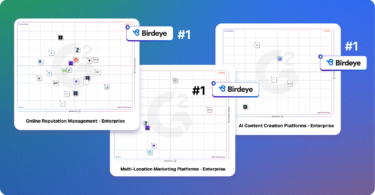
G2 has ranked Birdeye as the No. 1 Enterprise Online Reputation Management Software with a 4.7/5 rating based on 4,035+ reviews.

2. Reputation
Best for: Businesses focused on customer experience and feedback insights

Description
Reputation is a platform for reputation experience management that helps brands monitor and analyze customer feedback. It brings together reviews, surveys, and social data into a single system for better visibility. The platform focuses on identifying sentiment trends and performance gaps. It is commonly used by brands that rely on structured insights to improve customer experience.
Features
- Tracks and manages customer reviews from multiple platforms within a centralized dashboard.
- Analyzes customer feedback using sentiment analysis to identify trends and recurring issues.
- Collects structured feedback through surveys to capture insights before they become public reviews.
- Compares location-level performance using standardized metrics to highlight gaps and improvement areas.
Pros
- Detailed analytics for customer feedback and performance
- Reliable sentiment tracking across large datasets
- Helps maintain consistency across locations
- Established platform across multiple industries
Cons
- Limited automation compared to AI agent-based platforms
- Does not extend deeply into AI search visibility
- Interface and workflows may require training for larger teams
3. Podium
Best for: SMBs and mid-sized businesses focused on customer communication

Description
Podium is a customer interaction platform that helps businesses manage communication and collect reviews through messaging channels. It centralizes conversations from SMS, webchat, and social platforms into one inbox. The platform also supports payments and lead capture within the same system. It is designed for businesses that want to simplify customer interactions and increase review volume.
Features
- Sends automated review requests through SMS to make it easier for customers to share feedback.
- Consolidates messages from multiple channels into a single inbox for faster response management.
- Captures and converts website visitors into leads using webchat and automated responses.
- Enables businesses to collect payments directly via messaging, streamlining transactions.
Pros
- Easy setup and usability for small teams
- Focused approach to messaging and customer interaction
- Effective review collection through SMS
- Combines communication and payments in one platform
Cons
- Limited analytics and sentiment insights compared to more advanced platforms
- Not designed for complex multi-location structures
- Less coverage across listings and AI-driven search platforms
How does online reputation monitoring work for multi-location brands?

For multi-location brands, reputation monitoring has shifted from simple review tracking to a structured intelligence function. Feedback now flows in from more channels than ever, and enterprises need a way to connect signals from every location into a single, reliable view.
In 2026, the focus shifts from collecting data to interpreting it in context, identifying patterns early, and ensuring decisions remain consistent across the organization.
Location-level monitoring requires deeper context
Location performance is shaped by local factors, including staffing, service quality, demand patterns, and customer expectations. As a result, aggregated ratings often fail to reflect what is actually happening on the ground. Modern monitoring focuses on isolating each location’s performance and interpreting it against local conditions.
Key aspects include:
- Breaking down feedback by individual location
- Detecting sentiment shifts tied to specific operational changes
- Identifying underperformance that is hidden in brand averages
- Benchmarking locations against similar peers
Example in practice: Sonobello implemented structured reputation monitoring across its clinic network (100+ locations) to better understand patient experience at each site.
Outcome: By acting on localized feedback faster, the brand improved operational consistency across clinics and saw a 15–20% increase in patient show rates, driven by stronger trust, clearer communication, and better follow-through.
Maintaining consistency across hundreds of locations
Consistency today depends on governed systems that guide how customer interactions are created, approved, and delivered across locations. Without structure, response quality and tone can vary significantly across distributed teams, creating uneven customer experiences within the same brand.
Key elements include:
- Unified response standards with approved tone and messaging rules
- Automated workflows for review capture and response handling
- Role-based oversight for quality control and escalation
- Continuous monitoring of response behavior and customer sentiment impact
- Standard KPIs used across all locations for alignment
Example in practice: Black Bear Diner, operating across 150+ locations, standardized its response workflows to ensure consistent handling of guest feedback across all restaurants.
Outcome: This resulted in a 40% improvement in response consistency across locations, strengthening brand trust while still allowing local nuance where needed.
Unified reporting and performance tracking at scale
Reporting has evolved into a real-time intelligence layer that connects reputation data with operational signals across all locations. Instead of static reports, enterprises now rely on continuous visibility into performance trends and anomalies.
It enables:
- Cross-location performance comparison in real time
- Early detection of recurring service or experience issues
- Tracking sentiment shifts alongside operational changes
- Alignment of insights across leadership, regional, and local teams
Example in practice: Window Nation uses centralized reporting to analyze 40,000+ customer reviews across its locations.
Outcome: This approach helped identify recurring service themes across regions, enabling faster operational improvements and more consistent customer experience and response coordination.
When reputation data is structured through this lens, it becomes a continuous feedback system, helping enterprises respond faster, maintain alignment across locations, and improve customer experience with greater precision.
How to monitor your online reputation using Birdeye
Birdeye helps monitor online reputation for multi-location brands by bringing review activity, customer feedback, and visibility signals into a single connected system. Reviews from 200+ platforms are consolidated into a single dashboard, while automated workflows ensure review requests are sent at the right times and responses remain consistent with brand standards.
Sentiment analysis highlights recurring themes across locations, listings management keeps business information accurate across directories, and visibility tracking shows how each location appears across search and AI-driven platforms. Unified reporting then consolidates all these signals into a single, structured view, helping teams continuously monitor performance and act on insights with clarity across the entire network.
This connected approach gives enterprises a complete, real-time understanding of reputation across every location.
FAQs about online reputation monitoring
Online reputation should be monitored continuously, in real time, to ensure timely responses to customer reviews and feedback. Regular monitoring helps prevent issues from escalating and maintains brand trust.
Birdeye is the leading online reputation monitoring software, as it centralizes reviews, listings, and customer feedback into a single system for multi-location brands. The best software is one that enables consistent tracking and response across thousands of locations.
Online reputation monitoring focuses on tracking reviews, mentions, and feedback, while ORM includes responding to and actively managing brand perception. Monitoring is the foundation of the broader ORM process.
Brand reputation on social media can be monitored by tracking mentions, comments, tags, and conversations across platforms. Birdeye Social AI helps consolidate these signals into a single place for easier monitoring and management.
AI enhances reputation monitoring by analyzing large volumes of feedback, detecting sentiment patterns, and surfacing key insights faster. It also helps improve response speed and consistency across multiple locations.
Online reputation monitoring costs depend on the number of locations and the capability mix, including features such as review management, listings, social monitoring, and AI-driven insights.
Final thoughts
Online reputation monitoring is an ongoing process that helps businesses understand how they are perceived across reviews, search, and digital conversations. As feedback spreads across multiple platforms, maintaining consistency becomes essential to ensure accurate visibility for every location. A structured approach helps teams stay in control and respond with clarity across channels.
Birdeye simplifies online reputation monitoring by consolidating all reputation signals into a single system, making it easier to maintain consistency across locations.
Watch a free Birdeye demo to see how teams can manage reputation across every location from one platform.

About the Author

Vanjana Sharma
Originally published