Reputation management software is a technology platform, such as Birdeye, Reputation Inc., Igniyte, etc., that helps businesses monitor, manage, and improve their visibility across search engines, review sites, and digital directories, all from a single system.
Summary
For UK businesses operating across multiple locations, online reputation no longer lives in one place. It lives in Google reviews, Trustpilot ratings, AI-generated search answers, business listings on Yell and Apple Maps, and social media conversations happening right now. A single inconsistency across these touchpoints can cost you customers before they ever visit your website. UK consumers rely more heavily on peer reviews and digital signals than ever before, and the businesses that manage those signals proactively hold a significant competitive advantage over those that do not.
This blog covers the best reputation management software and companies serving UK businesses in 2026, what services they provide, and how to choose the right fit for your size, industry, and growth goals.
Table of contents
- Why reputation management matters for UK businesses
- What does UK law require from businesses managing their online reputation?
- How does reputation management software differ from reputation management agencies?
- 9 Best reputation management software and companies for UK businesses (2026)
- What services do UK reputation management companies provide?
- How to choose the right reputation management software for your UK business
- FAQs about reputation management software UK
- Building a stronger reputation in the UK digital economy
Why reputation management matters for UK businesses
Reputation is a measurable financial asset for UK businesses, not just a communications concern.
According to Echo Research’s The Reputation Economy 2026, corporate reputation now drives 28% of the total market value of FTSE 350 companies, equating to £841 billion in shareholder value.
The same research shows that 5% of UK-listed companies actively destroy value through poor reputation management, wiping out an estimated £9 billion due to governance failures, perceptions of weak leadership, and unmet stakeholder expectations. For businesses of any size, the financial argument for managing reputation proactively is clear.
What UK consumers actually do before they buy
A London Research study commissioned by Trustpilot on UK buying behaviour found that 78% of UK consumers regard customer reviews as either “very useful” or “useful” during the buying decision-making process. The same research places reviews alongside search engines as one of the three most influential touchpoints in the entire purchase journey, ahead of social media (47%) and TV advertising (45%).
The study also found that star ratings and reviews carry a strong influence across high-value UK consumer categories, including financial services, holidays and travel, electronics, and insurance. For multi-location businesses operating in these sectors, review volume, recency, and response behaviour directly shape whether a potential customer chooses you or a competitor.
Insurance providers can dig deeper into the right platforms with our top 16 insurance review sites guide.
What happens when UK businesses get it wrong
Recent UK reputation crises offer clear cautionary lessons for any business that treats reputation as an afterthought.
Post Office Horizon
The Post Office Horizon scandal stands as one of the most serious reputation failures in British corporate history. For over two decades, the Post Office pursued thousands of sub-postmasters using data from a faulty IT system, leading to wrongful convictions, financial ruin, and severe personal harm.
A parliamentary inquiry confirmed the scale of damage: 82% of affected family members reported stigma or reputational loss, and by April 2025, the government had paid approximately £892 million in compensation to over 6,200 claimants.
The lesson for businesses is that reputation damage compounds when organisations choose to suppress problems rather than address them openly and transparently.
P&O Ferries
On 17 March 2022, P&O Ferries dismissed approximately 800 seafarers without notice or consultation, replacing them with cheaper agency workers. The company’s own CEO later admitted to MPs that the dismissals broke UK employment law.
The company’s own CEO later admitted to MPs that the dismissals broke UK employment law. The Insolvency Service launched a criminal inquiry, trade unions called for a boycott, and the Transport Secretary publicly called for the CEO to resign.
The episode prompted government legislation to prevent similar dismissals in the future and demonstrated that operational decisions made without regard for public and regulatory perceptions carry reputational costs that no communications response can quickly reverse.
NatWest and Coutts
In July 2023, NatWest Group faced intense reputational and political pressure after its CEO admitted to discussing a high-profile customer’s banking arrangements with a BBC journalist, which led to an inaccurate news story.
As reported by BBC News, NatWest CEO Dame Alison Rose resigned after acknowledging the discussion as a “serious error of judgment.” The CEO of Coutts, NatWest’s private banking arm, also stepped down.
The Financial Conduct Authority urged NatWest’s board to review the matter. The incident illustrated how quickly a single misstep in handling customer data and media communications can escalate to board-level resignations and sustained regulatory scrutiny.
Why the stakes are higher for multi-location UK businesses
For businesses operating across multiple UK locations, each site carries its own reputation footprint. A negative review pattern at one location can suppress search visibility across your entire brand. Inaccurate listing data on Google, Apple Maps, or Bing reduces discoverability and erodes customer trust before a prospect ever makes contact.
The regulatory environment adds a further layer of accountability. The Competition and Markets Authority (CMA) is now actively enforcing the Digital Markets, Competition and Consumers Act 2024. In March 2026, it opened investigations into five businesses suspected of non-compliance with the law’s requirements around online reviews. Managing reputation at scale is no longer optional for UK businesses. It is a commercial and regulatory necessity.
What does UK law require from businesses managing their online reputation?
Four areas of UK law directly shape how businesses collect, display, respond to, and request the removal of reputation-related content online. Any reputation management software UK businesses adopt must support compliance across all four.
1. UK GDPR and the ICO: Lawful basis and the right to erasure
Under Article 17 of the UK GDPR, enforced by the Information Commissioner’s Office (ICO), individuals hold the right to request deletion of their personal data, also known as the “right to be forgotten.” Businesses must respond to a valid erasure request within one calendar month.
For businesses that collect and process customer review data, this creates two practical obligations:
- Establish a lawful basis for processing personal data before collecting it.
- Maintain documented processes for handling erasure requests, including notifying third parties with whom that data has been shared.
Note: The Data (Use and Access) Act, which came into law on 19 June 2025, means parts of the ICO's guidance on individual rights are currently under review. UK businesses should monitor ICO updates to stay compliant as the position develops.
2. Defamation Act 2013: Serious harm and website operator responsibilities
The Defamation Act 2013 applies to any UK business that publishes, hosts, or responds to content about its brand online. Two sections carry direct practical weight:
Section 1: Serious harm A statement only qualifies as defamatory if it has caused or is likely to cause serious harm to reputation. For businesses that trade for profit, Section 1(2) requires proof of serious financial loss, which raises the threshold for legal action significantly compared to the pre-2013 law.
Section 5: Operators of websites Businesses that host review sections or customer feedback platforms can claim a defence against defamation claims relating to user-generated content, provided they:
- Did not post the statement themselves.
- Respond correctly to a formal notice of complaint.
- Follow the procedure set out in the Defamation (Operators of Websites) Regulations 2013.
Brands that fail to follow that procedure lose the protection the defence provides. This makes documented, legally compliant response workflows a core requirement for any business managing online reviews.
3. Digital Markets, Competition, and Consumers Act 2024: The ban on fake reviews
The DMCCA 2024, which came into force on 6 April 2025, gives the CMA direct enforcement powers over fake reviews without needing to litigate through the courts. Under the Act, businesses that publish consumer reviews must:
- Take reasonable and proportionate steps to prevent fake or hidden incentivised reviews from appearing.
- Avoid commissioning fake reviews or using services that facilitate them.
- Publish reviews and review-derived information in a way that does not mislead consumers.
The CMA published its Fake Reviews guidance (CMA208) in April 2025 and opened formal enforcement investigations into five businesses in March 2026. In its first year of direct enforcement, the CMA ordered £760,000 in consumer refunds and imposed fines totalling £4.7 million. Fines can reach up to 10% of global turnover. For UK businesses that use reputation management software to generate and publish reviews, compliance with CMA208 is a non-negotiable operational baseline.
4. Google UK delisting: The post-Google Spain landscape
Following the 2014 Google Spain ruling, individuals gained the right to request that search engines remove links to personal information that is outdated or no longer serves a legitimate public interest. The UK retained this framework post-Brexit through Article 17 of the UK GDPR, which the ICO enforces domestically.
Key points UK businesses need to understand:
- Individuals submit delisting requests directly to Google UK to remove search results for their name.
- A successful delisting removes the link from search results but does not remove the underlying content from the web.
- Delisting and content removal are two separate processes that require separate actions.
Businesses implementing search reputation strategies through reputation management software must build this distinction into their approach and ensure any advice given to clients accurately reflects the scope and limits of UK delisting rights.
How does reputation management software differ from reputation management agencies?
UK businesses searching for the right solution often encounter two distinct types of providers: reputation management software and reputation management agencies. Both serve a purpose, but they solve different problems.
What reputation management software does
Reputation management software is a SaaS platform that provides businesses with ongoing operational control over their digital presence. It works continuously in the background, across every location, without requiring a new brief or project sign-off each time something needs attention.
Key characteristics:
- Runs as a subscription platform with always-on monitoring and automation
- Manages reviews, listings, social content, and customer sentiment at scale
- Suits multi-location brands operating across 100 to 10,000+ locations
- Gives internal teams direct visibility and control through a single dashboard
- Integrates with existing CRM, POS, and marketing tools
- Produces consistent output across locations without manual intervention
Software is the right choice when the need is ongoing, operational, and tied to day-to-day business performance.
What reputation management agencies do
Reputation management agencies operate as consultancies. They typically engage on a project or retainer basis, bringing in specialist expertise to address a defined problem, most often a crisis, a content suppression challenge, or a complex search result issue that requires human judgement and media relationships.
Key characteristics:
- Delivers bespoke, hands-on consultancy rather than a self-serve platform
- Suits one-off reputation crises, executive reputation repair, or legal content removal
- Requires a brief onboarding and account management for each engagement
- Works best for high-stakes, low-frequency reputation challenges
- Does not replace the need for ongoing review and listings management
Agencies are the right choice when the problem is specific, high-stakes, and requires specialist human expertise.
Why Birdeye sits firmly in the software category
Birdeye is not an agency. It is the leading agentic marketing platform for UK multi-location brands to manage reviews, listings, social presence, and customer sentiment through a full-cycle agentic platform. It handles the ongoing operational work that keeps a brand visible, trusted, and consistent across every location, every day. Where agencies focus on crisis response, Birdeye helps businesses proactively monitor, manage, and strengthen their reputation before issues escalate into larger problems.
9 Best reputation management software and companies for UK businesses (2026)
The table below flags the UK presence clearly so you can evaluate every option with full transparency.
| Company | UK presence | Type |
| Birdeye | Global platform, verified UK presence | Software platform |
| Igniyte | UK-headquartered, London and Leeds | Agency |
| Reputation Inc. | UK-headquartered, London | Consultancy |
| Schillings | UK-headquartered, London | Legal consultancy |
| Trustist | UK-headquartered, York | Review platform |
| Emitrr | US-based, no confirmed UK office | Software platform |
| BrandYourself | US-based, no confirmed UK office | Software/service |
| Status Labs | US-based, no confirmed UK office | Agency |
| NetReputation | US-based, no confirmed UK office | Agency/service |
1. Birdeye
Best for: Multi-location UK brands managing reviews, listings, AI search visibility, social, and customer sentiment across 100 to 10,000+ locations.
UK presence: Verified. UK clients include Signs Express, MyDentist, Country Court Care, Timpson and more.
Type: Agentic marketing platform
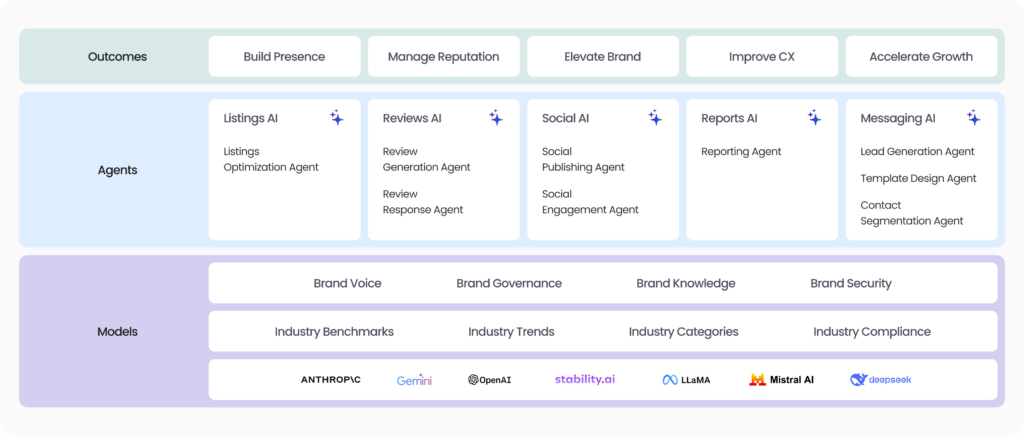
Birdeye is the #1 agentic marketing platform that UK multi-location brands use to replace fragmented tools with one AI-powered system. It helps brands scale operational control across locations by deploying AI agents that work continuously and autonomously.
Key capabilities:
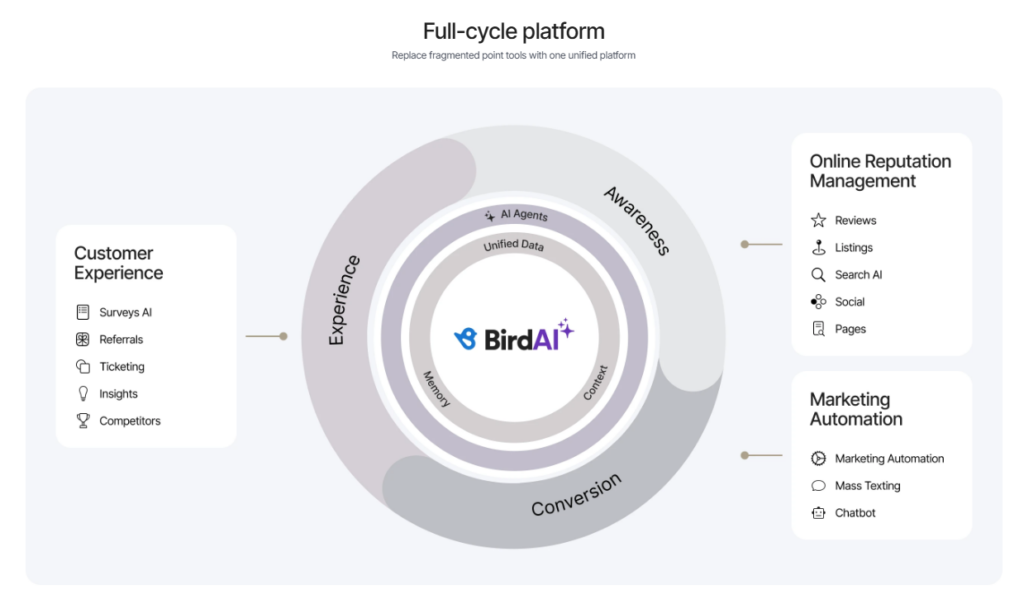
Full-cycle platform
- Centralises customer-facing workflows across all locations
- Connects reviews, messaging, surveys, and social engagement in one system
- Manages reviews across 200+ sites from a single dashboard
- Helps teams maintain consistency and governance across all locations
Local intelligence
- Search AI tracks visibility across AI-driven platforms, including ChatGPT and Gemini
- Brand AI and Industry AI maintain context-aware and on-brand information
- Identifies visibility gaps and inconsistencies that affect trust and discovery

Marketing AI Agents
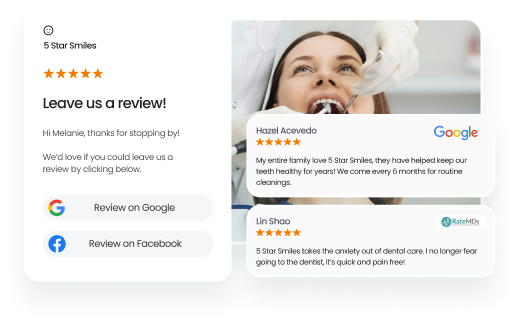
- Review Generation Agent requests reviews at the right moment and on the most relevant platform to increase review volume across locations.
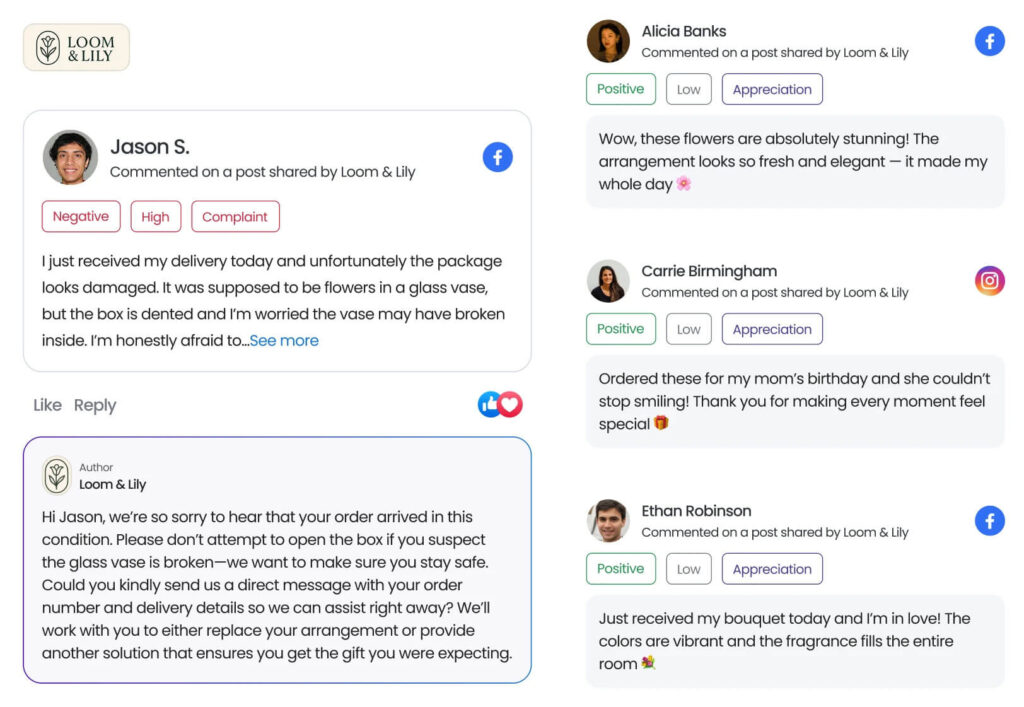
- Review Response Agent drafts and publishes on-brand responses, with options for approval workflows or autonomous publishing.
- Reporting Agent explains performance changes, highlights trends, and flags anomalies in clear, easy-to-understand language.
- Listings Optimization Agent keeps business information accurate across major platforms, including Google, Apple, Facebook, and Yelp..
- Social Publishing Agent creates and schedules localized content tailored to each channel and business location.
- Social Engagement Agent prioritizes and helps manage comments, messages, and customer interactions across social channels.
- Marketing Automation supports personalized campaigns across locations, channels, and customer segments.
- Lead Generation Agent captures, qualifies, and routes leads automatically around the clock.
- Survey Agents collect customer feedback and surface emerging trends and improvement opportunities.
- Insights provides a unified view of reputation, sentiment, and listing accuracy, helping businesses prioritize actions based on performance data.
Pros:
- Centralises reviews, listings, social, and messaging into one platform, removing the need for multiple tools
- AI-powered responses save significant time and maintain a consistent brand voice across locations
- Highly customisable reporting dashboards give clear performance visibility at the location level
- Smooth onboarding and reliable post-sales support are cited consistently by enterprise users
- Scales effectively for franchise and multi-location networks of all sizes
Cons:
- Some specialised integrations may require additional setup, though APIs and connectors typically help streamline implementation
- The platform’s broad functionality can involve a learning curve as teams expand adoption across multiple locations
G2 rating: 4.7/5 based on 4,075+ reviews.
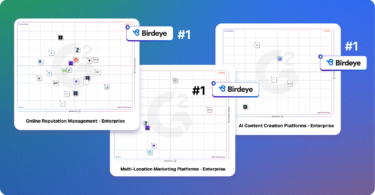
Recognized by G2 as a Top Global Software Company and AI Leader, Birdeye earned #1 enterprise rankings across 10+ categories, reinforcing its leadership in AI-powered marketing for multi-location brands.

recognition
How Birdeye compares to UK alternatives:
| Birdeye | Igniyte | Reputation Inc. | |
| Type | Software platform | Agency | Consultancy |
| Best for | Multi-location operational reputation management | Reputation repair and crisis | Corporate reputation strategy |
| Review management | Automated at scale (100-10,000+ locations) | Manual, bespoke | Not a core service |
| Listings management | Yes, AI-driven | Limited | No |
| Ongoing vs project | Ongoing, subscription | Project or retainer | Project or retainer |
| UK presence | Verified | London and Leeds | London |
2. Igniyte
Best for: UK businesses and executives that need reputation repair, suppression of negative content, or crisis management.
UK presence: UK-headquartered, London and Leeds.
Type: Reputation management agency
Igniyte is one of the UK’s most established online reputation management agencies, combining SEO, PR, content strategy, and legal support to repair and protect digital reputations for businesses and individuals.
Key capabilities
- Reputation audits and tailored strategy development
- Negative search result suppression and Google content removal
- Crisis PR and media relations
- Legal support for defamation and data protection issues
Pros
- Strong track record in managing complex, high-stakes UK reputation cases
- Combines legal, PR, and SEO expertise under one roof
- Personalised, bespoke approach tailored to each client’s needs
Cons
- Agency model means higher cost per engagement compared to software platforms
- Project-based structure is less suited to ongoing, day-to-day reputation management at scale
- Limited platform transparency compared to self-serve software tools
G2 rating: No ratings
3. Reputation Inc.
Best for: Leadership teams and established organisations seeking strategic, research-led reputation consultancy.
UK presence: UK-headquartered, London (71 Hopton Street, SE1).
Type: Reputation management consultancy
Reputation Inc. is a senior-led consultancy working with boards and leadership teams to ensure reputation informs strategic decision-making. It focuses on research, stakeholder engagement, and long-term reputation strategy rather than day-to-day review management.
Key capabilities
- Reputation strategy design aligned to business objectives
- Stakeholder research and reputation intelligence
- Crisis preparation and issues management
- Corporate communications and engagement campaigns
Pros
- Deep expertise in corporate and leadership reputation at the board level
- Strong research and data capability underpinning strategy
- Works across complex, cross-market reputation challenges
Cons
- Not suited for operational review or listings management
- Engagement model is project or retainer-based, not self-serve
- Limited publicly available pricing or case study transparency
Note: Reputation Inc. does not have a G2 listing as it operates as a consultancy rather than a software platform.
4. Schillings
Best for: Businesses and high-profile individuals that need legal-led reputation protection, privacy defence, or defamation action.
UK presence: UK-headquartered, London. Regulated by the Solicitors Regulation Authority.
Type: Legal and reputation consultancy

Schillings is a London-based multidisciplinary firm combining legal expertise, intelligence, communications, and security for high-stakes reputation and privacy matters. It holds the largest team of defamation and privacy lawyers in the world.
Key capabilities
- Defamation and privacy law, acting exclusively for claimants
- Crisis legal strategy and media law advice
- AI litigation and misinformation claims
- Cross-border reputation and privacy protection
Pros
- Unrivalled legal expertise specifically in UK defamation and privacy law
- Highly ranked by Chambers UK and Legal 500 for reputation management
- Multidisciplinary team covering legal, intelligence, communications, and security
Cons
- Legal-led model makes it unsuitable for ongoing digital reputation management
- Primarily serves high-profile individuals and large corporates, not SMEs
- Engagement costs reflect premium legal market rates
Note: Schillings does not have a G2 listing as it operates as a legal consultancy.
5. Trustist
Best for: UK SMEs focused on collecting, aggregating, and displaying customer reviews to improve local search visibility.
UK presence: UK-headquartered, York. Serves over 15,000 UK businesses.
Type: Review management platform
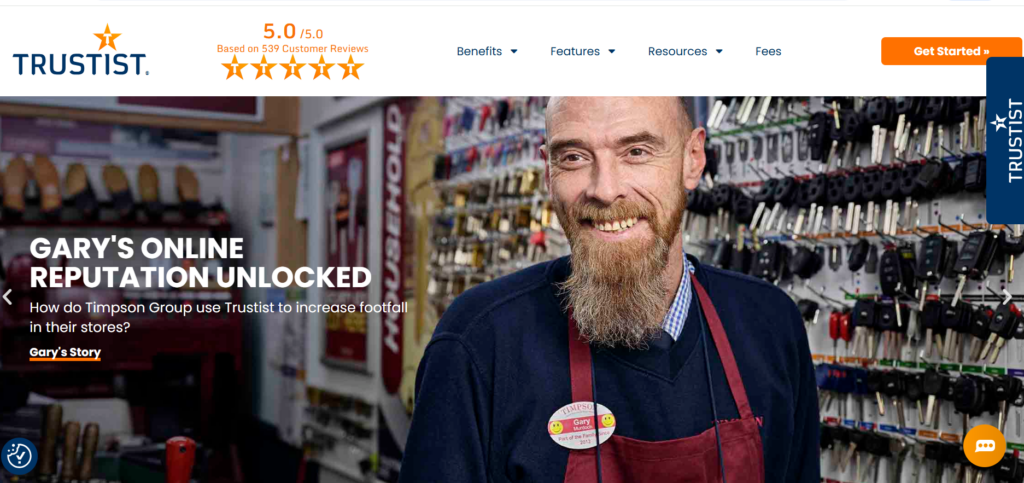
Trustist is a York-based review platform built for UK businesses. It aggregates reviews from multiple platforms, displays them via website widgets, and supports local SEO through structured review data.
Key capabilities
- Aggregates reviews from Google, Facebook, and other platforms
- Displays reviews via customisable website widgets
- Review collection via QR codes and payment terminals
- Supports local SEO through structured review signals
Pros
- Simple setup and easy to use for small business teams
- Review widget improves click-through rates in local search results
- UK-based support team with hands-on onboarding assistance
Cons
- Google star rating feature has compatibility limitations with some website platforms such as Wix
- Alert notifications for new reviews are not always reliable
- Less brand recognition than larger review platforms, which may affect consumer trust signals
G2 rating: 4.6/5 based on 4 reviews
6. Emitrr
Best for: Local and service-based businesses that need review generation combined with customer communication tools.
UK presence: US-based. No confirmed UK office.
Type: Software platform
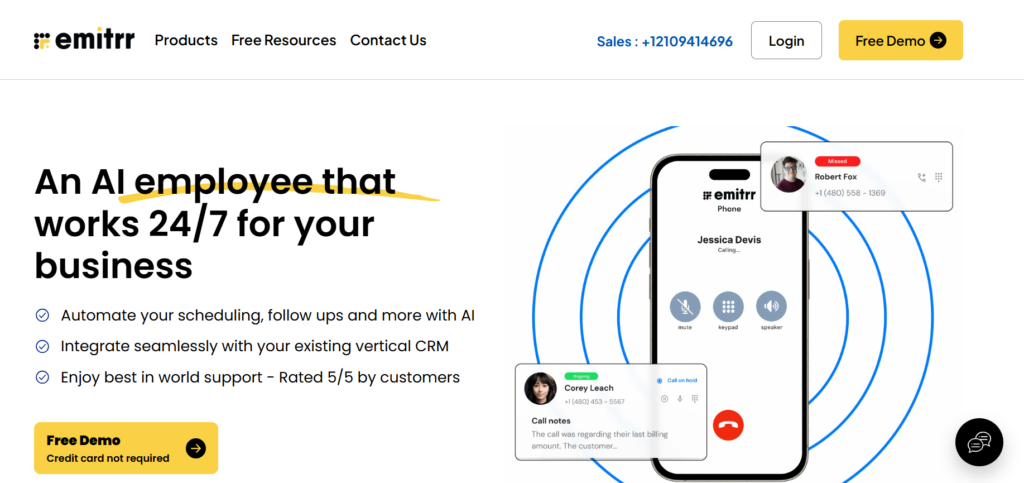
Emitrr is a US-based customer engagement and reputation platform combining automated review requests, messaging, and workflow tools for service-based businesses.
Key capabilities
- Automated review requests via SMS and email
- Unified messaging inbox across channels
- Appointment reminders and customer engagement workflows
- Sentiment tracking across reviews and conversations
Pros
- Outstanding customer support is rated consistently highly by users
- Intuitive, easy-to-navigate interface with minimal onboarding friction
- Integrates with 1,000+ scheduling, PMS, EMR, and CRM tools
Cons
- The platform can run slowly at times, requiring manual refreshing
- Automation customisation options are limited for more complex workflows
- No confirmed UK office, data residency, or UK regulatory support
G2 rating: 4.8/5 based on 22 reviews
7. BrandYourself
Best for: Individuals and professionals managing personal search results and online privacy.
UK presence: US-based. No confirmed UK office.
Type: Software and managed service
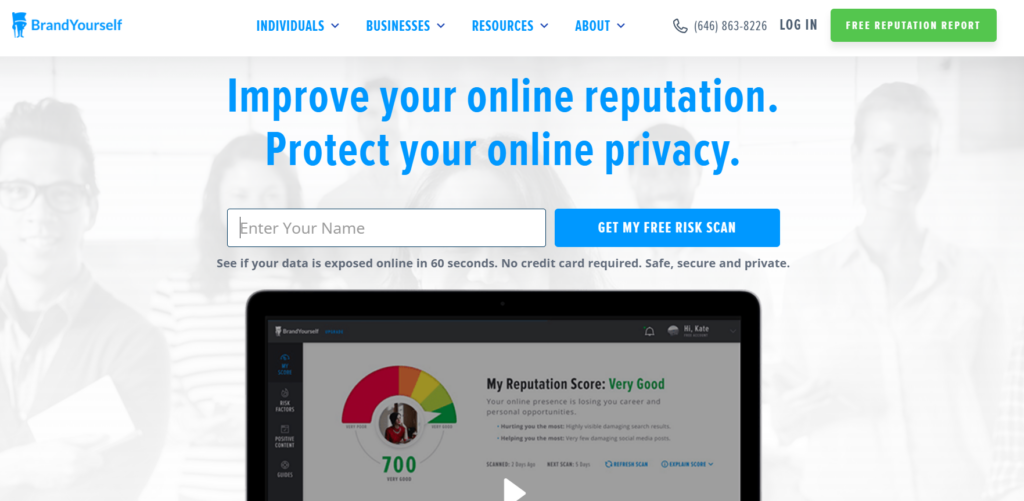
BrandYourself offers DIY tools and managed services for individuals who want to improve personal search results and remove private data from data broker sites.
Key capabilities
- Personal reputation monitoring and search result improvement
- Private data removal from data broker websites
- Step-by-step guided tools for individuals
- Online sentiment tracking
Pros
- Accessible pricing suited to individuals and small businesses
- Intuitive interface with clear progress indicators
- Automated scanning quickly identifies exposed personal information
Cons
- Limited feature set for businesses needing multi-location or enterprise-level capabilities
- Basic SEO tools may not meet the needs of advanced users
- A narrow monitoring range can miss relevant brand mentions or reviews
G2 rating: 3.6/5 based on 17 reviews
8. Status Labs
Best for: Brands and public figures needing search engine reputation management and digital PR.
UK presence: US-based. No confirmed UK office.
Type: Agency
Status Labs combines SEO and digital PR to manage online perception, suppress negative search results, and build long-term brand positioning.
Key capabilities
- Search engine reputation management (SERM)
- Media outreach and digital PR campaigns
- Negative content suppression
- Long-term brand positioning through content strategy
Pros
- Combines SEO and PR for a joined-up approach to search reputation
- Experienced in managing high-profile client reputation campaigns
- Strong focus on long-term brand positioning, not just crisis response
Cons
- No confirmed UK office, which limits UK-specific platform expertise and regulatory familiarity
- No G2 rating available, making independent performance verification difficult
- Not suited to ongoing operational review or listings management
G2 rating: Not available
9. NetReputation
Best for: Businesses seeking reputation repair, content suppression, and SEO-led visibility improvement.
UK presence: US-based. No confirmed UK office.
Type: Agency and managed service
NetReputation provides reputation repair services that combine review monitoring, content suppression, and SEO improvements for individuals and businesses.
Key capabilities
- Review monitoring with real-time alerts
- SEO-led content suppression strategies
- Content removal support
- Customisable reputation management plans
Pros
- Broad end-to-end service offering covering repair, monitoring, and brand building
- Straightforward onboarding with a guided, step-by-step process
- Personalised support with dedicated account management
Cons
- No confirmed UK office, data residency, or UK regulatory compliance support
- Pricing is not transparent and can be steep for smaller budgets
- No verified G2 rating with sufficient review volume for reliable benchmarking
G2 rating: 5/5 based on 1 review
Discover Top 8 Reputation Management Companies in the UK
Want to see the impact of Birdeye on your business? Watch the Free Demo Now.
What services do UK reputation management companies provide?
UK reputation management companies provide a range of services spanning daily operational tasks, strategic consultancy, and legal protection. Understanding what each service covers helps businesses choose the right combination of tools and providers.
Online review management
Review management sits at the core of what reputation management software UK businesses use daily. It covers:
- Sending automated review requests to customers via SMS, email, or in-app prompts
- Monitoring incoming reviews across platforms, including Google, Trustpilot, Facebook, and sector-specific sites
- Responding to reviews using AI-generated, on-brand responses
- Analysing review sentiment to identify operational issues at the location level
- Reporting on review volume, average rating, and response rate across all locations
Birdeye automates this entire workflow across 200+ review sites from a single dashboard, which removes the need for manual monitoring across multiple platforms.
Search engine reputation management (SERM)
SERM focuses on what appears when someone searches for your business or key personnel on Google UK. For UK businesses, this service operates within the post-Google Spain regulatory landscape, where individuals hold the right to request delisting of personal information under Article 17 of the UK GDPR, enforced by the ICO.
SERM services typically include:
- Auditing search results for your brand, executives, and key locations
- Suppressing negative or outdated content through SEO and content strategies
- Submitting and managing Right to be Forgotten delisting requests to Google UK
- Building positive, high-ranking content to improve search result composition
- Monitoring search result changes over time
Business listings management
Inaccurate or inconsistent listing data across Google, Apple Maps, Bing, Yell, and other directories directly reduces search visibility and erodes consumer trust. Listings management services keep this data accurate and consistent at scale.
Key activities include:
- Auditing listings across all major directories for accuracy and consistency
- Correcting inaccurate name, address, phone number, and opening hours data
- Identifying and resolving duplicate profiles that cannibalise search visibility
- Keeping listings updated for seasonal changes, new locations, or service changes
- Optimising listing content to improve local search performance
Online reputation monitoring
Reputation monitoring gives businesses real-time visibility into what people say about them across the web. Services cover:
- Tracking brand mentions across review platforms, news sites, social media, and forums
- Monitoring competitor reputation signals to identify gaps and opportunities
- Setting up alerts for spikes in negative sentiment or sudden rating drops
- Aggregating data into dashboards for operational and executive reporting
Crisis communications
When a reputation incident escalates, businesses need both a communications response and an operational plan to manage the fallout. For major crises, UK PR and communications agencies step in as a specialist layer that complements rather than replaces reputation management software.
London-headquartered firms such as Brunswick Group, Edelman UK, and FleishmanHillard UK provide crisis communications advisory, media management, and stakeholder engagement at the corporate level. These firms are not direct competitors to reputation management software. They handle the high-stakes, human-led communications layer that no platform can automate. Reputation management software handles the day-to-day operational layer that no agency can manage cost-effectively at scale. The two work best together.
Content creation and positive brand building
Beyond crisis response, reputation management includes proactive content strategies that strengthen positive signals over time:
- Publishing blog posts, press releases, and thought leadership content that ranks well in Google UK
- Building and optimising professional profiles on LinkedIn, Google Business Profile, and sector directories
- Creating video and visual content that improves brand perception across channels
- Managing social media presence to maintain a consistent brand voice across locations
Social media management
Social media signals now feed directly into reputation scoring and AI-generated search answers. Social media management services cover:
- Publishing and scheduling content across platforms from a single system
- Monitoring comments and mentions and responding promptly
- Tracking engagement metrics and sentiment across all channels
- Maintaining brand consistency across franchise or multi-location networks
Not all reputation management solutions are built the same. Once you understand the services on offer, it’s important to evaluate which software best aligns with your business goals, industry requirements, and operational complexity.
How to choose the right reputation management software for your UK business
Choosing reputation management software is a buying decision with long-term operational and regulatory consequences. The platform you choose shouldn’t just collect reviews; it should control how quickly you detect risks, how consistently you apply your policies, and how confidently you can demonstrate compliance.
Use the checklist below to evaluate your options.
1. Confirm UK presence and account management
Not every platform that markets to UK businesses operates with a UK office, UK account management, or any meaningful understanding of the UK regulatory environment. Before shortlisting any provider, confirm:
- Does the provider have a UK office or a dedicated UK account team?
- Can they provide UK-specific case studies and client references?
- Do they offer support in UK business hours without routing you through a US-based team?
- Have they worked with businesses in your sector in the UK?
For multi-location UK brands, UK account management is not a nice-to-have. It is a practical requirement for onboarding, compliance support, and ongoing platform governance.
2. Check UK regulatory familiarity
Any reputation management software UK businesses adopt must support compliance with the regulators that govern UK digital and consumer activity. Ask every provider directly whether their platform and processes align with:
- ICO and UK GDPR requirements on lawful basis, consent, and right to erasure
- CMA guidance on fake reviews (CMA208) under the Digital Markets, Competition and Consumers Act 2024
- FCA requirements for businesses in financial services managing customer-facing review content
- Ofcom obligations for providers operating in regulated communications sectors
- UK data residency requirements, particularly where customer data is processed or stored outside the UK
Providers that cannot answer these questions confidently create compliance exposure for your business.
3. Assess multi-location capability
If your business operates across more than one location, single-location tools will not scale. Evaluate:
- Does the platform manage reviews, listings, and social across all locations from one dashboard?
- Can you set location-level rules and permissions while maintaining brand-wide governance?
- Does it identify and resolve duplicate or inaccurate listing data across directories including Google, Apple Maps, Bing, and Yell?
- Does it track visibility across AI-driven platforms such as ChatGPT, Gemini, and Perplexity as well as traditional search?
4. Evaluate automation and AI capability
The volume of reputation signals UK multi-location businesses manage makes manual workflows unworkable at scale. Assess whether the platform:
- Automates review request sending at the right point in the customer journey
- Generates on-brand, sentiment-aware review responses without requiring manual input for every review
- Identifies listing gaps, inconsistencies, and duplicate profiles automatically
- Surfaces actionable insights from review and sentiment data rather than just raw data dashboards
5. Verify integration with your existing systems
Reputation management software only delivers full value when it connects to your existing technology stack. Before committing, confirm:
- Does the platform integrate with your CRM, POS, or booking system?
- Does it support the specific integrations your business relies on, or will you need custom API work?
- What is the implementation timeline and what support does the provider offer during onboarding?
6. Demand pricing transparency
Many reputation management platforms do not publish pricing, which makes budgeting and internal approval processes unnecessarily difficult. When evaluating providers, ask for:
- Pricing quoted in GBP, not USD, to avoid currency risk and billing ambiguity
- A clear breakdown of what each pricing tier includes and excludes
- Confirmation of whether per-location pricing applies and how costs scale as you add locations
- Details of any setup fees, minimum contract lengths, or exit clauses
7. Ask for UK client proof points
Any provider can claim UK market experience. Ask for evidence:
- Can they name UK clients you can contact, or UK case studies you can read?
- Do they have sector-specific UK references relevant to your industry?
- Have they supported UK businesses through regulatory enquiries, CMA compliance reviews, or ICO data requests?
Birdeye’s UK client base includes Signs Express, MyDentist, and Country Court Care, spanning consumer services, healthcare, and automotive sectors.
| Brand | Industry | Challenge | How Birdeye helped |
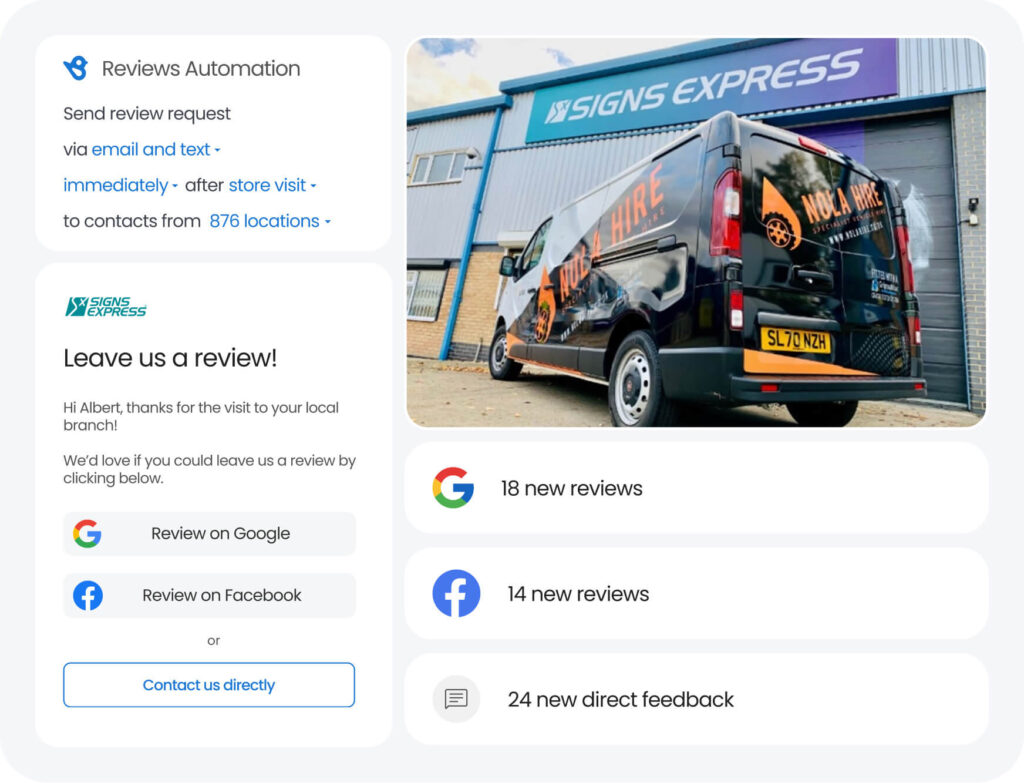
| Signs Express | Signage & Business Services | Needed a more consistent and scalable approach to managing local visibility and customer reputation across 60+ locations. | Centralized reviews, listings, and social media management, generating 600+ new reviews, maintaining a 5.0-star average rating, driving 513K+ profile impressions, 28K website visits, and 256K social impressions across the franchise network. |
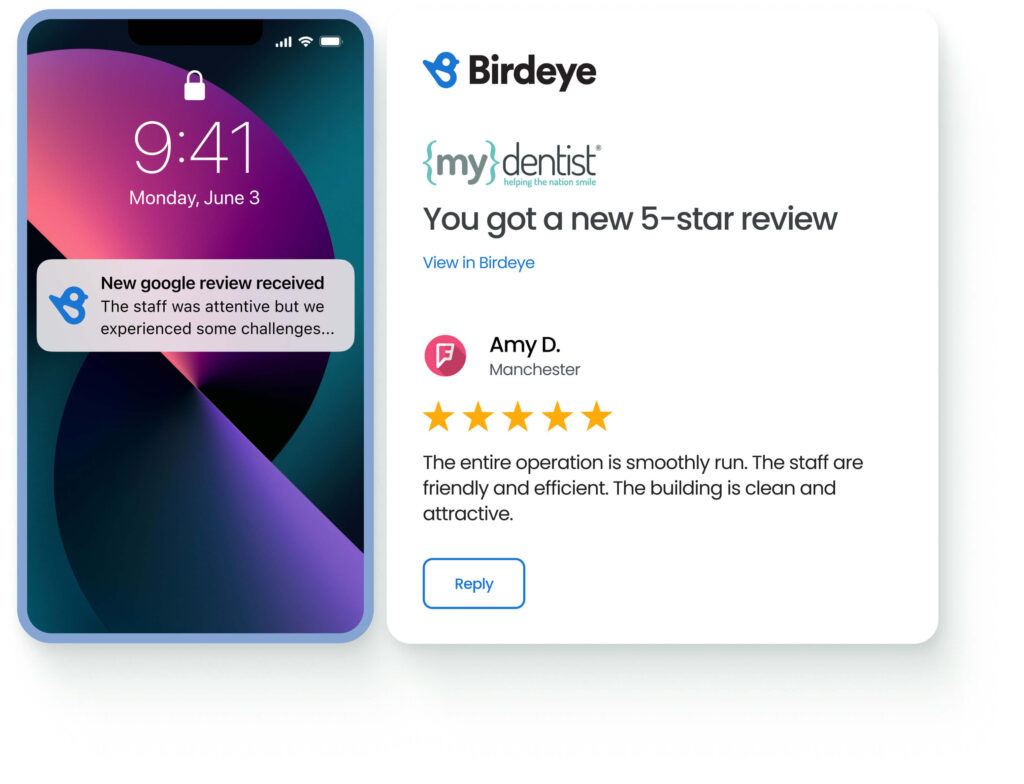
| mydentist | Healthcare (Dental) | Struggled to manage more than 1,500 listings and monitor reviews across 530 locations, leading to duplicate listings, inaccurate information, and fragmented review management. | Used Listings AI and Reviews to streamline 530+ listings, achieve a 99% Google review response rate, increase reviews by 50% year over year, improve ratings from 4.4 to 4.6 stars in six months, and drive a 10% uplift in Google Business Profile interactions. |
| Country Court Care | Care & Nursing Homes | Faced inconsistent listings, fragmented review management, and limited visibility across 47 care home locations. | Unified listings and review management across 47 locations, improving search visibility, increasing profile impressions, establishing structured review-generation processes, and significantly improving review response rates through centralized monitoring and AI-assisted workflows. |
The examples below illustrate how brands have used the platform to improve visibility, streamline reputation management, and create more consistent customer experiences across locations. Damien Berry, Signs Express, Head of Marketing says:
“Birdeye allows us to scale review generation, positioning us as the dominant signs and graphics provider in our local market.”
Also, Peter Bailey from mydentist, Head of Digital, shares:
“It’s fair to say it was challenging at points…but the Birdeye team just kept stepping up. They kept coming back and fixing the blockers at a rate I wasn’t expecting. Within 60 days, we were onboarding another 25 locations…and shortly after, we were able to onboard all 530 locations.”
FAQs about reputation management software UK
Reputation management software helps businesses monitor and improve their online reputation from one dashboard. It typically includes tools for review management, listings management, sentiment analysis, and customer feedback.
Birdeye is a leading choice for UK multi-location brands, offering review management, listings, social media, and AI-powered reputation tools. For agency-led support, Igniyte and Reputation Inc. are well-known UK options.
Yes. Software provides ongoing tools to manage reviews, listings, and customer sentiment, while agencies offer consultancy services for crisis management, reputation repair, and specialist projects.
Yes. Businesses must have a lawful basis for collecting review data, comply with deletion requests, and ensure their reputation management processes support UK GDPR requirements.
Yes. Under the Digital Markets, Competition and Consumers Act 2024, fake reviews are prohibited. Businesses are expected to take reasonable steps to prevent misleading or incentivised reviews.
In some cases, yes. Individuals can request the removal of certain search results under the Right to be Forgotten. However, removing a search result does not remove the original content from the web.
Pricing varies based on the number of locations, features, and contract terms. Most enterprise vendors provide custom quotes rather than publishing standard pricing.
Building a stronger reputation in the UK digital economy
For UK businesses, reputation is no longer confined to reviews alone. It influences how customers discover your brand, how search engines rank your locations, how AI platforms recommend your business, and ultimately whether consumers choose you over a competitor. As regulatory scrutiny increases and customer expectations continue to rise, managing reputation requires a proactive, connected approach rather than a collection of disconnected tools and manual processes.
Birdeye helps multi-location brands do this through its Consolidate, Think, and Act framework:
- Consolidate: Bring reviews, listings, social engagement, customer feedback, and location data into a single source of truth across every location.
- Think: Use AI-powered insights to uncover reputation risks, monitor customer sentiment, benchmark competitors, identify visibility gaps, and understand how your brand appears across search and AI-driven discovery platforms.
- Act: Automate review generation, review responses, listings optimization, social engagement, and customer experience workflows with AI agents that help teams respond faster and operate more consistently.
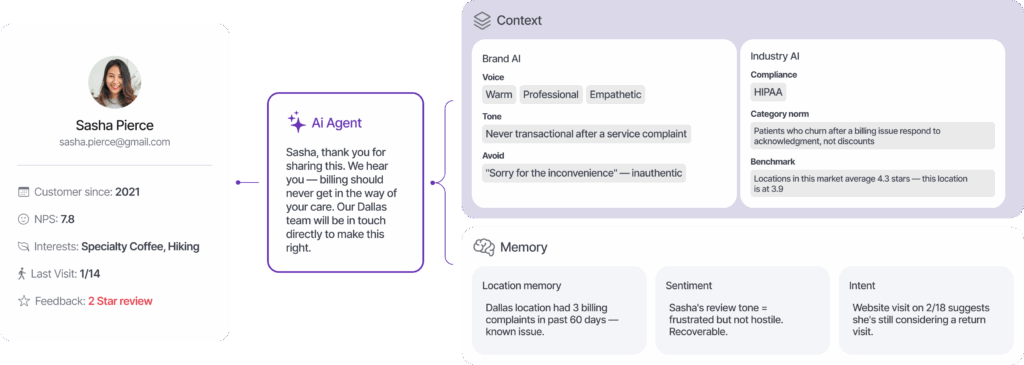
With all the AI agents working together, Birdeye gives UK businesses the visibility, governance, and automation needed to build trust, strengthen local visibility, and stay competitive across every customer touchpoint. Whether you’re managing 100 locations or 10,000+, the ability to consolidate data, think intelligently, and act decisively is becoming a critical advantage in modern reputation management.
See Birdeye in action and learn how leading UK brands use AI-powered reputation management to strengthen customer trust, improve local search visibility, and drive growth across every location. Watch a free demo now.

About the Author

Vanjana Sharma
Originally published