Optimizing listings on high-traffic “core” sites (Google, Apple, Facebook, Bing, plus key industry directories) is now more effective for local SEO than spreading your data across dozens of low-traffic directories, because accuracy, trust signals, and real customer engagement matter more than sheer citation volume.
Summary
Local citation strategy has changed. With 68% of customers abandoning businesses with incorrect listings, accuracy on the platforms people actually use has become non-negotiable. The latest thinking also reflects how ranking factors have shifted: citation building is no longer the primary lever (it represents a smaller share of impact compared to other signals). And Birdeye’s traffic analysis reinforces where discovery happens today: Google drives ~83.10% of traffic, followed by platforms like Facebook, DuckDuckGo, and Bing, making quality over quantity the practical way to win. This blog explains what changed, which sites matter most, and how to manage citations efficiently for stronger local visibility.
Table of contents
- The evolution of citation importance
- Why has the importance of extensive listings declined?
- Case studies
- Best practices for effective citation management
- Tools and resources to help you win
- The bottom line: Quality trumps quantity in local SEO
- FAQs on citation building and local SEO
- Business listing management made easy with Birdeye
The evolution of citation importance
Back in 2014, when listings management was considered the primary local ranking factor, local SEO was essentially a numbers game. Citation consistency was king, making businesses scramble to get their names, addresses, and phone numbers (NAP) listed on every single directory, hoping for a boost in search rankings. This strategy worked because Google relied heavily on these citations to verify business information.
However, that’s no longer the case. Now, Google prioritizes quality over quantity. In fact, the 2023 version of the Local Search Ranking Factors survey revealed that citation building now has a smaller impact on local ranking (7%), while other factors contribute significantly more (93%).
Why has the importance of extensive listings declined?
Let’s explore the factors behind the decline in the importance of extensive business listings.
1. The rise of Google Business Profile (GBP)
Imagine Google as a vast, interconnected web of information. In 2012, it introduced the Knowledge Graph that changed the way we explore this web. From a static database of business information, Google evolved into an entity-based model, allowing it to handle even slightly off information. As a result, the exact consistency of citations isn’t as crucial as it was a decade ago.
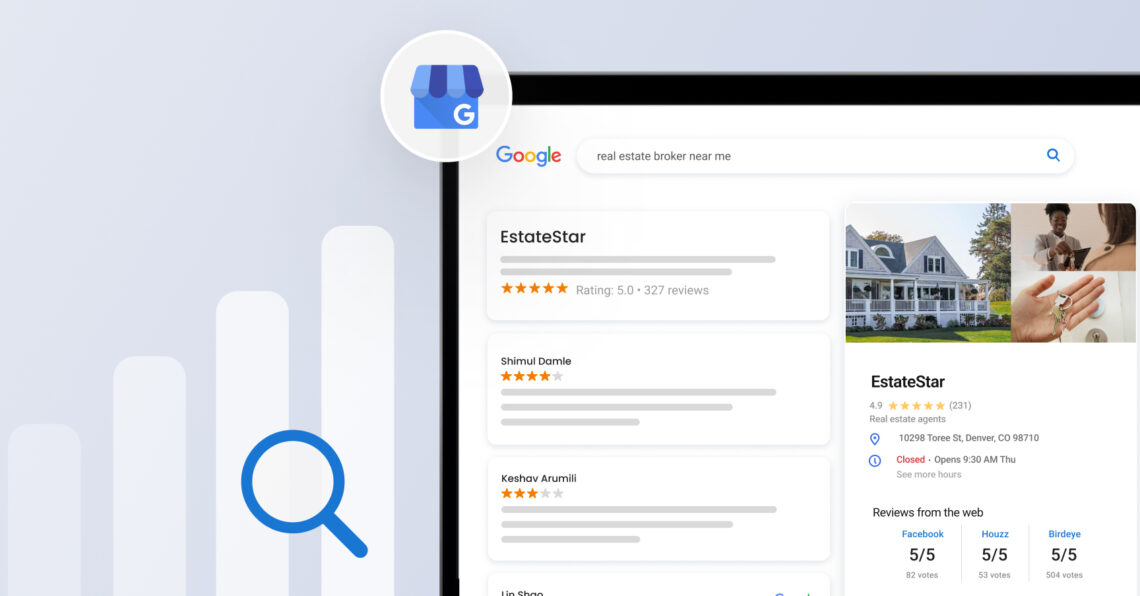
This shift opened doors for businesses. And today, having an optimized Google Business Profile is the key. It has become the cornerstone of local SEO, acting as your command center on Google to let you manage how your business appears right there where most searches happen.
A well-optimized GBP with accurate business listings on core platforms like Facebook, Apple, Bing, and industry-specific directories relevant to your business is a major SEO win.
However, it’s worth noting that not all citations are created equal. While claiming your business profile on major platforms is essential, it’s also important to ensure these citations are indexed by Google. Here’s what SEO expert Joy Hawkins had to say:
“We have about 10-15 sites that we usually use for citations and have found that the majority of citations that get created do not get indexed by Google. If they aren’t in Google’s index, they aren’t capable of helping your ranking, as Google isn’t aware they exist.”
Joy Hawkins – Owner, Local Search Forum, LocalU & Sterling Sky Inc & Google Business Profile Product Expert
If you are noticing a lot less improvement from your local citation campaigns/efforts lately, this might help visually explain why. pic.twitter.com/PilWRyznT8
— Joy Hawkins (@JoyanneHawkins) November 3, 2023
2. The role of business websites
With more businesses creating their own websites, these online storefronts have become a game-changer in local search rankings. A well-maintained website with high-quality content and inbound links significantly boosts local search performance. It informs and engages visitors, showcasing your products or services and answering their questions.
The combination of a strong website and a well-optimized GBP is a winning formula for improving search rankings and capturing potential customers at every step of their search journey.
3. The decline of third-party directories
There was a time when third-party directories like Yellow Pages and Citysearch were the local business bible. But the reliance on these old-school sources has diminished. Why? Because Google no longer depends heavily on these directories to confirm your business information and user behavior has changed. Users now prefer searching directly on Google due to its ease of use and the availability of reliable customer reviews.
Research backs this up. According to Birdeye’s traffic analysis of its customers across various segments, the majority of traffic for businesses comes from major platforms like Google, Apple, Facebook, and Bing, rather than numerous low-traffic directories.
Google accounts for 83.10% of the total traffic, Facebook for 3.24%, DuckDuckGo for 2.64%, and Bing for 2.09%. This indicates that focusing efforts on maintaining accurate and optimized listings on these high-traffic sites is more beneficial than extensive listings across lesser-known directories.
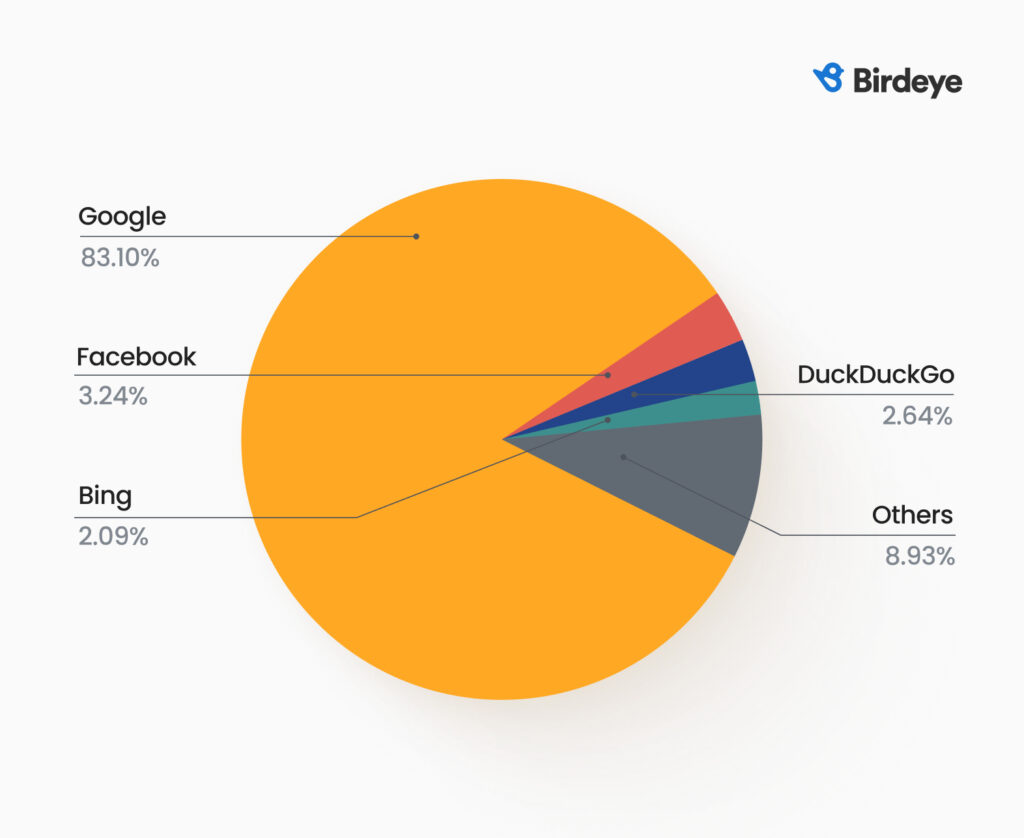
The findings align with the prevailing view that extensive listings on low-traffic directories offer little to no SEO benefit. Instead, Google’s focus has shifted to user engagement and the quality of information on major platforms.
While exact citation consistency isn’t as crucial as it once was, maintaining a consistent brand narrative across online mentions is still important. Speaking to Birdeye, here’s what SEO expert Ben Fisher, said:
“Citations are crucial for maintaining a consistent brand narrative, especially in the age of generative AI. From a local SEO standpoint, I have seen citations cause a small bump in rankings if they are local citations. Focusing on the core citations and those where your customers are is important. This way, you can avoid the hassle of updating every single listing site. Additionally, concentrating on a smaller set of citations reduces the workload of keeping them all up to date.”
Ben Fisher – Co-Founder/Lead Consultant, Steady Demand & Google Business Profile Product Expert
Dayna Lucio, Sr. SEO Strategist, Amsive, had a similar opinion:
“I would focus efforts on fully optimizing my profiles that rank in search engine results, such as GBP, and Bing Places. Beyond that, I would hone in on niche directories and industry-specific listings. For example, if you’re a local service business, think HomeAdvisor, etc., because that’s an opportunity to connect with in-market customers, and that’s where your competitors are.”
Dayna Lucio – Sr. SEO Strategist, Amsive
4. Authority and trust factors
While the authority and trust of many traditional directories have waned, quality citations from reliable sources scream legitimacy to both search engines and potential customers. This online buzz positions you as a trusted option, which increases your chances of ranking higher in search results and attracting more customers.
See how your business appear in AI platforms

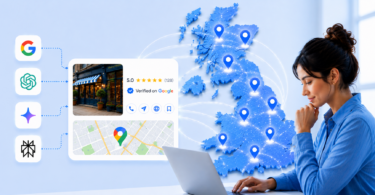
AI-generated answers are changing how customers discover and compare local businesses. Instead of only scanning traditional search results, customers may now ask platforms such as ChatGPT, Gemini, and Perplexity for recommendations, comparisons, and nearby options.

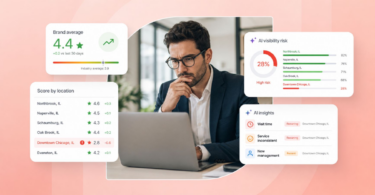
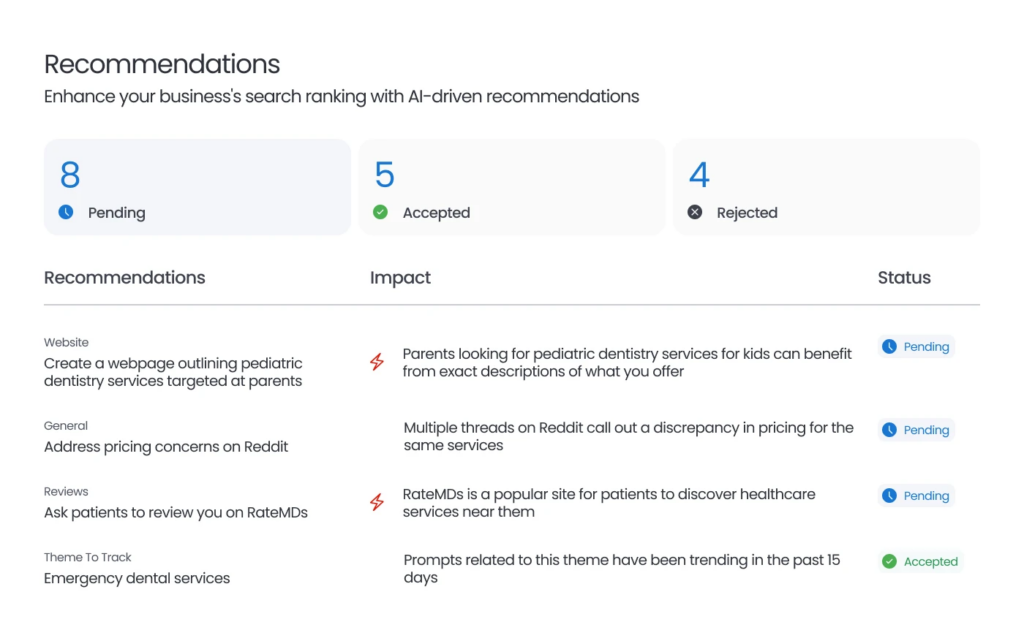
Birdeye Search AI shows how each location appears across AI-driven search experiences. It tracks visibility, trends, citations, business information accuracy, sentiment, and competitor presence, helping multi-location brands understand how AI engines interpret and describe their locations.
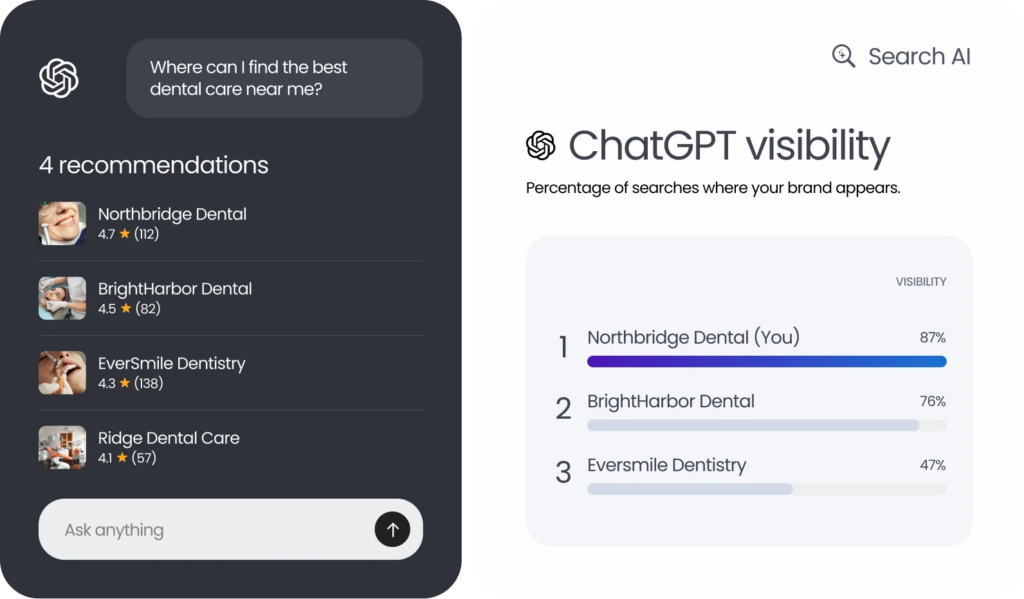
It also surfaces recommended actions across listings, reviews, citations, FAQs, and local content, giving teams a clearer path to strengthen the signals that influence both traditional local search and AI-driven discovery.
Darren Shaw, President and Founder of Whitespark, emphasizes this point by pointing out that businesses can still rank highly despite having inconsistent citations as long as they are listed on prominent, high-traffic sites.
“In this new model, Google has no problem with partially matching citations it finds online with your business entity in the knowledge graph. So, if you have a citation that has the correct name and phone number, but the address is different, Google still knows this is your business and associates the citation with your entity,” Darren wrote in a Reddit post, referring to Google’s Knowledge Graph.
Further supporting this view, SEO expert Greg Sterling told Birdeye:
“Listings management isn’t dead. However, a more deliberate approach is now required. Recent insights from the Search API leak suggest that Google devalues links on low-quality or low-traffic pages. Many early local search sites and aggregators are a shell of what they once were and have seen significant declines over the years. That makes links or mentions on those sites less effective. There should instead be a focus on key vertical directories and local consumer sites that still have meaningful traffic. That delivers multiple benefits. Many of those sites rank well, enabling direct discovery (Barnacle SEO). Links and mentions also support Google’s concept of local ‘prominence,’ which contributes to greater local SEO visibility.”
Greg Sterling – Co-founder of Dialog and Near Media & former contributing editor for Search Engine Land
What is Barnacle SEO?

Barnacle SEO is a strategy where a business attaches itself to high-authority websites to improve its own search visibility. This involves getting listed on or associated with top-ranking sites to “ride along” their SEO success.
Case studies
Now, let’s take a look at some real-world success stories:
Quick Care Med: Effective citations yielding results with Google accounting for 81.18% of website traffic
Quick Care Med wanted to transform its digital presence with streamlined operations and enhanced online accuracy. Since becoming a Birdeye customer, the company has experienced 98.5K mobile Google Map impressions, 94.7K visitors clicking on the “Call” button to contact their business, and 24.7K Facebook page interactions.
“Birdeye has really helped us get our name on the first page of Google and other top sites, improving our search rankings. It’s important for us to be seen in these top directories, and Birdeye boosts our visibility there, making a big difference for us.”
Charley Balbuena – Director of Operations, Quick Care Med
Cunningham Restaurant Group: Improved local SEO with quality citations led to 1,048.62% surge in traffic
Cunningham Restaurant Group has maintained accurate listings across key platforms like Google and Facebook using Birdeye Listings. It has not only ensured the reliability of information but also significantly enhanced Cunningham Restaurant’s SEO.
“48.91% of our website visitors come from Google, so it’s really important to keep our info up-to-date. Birdeye makes it easy to update our listings quickly across Google and other big sites, helping us stay accurate online and keep our customers happy.”
Carissa Newton – Director of Marketing, Cunningham Restaurant Group
Superior Storage: Multi-location business success with 92% of website traffic stemming from Google
Superior Storage saw significant gains in visibility and engagement by using Birdeye to manage its business listings across 29 locations. Working with Birdeye has been a game-changer for the business, ensuring that all its addresses, phone numbers, and business information are consistent on the Internet.
“Over the past 12 months, we have noted that 92% of our website traffic originated from Google, translating to 297,000 GBP in impressions. This surge in visibility has resulted in 33,200 website visits, 24,000 direction requests, and 13,500 calls.”
Brandon Wipperfurth – Director of Marketing, Superior Storage
Best practices for effective citation management
From the above discussion, it’s clear that quality citations are your ticket to local SEO success. But how do you play the citation game the right way? Here are some best practices you must follow:
- Focus on high-traffic and relevant directories. Prioritize business listings on major platforms like Google, Facebook, Apple, Bing, and industry-specific sites to enhance your online visibility and attract potential customers.
- Maintain accurate Information: Look at information beyond NAP. Build complete profiles on core sites and add vital information like media, attributes, products, services, important links, and relevant offers and updates.
- Clean up your act: Regularly audit your online presence by cleaning up citations on key sites to maintain accuracy and trust.
Show up where your customers search
Want to see how Birdeye can supercharge your local SEO performance? Watch the free demo now.
Tools and resources to help you win
Building a strong online presence through quality citations takes time and effort. But, there are tools and resources available to help you ace your local SEO management efforts.
- Free tools: The GBP account, a free and easy-to-use tool, directly affects how your business appears on Google Search and Maps. You can also use Birdeye’s Free Local SEO Audit tool to see how your business is showing up online. Additionally, many social media platforms like Facebook, X (formerly Twitter), and LinkedIn allow you to create your business profile for free, adding valuable citations to your online presence.
- Business Listing management platforms: For multi-location brands, managing business information manually across core platforms can lead to outdated hours, missing fields, duplicate profiles, and inconsistent location details. A listings management platform such as Birdeye Listings AI gives teams a centralized way to manage accurate business information across the high-impact sites customers actually use.
- Conversation paths: Attracting customers to a profile is only part of local SEO. Businesses also need clear next steps once customers arrive. Features such as appointment links, messaging options, Google Q&A, webchat, and other contact paths can make it easier for high-intent visitors to call, book, ask a question, or visit a location.
- Local SEO experts: Consider consulting with a local SEO specialist who can conduct a comprehensive audit of your online presence, identify citation issues, and develop a personalized strategy to improve your local search rankings.
Remember, local SEO is not just about business listings. You need a stellar online reputation and an appealing social media presence to attract customers. Take a holistic approach, instead of just maximizing for NAP on as many sites as possible.
The bottom line: Quality trumps quantity in local SEO
The days of chasing endless directory listings are over. Considering that Google now favors websites and directories that people actually use, you must prioritize high-quality citations for building a strong online reputation. It will propel your business to the top of local search results and help you convince potential customers that you’re a legit business worth checking out.
FAQs on citation building and local SEO
Citation building involves listing your business’s name, address, and phone number (NAP) on various online directories, websites, and platforms to improve your local search visibility and credibility.
Citations help search engines verify the accuracy and legitimacy of your business information, which can improve your local search rankings. They also increase your business’s online presence and make it easier for potential customers to find you.
Ensure consistency by using the same NAP details across all listings. Regularly audit your citations on major platforms and correct any discrepancies to avoid confusing search engines and customers.
Focus on high-traffic and authoritative directories relevant to your industry, such as Google, Apple, Facebook, Bing, and industry-specific sites. These platforms have a more significant impact on your local SEO.
Barnacle SEO works by attaching your business to well-ranking websites in your industry or local market. By having your business listed or mentioned on these sites, you benefit from their established SEO authority and traffic.
Yes, small businesses can greatly benefit from Barnacle SEO by gaining exposure on established sites, which can drive local traffic and improve their search visibility without extensive SEO resources.
Business listing management made easy with Birdeye
Chasing citation volume across low-traffic directories creates more work without guaranteeing stronger local visibility. A better approach is to focus on the platforms customers actually use, keep every location profile accurate, and continuously improve the information that shapes discovery.
Birdeye is the #1 agentic marketing platform built for multi-location brands. It replaces fragmented marketing tools with one enterprise platform that unifies customer and location data and deploys custom AI agents trained on your brand and industry to drive business outcomes.
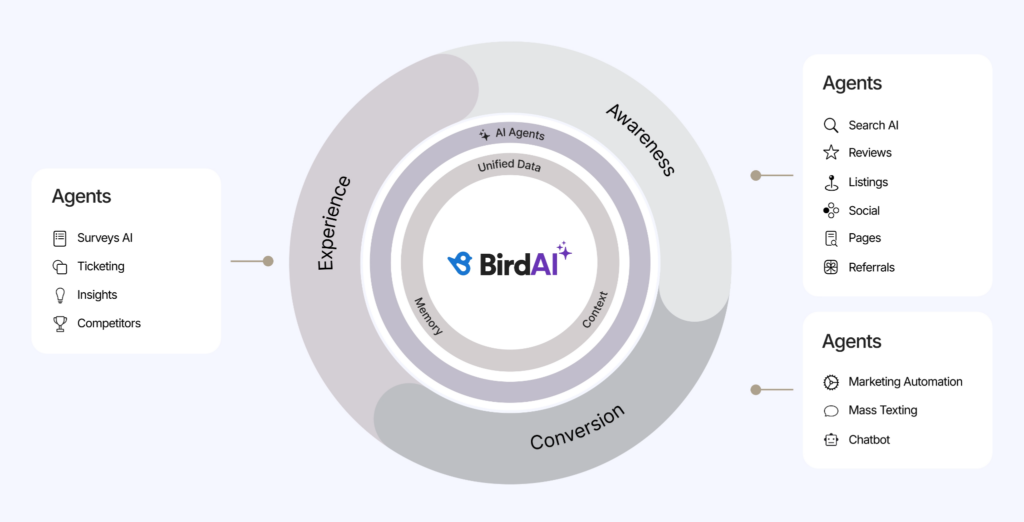
For listings management, that means teams can move beyond static citation checklists and manage local presence as an ongoing performance strategy. Birdeye Listings AI keeps business profiles complete, accurate, and competitive across high-impact platforms such as Google, Apple, Facebook, Yelp, and other important discovery sites.
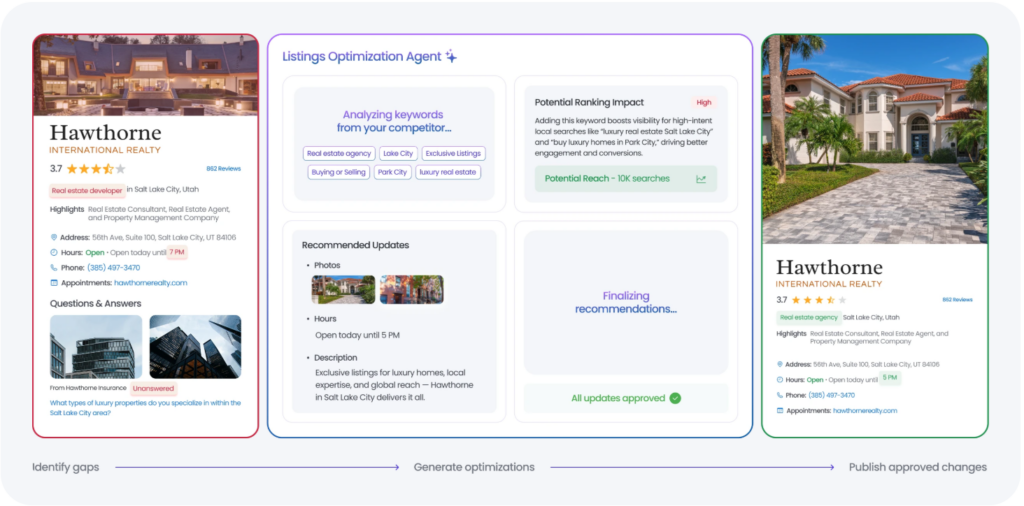
The Listings Optimization Agent continuously monitors profiles and competitor content to identify missing information, outdated details, errors, and location-specific opportunities. It recommends improvements to profile elements such as descriptions, services, photos, links, Q&As, and other fields that help customers find and choose the right location.
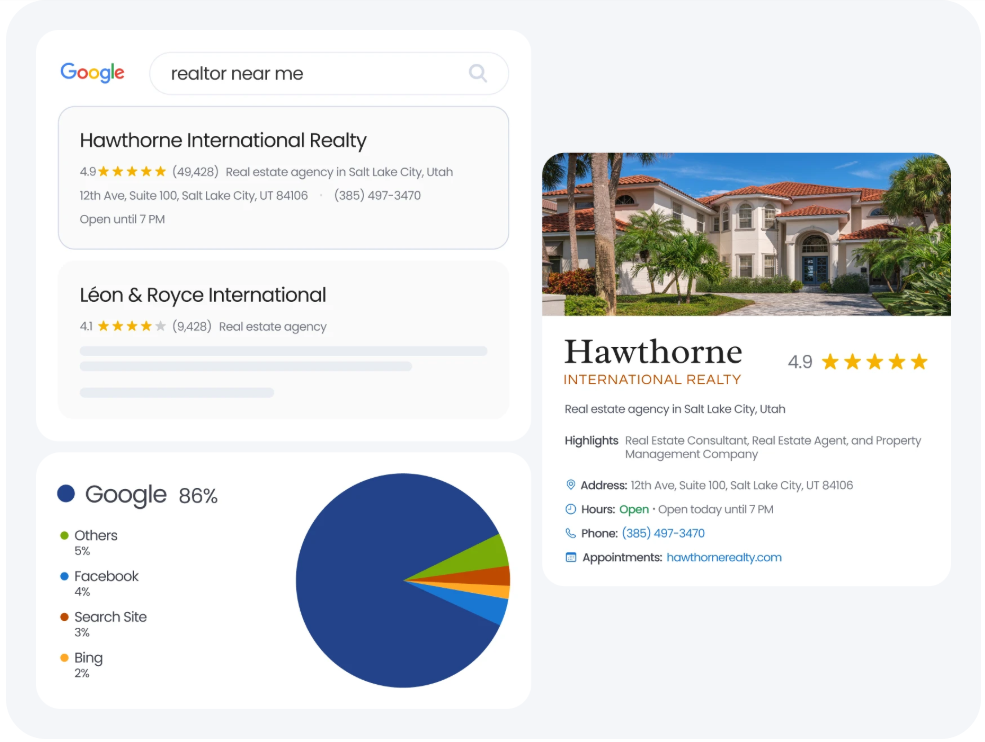
Teams can configure guardrails and approval workflows before updates are applied, helping every location stay consistent with brand standards while remaining relevant to its local market. Performance insights give corporate and local teams visibility into profile accuracy, keyword rankings, website visits, calls, and other customer actions.
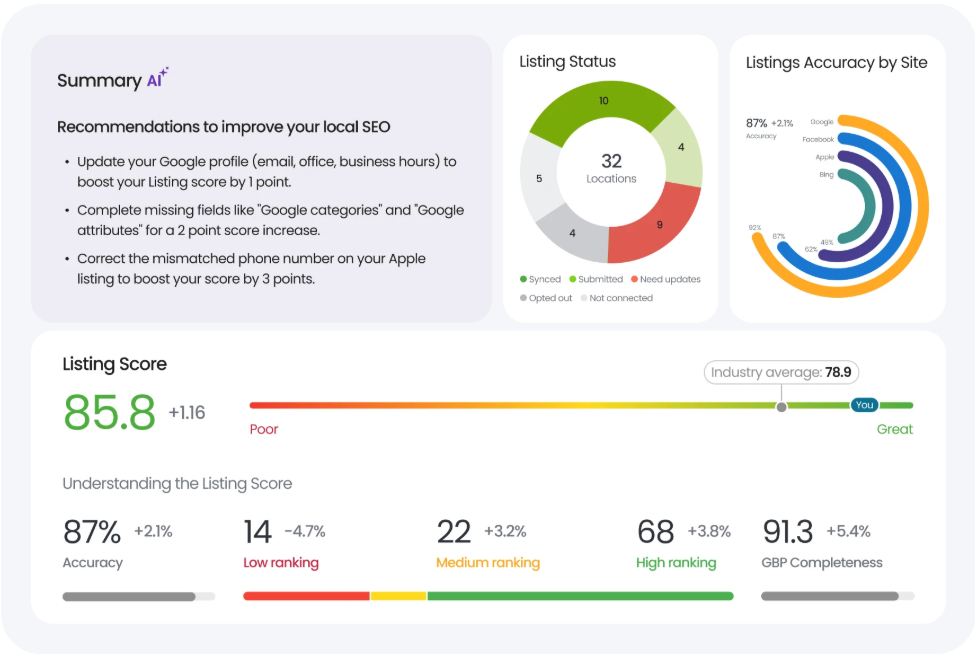
With Birdeye, multi-location brands can shift from directory volume to listing quality, focus on the platforms that matter, understand what each location needs, and keep profiles optimized for both local search and AI-driven discovery.
Ready to transform the way you manage your business’s online presence? Click the banner below and watch our free demo today.

About the Author

Kukil Bora
Birdeye
Originally published