For healthcare brands, social media isn’t optional anymore. It’s a trust channel, an education channel, and a reputation channel rolled into one. Before choosing a hospital, clinic, or specialist, patients scroll through Instagram posts, TikTok explainers, LinkedIn thought leadership, and Google Business updates.
Summary

What’s changed is how patients make decisions. They expect fast information, credible voices, transparent communication, and timely updates — not polished ads or corporate hospital banners. A strong social media presence now influences everything from referral decisions to provider preference to emergency-care choices. That’s why the healthcare social media strategy that worked in 2021 absolutely won’t work in 2026.

Healthcare social media management now blends storytelling, community engagement, and real-time accessibility. And the organizations that get this right see measurable impact: more appointments, stronger provider brands, faster crisis communication, and deeper patient loyalty.

This guide breaks down exactly how social media marketing for hospitals and clinics works today, how medical organizations can create meaningful engagement without risking compliance, and how AI-powered tools like Birdeye Social AI help teams.
Table of contents
- Why social media matters in healthcare marketing today
- What patients expect from healthcare brands on social media?
- Core social media marketing channels that drive patient engagement
- A healthcare social media strategy that actually works
- Benefits of using social media in healthcare marketing
- Risks of employing social media in healthcare marketing
- HIPAA-safe social media dos and don’ts for healthcare
- 5 tips on handling comments, messages & patient interactions on social media?
- Key metrics to track in healthcare social media marketing
- Best practices for healthcare social media management
- How Birdeye Social AI strengthens healthcare social media operations
- FAQs about using social media in healthcare
- Elevate your healthcare social media marketing strategy with Birdeye
Why social media matters in healthcare marketing today
Social media is no longer just a branding channel for healthcare — it’s a real-time patient communication system, a trust signal, an educational platform, and increasingly, a primary discovery engine for clinics, hospitals, and medical practices.
Patients now use social in the same way they use search: to learn, compare, validate, and decide.
A strong presence signals credibility. A weak or inconsistent presence raises doubt. And for many hospitals and clinics, the gap between the two determines whether a patient checks your website or chooses another provider entirely.
Why it matters right now
- Patients expect transparent, ongoing communication, not one-way announcements.
- Younger demographics (and increasingly older ones) use social platforms to learn about conditions, treatments, and provider reputations.
- Social algorithms reward organizations that publish helpful, consistent, trustworthy content — giving you reach without paid spend.
What’s changed
Healthcare brands can no longer rely solely on websites, referrals, or listings. Social platforms are becoming:
- Educational channel
- A community reputation indicator
- A patient engagement and retention tool
- An engine for service-line awareness (urgent care, orthopedics, maternity, behavioral health)
And with AI rapidly reshaping how content is discovered and summarized, a strong social presence now improves your visibility in both traditional search and AI-generated health answers.This is why social media marketing in the healthcare industry is no longer optional — it’s an operational necessity that shapes perception, trust, and patient acquisition.
What patients expect from healthcare brands on social media?
Social media has become an extension of the patient experience. Before they book, patients scan your posts the same way they’d scan your website — to evaluate credibility, culture, values, and how your organization treats real people.
Clear, reassuring communication
Patients expect content that speaks like a real clinician or care team, not a corporate script. Straightforward explanations, compassionate tone, and everyday language win — especially for anxiety-driven topics like symptoms, recovery, or screenings.
Practical, timely updates
People follow healthcare brands for relevance. They want:
- Appointment availability
- Seasonal reminders
- Policy changes
- Community alerts
- New providers
- Updated hours
If your channels feel outdated, patients assume your operations are too.
Educational content without fear or jargon
Patients want to understand their health, not decode it. People follow healthcare brands to understand:
- Which symptoms require care
- How to prepare for procedures
- Whether a service is offered locally
- How to access virtual or urgent care
When a brand makes health easier to understand, patients stay loyal.
Social is just one channel — see our full guide to marketing for doctors for the complete strategy.
Proof of real-world care
Patients trust what they can see: your team, your facilities, your community presence. Photos, stories, and behind-the-scenes posts humanize providers and make large organizations feel approachable.
Healthcare organizations can extend this visibility to their own digital properties by embedding social media feeds on their website, giving visitors another way to see recent, publicly shared content from the brand.
Responsiveness
Ignoring comments or messages — especially questions about access or care signals indifference. Even a brief acknowledgment maintains confidence while keeping boundaries HIPAA-safe.
Core social media marketing channels that drive patient engagement
Each channel serves a different purpose, attracts different patient behaviors, and requires a different style of communication.
Here’s how the major platforms work for healthcare and what they’re best at.
Instagram & Facebook: Awareness, education, and community-building
These remain the most important platforms for clinics, hospitals, and specialty practices because patients use them to evaluate a brand’s credibility and culture.
What works best:
- Short educational posts
- Provider spotlights and behind-the-scenes content
- Patient stories (HIPAA-safe)
- Seasonal health guidance
- Community involvement updates
These channels also play a huge role in family decision-making — particularly pediatrics, primary care, OBGYN, dental, and wellness.
TikTok & Reels: Trust-building through simplicity
Medical social media marketing thrives here because patients want simple, visual explanations.
Best for:
- Myth-busting
- Health tips
- Lifestyle and preventive care content
- Quick “When to see a doctor” videos
These formats outperform long educational posts and help humanize your providers.
LinkedIn: Employer brand + recruiting
A must for hospitals, multispecialty groups, and fast-growing clinics.
Most effective content:
- Provider milestones
- New locations
- Research contributions
- Organizational values, culture, DEI, and recognition
YouTube: Deep patient education
The most powerful channel for long-form patient guidance.
Use it for:
- Procedure explainers
- Provider interviews
- FAQ-style content
- Pre-op/post-op instructions
- Condition-specific education
YouTube content also feeds Google search results, boosting long-term discoverability.
Review + reputation channels: Trust and decision-making
Healthcare review sites aren’t traditional “social” platforms, but they heavily influence patient choice.
Patients check Google, Facebook, and sometimes Healthgrades or WebMD comments like they would any social feed.
This is where sentiment shapes conversion.
And that’s exactly why a healthcare social media strategy can’t live in silos anymore — it has to connect platforms, reputation, responsiveness, and content into one unified system.
A healthcare social media strategy that actually works
A smart healthcare social media strategy gives every clinic, hospital, or provider a unified direction without drowning teams in rules or content demands.
Below is a clean, practical strategy framework that works across specialties and organization sizes.
1. Anchor your strategy in patient intent
Instead of guessing what to post, start with what patients actively want to know:
- When should I see a doctor?
- What symptoms matter?
- What does this clinic specialize in?
- Is this place trustworthy and responsive?
- How fast can I get care?
2. Build a repeatable content structure (not a long calendar)
Healthcare teams burn out when content creation has no system.
Use simple formats:
- “When to Come In” posts
- Provider spotlights
- Behind-the-scenes operations
- Reviews & patient stories
- Community involvement highlights
These formats keep your feed varied without reinventing the wheel each week.
3. Balance centralized control with local authenticity
This is the biggest challenge for multi-location healthcare organizations. You need brand consistency, but each clinic needs space to sound human and relevant to its community.
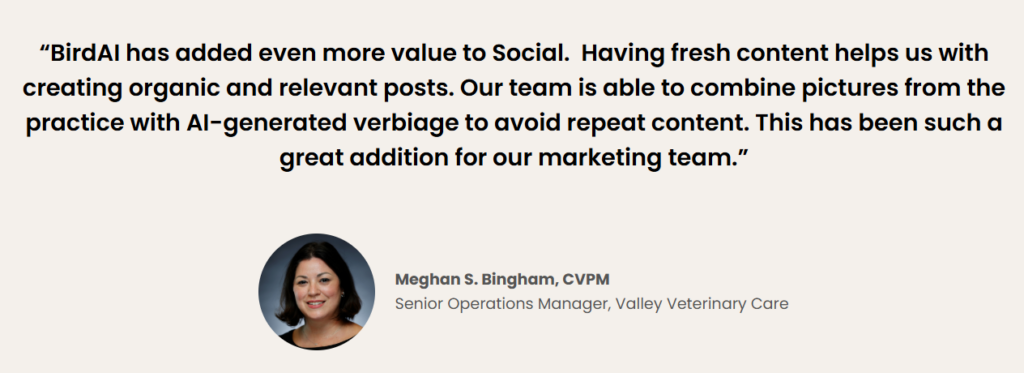
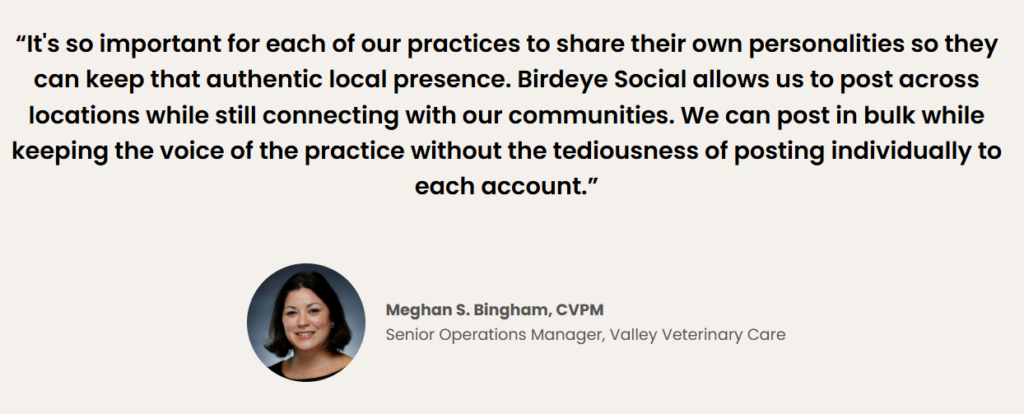
A real example: Valley Veterinary Care used Birdeye Social AI to centralize brand voice while empowering 100+ locations to publish content tailored to their local communities, without drowning staff in manual scheduling. This model works beautifully for hospitals and clinic networks facing similar scale challenges.
4. Plan for responsiveness
The strategy isn’t complete unless you define:
- Who responds to comments
- How quickly
- What gets escalated
- What never gets answered publicly
- How to handle misinformation
A good strategy makes these workflows predictable, so there are no surprises.
5. Document your compliance rules simply
Clear rules reduce risk and speed up approvals. No legal wall of text.
Just:
- What can clinicians say
- What front-desk teams should not say
- How to redirect conversations safely
Benefits of using social media in healthcare marketing
For multi-location healthcare brands, social media isn’t just a marketing channel — it’s how consistency, trust, and visibility scale across every clinic, provider, and community you serve. When executed well, it drives patient choice at the local level while reinforcing brand credibility at the system level.
Reach a younger audience
Gen Z and Millennials often turn to social media to discover new products, brands, or concepts. This applies to the healthcare industry, too. By being present on social media, your healthcare brand can gain an advantage over competitors and become more familiar to younger generations. The more they see your brand active on social media, the more likely they’ll trust you.
While many traditional marketing strategies are available, social media is one of the most critical channels for healthcare brands and professionals to connect with younger audiences seeking information online. Healthcare brands can use social media to share information and connect with the audience on each platform.
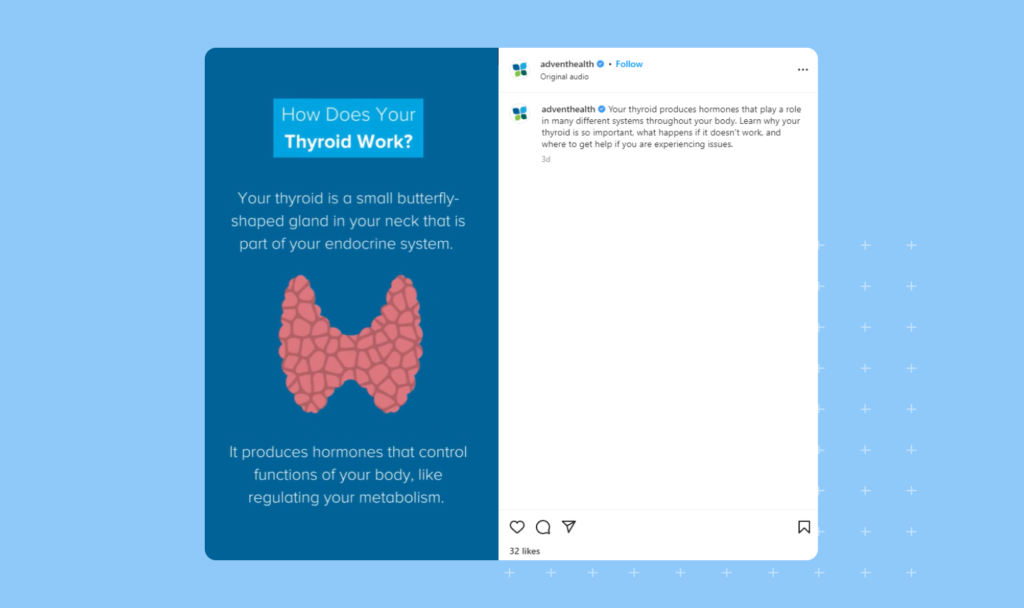
Be discovered easily
Social media is rapidly becoming an alternative to search engines for finding product and service providers. An active social media presence can also help your brand’s search engine optimization (SEO) efforts. By consistently publishing new content and interacting with your audience, you’ll help put your practice in front of potential patients.
Also, social media has become a growing space for fitness and wellness influencers. If you partner with them, you can take your information to their followers and drastically increase your reach in the industry.
Build a solid online reputation
Your reputation matters a lot in the healthcare industry. By leveraging social media in healthcare marketing, hospitals, clinics, individual professionals, and brands can build a solid online reputation.
Plus, social media can help you strengthen your existing word-of-mouth channels, collect public testimonials, showcase reviews, and respond to customer queries.
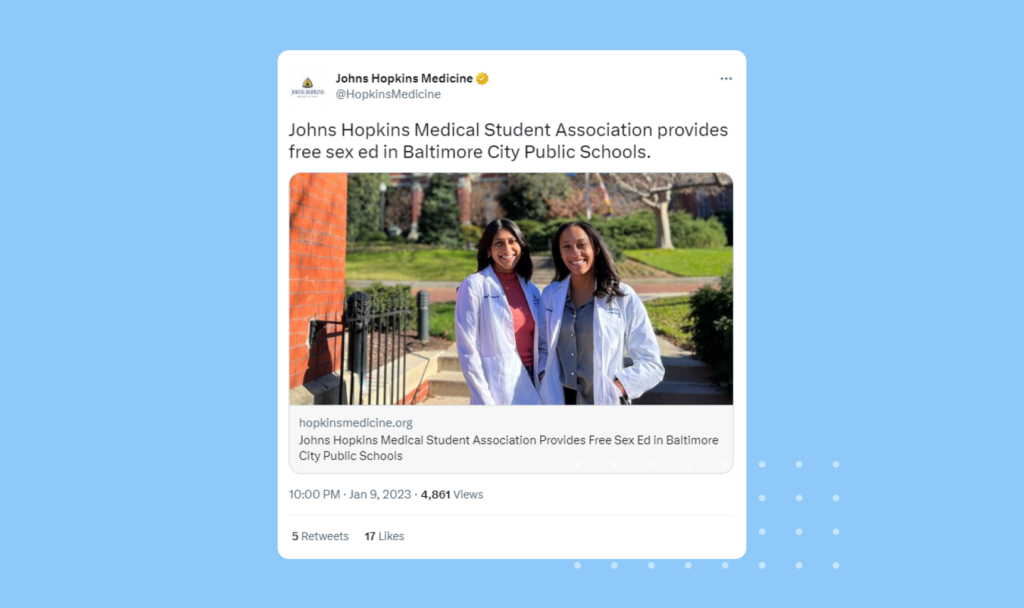
Communicate your values
While you may have communicated your values and principles on your website or other sales collateral, social media is the best place to showcase them to your audience.
You can leverage social media in healthcare marketing to showcase your values, display your brand personality, and connect with like-minded patients to boost your revenue.
Source: Twitter
Risks of employing social media in healthcare marketing
Social media can seriously benefit your healthcare business, but it also has its disadvantages. Any healthcare company considering using social media must weigh the pros and cons before beginning.
Online reputation management
While social media plays a vital role in building a healthcare brand’s online presence and reputation, maintaining that reputation is also a concern. Social media platforms are open to everyone, which means anyone can share their opinions about your brand, service, product, and even your industry.
Healthcare brands often face angry patients flooding their social media profiles with negative comments and exaggerated feedback. Online reputation management on social media can be a big challenge for a large healthcare brand with multiple locations.
Customer service expectations
When a business has a strong online presence, customers expect it to be “present” at all times and to provide round-the-clock appointment scheduling, instant responses, and accurate information. However, these expectations are only realistic for some healthcare brands.
Social media marketing can be challenging for healthcare brands with multi-location operations and large teams. With a lot of cooks in the kitchen, it can be hard to delegate tasks – but there are a few ways to make things easier, including:
- Setting up automated responses for direct messages, indicating if that is the right channel, and directing them to the appropriate channel, if necessary
- Including their contact information on their handles so that social media users know how to contact them
The bottom line: Clear communication can help healthcare brands set boundaries and avoid any miscommunication.
Resource requirement
Online reputation management and customer service are highly demanding and require plenty of time, money, and effort.
Social media marketing in healthcare needs a marketer to create and publish content while a medical professional oversees it to avoid misinformation. As patients tend to reach out with concerns on these channels, businesses also need staff to monitor the inbox. Without dedicated people, this can take up a lot of time for other staff, such as receptionists or marketing teams.
Without a dedicated team in place, this eventually becomes a handicap for many healthcare companies when it comes to using social media to boost their brand.
HIPAA concerns
Healthcare brands have the unique ability to create genuine educational content, which is usually a big success in social media content marketing. However, when using social media in healthcare marketing, there is also a risk of violating HIPAA or doctor-patient confidentiality norms.
When referring to medical cases or soliciting testimonials, healthcare providers and companies must be aware of the data privacy requirements.
Of course, this doesn’t mean that social media in healthcare marketing is impossible to get right. Many brands successfully build a solid social media presence, and you can too.
What good healthcare social media content actually looks like
Patients don’t follow healthcare brands for corporate announcements.
They follow you because they want clarity, reassurance, and simple guidance from a trusted source. Good social content in healthcare isn’t about trends — it’s about:
Clear, simple explanations of health topics
Content that humanizes your providers
Local, community-rooted posts
Real stories & proof points

Simple rule: If a patient can learn something useful in under 10 seconds, it will perform well.
HIPAA-safe social media dos and don’ts for healthcare
Healthcare social media moves fast — but compliance moves on rails. Anything posted, replied to, or shared must protect patient identity, maintain confidentiality, and avoid even accidental disclosure. HIPAA doesn’t restrict your ability to be active on social media; it restricts the kind of patient-specific information you can reveal.
Below is the simplest, most bulletproof way to guide frontline teams, marketers, and clinicians who create or respond on social.
| DO | DON’T |
| 1. Use generic, non-identifiable language when discussing patient stories or outcomes. | 1. Never post patient photos, names, or appointment details without a signed, specific HIPAA authorization. |
| 2. Respond to comments with general guidance, not treatment details (e.g., “We’d be happy to help — please call our office”). | 2. Don’t confirm someone is a patient — even if they say it publicly. |
| 3. Use approved templates/scripts for replies to maintain compliance across staff. | 3. Don’t answer medical questions directly in DMs or comments — move the conversation offline. |
| 4. Review every post for PHI risk (names, faces, dates, room numbers, diagnoses). | 4. Don’t discuss outcomes, conditions, or visit details in any public reply. |
| 5. Train teams regularly on HIPAA rules for photos, comments, reviews, and messaging. | 5. Don’t repost user-generated content (UGC) that contains PHI, even if the patient tags your organization. |
5 tips on handling comments, messages & patient interactions on social media?
Most healthcare brands underestimate how much trust is built (or lost) in the comments section. Patients aren’t just reacting to posts — they’re asking real questions, expressing concerns, checking responsiveness, and evaluating professionalism in real time. How you handle these interactions becomes part of your brand’s public reputation.
Unlike other industries, healthcare teams must balance approachability, responsiveness, and HIPAA safety — without slipping into clinical advice or confirming patient identity. Here’s a simple framework for safe, confident interaction:
1. Acknowledge quickly.
Short replies within a few hours show patients you’re present, even if you can’t address specifics publicly.
2. Never confirm patient status.
Avoid lines like “We saw you last week…” or “Your appointment…”
Use neutral language: “Thanks for reaching out — we’re here to help.”
3. Move anything clinical offline.
Redirect to phone or secure messaging:
“For your safety and privacy, our team will follow up directly.”
4. Set boundaries for DMs.
You can answer general questions, but not symptoms, diagnoses, or medical advice.
Have a standard message ready to guide patients to proper channels.
5. Stay calm during negative feedback.
A brief, empathetic response is enough.
Avoid arguments. Avoid defensiveness.
Signal action: “We appreciate your feedback and will contact you to learn more.”
Key metrics to track in healthcare social media marketing
Social media delivers real value in healthcare only when you measure the right outcomes—not vanity metrics. Leaders need visibility into what’s actually improving patient acquisition, patient experience, and brand trust.
Below are the metrics that matter most for hospitals, clinics, multi-location groups, and medical practices.
1. Visibility & reach (Are we being seen?)
Track how often your posts, reels, and stories appear beyond your followers.
Useful metrics:
- Post reach
- Profile views
- Discovery impressions (non-followers)
These show whether your content is breaking out of your existing audience.
2. Engagement quality (Are people paying attention?)
Healthcare content that sparks comments, saves, or shares performs better in algorithms.
Monitor:
- Comments
- Saves (strongest intent indicator)
- Shares (signals credibility or relevance)
- Clicks on links/buttons
These reflect whether patients find your content helpful — not just visible.
3. Reputation signals
Your online reputation is now part of your social footprint.
Track:
- Review volume
- Customer sentiment score
- Response times
4. Conversion metrics (Did this lead to action?)
Measure actions that tie social activity to real outcomes:
- Appointment requests
- Chat/DM inquiries
- Phone calls from social profiles
- Landing page visits
This is where marketing connects to patient acquisition.
5. Operational insights (Where are we improving or slipping?)
Leaders should look for:
- Spikes in questions about wait times or service issues
- Repeated confusion about insurance or availability
- Sudden drops in engagement after policy or schedule changes
These signals help healthcare teams respond faster and operate smarter.
Best practices for healthcare social media management
Understand your audience
Every marketing strategy starts with understanding an audience – and social media in healthcare marketing is no exception. Before creating social media profiles and publishing content, you should know who you’re talking to. An easy way to do this is to send out a survey to your patients and understand their social media preferences.
This data should ideally guide your:
- Choice of platform
- Posting schedule
- Content creation strategy
Not everyone is looking for the same information, so knowing your audience can help you reach the right person quickly.
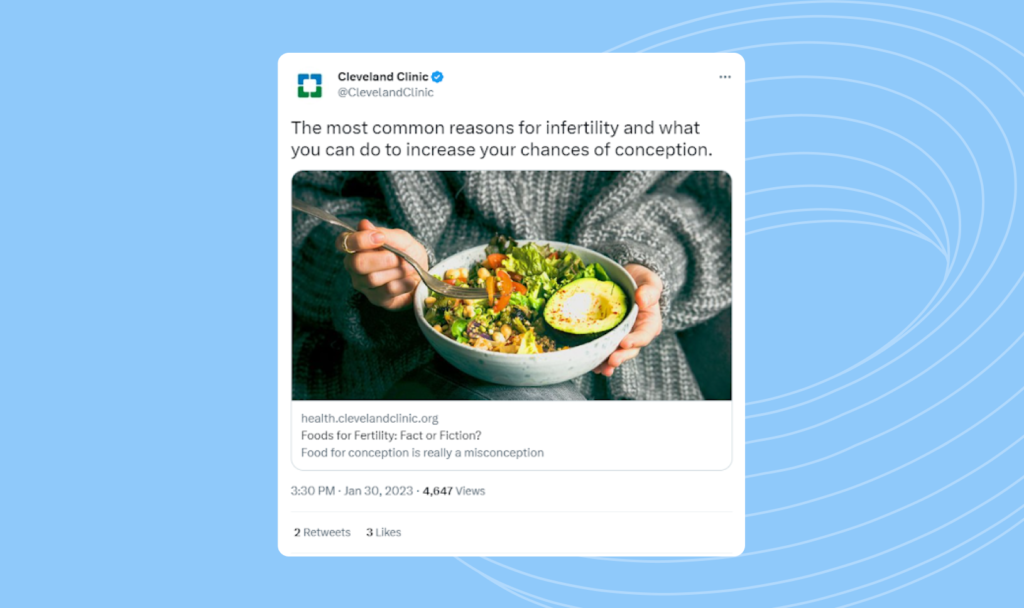
Stay factual
As good as social media is for healthcare brands, it’s also a place where misinformation spreads quickly. Your content must focus solely on the facts to stand out and build credibility.
If and when you set out to battle misinformation, rely on verified sources and use simple concepts that your social media audience can understand.
Make sure you’re staying professional at all times, and don’t engage in social media arguments or debates.
Source: Twitter
Create relatable, shareable content
In healthcare marketing, your brand will benefit from content that caters to a large portion of your audience. This makes it instantly relatable and urges them to share with their own networks. Most social media platforms reward this behavior and boost your brand’s profile reach.
Be sure to avoid jargon and communicate in plain language. You want your content to be easy for a large, diverse audience to understand.
Engage with your audience
Social media can often feel like a one-way street, with your brand just posting content for your audience. But if you want to truly connect with your audience, open up the lines of communication. Invite your social media followers to:
- Comment on your posts.
- Reply to your stories with feedback and questions.
- Message you directly for appointments or consultations.
Stay present after publishing content and engage with the responses. This makes your social media followers feel heard and can encourage them to interact with your company more.
Share reviews and testimonials
As social media in healthcare can build a strong online reputation, brands must make the most of it by sharing reviews and testimonials. This will help to balance any negative comments or reactions your brand may be getting online.
Healthcare brands can share reviews and testimonials from their other platforms (e.g., websites, blogs) and encourage their patients to share their positive feedback directly on social media.
How Birdeye Social AI strengthens healthcare social media operations
Modern social media management in healthcare is no longer about “posting regularly.” It’s about scale, accuracy, compliance, and keeping every location’s voice consistent without drowning staff in manual work. That’s where Birdeye’s healthcare-apt Social AI Agents step in.
Birdeye Social AI:
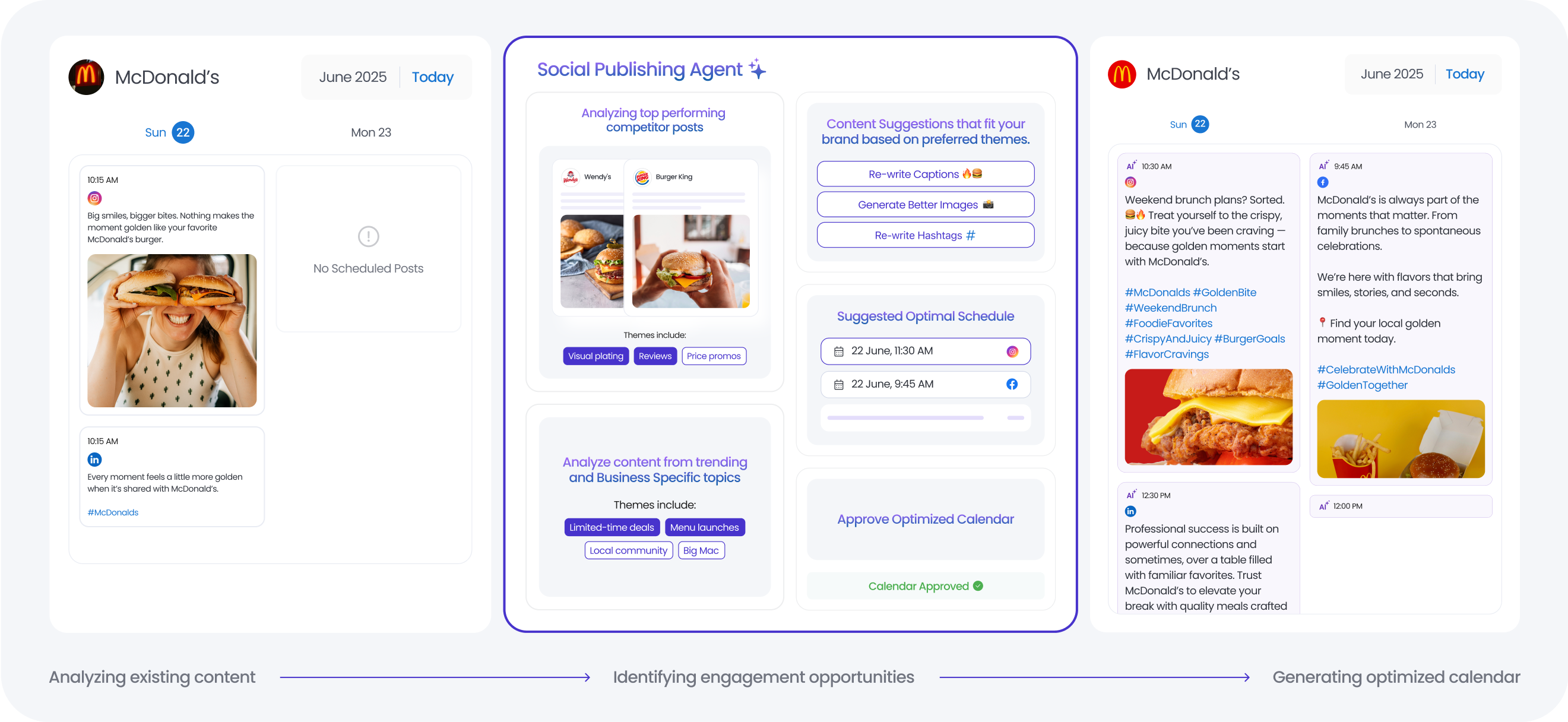
1. Publish faster with on-brand, compliant content
Social AI creates draft posts, captions, and variations tailored to your services, specialties, and tone. It ensures wording stays professional and avoids PHI, helping teams maintain both speed and compliance.
2. Manage multi-location pages without losing local authenticity
Large systems struggle to maintain consistent quality across clinics or departments. Social AI helps standardize messaging while allowing local teams to add community-specific context.
As mentioned above, Valley Veterinary Care used Birdeye Social AI to centralize its multi-location publishing workflow and maintain a consistent brand voice while still showcasing each clinic’s local personality.
3. Respond intelligently at scale
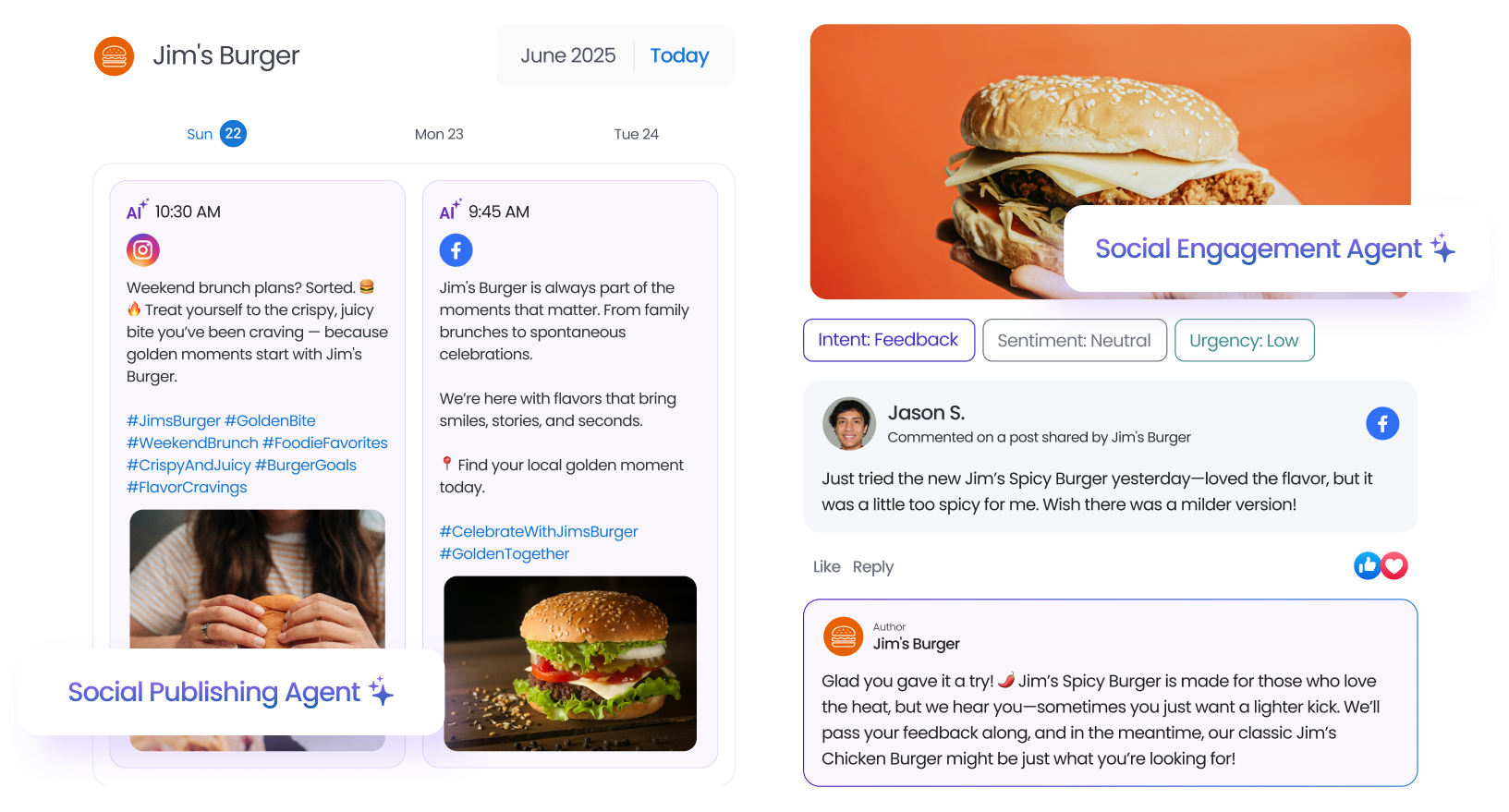
Social AI drafts responses to comments and messages using safe, non-diagnostic language. Teams stay present without risking PHI violations or uneven tone.
4. Spot trends and risks early
Birdeye automatically identifies engagement surges, sentiment changes, or negative comment patterns that may require attention — crucial for brand safety in healthcare.
5. Make reporting simple for leadership
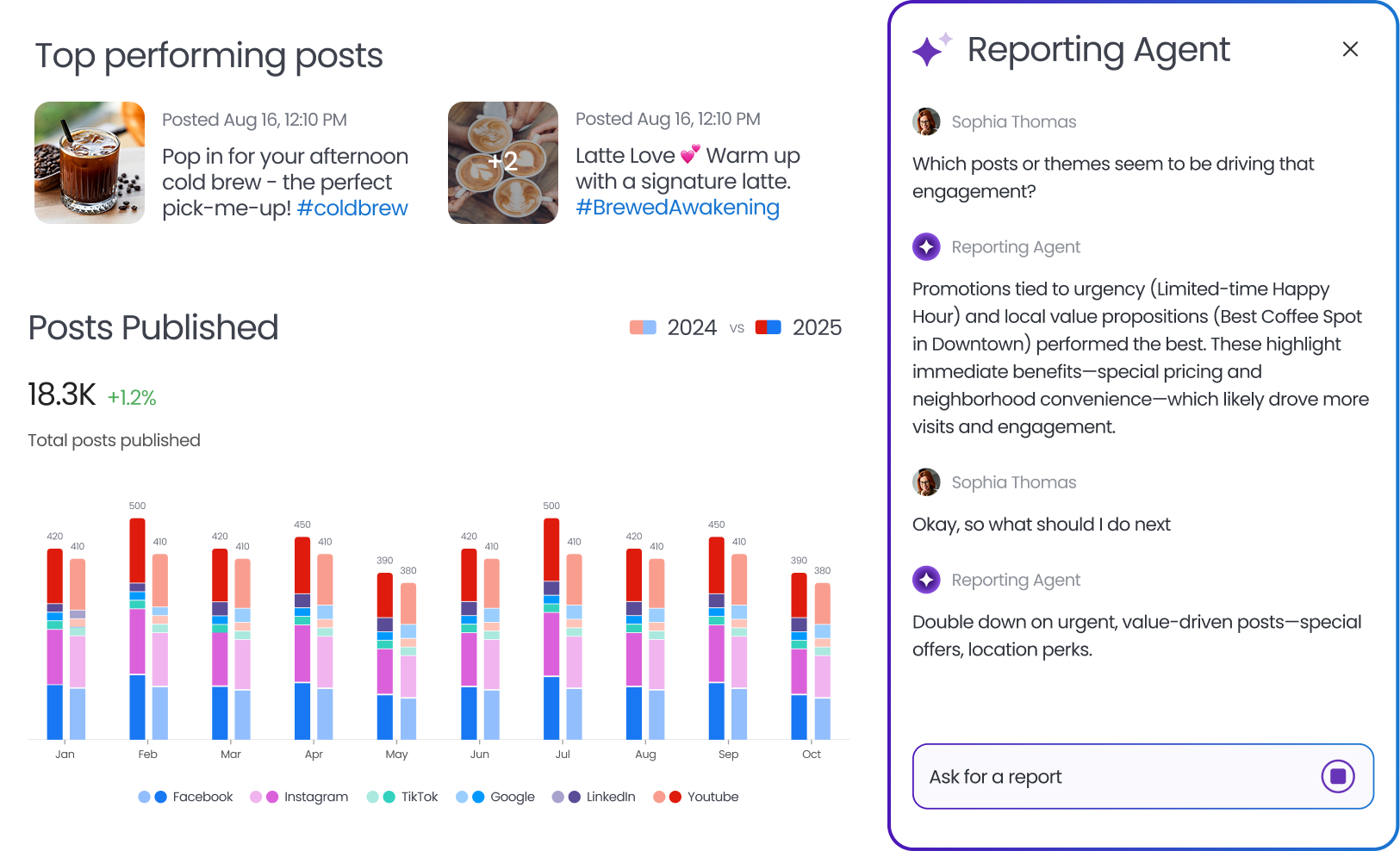
Instead of dashboards full of numbers, Social AI highlights what changed, why it changed, and what actions will improve reach and engagement next month.
FAQs about using social media in healthcare
Social media can be used in healthcare to spread awareness, combat misinformation, and improve the accessibility to quality products and services.
Social media is an easy-to-access platform with over 50% of the world’s population. Using social media in healthcare ensures everyone can access the correct information quickly.
Hospitals need social media to spread brand awareness, connect with patients, and boost their online reputation.
Patients use social media in healthcare to look up healthcare information, find providers, check reviews of companies, and choose the best service for them.
The challenges of using social media in healthcare are that it invites negative feedback, HIPAA concerns, and instant customer service expectations for healthcare providers.
Elevate your healthcare social media marketing strategy with Birdeye
Social media is no longer optional in healthcare marketing. It shapes brand perception, patient trust, and clinical demand long before someone clicks “Book Appointment.”
But the reality is: managing content, engagement, compliance, and consistency across multiple locations and providers is heavy operational work. That’s where modern tools matter.
Birdeye Social AI helps healthcare teams work smarter by:
- Publish consistent, compliant content across locations
- Strengthen patient trust with smarter engagement
- Improve visibility across social platforms and AI search
- Reduce manual workload for busy teams
Sign up for a free trial to see how Birdeye healthcare social media marketing works.
This blog post is part of our Social Media Management Guide
About the Author

Shruti Dugar
Birdeye
Originally published