Search engine reputation management is becoming increasingly important as search engines and AI platforms influence more customer decisions online. Reviews, ratings, listings, news mentions, and customer feedback now shape how brands appear across Google Search, ChatGPT, Gemini, Perplexity, and Google AI Overviews.
Summary
Search behavior is also changing rapidly. Instead of browsing multiple websites, consumers increasingly rely on AI-generated summaries and recommendations to compare brands, evaluate trust, and make purchase decisions. That means reputation signals influence not only where your brand appears, but also how AI search engines describe your business.

This guide explains how search engine reputation management works, which reputation signals matter most in 2026, and how brands can improve both search visibility and AI search presence across locations.
Table of contents
- What is search engine reputation management (SERM)?
- How is modern search evolving beyond the traditional results page?
- How search engine reputation management works: 7 core tactics
- How do AI answer engines select and cite brands?
- How can multi-location brands manage search engine reputation at scale?
- Comparison: What good looks like vs. common practice in search engine reputation management
- What should brands look for in search engine reputation management tools?
- How do Birdeye agents improve AI search visibility for multi-location brands?
- FAQs about search engine reputation management
- Birdeye helps brands strengthen their search engine reputation management
What is search engine reputation management (SERM)?
Search engine reputation management (SERM) is the practice of improving how your brand appears across search engines, review platforms, online listings, and AI-generated search experiences. Strong reputation signals, such as ratings, reviews, recent responses, and accurate business information, help improve both traditional search visibility and customer trust.
Search engine reputation management includes monitoring customer feedback, maintaining accurate listings, strengthening online reviews, managing brand mentions, and improving the overall quality and consistency of your online presence. These signals influence how customers evaluate your business before they visit your website or contact a location.
According to Birdeye’s State of Online Reviews 2026 report, Google accounted for 79.4% of reviews per location in 2025, reinforcing Google’s dominance as the primary reputation signal influencing both local SEO and AI-generated search results.

AI answer engines often rely on publicly available reviews, listings, and customer feedback patterns to describe brands, locations, and the quality of the customer experience.
Why SERM matters for your brand
Search visibility strongly influences customer trust and purchase decisions. Reviews, ratings, listings, and customer responses often shape first impressions before someone visits your website or contacts your business.
Search behavior is also changing rapidly. More consumers now ask AI platforms complete questions and make decisions based on summarized answers. That means reputation signals influence not only where your brand appears, but also how AI search engines describe your business.
For multi-location brands, consistent reputation management signals across locations becomes even more important. A few outdated listings or unanswered reviews can affect customer confidence, local visibility, and how AI platforms summarize the brand overall.
How is modern search evolving beyond the traditional results page?
Your website is no longer the only source shaping customer decisions in search. Review sites, news articles, business listings, social profiles, and discussion forums can all appear in traditional search results and AI-generated answers.
AI search engines increasingly evaluate publicly available reputation signals across the web to determine which brands appear trustworthy and relevant. Inaccurate listings, unresolved reviews, or inconsistent customer experiences can directly affect how brands appear in AI-generated recommendations.
Birdeye Search AI helps multi-location teams monitor how often their brand appears in AI-generated answers, track sentiment trends, and identify which reputation signals influence visibility across AI search engines. The same signals that improve AI discoverability, such as accurate listings, strong reviews, and consistent responses, also strengthen traditional local SEO performance.
How search engine reputation management works: 7 core tactics
Search engine reputation management combines reviews, listings, content, social engagement, and search visibility strategies to strengthen how brands appear online. The most effective SERM strategies improve both customer trust and AI search visibility by maintaining reputation signals across platforms.
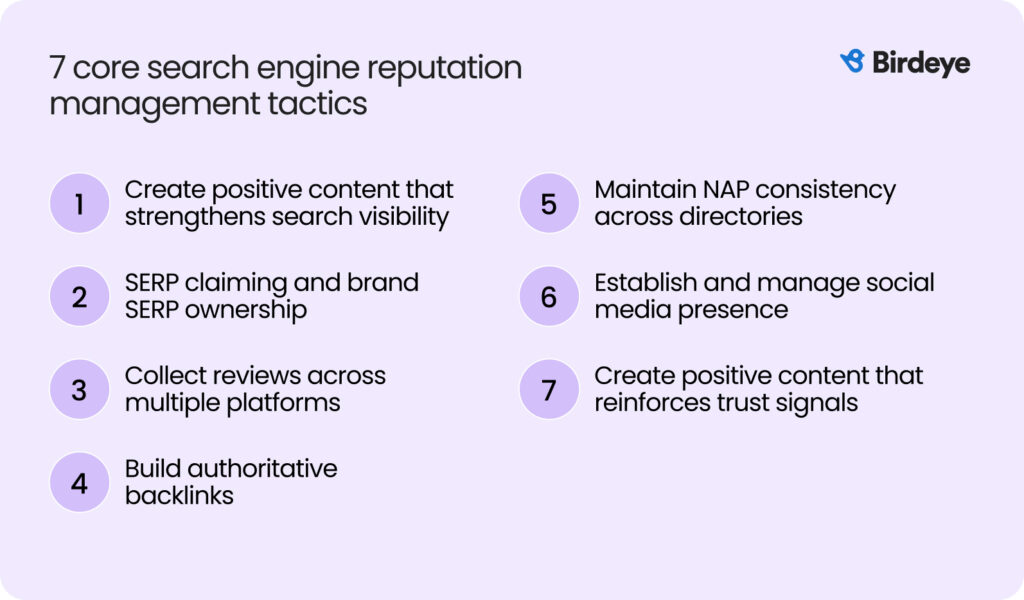
Let’s explore these in detail:

1. Create positive content that strengthens search visibility
2. SERP claiming and brand SERP ownership
3. Collect reviews across multiple platforms
4. Build authoritative backlinks
5. Maintain NAP consistency across directories
6. Establish and manage social media presence
7. Create positive content that reinforces trust signals
1. Create positive content that strengthens search visibility
Modern search engine reputation management focuses on strengthening trust signals across search engines and AI platforms. Instead of trying to bury negative results, brands improve visibility by publishing authoritative content, collecting recent customer reviews, maintaining accurate listings, and responding consistently to feedback.
Positive online reputation content can include:
- Customer reviews
- Thought leadership articles
- News coverage
- Social media content
- Business directory profiles
- Customer success stories
These signals help search engines and AI platforms better understand your brand reputation, the quality of your customer experience, and your market relevance.
2. SERP claiming and brand SERP ownership
Brand SERP ownership means controlling as many high-visibility search results as possible for your business name. This includes your website, Google Business Profiles, review platforms, social media pages, directory listings, press coverage, and other trusted sources that appear when customers search for your brand.
Strong SERP ownership helps:
- Improve customer trust
- Reduce visibility gaps
- Strengthen brand consistency
- Increase click-through rates
- Improve AI search understanding of your brand
AI answer engines also rely on these public sources when summarizing businesses and customer sentiment. Maintaining accurate and active brand profiles across platforms helps reinforce trust and visibility.
3. Collect reviews across multiple platforms
Reviews remain one of the strongest reputation signals for both traditional search engines and AI-generated search experiences. Review volume, recency, response activity, and review specificity all influence how brands appear across Google Search, Maps, and AI answer platforms, and industry-specific review sites.
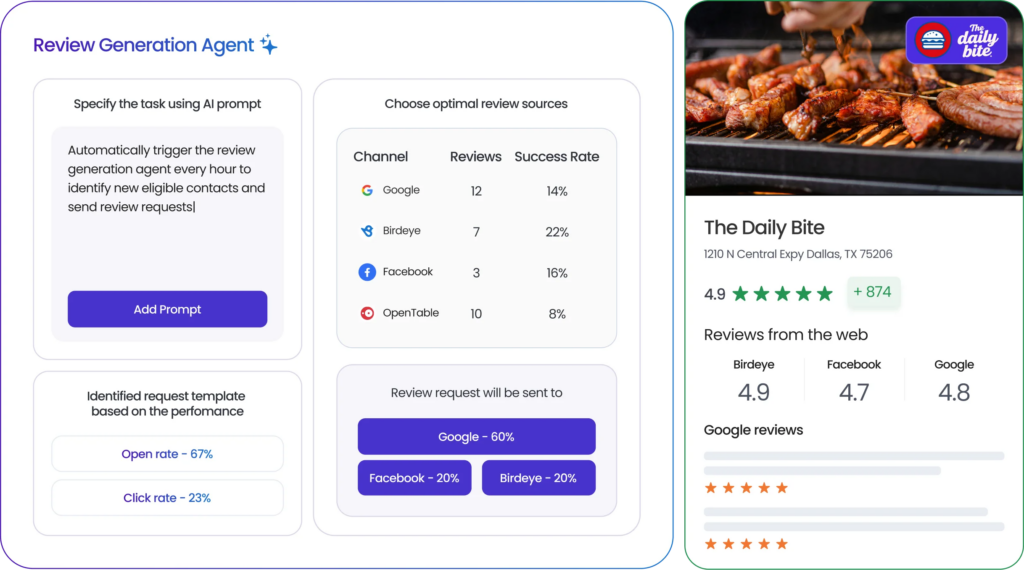
Fresh reviews help search engines and AI platforms understand whether customer experiences remain current and trustworthy over time.
Brands can also use AI review generators to streamline review workflows ethically while maintaining authentic customer feedback.
4. Build authoritative backlinks
Authoritative backlinks continue to strengthen search credibility and domain trust. When trusted websites, news publications, industry directories, and professional organizations link to your brand, search engines gain stronger confidence in your authority and relevance.
Backlinks also help AI search engines validate brand legitimacy across the web. Consistent mentions from reputable sources reinforce trust signals that influence both search rankings and AI-generated recommendations.
Brands can strengthen backlink profiles through:
- Digital PR
- Guest contributions
- Industry partnerships
- Original research
- Thought leadership content
- Review platform profiles
5. Maintain NAP consistency across directories
NAP consistency refers to keeping your business name, address, and phone number accurate across all directories, listings, review platforms, and search engines.
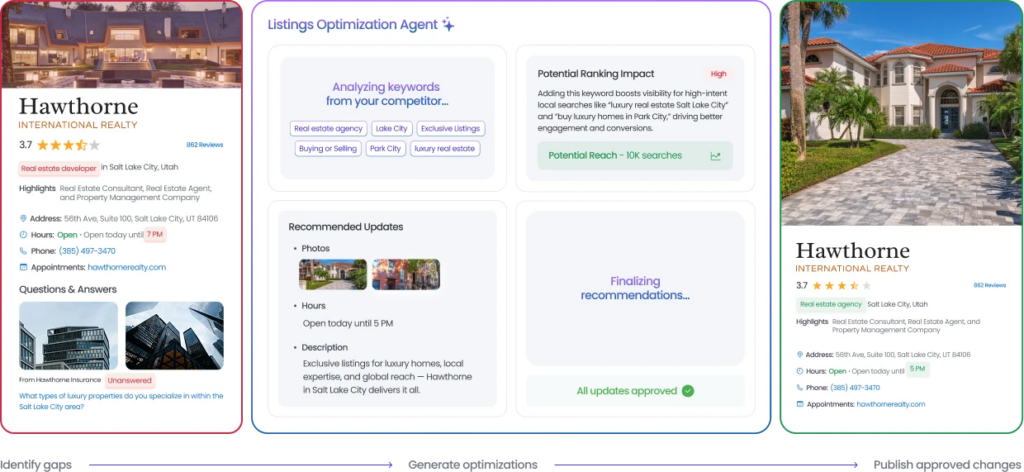
Brands should regularly audit all their channels, as inconsistent listings create confusion for both customers and AI search engines. Incorrect addresses, duplicate listings, or outdated phone numbers can weaken local visibility and lead to inaccurate AI-generated business recommendations.
Consistent listings improve customer trust, local SEO performance, and AI search accuracy across locations.
6. Establish and manage social media presence
Social media platforms increasingly influence brand discovery, customer trust, and reputation visibility across search engines and AI answer platforms. Active social profiles help brands strengthen authority signals while giving customers additional ways to engage and evaluate experiences.
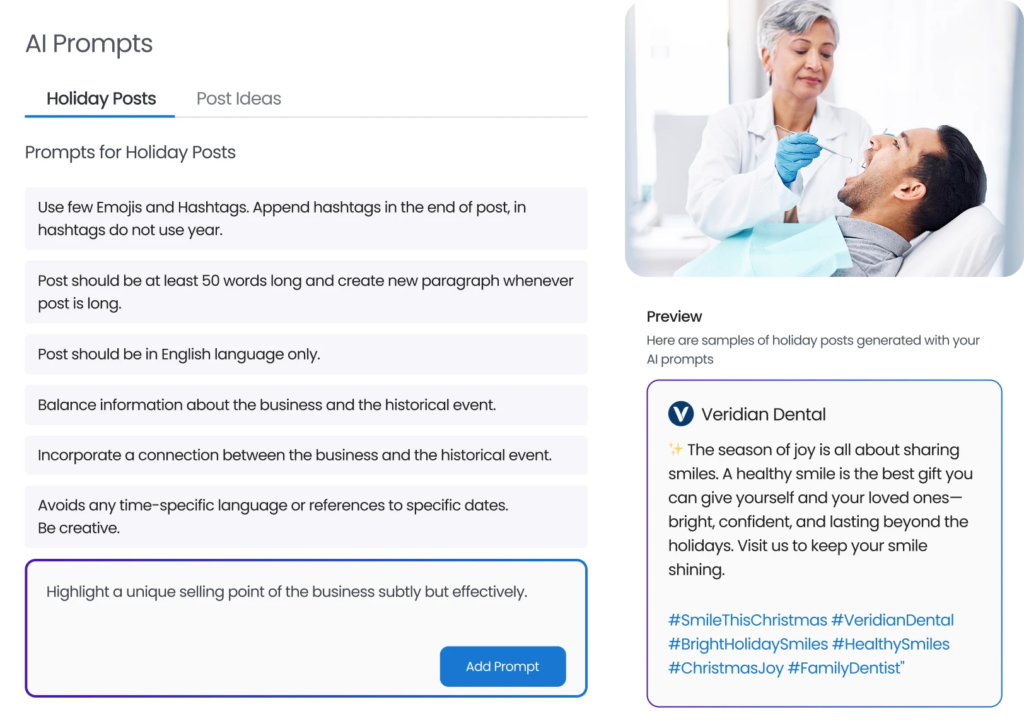
Brands should maintain consistent activity across major social platforms by:
- Responding to customer conversations
- Publishing educational content
- Sharing updates regularly
- Monitoring brand mentions
- Engaging with customer feedback
7. Create positive content that reinforces trust signals
Search engines increasingly evaluate public engagement signals, sentiment patterns, and social activity when interpreting overall brand reputation.
Reputation management is not only about responding to negative feedback. Strong brands consistently publish useful, trustworthy content that reinforces credibility and helps customers evaluate the business with confidence across search and AI platforms.
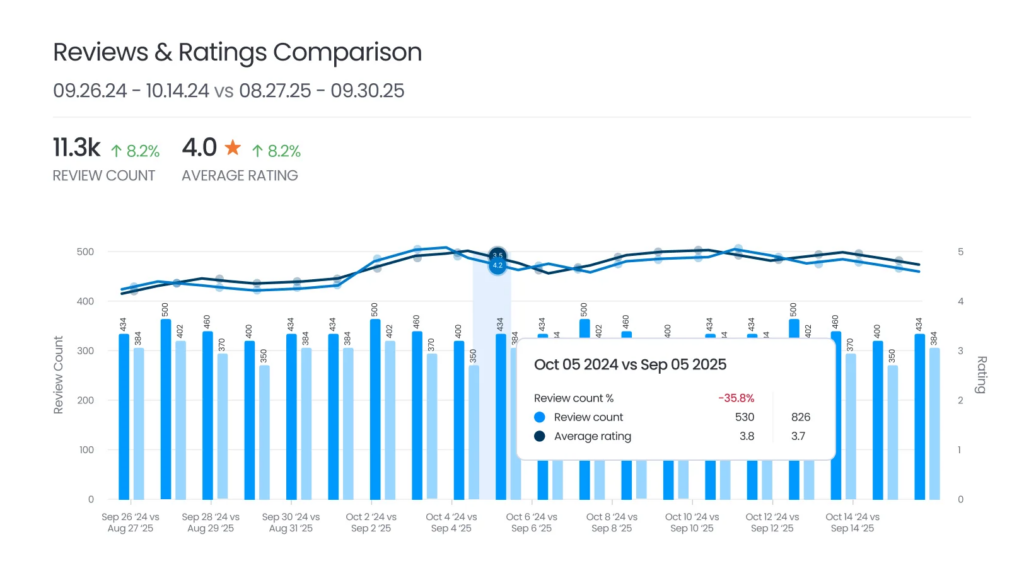
This content may include:
- Customer stories
- FAQ pages
- Expert articles
- Community updates
- Local landing pages
- Educational resources
Positive, high-quality content helps search engines and AI platforms better understand your expertise, customer experience, and brand reputation over time.
How do AI answer engines select and cite brands?
AI answer engines like ChatGPT, Gemini, Perplexity, and Google AI Overviews do not rank businesses the same way traditional search engines do. Instead of showing a list of links, they generate summarized answers using publicly available trust signals from across the web.
For example, if someone asks ChatGPT: “What’s the best dental clinic near me with strong reviews?”
AI search engines summarize information that businesses use:
- Reviews and ratings
- Listing accuracy
- Website content
- Social media activity
- Third-party mentions
- Customer sentiment
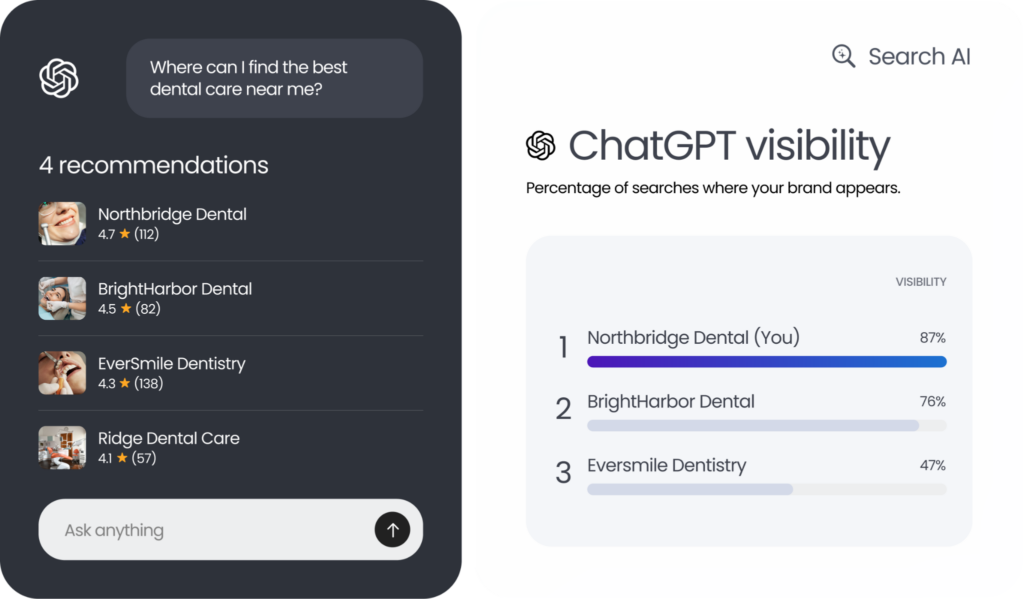
According to Birdeye’s State of AI Search 2026 report, discovery is shifting from traditional rankings to AI-generated, citation-backed answers.
As more consumers rely on AI-generated summaries instead of browsing multiple websites, brands need to ensure their reputation signals are accurate, consistent, and easy for AI engines to interpret.
Reviews play an especially important role because they help AI engines understand customer experience quality, reputation consistency, and business credibility over time.
What are the five review signals that influence AI search visibility?
AI search engines do not treat all reviews equally. They look for patterns that help determine whether customer feedback appears trustworthy, recent, and consistent across platforms.
The five review signals that most influence AI search visibility are:
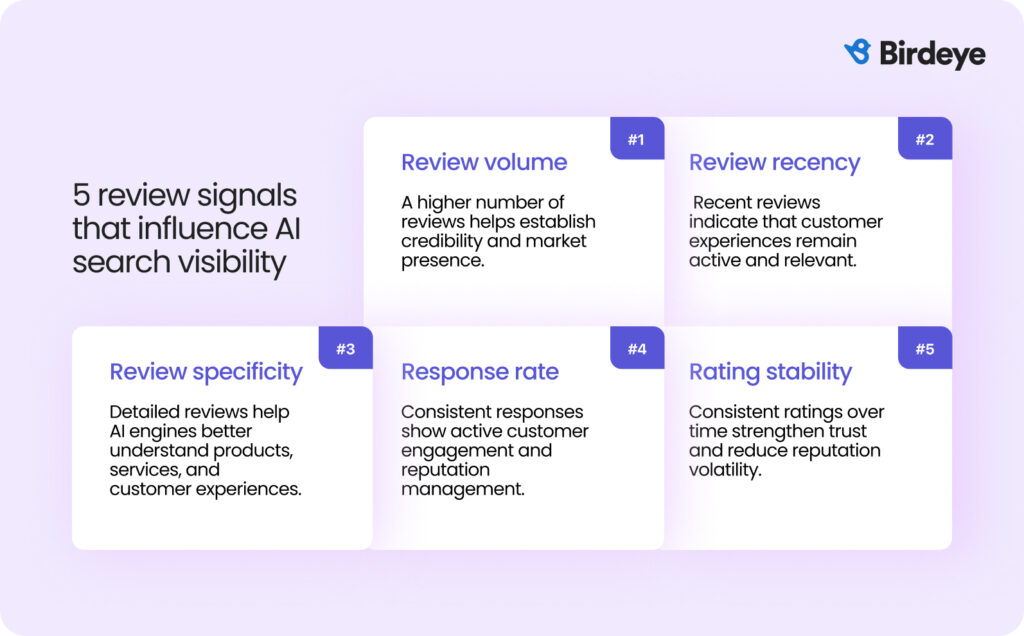
For example, a business with hundreds of recent, detailed reviews and regular responses is more likely to appear trustworthy to AI engines than a business with outdated or inconsistent feedback.
How can multi-location brands manage search engine reputation at scale?
Managing reputation across multiple locations becomes difficult when reviews, listings, and customer conversations are spread across different platforms.
To maintain strong search visibility across locations, brands should focus on:
- Keeping business listings accurate across every location
- Responding to reviews consistently
- Monitoring customer sentiment across platforms
- Standardizing response guidelines for local teams
- Tracking visibility and engagement by location
According to Birdeye’s State of Google Business Profile 2026 report, 86% of business profile impressions now come from category-based and “near me” searches instead of branded searches.
That means customers often discover locations without searching for the brand directly. Inaccurate listings or weak review activity at individual locations can reduce local visibility and customer trust

How is AI search changing SERM in 2026?

AI search engines and Generative AI tools now evaluate reviews, listings, and customer feedback when recommending local businesses. For multi-location brands, that makes review quality, listing accuracy, and response consistency critical for both local SEO and AI search visibility.

According to Birdeye’s 2025 Local Search Accuracy Benchmark report, LLM-powered search experiences are more likely to return inaccurate or inconsistent local business information when trust signals across listings and review platforms are weak.
Comparison: What good looks like vs. common practice in search engine reputation management
Many brands still approach search engine reputation management as a reactive task, responding only when negative reviews or visibility issues appear. But modern search visibility depends on maintaining strong, consistent reputation signals across search engines, review platforms, listings, and AI-generated search experiences.
According to Birdeye’s State of Online Reviews 2025 report, review response rates increased from 63% in 2023 to 73% in 2024, showing that more businesses now recognize customer engagement as an important reputation signal.
The difference between average and high-performing brands often comes down to consistency, responsiveness, and visibility across platforms.
| Signal/Capability | Common practice | Best-in-class (2026) | Why it matters for AI search |
| Reviews | Collecting reviews occasionally | Continuous review generation and monitoring | AI search engines prioritize fresh and active reputation signals |
| Review responses | Responding only to negative reviews | Responding consistently across locations | Signals active customer engagement and trust |
| Listings management | Updating listings manually | Centralized listing management across platforms | Improves accuracy in AI-generated recommendations |
| Content strategy | Publishing generic SEO content | Creating GEO-optimized, location-specific content | Helps AI assistants understand brand relevance |
| Visibility tracking | Tracking rankings only | Monitoring both SEO and AI search visibility | Improves discoverability across modern search experiences |
| Social engagement | Posting inconsistently | Maintaining active local engagement | Strengthens brand trust and public sentiment signals |
| Reputation governance | Managing locations individually | Standardized workflows across locations | Maintains brand consistency at scale |
What should brands look for in search engine reputation management tools?
The right search engine reputation management tool helps brands manage both traditional SEO and AI search visibility from one place. So, when evaluating SERM tools, brands should look for features such as:
- Review monitoring and response management
- Listings and citation management
- AI search visibility tracking
- Local SEO reporting
- Sentiment analysis
- Social media monitoring
- Multi-location governance controls
- Role-based permissions and workflows
- CRM and marketing integrations
To unlock the full benefits of online reputation management, modern platforms also increasingly use AI agents to help brands organize reviews, monitor sentiment trends, identify visibility gaps, and maintain consistent responses across locations.
Birdeye’s agentic marketing platform combines review management, listings, messaging, social engagement, and AI search visibility tracking into a centralized workflow for multi-location brands.
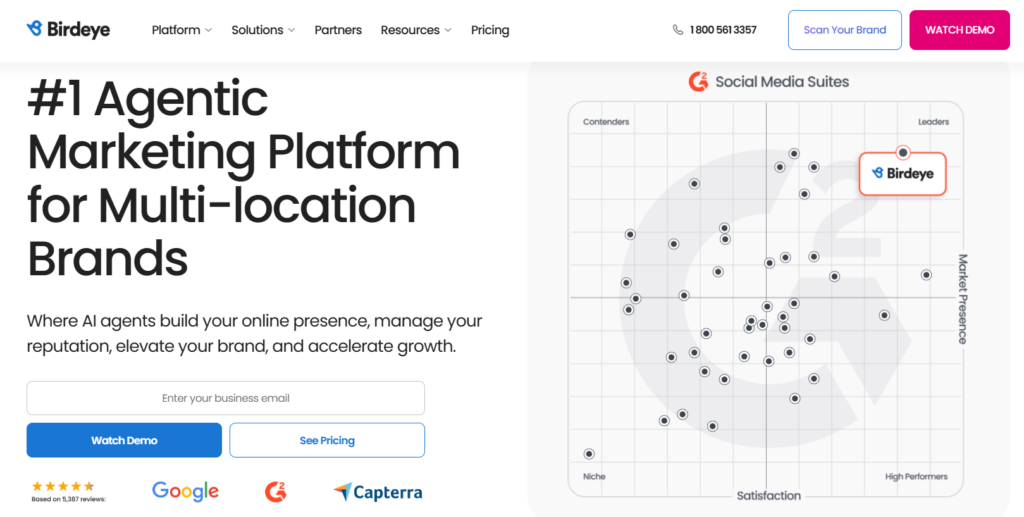
Brands comparing platforms can also explore different online reputation management tools to understand which capabilities matter most for long-term search visibility and reputation management.
How do Birdeye agents improve AI search visibility for multi-location brands?
Managing a digital presence across hundreds or thousands of locations is a massive challenge that manual workflows can no longer solve. Birdeye is the #1 agentic marketing platform for multi-location brands, trusted by the largest brands globally, including H&R Block, Sutter Health, Aspen Dental, and Caesars Entertainment.
Our agentic approach allows enterprises to move from fragmented point tools to a full-cycle platform that consolidates data, thinks locally, and acts at scale. Unlike generic AI, Birdeye agents use 13 years of multi-location intelligence and are trained on your specific brand voice and industry compliance standards.
Here is how specific Birdeye agents drive visibility and outcomes:
- Search AI: Continuously monitors how your brand is cited across AI platforms like ChatGPT and Gemini, identifying trending themes and gaps in your AI presence to ensure you remain the #1 answer.
- Listings Optimization Agent: Scans your profiles across Google, Apple, and Yelp in real-time, automatically pushing field-level updates to ensure 100% accuracy—a critical signal for AI engine trust.
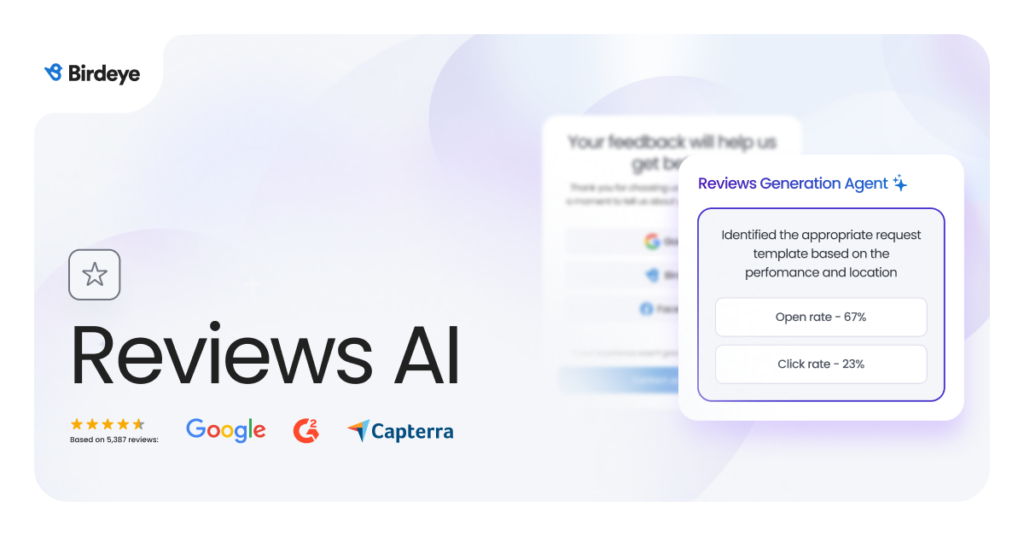
- Review Agents: The Review Generation Agent helps locations consistently generate fresh customer reviews across platforms. Review Response Agent drafts empathetic, brand-aligned responses to 100% of reviews. By detecting sentiment and urgency, it signals to search engines that your brand is active and trustworthy.
- Social Publishing & Engagement Agents: Maintain an active local presence by turning trending topics into a ready-to-publish calendar and responding to local comments in context.
- Lead Generation Agent: Drives human-like conversations 24/7 across every channel, converting search interest into bookings or sales by detecting sentiment and intent in real-time.
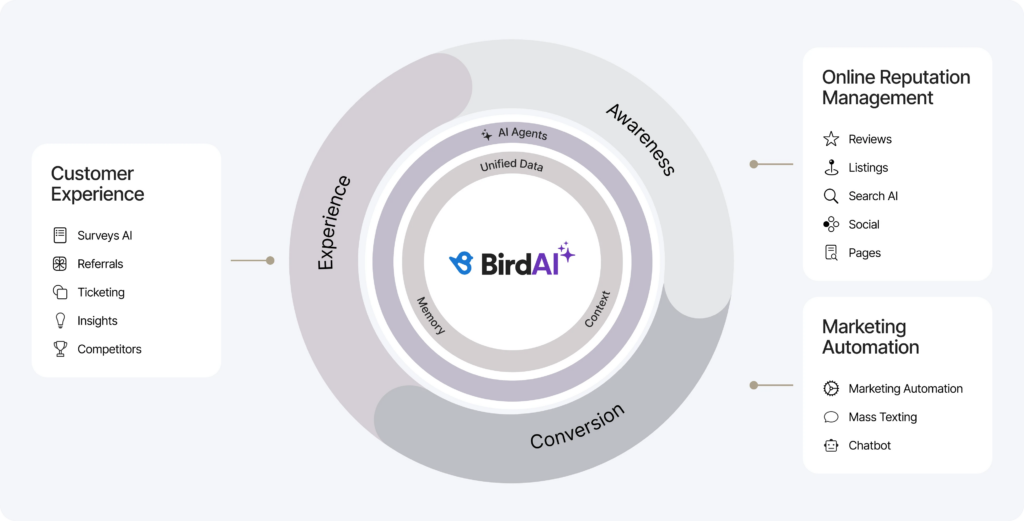
For enterprise teams, Birdeye also supports:
- Centralized governance across locations
- Role-based permissions and approval workflows
- Portfolio-wide reporting and visibility tracking
- Named Technical Account Managers
- Enterprise onboarding and custom scoping
- 99.99% uptime SLAs
By unifying customer and location data into a single source of truth, Birdeye agents deliver the local intelligence required to win in the age of AI search while maintaining enterprise-grade governance.
FAQs about search engine reputation management
Online reputation management (ORM) focuses on managing how customers perceive a brand across reviews, social media, and online conversations. Search engine reputation management (SERM) focuses specifically on how those reputation signals influence visibility across search engines and AI-generated search experiences.
Generative Engine Optimization (GEO) is the process of improving how brands appear in AI-generated answers from platforms like ChatGPT, Gemini, Perplexity, and Google AI Overviews. GEO focuses on strengthening trust signals such as reviews, listings, website content, and customer engagement so AI search engines can interpret and recommend brands more accurately.
Search engine reputation management is an ongoing process, not a one-time fix. Brands may begin to see improvements in reviews, listing visibility, and customer engagement within a few months, but long-term reputation growth requires consistent monitoring, responses, and content updates.
AI search engines evaluate publicly available trust signals across the web. This includes reviews, ratings, listing accuracy, customer sentiment, website authority, and response activity. Brands with consistent and trustworthy information across platforms are more likely to appear in AI-generated recommendations.
Google AI Overviews summarize businesses directly within search results using information from reviews, listings, websites, and other public sources. This means reputation signals now influence not only rankings, but also how brands are described and recommended in AI-generated search experiences.
Birdeye helps brands strengthen their search engine reputation management
As search behavior shifts from scrolling lists to AI-generated answers, the brands that win will be those that move beyond manual tools and “AI features” to a fully autonomous strategy.
Birdeye is the only agentic marketing platform purpose-built to solve the complexity of multi-location marketing at scale. By combining local intelligence with a fleet of brand-trained agents, Birdeye doesn't just provide data—it executes the work.
From ensuring 100% listing accuracy across thousands of locations to converting AI search visibility into booked appointments, Birdeye agents act as a 24/7 extension of your team. For global brands, this means lower TCO, unprecedented scale, and the ability to turn every local signal into a measurable business outcome.

This blog post is part of our Online Reputation Management Guide:
Online Reputation Management
- Reputation management companies
About the Author

Shruti Dugar
Birdeye
Originally published