![[Feature image] Law Firm Reputation Management_ The Complete Guide for Attorneys](https://birdeye.com/blog/wp-content/uploads/Feature-image-Law-Firm-Reputation-Management_-The-Complete-Guide-for-Attorneys-1140x596.jpg)
Law firm reputation management is the ongoing practice of building, monitoring, and protecting your firm’s credibility across every channel. It includes reviews, search engines, attorney directories, and AI platforms that potential clients use to evaluate and choose legal representation.
Summary
A law firm’s reputation today is shaped less in courtrooms and more in the moments when prospects search “best personal injury lawyer near me” on Google or on an AI-powered search experiences. According to the Birdeye State of Online Reviews 2026 report, Google now accounts for 79.4% of all reviews per location, with the legal industry seeing Google’s share exceed 87%. This makes Google the primary public record of a law firm’s reputation and a major signal influencing both traditional search visibility and AI-generated recommendations.
This guide covers everything attorneys need to know about law firm reputation management, from client acquisition and proven strategies to ethical considerations. It also explores the tools and software that help law firms manage reputation more efficiently.
Table of contents
- What is law firm reputation management?
- Why online reputation management matters for law firms
- What are the key components of law firm reputation management
- What are the 7 law firm reputation management strategies that work
- What are the ethical and compliance considerations in law firm reputation management
- Top law firm reputation management tools and software
- FAQs about law firm reputation management
- Take control of your firm’s reputation today
What is law firm reputation management?
Law firm reputation management is the process of monitoring, building, and protecting your firm’s online credibility across every platform where potential clients search for legal help, including Google, attorney directories, social media, and AI search tools like ChatGPT, Gemini, and Perplexity.
It covers four core areas:
- Collecting and responding to client reviews
- Maintaining accurate business listings and directory profiles
- Optimizing visibility in both traditional and AI-powered search results
- Building long-term brand authority through content and social presence.
Unlike general reputation management, legal reputation management must also operate within the ethical boundaries set by the ABA and state bar associations, which govern how attorneys can solicit testimonials and promote their services online.
Why online reputation management matters for law firms
When someone needs a lawyer, they type a query into Google or ask an AI answer engine like ChatGPT for a recommendation. What they find in those first few results determines whether your firm gets the call or loses the client before any conversation begins. Here is why law firm reputation management is no longer optional.
More clients come from credibility, not just advertising
A strong online reputation is one of the fastest drivers of new client inquiries for law firms because legal services are built on trust, credibility, and visible proof of expertise. According to Martindale-Avvo Legal Consumer Research, 70% of U.S. consumers consult online content before engaging with an attorney, including reviews, testimonials, and legal directories.
For example, a law firm with a profile of 200 Google reviews and a 4.8-star rating creates a strong trust signal. This shows prospective clients that real clients have worked with the firm, valued its services, and publicly reinforced its credibility before an initial consultation

A strong reputation lowers your paid search costs
Reviews do not just build trust; they also reduce the cost you spend to acquire clients through paid channels. Google’s own documentation on Seller Ratings confirms that displaying your firm’s star rating directly inside paid search ads improves ad performance. Firms that qualify, which require a minimum of 100 reviews in the past 12 months and a composite rating of at least 3.5 stars, consistently see higher click-through rates on their ads.
A higher click-through rate improves your Quality Score, which in turn lowers your cost per click. For law firms running Google Ads in competitive practice areas, this can represent significant savings across a full campaign.
AI search is reshaping how clients find attorneys
AI is changing how law firms compete for search visibility and trust. As digital search, AI-generated answers, and online reputation signals play a larger role in how legal services are evaluated, visibility is no longer shaped by rankings alone.
For law firms, weak reviews, inconsistent listings, and limited authoritative content can reduce discoverability, while firms with stronger reputation signals and an accurate digital presence are more likely to appear as credible options across search and AI-driven discovery channels.
Credibility directly influences the decision to contact your firm
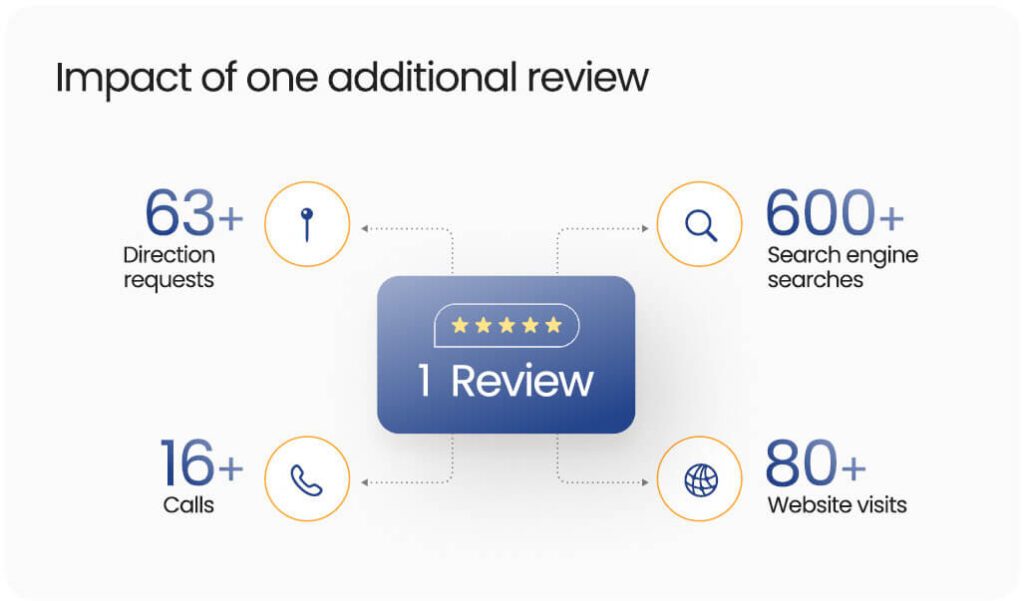
When two firms appear side by side in search results, and one has 15 reviews with a 3.2‑star rating while the other has 180 reviews with a 4.9‑star rating, most prospects decide almost instantly. Birdeye’s latest analysis shows that even a single new review can drive over 600 additional searches and around 80 website visits for a business, dramatically amplifying the impact of each satisfied client. For attorneys, where choosing the wrong firm can be life‑altering, that credibility and traffic gap is even more pronounced, which is why reputation management must focus on strengthening these signals at every step of the client journey.
What are the key components of law firm reputation management
Effective law firm reputation management is a system of interconnected signals that together determine how your firm is perceived, discovered, and chosen by potential clients. Understanding each component is the first step to managing them strategically.
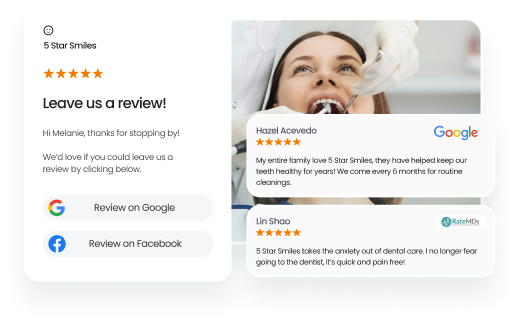
Online reviews: Google, Avvo, Martindale, Yelp, and Facebook
Online reviews are one of the most influential components of attorney reputation management because they shape first impressions before a prospective client ever contacts your firm. Google Reviews have the greatest impact on local search visibility, while legal-specific platforms like Avvo and Martindale-Hubbell strengthen credibility through attorney ratings, peer recognition, and client feedback. Yelp and Facebook also play an important role in consumer-facing practice areas by expanding social proof and reinforcing trust across search and social channels.
Business listings and NAP consistency
Your firm’s name, address, and phone number (NAP) must remain consistent across every directory, listing site, and platform where the business appears online. Inconsistent information can confuse both prospective clients and search engines, weakening local visibility and trust. According to Google’s local search guidance, maintaining accurate and complete business information directly influences local search performance, making listing consistency especially important for firms with multiple locations
Attorney directory profiles: Avvo, FindLaw, and Lawyers.com
Attorney directories such as Avvo, FindLaw, and Lawyers.com are valuable reputation assets because they often rank independently in search results and serve as trusted research sources for prospective clients. A strong profile should include updated practice areas, attorney bios, professional photos, verified contact details, and recent client reviews. Keeping these profiles complete and active improves visibility, strengthens credibility, and creates additional pathways for potential clients to discover your firm.
Social media presence and engagement
Social media helps shape how prospective clients perceive your firm’s professionalism, credibility, and values. Platforms like LinkedIn, Facebook, and Instagram allow firms to share educational content, highlight attorney expertise, showcase community involvement, and engage directly with audiences in a professional but approachable way. Consistent activity and timely engagement also strengthen your broader digital presence, which increasingly influences both search visibility and AI-driven recommendations.
Google Business Profile optimization
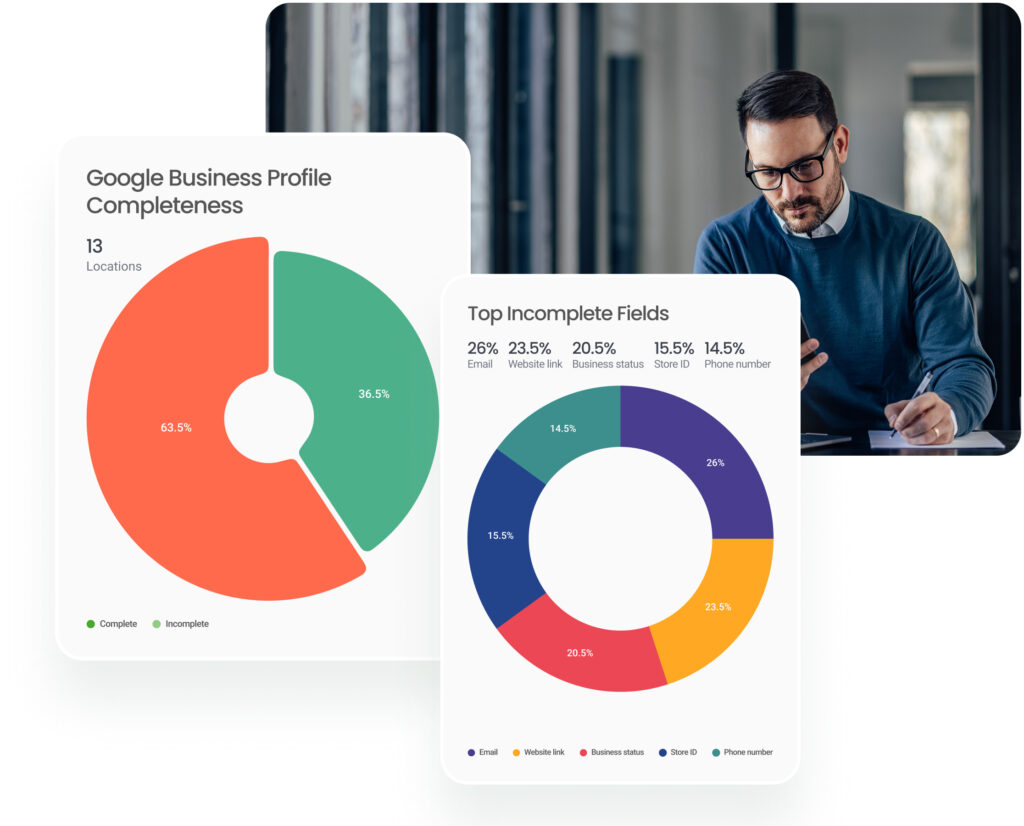
Your Google Business Profile is one of the most important drivers of local visibility for legal searches. An optimized law firm GBP profile with accurate business information, updated hours, practice categories, photos, and consistent review activity improves your chances of appearing prominently in Google’s local pack and map results. Google’s own guidelines confirm that profile completeness, accuracy, and review activity all contribute to stronger local search visibility.
AI search visibility: ChatGPT, Perplexity, and Gemini
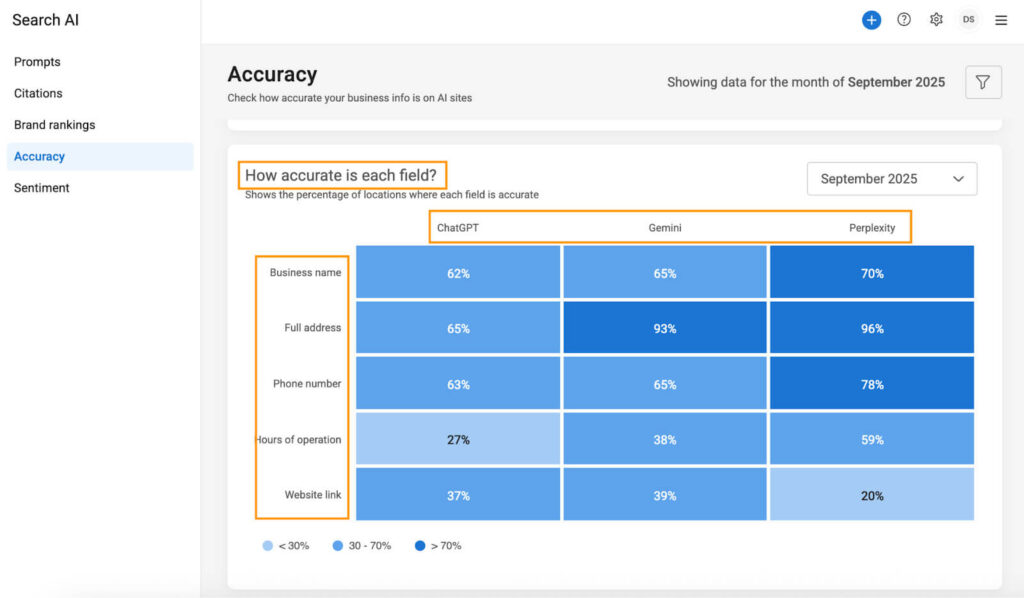
AI search visibility is becoming a critical part of law firm reputation management as users increasingly rely on platforms like ChatGPT, Gemini, and Perplexity to research and compare attorneys. Tools like Birdeye Search AI help law firms track citations, monitor sentiment, identify visibility gaps, and understand how potential clients discover firms across AI-driven search platforms.
Thought leadership and content marketing
High-quality content plays a major role in building authority and strengthening a law firm’s online reputation. Educational blogs, FAQs, practice area pages, and legal guides help answer real client questions while improving search visibility and positioning attorneys as trusted experts. Over time, consistent content creation strengthens digital authority and increases the likelihood that both search engines and AI platforms will reference your firm in recommendations and results.
What are the 7 law firm reputation management strategies that work
The strategies below produce measurable results for law firms, from solo practitioners to multi-location practices. Each addresses a specific gap most firms leave unmanaged and that competitors with stronger reputations actively fill.
1. Build a systematic review collection process
The biggest mistake law firms make with reviews is treating them as something that happens organically. Waiting for satisfied clients to leave reviews on their own produces a slow, inconsistent trickle that will never keep pace with a competitor who is actively asking. Building a systematic process means making review requests a standard step in your client journey, not an afterthought.
A reliable review collection process for law firms includes:
- Sending review requests via text and email immediately after key case milestones, such as a case closing, a successful hearing, or a settlement
- Using direct links to your Google Business Profile or Avvo page to reduce friction and increase completion rates
- Automating requests through your practice management software so no client is missed
- Following up once if the initial request goes unanswered, without applying pressure
According to Google’s support documentation on reviews, businesses that actively request and respond to reviews improve both their local search ranking and their overall star rating over time. For law firms, a higher volume of recent, authentic reviews is one of the most direct signals that both search engines and AI platforms use to evaluate credibility.
2. Optimize your Google Business Profile for legal services
Your law firm’s Google Business Profile is one of the most important tools for law firm reputation management. A fully optimized profile improves your chances of appearing in the local pack for high-intent searches like “personal injury lawyer near me” or “criminal defense attorney in Chicago.”
In fact, according to the Birdeye State of Google Business Profile 2026 report, Healthcare, dental, and professional services businesses have among the highest GBP verification rates at 84%–89%, reinforcing how trust-sensitive industries like legal increasingly treat complete and accurate profiles as a baseline requirement for visibility and credibility.
Optimizing your profile means:
- Selecting accurate practice area categories
- Writing a keyword-rich business description
- Adding high-quality office and attorney photos
- Keeping contact information consistent across directories
- Publishing regular Google Posts
- Responding to reviews quickly
For multi-location law firms, each office should have its own optimized profile to maximize local visibility. Managing listings across multiple platforms manually can be difficult at scale. Tools like Birdeye Listings Optimization Agent help automate the process by correcting inconsistent information, completing missing fields, and improving visibility across Google, Apple, Yelp, and other major directories.

3. Claim and complete all major attorney directories
Attorney directories are one of the most underleveraged assets in online reputation management for lawyers. Platforms like Avvo, FindLaw, Lawyers.com, and Martindale-Hubbell are not just listing sites. They are standalone search destinations that rank in Google results for high-intent legal queries, meaning an optimized profile on these platforms gives your firm additional visibility beyond your own website.
Claiming and completing your directory profiles means:
- Verifying ownership of your profile on each platform
- Ensuring your NAP data is identical across all directories and consistent with your Google Business Profile
- Writing a detailed, keyword-rich attorney biography that covers your practice areas, experience, and credentials
- Adding a professional photo and any peer endorsements or ratings that the platform supports
- Actively soliciting client reviews on legal-specific directories, not just Google
Many attorneys claim their profiles but leave them partially completed, which is only marginally better than having no profile at all. A half-finished Avvo profile with no reviews and an outdated phone number signals neglect to the prospective client who finds it.
4. Respond to every review, good and bad
Review responses are one of the most visible and most neglected elements of attorney reputation management. When a prospective client reads your reviews, they are not just reading what past clients said. They are watching how you respond. A thoughtful, professional response to a negative review can strengthen a prospect’s confidence in your firm more than a string of five-star ratings without engagement.
The Birdeye State of Online Reviews 2026 report also states that businesses now respond to 75.5% of all reviews, and industries like Legal that increased their response rates saw some of the largest gains in average star rating. This shows that consistent review engagement is now directly correlated with better ratings and stronger reputations, as clients reward firms that acknowledge and act on feedback
Template for responding to a positive review:
“Thank you so much for taking the time to share your experience with [Firm Name]. It was a privilege to work with you, and we are glad we could help. We appreciate your trust in our team.”
Template for responding to a negative review:
“Thank you for your feedback. We take all client experiences seriously and are sorry to hear your experience did not meet your expectations. We would welcome the opportunity to discuss this further. Please contact our office directly at [phone number] so we can address your concerns.”
Two quick ethics rules for review responses: never reveal confidential client details and avoid any statements that might violate bar advertising rules. When unsure, keep replies brief, professional, and move the conversation offline.
5. Manage your social media reputation proactively
Left unmanaged, social media can create visibility gaps that weaken trust and allow competitors to capture attention. Proactive social media reputation management means consistently monitoring brand mentions, responding to comments and messages quickly, and maintaining an active, credible presence across platforms.
AI is also helping businesses strengthen social media reputation by tracking conversations in real time, identifying sentiment shifts, and surfacing high-priority engagement opportunities. This helps brands respond faster, protect credibility, and maintain stronger customer relationships across social channels.
Law firms should:
- Post three to four times per week on LinkedIn and Facebook.
- Share educational content that answers common client questions.
- Highlight milestones, attorney credentials, and community or pro bono work.
- Monitor mentions of your firm name and respond quickly to feedback.
- Avoid public disputes with former clients or opposing parties, no matter the provocation.
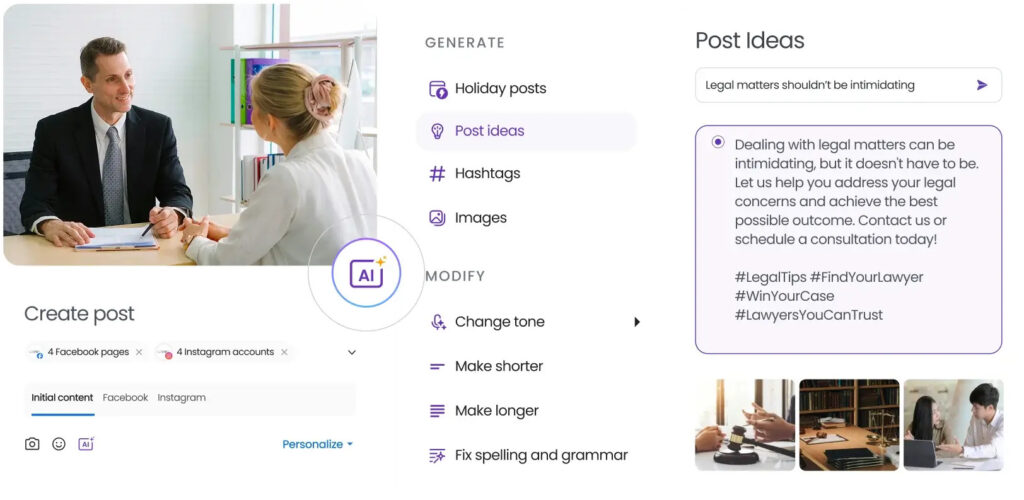
Pro tip: Use AI-driven social tools to keep every office visible and on-message without adding to your team’s workload. The Birdeye Social Publishing Agent helps you build, schedule, and localize content for each location so your calendar stays full and your brand stays consistent. Pair it with the Birdeye Social Engagement Agent to automatically prioritize comments, flag sensitive client interactions, recommend compliant, on-brand replies, and instantly route critical messages to the right attorney or staff member.
6. Handle crisis reputation situations: bad press and defamatory reviews
Every law firm will face a reputation issue at some point, whether it is a harsh review, a negative article, or a public bar complaint. What you do in the first 48 hours goes a long way toward determining the long-term impact.
A structured approach to reputation crisis management for law firms involves:
- Monitor mentions of your firm and attorneys, so you see issues as soon as they surface.
- Assess calmly before reacting; not every negative comment requires a public response.
- Use platform reporting tools to flag reviews that clearly violate content policies.
- For demonstrably false, harmful statements, consult a defamation attorney before taking legal action.
- Focus on steadily generating authentic positive reviews and credible content to outweigh and outrank negative material over time.
7. Monitor your firm’s AI search visibility across ChatGPT and Perplexity
AI search monitoring is now essential for law firm reputation management because tools like ChatGPT, Perplexity, and Google Gemini are becoming primary ways clients discover attorneys. According to the Birdeye State of AI Search 2026 report, about 80% of brands are cited at least once in AI-generated answers, but only around 15% consistently win the top recommended position.
This means a small minority of firms currently capture most AI-driven visibility. So a growing share of prospects are already asking AI which lawyer to hire, but only firms that actively optimize their reviews and owned content for AI search are showing up as the first choice.
Monitoring your AI visibility means regularly running client-style queries, assessing whether and how your firm appears relative to competitors. It also includes correcting source data listings, website content, and reviews to ensure AI answer engines accurately describe and recommend your firm.
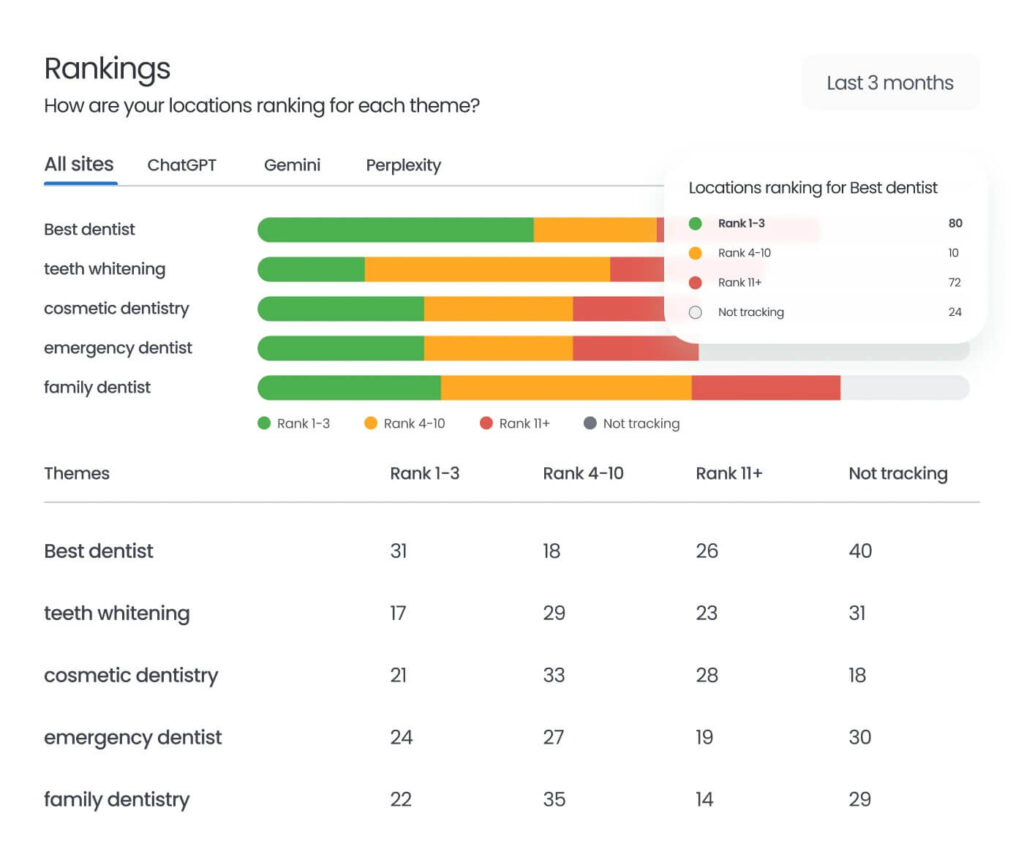
Birdeye Search AI takes this further by tracking how your brand and individual locations rank across AI engines like ChatGPT, Gemini, Perplexity, grouping rankings into tiers (1–3, 4–10, 10+) by theme and platform so you can quickly see where you are visible, where you are buried beyond the top 10, and which locations or practice areas need attention.
What are the ethical and compliance considerations in law firm reputation management
Law firms must follow strict advertising and client communication and bar association rules when managing their online reputation. Unlike other industries, attorneys are regulated by the ABA Model Rules and state bar guidelines that govern testimonials, review requests, and public marketing.
What the ABA Model Rules say
Several ABA rules directly impact law firm reputation management:
- Rule 7.1: Prohibits false or misleading claims about your firm, services, or results.
- Rule 7.2: Allows attorney advertising across digital channels as long as it complies with state rules.
- Rule 7.3: Regulates client solicitation and review requests. Firms should avoid coercive language or incentives for reviews.
- Rule 1.6: Protects client confidentiality, even when responding to negative reviews.
Why state bar rules matter
Each state has its own advertising and ethics rules. States like California, Florida, Texas, and New York may have stricter requirements around disclaimers, testimonials, and review responses.
Law firms should verify:
- Whether testimonials can be published
- If disclaimers are required
- Rules around responding to reviews
- Whether advertising materials require approval
How to ask for reviews ethically
Most state bars allow attorneys to request reviews if done properly. Best practices include:
- Ask only after a case is completed
- Use neutral, non-coercive language
- Never offer gifts or incentives for reviews
- Avoid disclosing confidential client information
- Keep records of review request templates and workflows
Many reputation management platforms help multi-location law firms manage reviews within ethical and regulatory boundaries by standardizing review request workflows, centralizing approvals, and maintaining consistent client communication across offices.
Birdeye strengthens this process with governance-focused capabilities such as approval workflows, role-based access controls, templated responses, review monitoring, and centralized oversight across locations. These features help firms maintain consistency, create auditable review processes, reduce compliance risks, and protect client confidentiality while ensuring reputation management activities remain professional and controlled.
Top law firm reputation management tools and software
Choosing the right law firm reputation management software is one of the highest-leverage decisions a firm can make. The right platform removes the manual burden of review monitoring, listing management, and AI visibility tracking, allowing your team to focus on client work while the system manages your reputation at scale.
What to look for when choosing law firm reputation management software (Top criteria)
Before evaluating specific platforms, every law firm should assess tools against the following criteria:
- Automation depth: Does the platform automate review requests, responses, and listing updates, or does it require significant manual input to function?
- Multi-location support: If your firm has multiple offices, does the platform support centralized management with location-level visibility and controls?
- Directory and platform coverage: Does it cover the review sites and directories that matter most for legal services, including Google, Avvo, Martindale-Hubbell, Facebook, and Yelp?
- AI search visibility: Does the platform track how your firm appears in AI-generated results on ChatGPT, Perplexity, and Gemini, not just traditional search?
- Integrations: Does it connect with your practice management software, CRM, and other operational tools so that review requests are triggered automatically at the right moment in the client journey?
- Compliance awareness: Does the platform support ethical, bar-compliant review request workflows with appropriate timing and neutral language?
Comparison Table: Reputation management tools for law firms (Quick glance)
Choosing the right reputation management software depends on your firm’s size, operational complexity, and whether you need capabilities beyond review management, such as listings optimization, messaging, or AI search visibility.
The table below compares the leading tools based on their ideal use case, strengths, and potential trade-offs.
| Tool | Best For | Core Strengths | G2 rating/reviews |
| Birdeye | Multi-location law firms and legal enterprises | Unified platform for reviews, listings, AI search visibility, messaging, social media, and customer experience; strong automation; broad integrations; role-based controls | 4.7/5 (4000+ reviews) |
| Podium | Small to mid-size law firms focused on SMS communication | Strong text messaging, review requests, shared inbox, mobile-friendly experience | 4.6/5 (2090+ reviews) |
| ReviewTrackers | Firms focused mainly on review monitoring | Broad review aggregation, simple dashboard, fast alerts, easier adoption | 4.6/5 (160+ reviews) |
Birdeye
Birdeye is the #1 agentic marketing platform for multi-location law firms, where AI agents go beyond showing data to driving real business outcomes by automating the full marketing flywheel across awareness, conversion, and client experience.
Powered by BirdAI and a unified data platform, Birdeye replaces fragmented marketing and reputation management tools with a single platform that manages the client journey at scale. For law firms with 100-10,000+ locations, Birdeye helps strengthen online reputation, improve local visibility, increase client reviews, manage firm listings, centralize communications, and monitor AI search presence across locations.
Trusted by leading legal organizations, including Patterson Law Group, Hupy and Abraham, and other multi-office firms, Birdeye helps law firms grow local presence, manage reputation, and deliver exceptional client experiences at scale.
The platform is built around three core pillars:
Birdeye’s AI agents help law firms consolidate data, reason with context, and act at scale to improve visibility, reputation, client engagement, and growth across every office.
- Consolidate: One unified view of every client, office location, review, conversation, and interaction across the firm.
- Reason: BirdAI reasons using context and memory across reviews, listings, messaging, surveys, and engagement data to identify trends and generate actionable insights.
- Act: AI agents act as digital coworkers that help law firms automate marketing, reputation management, client engagement, and visibility initiatives to deliver measurable outcomes.
Key features:
Reviews Agent
Reviews AI helps law firms generate more client reviews, improve attorney visibility, and strengthen online reputation across 200+ review platforms.
- Review Generation Agent identifies the best channels and moments to request reviews from clients, helping firms increase review volume and improve local search visibility.
- Review Response Agent analyzes review sentiment and context to draft personalized, on-brand responses that help legal teams engage with clients while maintaining consistency and professionalism.
Listings Agent
Listings AI helps law firms manage office, attorney, and practice area listings across Google, Apple Maps, Facebook, Yelp, and hundreds of online directories.
- Listings Optimization Agent monitors listing accuracy, updates firm information across directories, and identifies visibility gaps that may impact local SEO performance and client discovery.
Search AI
Search AI helps law firms monitor how their attorneys, practice areas, and locations appear across AI-powered search platforms such as ChatGPT, Gemini, and Perplexity. The platform tracks visibility, sentiment, accuracy, and citation sources to help firms strengthen their presence in AI-generated search results.
Social Agent
Social AI enables law firms to create, schedule, and manage social media content across multiple locations from a single dashboard. AI-powered content generation helps maintain a consistent brand presence and engage prospective clients across channels.
Chatbot AI
Chatbot AI helps law firms engage website visitors 24/7 by answering questions, capturing leads, routing inquiries, and supporting consultation booking workflows. The chatbot helps convert more website traffic into potential clients.
Messaging Agent
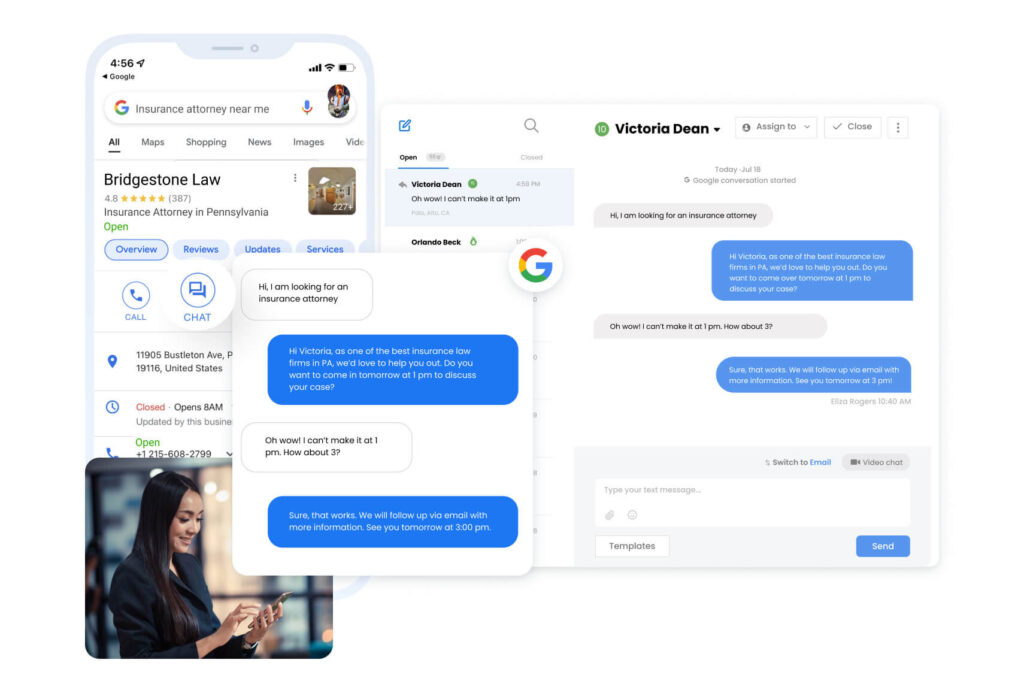
Messaging AI centralizes client conversations from text, email, social media, and webchat into a single inbox. BirdAI helps legal teams respond faster with AI-generated replies, message rephrasing, and conversation summaries.
Surveys AI
Surveys AI helps law firms collect client feedback through text-friendly surveys and analyze sentiment at scale. Firms can identify service gaps, measure client satisfaction, and improve client experience across offices and practice areas.
Pros
- Intuitive interface with centralized review management across multiple locations
- AI-powered review responses that maintain brand voice and save significant team time
- Single dashboard replacing multiple fragmented tools across reviews, listings, social, and messaging
- Firm-level and location-level reporting that gives leadership clear monthly visibility into performance
- Highly rated customer support with proactive account management and fast response times
Cons
- Some specialized integrations may need additional setup, although APIs and connectors usually help simplify the process.
- As the platform offers many features, it can take time for teams to fully adopt and manage them across all locations.
How Patterson Law Group turned client reviews into stronger visibility and growth

The brand
Patterson Law Group is a personal injury law firm with three locations. The firm wanted to strengthen its online visibility, improve review generation, and make it easier for potential clients to discover and trust the brand online.
The challenge
Before adopting Birdeye, Patterson Law Group relied on manual email outreach to request client reviews. The process was inconsistent and time-consuming, resulting in low conversion rates. The firm also lacked a centralized way to monitor reviews, promote client feedback, or improve local search visibility through reputation management.
The result
- Generated 200+ new client reviews through automated review requests
- Increased website traffic by 18,000+ visitors
- Improved local search visibility and rankings through stronger review activity
- Centralized review, monitoring, and response management across platforms
- Used Birdeye profiles, widgets, and social promotion to turn client reviews into ongoing social proof and client acquisition
W. Travis Patterson, Attorney at Law, Patterson Law Group shares:
“You spend your time turning clients into evangelists, and then Birdeye will give them a platform to evangelize to the masses. It’s a perfect system. Everybody wins.”
Podium

Podium is an AI-powered customer communication platform that consolidates review requests, text messaging, and client interactions into a single shared inbox. It suits small to mid-size law firms that prioritize SMS-based client communication and streamlined review collection.
Pros
- Shared inbox consolidates texts, review requests, and client feedback in one place for small teams
- SMS-based review requests allow clients to leave a Google review in as few as two clicks
- Mobile app is consistently praised for being as functional as the desktop version
Cons
- Starting price of approximately $399 per month can become expensive as feature needs grow
- Reporting and analytics are limited, with users flagging the need for deeper filtering and export options
- Integration coverage is narrower than broader platforms, with limited compatibility with some CRM and practice management tools
ReviewTrackers
ReviewTrackers is a review monitoring and management platform that aggregates feedback from review sites into a unified dashboard. It is a practical option for law firms that need broad review monitoring coverage without the full scope of an enterprise reputation management platform.
Pros
- Aggregates reviews from over 100 platforms into one dashboard, providing broad monitoring coverage for legal-specific directories alongside general review sites
- Clean, straightforward interface that is easy for small legal teams to adopt without significant onboarding
- Automated review alerts ensure the firm is notified promptly when new feedback appears across any monitored platform
Cons
- Limited automation for review generation, requiring more manual effort to build review volume compared to full-service platforms
- Lacks AI search visibility tracking, meaning firms need a separate solution to monitor their presence on ChatGPT, Perplexity, and Gemini
- Reporting customization is limited, with users noting that deeper analytics require exporting data to external tools
FAQs about law firm reputation management
Law firm reputation management works by strengthening the online signals that influence how potential clients discover, evaluate, and trust your firm, including reviews, directory listings, Google Business Profile optimization, authoritative content, and visibility across AI search platforms like OpenAI ChatGPT and Perplexity AI.
Law firm reputation management costs vary depending on firm size, number of locations, and the capabilities included in the platform. Basic tools are generally more affordable, while enterprise platforms like Birdeye and Reputation typically use custom pricing based on business needs, locations, and feature requirements.
Birdeye is the most comprehensive law firm reputation management software available, combining reviews, listings, AI search visibility, social media, and client messaging in one platform.
Respond promptly and professionally. Acknowledge the concern, keep your response brief, and invite the client to contact your office directly to resolve the matter offline. Never disclose confidential client information in your response. If the review violates platform policies, flag it for removal through the platform’s dispute process.
Most firms see measurable improvements in review volume and star ratings within 60 to 90 days. Local search ranking improvements typically follow within three to six months. AI search visibility improves as your listings, directories, and website content are updated and indexed. Results compound over tim
Take control of your firm’s reputation today
A law firm’s reputation has always been its most valuable asset. What has changed is where that reputation is built, measured, and lost. In 2026, it is built into Google reviews, attorney directory profiles, AI-generated recommendations, and social media presence, not just in referrals and courtroom outcomes.
The firms that win new clients consistently are not necessarily the ones with the best attorneys. They are the ones that show up credibly, visibly, and repeatedly at every point in the client’s decision journey. That is what legal reputation management delivers when it is done systematically.
Birdeye brings every component of law firm reputation management into one platform, powered by AI agents that automate the work, maintain your brand voice, and surface the insights your team needs to act. From review generation to Search AI visibility, Birdeye gives law firms the infrastructure to build a reputation that drives measurable business growth.
See how Birdeye helps law firms grow their reputation and win more clients. Book a free demo

About the Author

Sudeepta Bora
Originally published