
Financial services reputation management has become far more complex in 2026. One unresolved complaint, outdated branch listing, or poorly handled response can affect a financial institution’s trust and visibility.
Summary

Summary – For banks, lenders, insurers, and wealth management firms, online reputation management now directly impacts discoverability, compliance, and long-term brand credibility.

The challenge grows even larger for multi-location financial brands. Maintaining consistent listings, compliant communication, and strong review signals across every branch requires tighter operational control than traditional ORM workflows can provide.

At the same time, AI search platforms increasingly surface reputation signals directly inside generated answers and local recommendations. This is changing how financial brands appear across search and discovery experiences.
This guide explains how financial institutions approach reputation management in 2026, the compliance risks shaping finance ORM strategies, and how agentic marketing platforms like Birdeye help multi-location brands manage reputation and visibility at scale.
Table of contents
- What is financial services reputation management?
- Why is reputation management critical for financial institutions?
- How do compliance regulations affect financial services’ reputation management?
- How does reputation management differ across financial services sectors?
- What are the key benefits of financial services reputation management?
- How do financial service brands manage their reputation at scale?
- Which review platforms matter most for financial services brands?
- Why does online reputation management matter to mortgage lenders?
- How does Birdeye’s Agentic Marketing Platform help financial services brands?
- Financial services online reputation management FAQs
- Birdeye helps financial institutions manage reputation in the AI search era
What is financial services reputation management?
Financial services reputation management refers to how banks, lenders, insurers, wealth management firms, and other financial institutions monitor, manage, and improve their public perception across digital channels.
This includes reviews, listings, social media conversations, customer feedback, local search visibility, and AI-generated local search experiences.
Unlike other industries, financial institutions operate under stricter trust and compliance expectations. A poorly handled complaint, inconsistent branch listing, or delayed response can affect both customer confidence and regulatory risk.
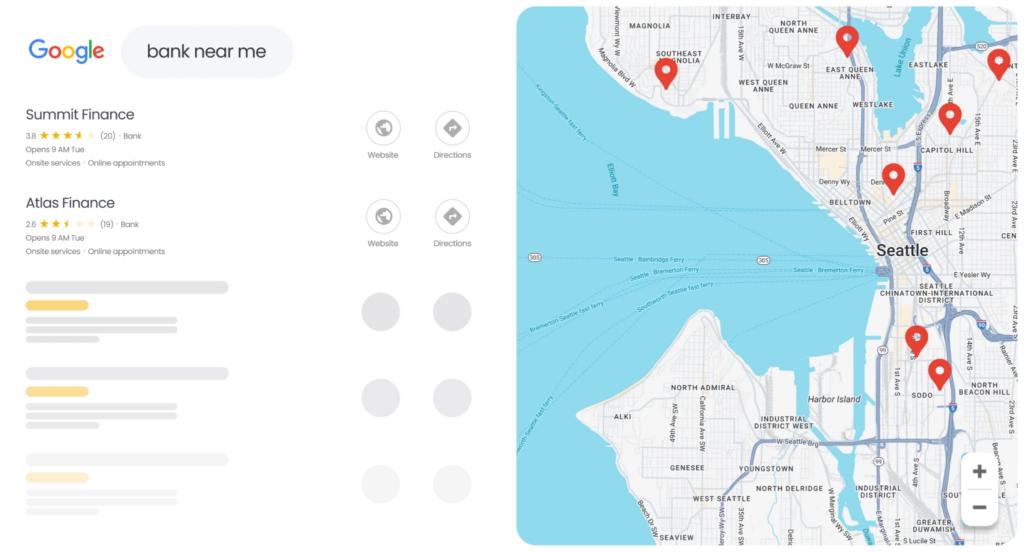
For multi-location financial brands, the challenge becomes even more operational. Teams must maintain consistent communication, accurate branch information, and compliant customer interactions across multiple locations and platforms simultaneously.
Effective review management for financial institutions typically includes:
- Monitoring customer feedback across review and social platforms
- Maintaining accurate listings and branch information
- Responding to reviews using compliant workflows
- Tracking customer sentiment across locations
- Improving visibility across search and AI-powered discovery platforms

As AI search optimization platforms increasingly surface reputation signals directly inside generated answers, financial services’ reputation management now affects far more than public perception alone. For financial institutions, it now directly influences customer trust, local visibility, compliance exposure, and long-term growth across increasingly competitive digital markets.
Why is reputation management critical for financial institutions?
Trust drives every financial decision. Customers do not evaluate banks, lenders, insurers, or wealth management firms the same way they evaluate retail brands. Financial institutions manage sensitive information, high-value transactions, and long-term customer relationships. That makes reputation far more fragile and far more important.
A single negative review may not damage a restaurant brand significantly. In financial services, however, unresolved complaints or poor customer experiences can influence:
- Loan decisions
- Account openings
- Advisor selection
- Investor confidence
- Referral volume
This is one reason financial services review management has become closely tied to business growth and customer retention.
Online reputation also affects local visibility. Financial institutions with stronger ratings, consistent reviews, and accurate listings typically perform better across Google Maps, local search, and review-driven discovery experiences.
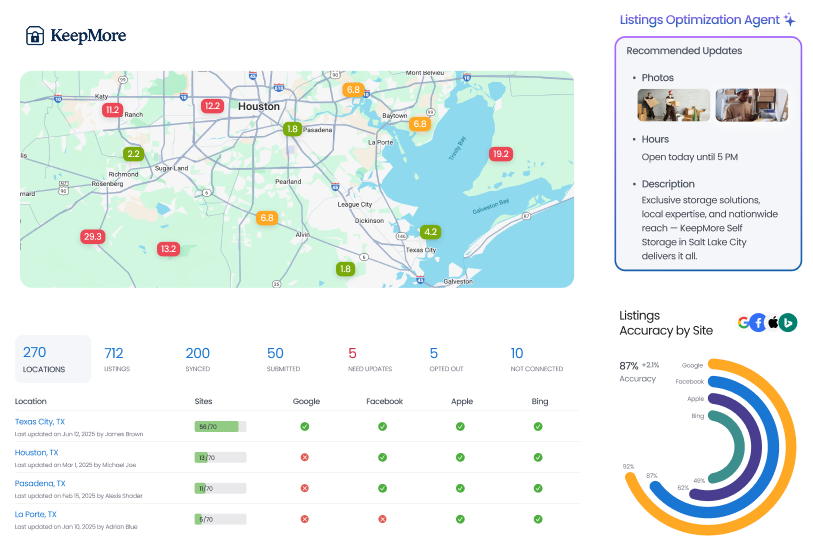
The risks extend beyond visibility alone. Reputation issues in financial services can quickly escalate into:
- Compliance concerns
- Regulatory scrutiny
- Public trust erosion
- Customer churn
- Brand perception challenges across multiple markets
The Wells Fargo fake accounts scandal remains one of the clearest examples of how operational failures can rapidly evolve into long-term reputational damage. Even years later, the case continues shaping public conversations around trust, transparency, and accountability in banking.
For multi-location financial brands, these risks become harder to control at scale. Different branches, advisors, franchise operators, and support teams often create inconsistent customer experiences across locations. Without centralized governance, reputation gaps can spread quickly across review platforms, listings, and social channels.
This is also why compliance plays such a major role in financial services reputation management. Unlike most industries, financial institutions cannot respond to reviews, generate customer feedback, or manage public communication without considering strict regulatory requirements.
How do compliance regulations affect financial services’ reputation management?
Financial institutions cannot manage reviews and customer communication the same way other industries do. Every public response, review request, or marketing claim must comply with strict regulatory requirements.
This is what makes reputation management for financial brands fundamentally different from standard consumer ORM strategies.
Several regulatory frameworks directly influence how financial institutions manage online reputation:
| Regulation | Reputation management impact |
| SEC | Restricts misleading claims, testimonials, and advertising language |
| FINRA | Requires supervision of public communications and advisor marketing |
| CFPB | Closely monitors complaint handling and customer communication practices |
| BSA/AML | Connects reputational risk to broader compliance and fraud oversight programs |
For example, financial advisors and broker-dealers must carefully manage how reviews, endorsements, and testimonials appear online under evolving SEC and FINRA guidance. Even well-intentioned review responses can create compliance concerns if they:
- Disclose sensitive customer information
- Imply guaranteed financial outcomes
- Offer financial advice publicly
- Use misleading promotional language
This creates a major operational challenge for multi-location financial institutions. Branch managers, advisors, loan officers, and support teams often interact with customers publicly across multiple channels simultaneously.
Without centralized governance, institutions risk:
- Inconsistent messaging
- Non-compliant responses
- Delayed complaint handling
- Regulatory exposure across locations
Compliance also affects how financial institutions generate reviews. Many finance brands cannot use aggressive review solicitation tactics commonly seen in retail, hospitality, or ecommerce industries. Review generation workflows must often include:
- Approved messaging
- Consent tracking
- Audit-ready documentation
- Escalation paths for sensitive feedback
As reputation management becomes increasingly tied to search visibility and customer acquisition, financial institutions need systems that balance both growth and compliance. This becomes especially important when managing reputation across multiple branches, review platforms, and local markets simultaneously.

How does reputation management differ across financial services sectors?
While reputation is critical across financial services, the factors that influence customer trust vary by sector. Banks, mortgage lenders, financial advisors, insurance providers, and wealth management firms are evaluated on different experiences, platforms, and trust signals.
Banks & credit unions
Customers evaluate banks based on branch experiences, customer service, and digital banking support.
Key priorities:
- Branch-level ratings
- Customer service reviews
- Accurate listings and hours
- Local search visibility
Mortgage lenders
Borrowers often compare lenders before applying, making reviews a major trust signal.
Key priorities:
- Loan officer reviews
- Review generation after closings
- Response speed and communication
- Zillow, LendingTree, and Google profiles
Financial advisors
Prospective clients research advisors extensively before making investment decisions.
Key priorities:
- Trust and credibility signals
- Advisor-specific reviews
- Professional reputation management
- Compliance-friendly communications
Insurance providers
Claim experiences often have the biggest impact on customer sentiment.
Key priorities:
- Claims-related feedback
- Customer satisfaction ratings
- Review response management
- Service recovery
Wealth management firms
High-value clients expect discretion, expertise, and personalized service.
Key priorities:
- Brand credibility
- Sensitive review management
- Client trust signals
- Thought leadership and expertise
How Madden Partners improved their online reputation
A similar approach to listings and reputation management for banks applies to accounting and financial service firms. Here is how Madden Partners scaled their trust signals and local visibility across their financial planning portfolio.
Since they started using Birdeye’s all-in-one platform, they’ve boosted their online presence and increased their customer base. One of the most proactive steps they took to improve their reputation was building a positive brand perception.

To ensure they maintain a strong online reputation, they tested various ORM strategies, such as:
- Encouraging satisfied customers to leave positive reviews
- Optimizing their business listing management with relevant keywords
- Engaging with customers promptly
Thanks to these efforts, they saw:
- 76 new reviews generated
- 46% increase in direction requests
- 32% increase in discovery searches
- 14% increase in Google profile views
What are the key benefits of financial services reputation management?
Strong financial services reputation management directly affects customer trust, local visibility, lead quality, and long-term growth across branches and markets.
Below are the core business benefits financial service firms see when ORM is handled correctly.
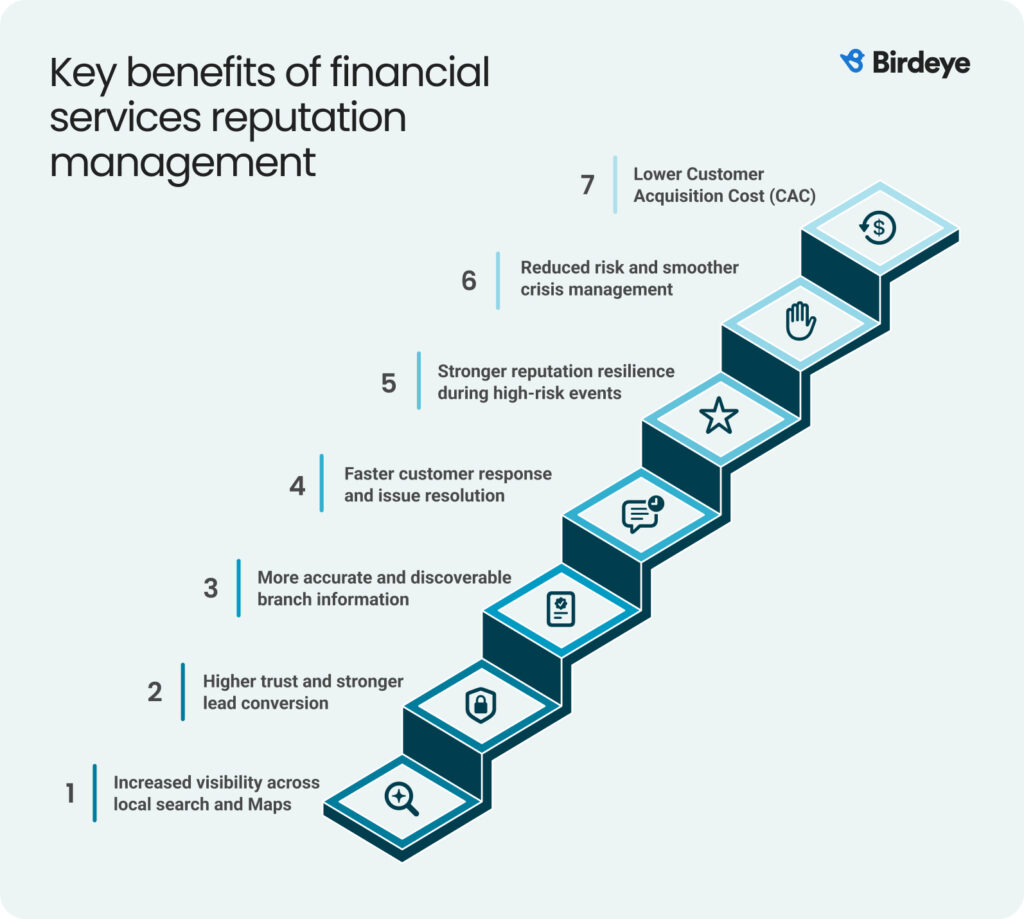
1. Increased visibility across local search and Maps
Most customers begin their research with searches like:
- “Mortgage lender near me”
- “Best financial advisor”
- “Credit union near me”
- “Investment firm in London”
Financial institutions with stronger ratings, recent reviews, and accurate listings often perform better across Google Maps and local search results.
This becomes especially important for multi-location banks and lenders competing across multiple geographic markets simultaneously.
2. Higher trust and stronger lead conversion
Financial decisions involve higher risk and longer customer consideration cycles than most industries. Customers want reassurance before opening accounts, applying for loans, or choosing advisors.
Consistent reviews and responsive customer engagement help reduce uncertainty during those decisions.
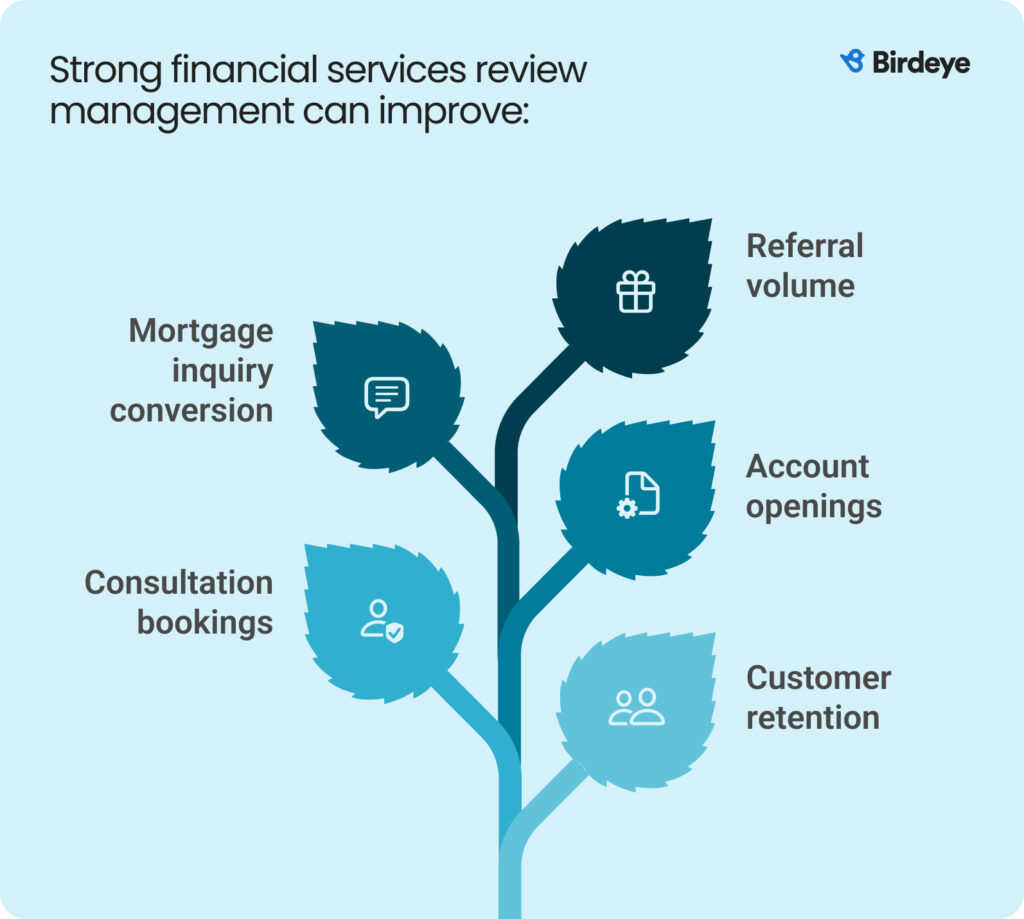
Strong financial services review management can improve:
- Mortgage inquiry conversion
- Consultation bookings
- Referral volume
- Account openings
- Customer retention
3. More accurate and discoverable branch information
Outdated business hours, incorrect phone numbers, or inconsistent branch details create immediate trust issues in finance.
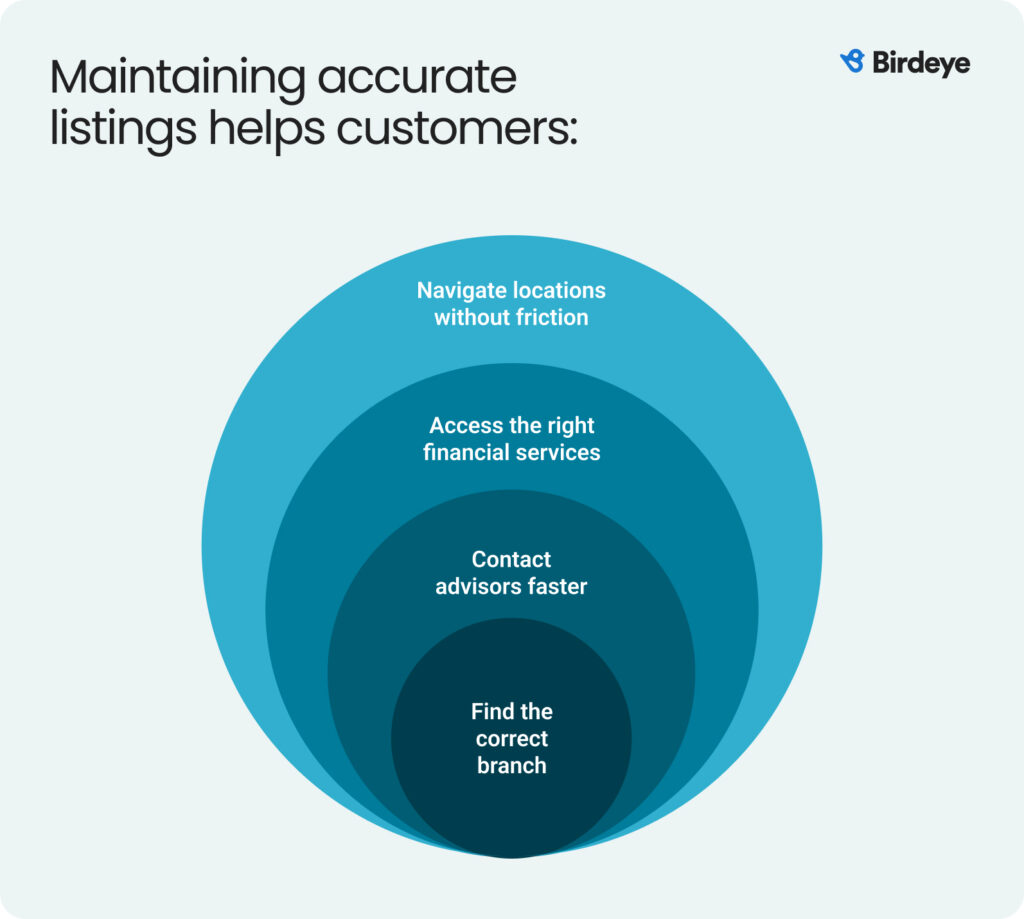
Maintaining accurate listings helps customers:
- Find the correct branch
- Contact advisors faster
- Access the right financial services
- Navigate locations without friction
For multi-location financial brands, listing accuracy also strengthens local SEO and location-level visibility.
4. Stronger reputation resilience during high-risk events
Brands with stronger review profiles and consistent customer trust typically recover faster during reputation-sensitive periods.
For multi-location financial brands, these benefits become even more important at scale. As review signals, listings, and customer feedback increasingly influence search visibility and digital trust, financial institutions need more structured ways to manage their reputation consistently across all branches and customer touchpoints.
5. Faster customer response and issue resolution
Customers increasingly expect financial institutions to respond quickly across reviews, social channels, and messaging platforms.
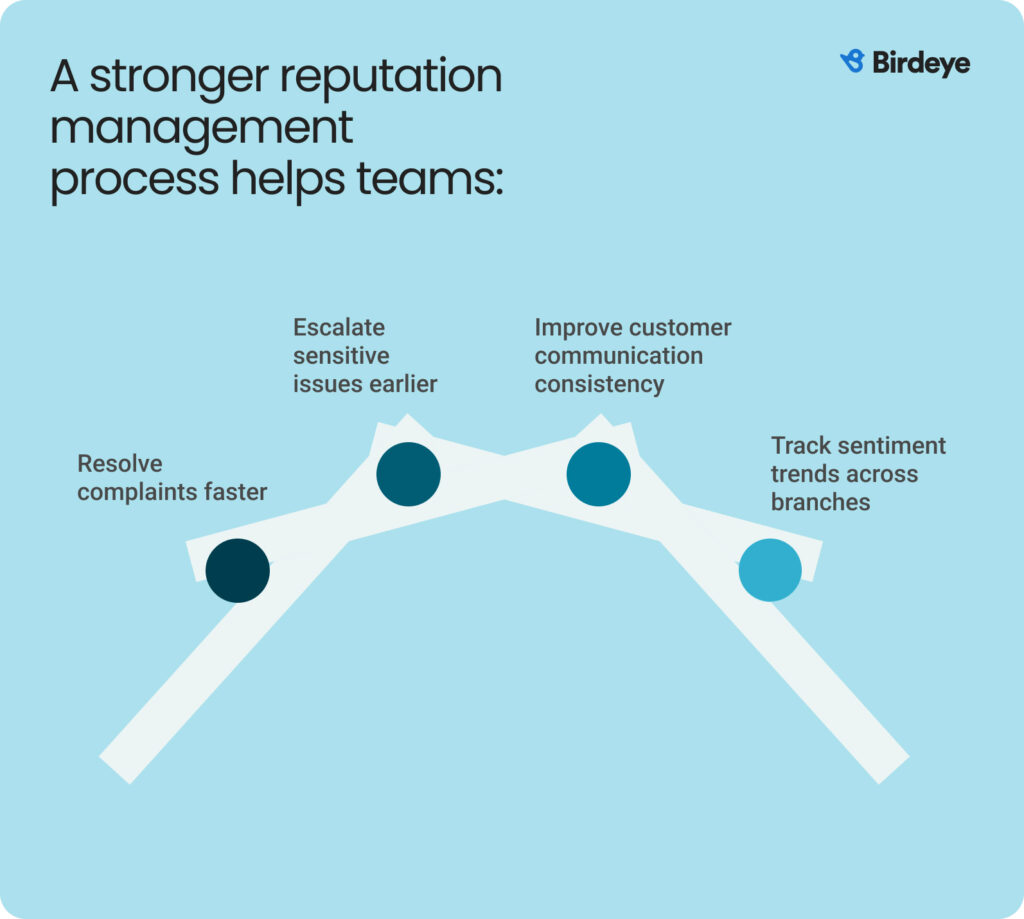
A stronger reputation management process helps teams:
- Resolve complaints faster
- Escalate sensitive issues earlier
- Improve customer communication consistency
- Track sentiment trends across branches
This becomes especially valuable during service disruptions, policy changes, or periods of financial uncertainty.
6. Reduced risk and smoother crisis management
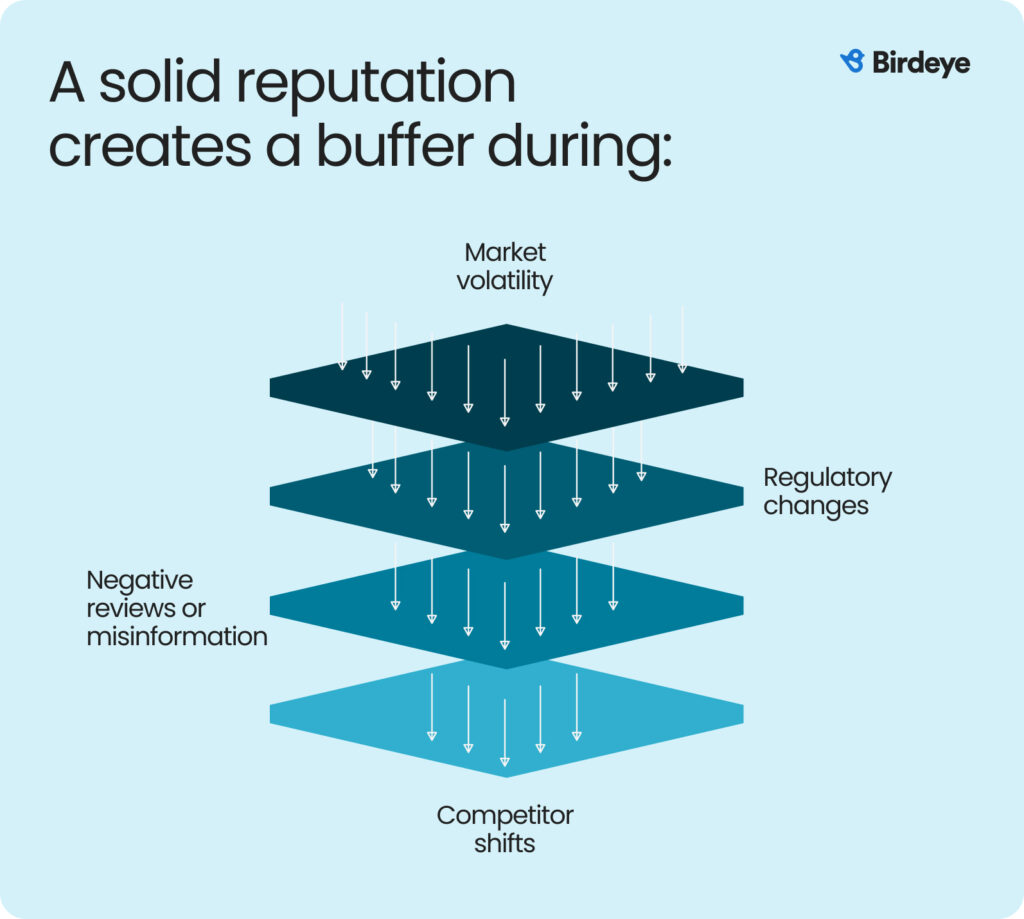
A solid reputation creates a buffer during:
- Market volatility
- Regulatory changes
- Negative reviews or misinformation
- Competitor shifts
With a solid brand crisis management plan, institutions with consistent, positive sentiment recover faster and maintain customer confidence.
7. Lower Customer Acquisition Cost (CAC)
A strong customer acquisition strategy improves marketing efficiency and reduces reliance on paid ads by increasing:
- Organic search traffic
- Profile clicks
- Referral conversions
- Repeat customer engagement
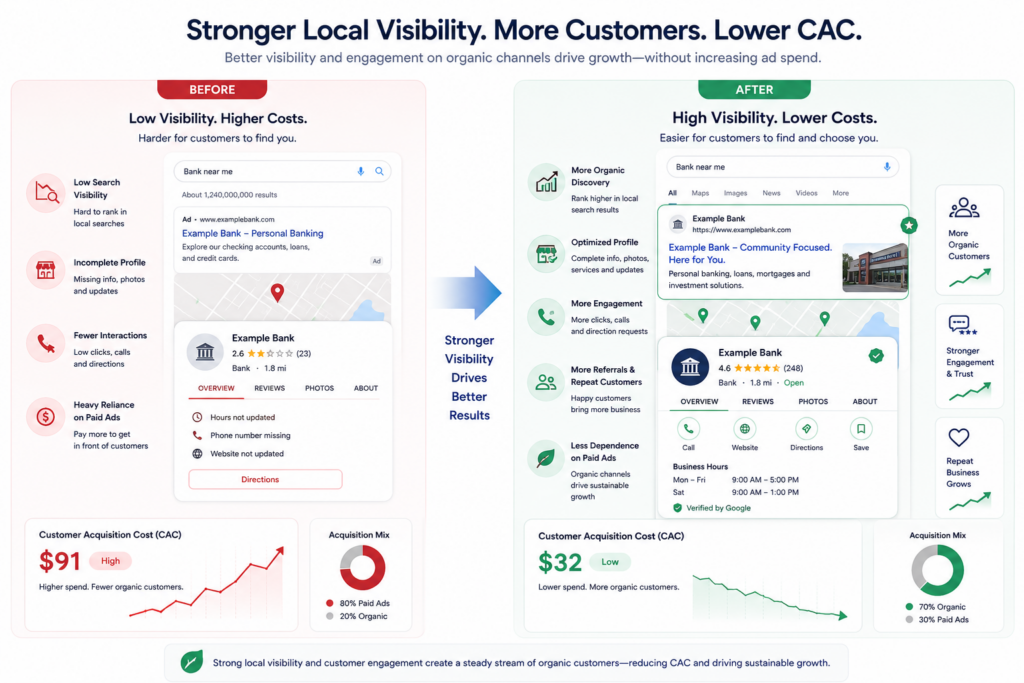
Strengthening your online reputation isn’t a branding exercise; it’s a measurable growth strategy. Birdeye helps financial institutions automate reviews, listing accuracy, and sentiment monitoring across 200+ platforms.
How do financial service brands manage their reputation at scale?
Managing reputation across one branch is manageable. Managing it across dozens or hundreds of locations is far more operationally complex.
Birdeye’s State of AI Search 2026 report found that 80% of brands were cited at least once in AI-generated answers, but only 15% secured the top citation position using their own content.
Multi-location financial brands must monitor reviews, maintain accurate listings, respond compliantly, and track customer sentiment across multiple platforms simultaneously. Without centralized oversight, inconsistencies can quickly affect both customer trust and local visibility.
Here are five ways financial institutions strengthen online reputation management at scale.
1. Monitor customer conversations across every channel
Financial customers share feedback across:
- Trustpilot
- Zillow
- Local review platforms
- Industry-specific forums
Tracking these conversations manually often creates delayed responses and missed risks.
Leading financial brands centralize review monitoring so regional and corporate teams can identify:
- Escalating complaints
- Reputation trends
- Branch-level sentiment gaps
- Compliance-sensitive conversations
Example:
Sargeants Conveyancing made the best use of reputation management for their property transactions and financial services.
Since they mainly serve customers in the Hawthorn area of Melbourne, they wanted to make the transactions smooth and stress-free.
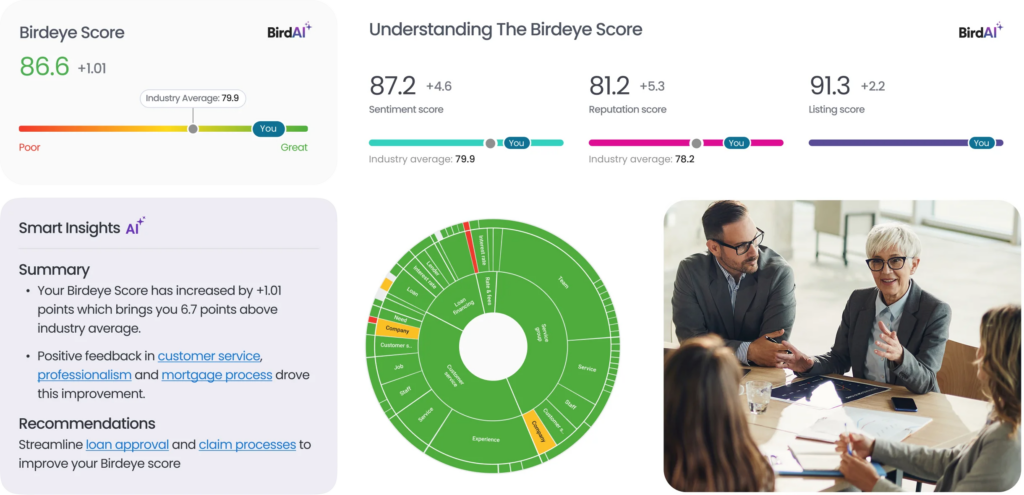
A few key improvements they saw when they implemented Birdeye’s online reputation management platform into their business were:
- 121% increase in Google profile views
- 325 new reviews generated
- 71% increase in website visitors
- 87% increase in discovery searches

2. Respond to all reviews, quickly and compliantly
Response speed matters in finance, but compliance matters even more.
Financial institutions must acknowledge customer concerns carefully without:
- Sharing sensitive information
- Providing financial advice publicly
- Violating internal communication policies
- Compromising on a consistent tone across branches
This is why many financial brands now use standardized response workflows with centralized approvals for sensitive interactions.
Birdeye’s agentic advantage:

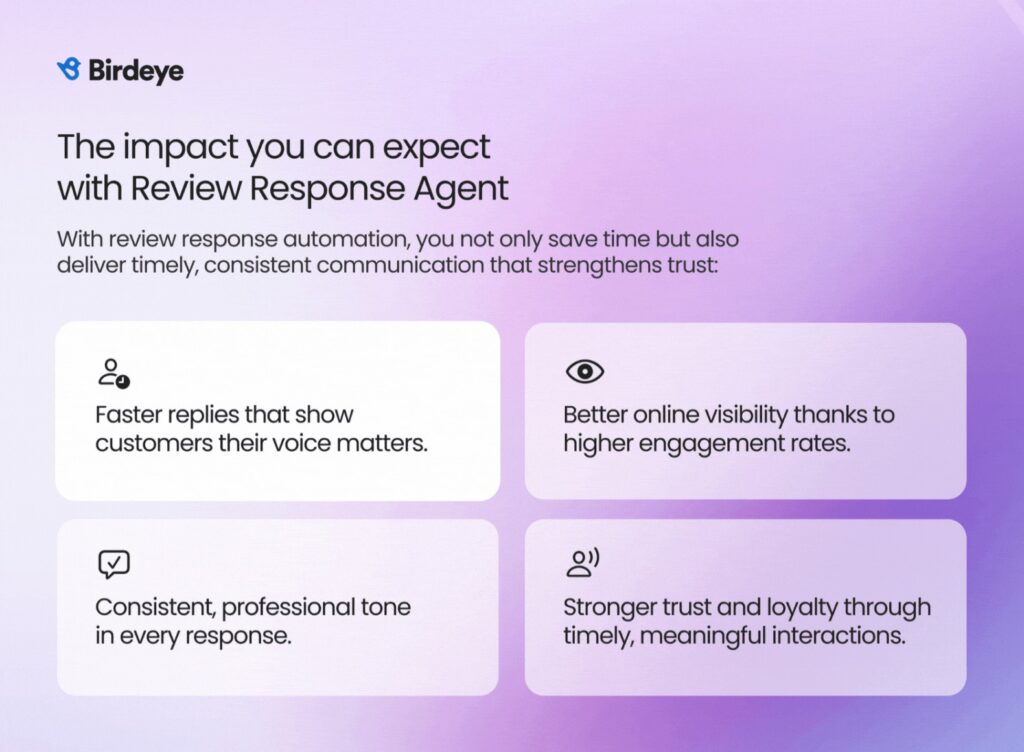
Birdeye’s Review Response Agent helps financial institutions respond faster while maintaining stronger compliance controls. The agent drafts personalized responses based on review context, brand guidelines, and location-level customer interactions. Teams can:

- Support compliant communication workflows at scale
- Draft personalized responses based on review context
- Maintain consistent brand tone across branches
- Route sensitive reviews for supervisor approval
- Reduce manual response workload for branch teams
3. Maintain accurate listings across all platforms
Incorrect branch hours, outdated phone numbers, or inconsistent service information create immediate trust issues.
For multi-location banks and lenders, listings management directly affects:
- Local and AI search visibility
- Branch discovery
- Customer experience
- Appointment volume
Maintaining consistent business information across Google, Apple Maps, Bing, and financial directories helps reduce customer friction while improving local discoverability.
4. Generate reviews using compliant workflows
Financial customers often leave reviews only after specific milestones such as:
- Loan approvals
- Advisory consultations
- Insurance onboarding
- Account opening experiences
Leading financial institutions automate Google review requests carefully using:
- Approved messaging
- Consent tracking
- Audit-ready workflows
- Timing controls
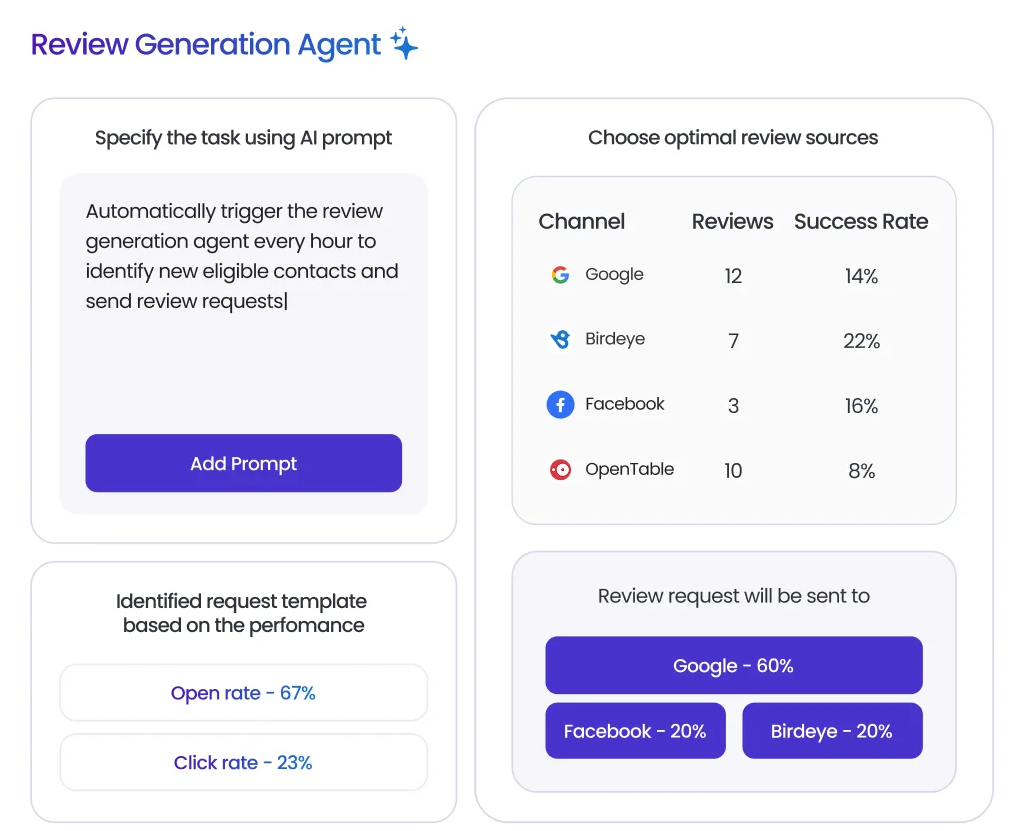
This helps increase review volume without creating unnecessary compliance exposure.
5. Use customer feedback to improve operational performance
Reviews often reveal operational issues long before they appear in internal reports.
Financial institutions increasingly analyze feedback trends around:
- Service quality
- Wait times
- Advisor responsiveness
- Documentation delays
- Customer communication gaps
For enterprise financial brands, reputation management now extends beyond marketing alone. It increasingly influences branch operations, customer experience strategy, compliance oversight, and long-term digital visibility across competitive financial markets.
Financial services reputation management: What top-performing brands do differently in 2026
Want to see the impact of Birdeye on your business? Watch the Free Demo Now.
Which review platforms matter most for financial services brands?
All review platforms influence financial services’ reputation management differently, based on trust, discovery, and customer decision-making at different stages.
For banks, lenders, insurers, and wealth management firms, visibility across trusted review ecosystems has become increasingly important for both local search performance and customer credibility.
| Platform | Why it matters for financial institutions |
| Google Business Profile | Most important for local visibility, Maps rankings, and branch discovery |
| Trustpilot | Influences trust and comparison-stage research |
| Zillow | Important for mortgage lenders and loan officers |
| LendingTree | Impacts lender credibility and borrower comparison |
| FINRA BrokerCheck | Critical trust signal for financial advisors and broker-dealers |
| Better Business Bureau (BBB) | Influences trust and complaint resolution credibility |
| WalletHub & Bankrate | Strong visibility for financial product comparison searches |
| Still influences community trust and local engagement |
Google remains the dominant review platform for most multi-location financial brands. According to Birdeye’s State of Online Reviews 2026 report, found that Google accounted for 79.4% of reviews in 2025, reinforcing its dominance in local discovery and financial services visibility.
However, finance-specific trust signals increasingly come from industry-focused directories and comparison platforms. Mortgage borrowers often compare lenders on Zillow and LendingTree before submitting inquiries, while wealth management clients frequently evaluate advisor credibility by reviewing BrokerCheck and Google reviews together.

This creates a more fragmented reputation landscape for financial institutions. Brands must maintain:
- Consistent ratings across platforms
- Accurate branch and advisor information
- Timely review responses
- Strong review recency
- Compliance-safe customer engagement
As financial services review management becomes increasingly tied to search visibility and customer trust, institutions can no longer focus on Google reviews alone. They need broader visibility across the platforms customers actually use during financial research and decision-making journeys.
Why does online reputation management matter to mortgage lenders?
Mortgage decisions involve high financial commitment and long customer consideration cycles. Borrowers often compare multiple lenders online before submitting an inquiry, booking a consultation, or starting an application.
This makes mortgage sales reputation management closely tied to trust, conversion, and referral growth.
For mortgage lenders, reviews influence far more than public perception. Strong review profiles can improve:
- Loan inquiry conversion
- Local search visibility
- Advisor credibility
- Referral confidence
- Customer retention
Platforms like Zillow, Google, LendingTree, and Trustpilot now play a major role in how borrowers evaluate lenders during research.
At the same time, mortgage lenders operate under strict regulatory and compliance expectations. Public responses, review requests, and customer communication workflows must remain consistent and compliant across every branch and loan officer interaction.
Waterstone Mortgage, a pioneer in the residential mortgage lender space, faced many of these challenges while trying to scale review generation and customer engagement across locations. After implementing Birdeye, the company achieved:
- 380% increase in reviews
- 338% increase in review ratings
- 39% survey response rate
The company also used Birdeye’s 3,000+ integrations with Encompass, Google, Facebook, and Zillow to streamline customer feedback collection and strengthen review visibility across mortgage-focused platforms.
As mortgage competition continues increasing across digital channels, lenders with stronger review visibility, faster response workflows, and more consistent customer trust signals are often better positioned to drive qualified inquiries and long-term borrower relationships.

How does Birdeye’s Agentic Marketing Platform help financial services brands?
Managing reputation across multiple branches, advisors, and customer channels is difficult to scale manually. Financial institutions must balance customer experience, compliance, listing accuracy, review management, and response speed simultaneously.
This is where Birdeye’s Agentic Marketing Platform helps financial services brands operate with more consistency and control.
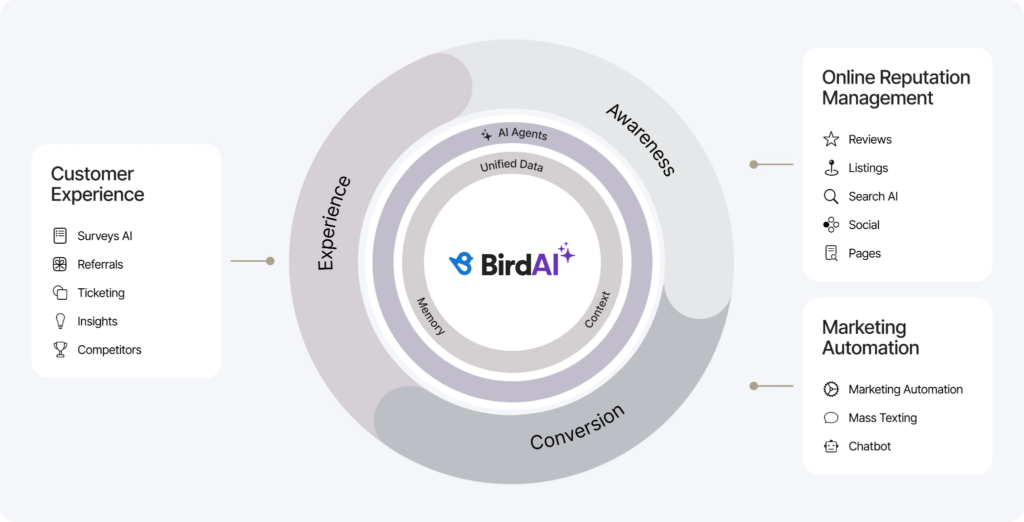
Unlike traditional automation tools that only simplify tasks, Birdeye’s AI agents help financial institutions grow their local presence, manage their reputation, and deliver exceptional customer experiences at scale. With teams across the U.S., EMEA, and APAC, Birdeye is redefining how enterprises win locally.
Birdeye’s platform supports financial services reputation management through three core capabilities:
Consolidate: Bring reputation management into one operational system
Financial brands often manage customer interactions across disconnected tools and teams. Birdeye consolidates reviews, listings, messaging, social media, surveys and customer feedback into one platform connected through 3,000+ integrations.
This gives enterprise teams better visibility into customer sentiment, branch performance, and reputation trends across 100-10,000+ locations.

Think: Turn customer feedback into operational intelligence
Birdeye’s Unified Data layer helps financial institutions analyze:
- Customer sentiment scores
- Branch-level reputation gaps
- Customer experience patterns
- Location-level performance
- Competitive benchmarks
This helps regional and corporate teams identify issues earlier and improve customer experience across markets.
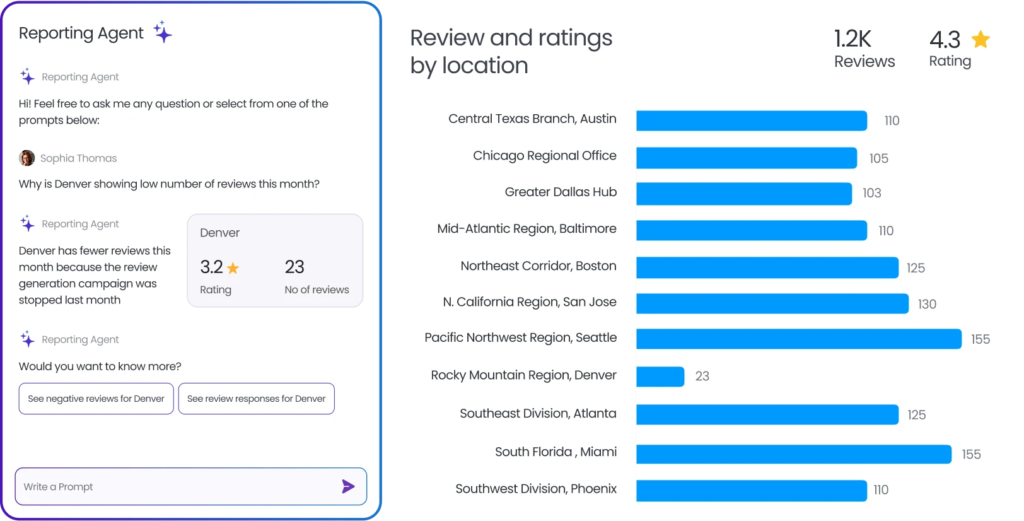
Birdeye’s Reporting Agent also helps leadership teams:
- Summarizes performance by branch, region, product, or advisor
- Pulls insights from reviews, surveys, listings, and leads
- Highlights compliance risks or recurring service issues
- Helps leadership make faster, data-backed decisions
Act: Maintain compliant and scalable customer engagement
Financial institutions need faster engagement without increasing compliance risk. Whether you are running localized text campaigns using an SMS marketing strategy for financial institutions or responding to online reviews, Birdeye’s agents help your branch teams stay responsive, compliant, and on-brand across every channel.
| Birdeye Agent | Core capabilities | Agentic advantage for financial brands |
| Response Agent | Drafts personalized review responses using customer, branch, and sentiment context | Helps financial institutions respond faster while maintaining compliant and brand-safe communication |
| Generation Agent | Automates review and feedback requests across customer journeys | Increases review volume using compliant messaging and approval-ready workflows |
| Listings Optimization Agent | Monitors and updates listings across Google and 200+ directories | Improves branch discoverability while reducing inconsistencies that weaken trust signals |
| Publishing Agent | Creates and schedules localized social media content at scale | Helps multi-location financial brands maintain consistent messaging across branches and advisors |
| Engagement Agent | Responds to comments, DMs, and social interactions across platforms | Improves response speed while escalating sensitive conversations for review |
| Contact Segmentation Agent | Organizes audiences based on customer behavior, engagement, and lifecycle stage | Helps financial brands deliver more personalized and targeted communication |
| Lead Gen Agent | Captures, qualifies, and routes leads across digital channels | Helps branch and advisor teams respond faster to high-intent financial inquiries |
| Email Template Agent | Generates compliant, brand-aligned email templates for campaigns and customer communication | Reduces manual workload while improving consistency across customer outreach |
| Reporting Agent | Summarizes reviews, listings, surveys, and customer trends into actionable insights | Gives leadership teams clearer visibility into reputation, sentiment, and brand |
The platform also supports role-based permissions, approval workflows, and centralized governance controls for multi-location financial brands.
This becomes increasingly important as AI search platforms rely more heavily on trusted reputation signals when generating recommendations and search answers.
Unlike traditional SEO, GEO focuses on improving how AI search visibility tools interpret reputation, trust, and business credibility across the web.
This is one reason financial institutions increasingly need:
- Accurate listings
- Consistent branch information
- Strong review recency
- Faster customer responses
- Trusted third-party signals
to maintain visibility across both search engines and AI-powered discovery experiences.

Madden Partners and Waterstone Mortgage both used Birdeye to increase review generation, improve customer visibility, and manage their reputations more consistently across customer touchpoints. Their results included higher review growth, stronger discovery visibility, and increased customer engagement across local markets.
Financial services online reputation management FAQs
Financial services reputation management refers to how banks, lenders, insurers, and wealth management firms manage reviews, listings, customer feedback, and digital trust signals across search engines, review platforms, social media, and AI-powered search experiences.
Trust heavily influences financial decisions. Strong online reputation management helps financial institutions improve credibility, increase local visibility, strengthen customer acquisition, and maintain more consistent customer experiences across branches and digital channels.
Common challenges include:
Inconsistent branch listings
Delayed review responses
Compliance restrictions
Reputation management across multiple locations
Negative customer sentiment
Fragmented customer communication workflows
These challenges become more complex for enterprise financial brands managing multiple branches or advisor networks.
Key review sites for financial services include Google Business Profile, Facebook, Trustpilot, WalletHub, Zillow (for mortgage lenders), LendingTree, and local finance directories. Google carries the strongest impact on search visibility and lead volume. Industry-specific platforms such as Zillow and Bankrate influence research-driven customers. Maintaining consistent profiles across these sites strengthens credibility and conversions.
AI search platforms increasingly surface reviews, ratings, listings, and reputation signals directly inside generated answers and local recommendations.
This means financial institutions now need:
Accurate listings
Strong review recency
Consistent customer feedback
Trusted third-party signals
Faster response workflows
to maintain visibility across both search engines and AI-powered discovery experiences.
Birdeye’s Agentic Marketing Platform helps financial brands manage reviews, listings, messaging, social engagement, and customer feedback from one centralized system.
Its AI agents help institutions automate workflows, improve response speed, maintain compliant communication, and strengthen visibility across search and AI-powered discovery platforms.
Birdeye helps financial institutions manage reputation in the AI search era
Financial services reputation management now affects far more than reviews alone. It influences customer trust, local visibility, compliance, and AI-powered discovery across every market a financial brand serves.
As search behavior continues evolving, multi-location financial institutions need more than disconnected ORM tools. They need centralized visibility, compliant workflows, and operational control.
Birdeye’s agentic marketing platform helps financial brands manage reputation, customer engagement, and digital trust consistently across every branch, platform, and customer touchpoint.

About the Author

Shruti Dugar
Birdeye
Originally published