Automating Google reviews means setting up systems that consistently request, collect, and respond to customer reviews without manual follow-ups. For multi-location brands, this ensures a steady flow of recent, high-quality reviews that improve visibility and build trust at every location.
Summary:
Think about the last time you had a great experience. You probably didn’t leave a review. That’s the gap most brands deal with. Positive experiences go unshared, while a few negative ones shape how your brand is perceived.
Relying on customers to leave reviews on their own is not reliable. Automation closes this gap by capturing feedback at the right moment and helping teams respond at scale.
In this guide, you’ll learn how to automate Google reviews in 2026, what to set up, and how to do it in a way that increases online presence without adding manual effort.
Table of contents
- What are Google reviews?
- What challenges do multi-location brands face with manual review management?
- Is automating Google reviews legal?
- What are the benefits of automating Google reviews?
- What features should review automation solutions include?
- How Birdeye approaches Google reviews automation?
- FAQs on how to automate Google reviews
- Automate Google reviews with Birdeye
What are Google reviews?
Google reviews are customer feedback posted on your Google Business Profile (GBP) that directly influence how your brand appears in search and how customers evaluate you.
For most customers, these reviews act as a first impression. They shape whether someone chooses your business, trusts your brand, or moves on to a competitor.
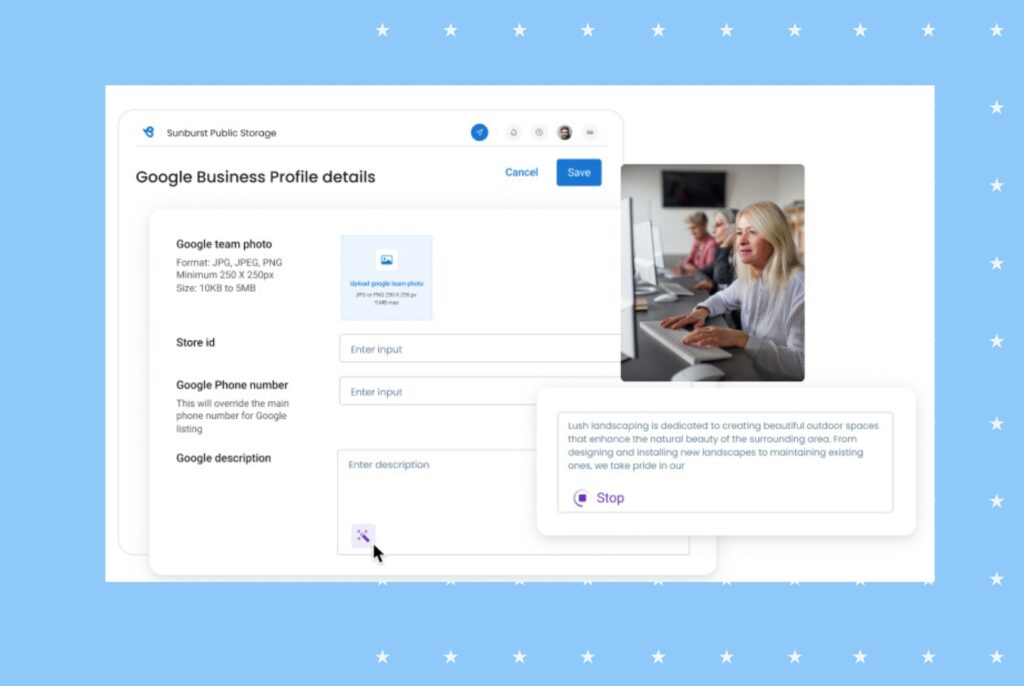
Unlike other channels, Google reviews don’t just reflect customer experience. They actively impact your visibility. More high-quality reviews and consistent responses improve your local search presence, helping your locations show up when customers are ready to buy.
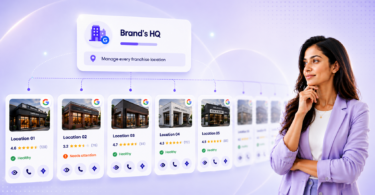
For multi-location brands, this impact compounds. Each location builds its own reputation, which means inconsistent review generation or response can lead to uneven performance across locations.
This is why managing Google reviews isn’t just about reputation. It’s a core part of how you drive discovery, trust, and conversions at scale.
If you're targeting a specific star rating, it helps to understand how Google reviews are calculated first.
Why do Google reviews impact brands?
When someone searches for a business, customers evaluate reviews first. A strong volume of recent, positive reviews builds confidence and drives clicks. In contrast, negative or unanswered reviews can create doubt and push customers toward competitors.
Google reviews directly impact your visibility in local search results. Google uses review signals like volume, recency, and response activity to rank local results. Brands that consistently generate and respond to reviews are more likely to appear in high-intent searches.
According to Birdeye’s State of Online Reviews 2025 report, 2025, 81% of all customer reviews now live on Google. This means your Google Business Profile is the primary platform shaping your online reputation and local discovery.
Given how strongly reviews influence visibility and trust, the next step is understanding how brands can manage them consistently at scale.
How does Google review automation work?

Google review automation is the process of using systems to automatically request, manage, and respond to customer reviews across your Google Business Profile. It replaces manual follow-ups with a structured workflow, turning every customer interaction into an opportunity to gather feedback and improve your online presence.
What challenges do multi-location brands face with manual review management?
Manual review management doesn’t scale for multi-location brands. As review volume increases across hundreds of locations, even small inconsistencies in how reviews are requested, managed, and responded to can impact visibility and brand trust at scale.
So, where do enterprise workflows break down?
1. Inconsistent execution across locations
Each location ends up following its own process for collecting and responding to reviews. Without Google review automation, review growth is uneven, and the customer experience is inconsistent across the brand.
2. Lack of brand control in responses
When responses are handled manually, maintaining a consistent tone and messaging becomes difficult. This creates brand risk, especially when negative reviews are handled differently across locations.
3. Low and uneven review response rates
As volume grows, many locations fall behind on responses. This leads to gaps in review response rate, which directly impacts trust and engagement.
Automate Google Reviews Like a Pro with Birdeye
Want to see the impact of Birdeye on your business? Watch the Free Demo Now.
4. Fragmented data across systems
Reviews sit across multiple Google Business Profiles and tools. Without Google review management automation, enterprise teams lack a unified view of performance, sentiment, and location-level trends.
5. Limited visibility into customer experience trends
At scale, it becomes difficult to identify patterns across locations. Without structured review automation, feedback remains scattered instead of driving operational improvements.
6. Operational inefficiency at scale
Managing reviews manually across hundreds of locations requires significant time and coordination. This slows down response times and reduces the team’s ability to focus on higher-impact work.
Why does this become a serious business risk?
For multi-location brands, inconsistent review management doesn’t just affect reputation. It creates uneven visibility across locations, weakens brand trust, and leads to missed revenue opportunities.
This is where Google reviews automation becomes critical. It replaces fragmented, manual workflows with a consistent system that scales across every location.
As brands look to adopt Google review automation at scale, one question often comes up: Is it allowed?
Is automating Google reviews legal?
Yes, automating Google reviews is allowed as long as it focuses on collecting genuine customer feedback or the voice of the customer and follows Google’s guidelines. The risk comes from manipulation, not automation itself. Google allows review automation when it is used to request reviews from real customers and manage responses. The issue arises when businesses try to manipulate reviews.
What practices are allowed?
- Sending automated review requests after real customer interactions
- Using AI review response to draft replies (with human approval)
- Managing reviews through Google Business Profile automation tools
- Collecting feedback consistently across locations
These practices help improve review growth and review response rate without violating any policies.
What should you avoid?
- Generating fake reviews
- Incentivizing only positive reviews
- Filtering or suppressing negative feedback
- Posting reviews on behalf of customers
That also means businesses should not take a customer’s review from one platform and repost it elsewhere. Here’s why copying and pasting reviews is a bad idea and what to do instead.
If reviews are not appearing correctly, refer to the 14 tips to fix Google reviews.
These actions violate Google’s policies and can lead to penalties, including removal of reviews or suspension of your profile.
Once implemented correctly, Google review automation becomes more than a compliance-safe process. It starts to directly impact how your brand is discovered, trusted, and chosen across locations.
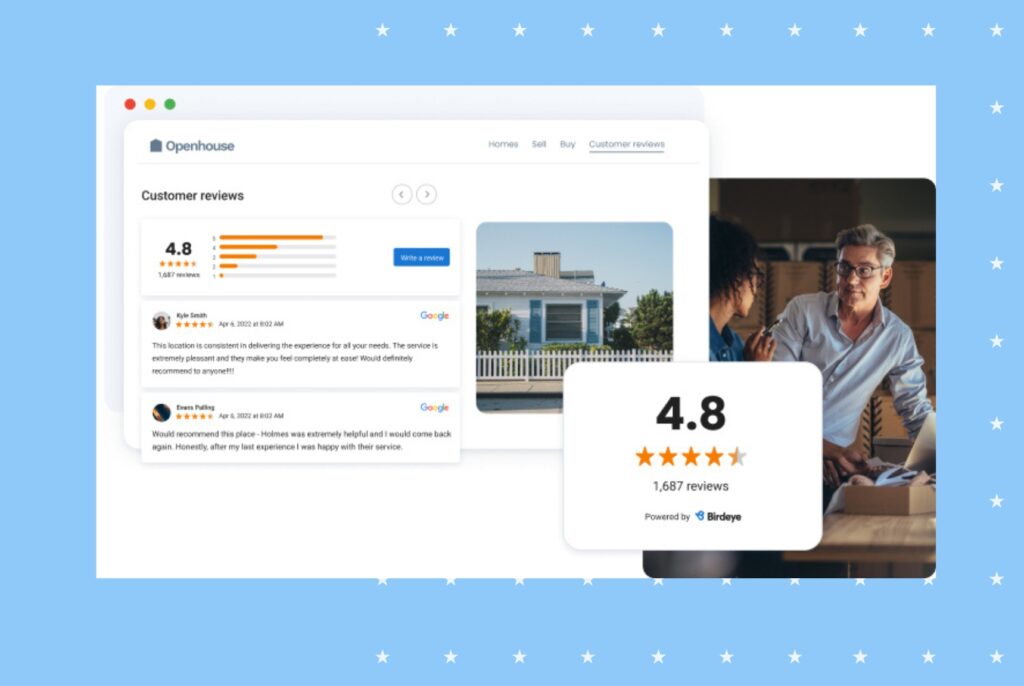
What are the benefits of automating Google reviews?
Automating Google reviews drives measurable improvements in review growth, response rates, and local visibility. These outcomes are already reflected in industry benchmarks and real-world results.
Let’s dive into the real-world success story of Etna Interactive, a digital marketing agency, to see how automation transformed their clients’ online reputations.
1. Effortlessly generate new reviews
Manual review collection can be extremely time-consuming and ineffective, especially for multi-location brands. By automating Google review requests with Birdeye, Etna Interactive helped its healthcare clients achieve an impressive 125% increase in new reviews year over year.
Consistently gathering more authentic business reviews helped them secure stronger credibility, enhance visibility in search results, and build greater trust with their customers, all without additional manual effort.
Read more: Managing review growth in Singapore? Learn how to get more Google reviews for your Singapore business with practical strategies for generating more authentic customer feedback.
2. Consistent and prompt automated responses
Automation enabled Etna Interactive’s clients to deliver quick, consistent responses to both positive reviews and negative feedback.
Prompt responses significantly enhanced the overall customer experience and showcased their dedication to customer satisfaction. This prevented potential harm to their online reputation from neglected or unanswered reviews.
3. Real-time insights for better decisions
Automation provided Etna Interactive’s clients with instant access to valuable insights from their review management efforts. Using Birdeye’s tools, they identified important trends, uncovered customer preferences, and gained actionable information.
By providing valuable insights, businesses could refine their services, enhance their offerings, and ultimately create a better customer experience.
Our customers; their stories:

"We have seen an uptick in SERP placement for clients who increase their review generation by more than 25%, and Birdeye gives our clients a simpler way to manage their online reputation, empowering them to shape and enhance it."

- Sean Collier, COO, Etna Interactive
How do we get more Google reviews across all our locations?

Getting more reviews across multiple locations requires establishing automated post-interaction touchpoints rather than relying on manual requests:

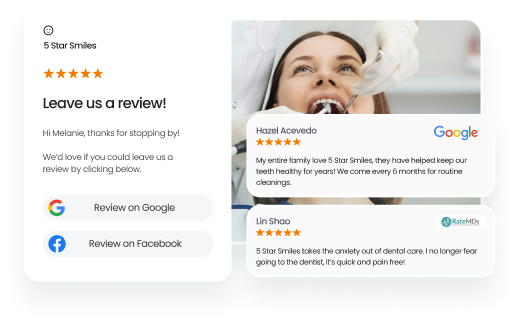
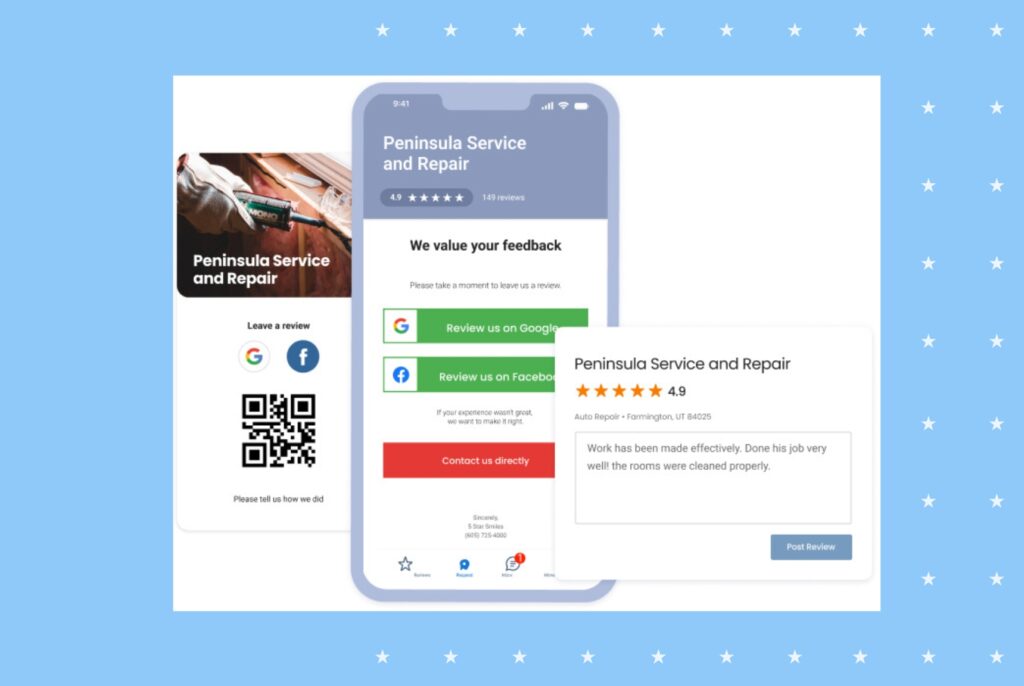
Automate multi-channel outreach: Trigger automated SMS or email review requests instantly after a purchase, service appointment, or checkout.
Implement QR codes at point of sale: Display direct review QR codes at front desks, checkout counters, or on physical receipts for immediate on-site feedback.
Optimize send timing: Send review invites within 2 to 24 hours of service completion when the customer experience is freshest.
Simplify the friction path: Provide a direct one-click review link that takes customers straight to your Google Business Profile review box without extra steps.
4. Strengthened local visibility and reputation
Regular, authentic reviews are crucial for boosting visibility and rankings for local businesses. By using automated Google review management, Etna Interactive’s clients significantly improved their local SEO performance, attracted more potential customers, and reduced the impact of potential fake reviews.
Automating Google reviews is more than a convenience; it strategically supports your business by saving time, enhancing customer engagement, and strengthening your online reputation, just as it did for Etna Interactive.
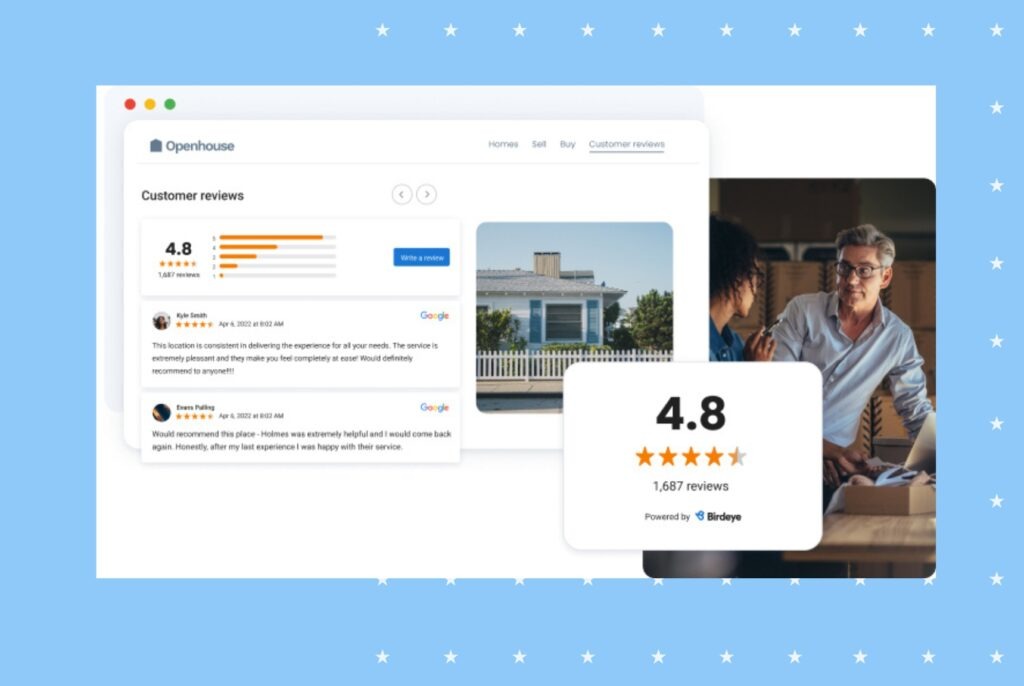
These results reflect broader patterns observed across multi-location brands that adopt Google review automation.
What outcomes does Google review automation drive?
1. Higher conversion from search to customer – A strong, recent review presence increases the likelihood that customers choose your location over competitors.

2. More reliable brand trust across locations – Consistent review generation and responses ensure every location reflects the same level of quality and engagement.

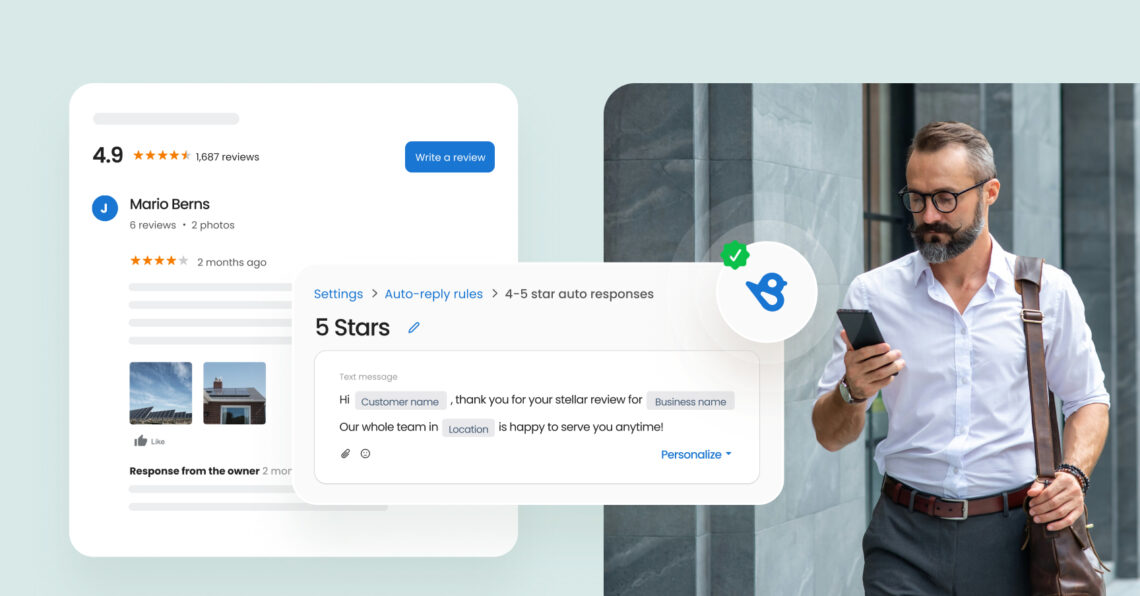
3. Better control over customer perception – Automate Google review responses to ensure every review is acknowledged in a timely and consistent way. You reduce the impact of negative reviews and shape how your brand is perceived.

4. Stronger performance in high-intent local searches – Google review automation improves key signals like recency and engagement. Your locations show up more often when customers are ready to take action.

5. Faster decision-making from customer feedback – Review automation tools organize feedback into clear patterns across locations. You can identify issues, improve operations, and replicate what works faster.

6. Scalable reputation management without added overhead – Instead of increasing headcount, Google reviews automation standardizes workflows across all locations. You grow without adding operational complexity.
What features should review automation solutions include?
The right Google review automation solution should help you consistently generate reviews, maintain control over responses, and turn feedback into insights across locations.
For multi-location brands, the goal is not just automation. It’s consistency, visibility, and control at scale. Here are six questions you should ask when evaluating the features of a review automation platform:
1. Does it automate Google review requests across thousands of locations?
A strong solution should support Google review request automation by triggering requests after real customer interactions. This ensures steady review growth across all locations rather than relying on inconsistent manual follow-ups.
2. Does it support AI review response with human oversight?
Look for AI review-response capabilities that draft replies and allow teams to review and approve before publishing. This helps teams respond faster while maintaining brand voice and quality.
Learn more about how to use AI review generators ethically to boost online reputation
3. Does it centralize Google review management?
Google review management automation should consolidate all reviews into a single place across your Google Business Profile locations. This gives teams full visibility and reduces the risk of missed or delayed responses.
4. Does it turn reviews into actionable insights?
Review automation tools should analyze feedback and surface patterns across locations. This allows teams to identify issues early and improve customer experience based on real data.
5. Does it integrate with your existing systems?
Google reviews automation should connect with your CRM, POS, or customer data platforms to trigger workflows automatically. This reduces manual effort and ensures no review opportunity is missed.
What's the best way to automate Google review requests across locations?

The best way to automate review requests across multi-location brands is by connecting your primary operational systems directly to an automated review engine:

Integrate via CRM/POS triggers: Set up API or native integrations with your CRM, POS, or Electronic Medical Records (EMR) system to send review invites automatically upon invoice completion or appointment closure.

Apply dynamic location tags: Use central email and SMS templates containing location-specific dynamic tokens (such as store address, staff name, or local branch phone number).

Stagger follow-up reminders: Configure non-intrusive automated reminders 3 to 5 days after the initial request for non-responders.

Establish central compliance guardrails: Manage review request rules centrally to ensure all branches strictly follow Google's anti-gating and spam policies.
These features define what effective Google review automation should look like. But in practice, most solutions handle only parts of the workflow. Some focus on sending requests. Others help with responses. Very few connect review generation, response, and insights into a single, consistent system.
This gap between fragmented tools and a unified system is where platforms like Birdeye come in.
How Birdeye approaches Google reviews automation?
Birdeye approaches Google review automation through its #1 Agentic Marketing Platform, engineered specifically to handle the complexities of multi-location brands.
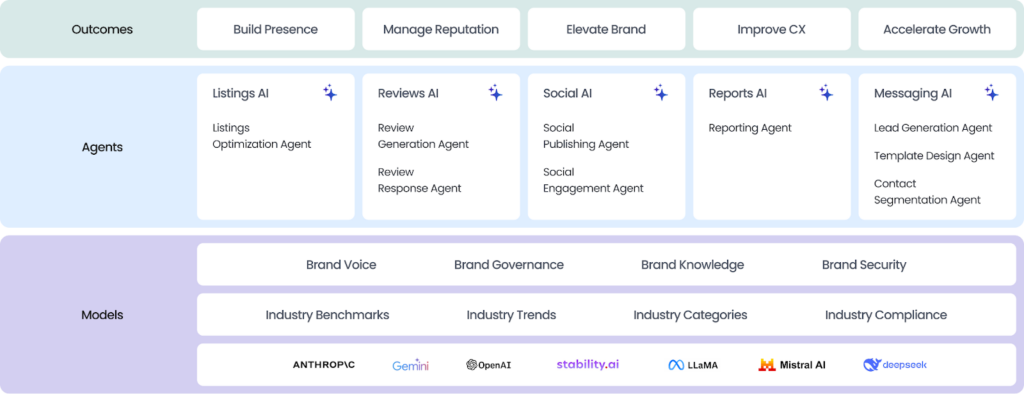
It combines a full-cycle platform, local intelligence, and autonomous AI agents that take ownership of review workflows at scale.
Integrating seamlessly with over 3,000+ CRM and PoS systems, the platform detects customer interactions and automatically coordinates how reviews are generated, responded to, and analyzed across thousands of locations.
How do Birdeye Reviews Agents work?
Birdeye’s review automation is driven by specialized, outcome-focused AI agents that handle every phase of the customer feedback lifecycle. Governed by strict Brand AI and Industry AI rules, these agents ensure absolute consistency and compliance:
| Birdeye AI Agent | Primary function | Key capabilities & features | Business impact |
| Review Generation Agent | Automates the review request process to drive consistent growth in reviews. | • Instant triggers: Sends SMS/email requests immediately after real customer interactions. • Smart optimization: Dynamically optimizes send times and handles automated follow-up reminders. • Personalization: Uses A/B testing and contextual tokens for high-converting templates. | Maximizes review completion rates without relying on manual staff follow-ups, ensuring a steady stream of fresh feedback. |
| Review Response Agent | Drafts instant, empathetic replies to positive and negative feedback. | • Context-aware: Analyzes sentiment, location context, and attached photos to craft human-like replies. • Multilingual: Automatically translates reviews and responds natively in the customer’s preferred language. • Brand compliance: Strictly adheres to your established brand tone and approval workflows. | Dramatically improves response times, ensures 24/7 engagement, and maintains a unified brand voice across 100-10,000+ locations. |
| Review Reporting Agent | Processes large volumes of review data to surface operational insights. | • Instant summaries: Processes thousands of reviews to generate clear sentiment summaries. • Trend spotting: Highlights recurring feedback themes and compares location-level data. • Competitive benchmarking: Benchmarks your performance against local competitors. | Eliminates manual spreadsheet data crunching, helping operational teams quickly spot emerging issues and measure service changes. |
What does this mean for your brand?
By shifting from “software that helps you think” to Agentic AI that executes for you, Birdeye brings Google review management automation into one coordinated system.
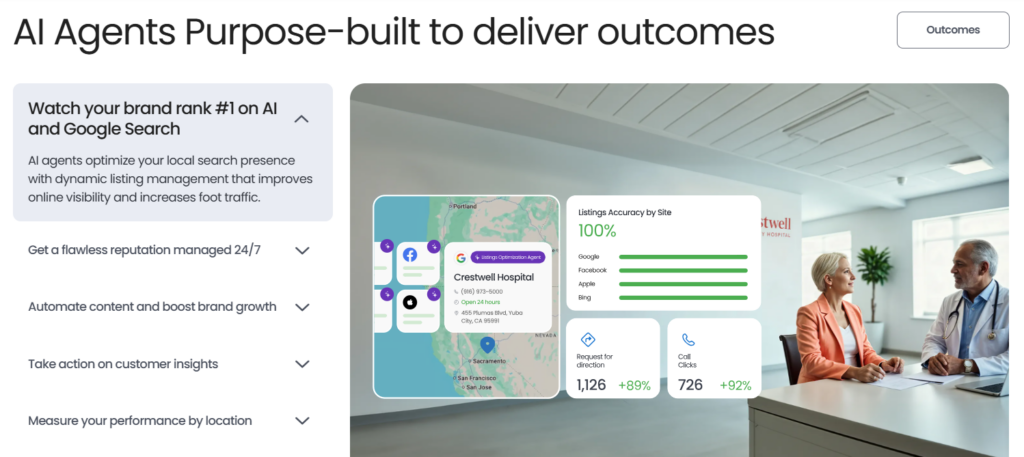
This unified approach dramatically improves your review response rates, ensures flawless 24/7 engagement across every branch, and boosts your visibility in both traditional local SEO and emerging AI search engines.
Ultimately, Birdeye’s agentic marketing platform turns customer feedback from a massive administrative burden into a structured, repeatable engine for driving leads, foot traffic, and revenue growth.
This also supports visibility in AI-driven discovery. Read more: From SEO to GEO: Why brands must optimize for AI search now.
Ethical considerations when automating Google reviews – Avoid fake reviews and compliance risks
Understanding updated enforcement rules is crucial, especially as algorithms expand beyond traditional local packs to penalize manipulated data across conversational assistants. Reviewing current Google spam policies for AI search helps multi-location brands ensure their automated collection workflows remain strictly compliant.
Always:
- Encourage only real and satisfied customers to leave feedback.
- Avoid incentivizing reviews to maintain authenticity.
- Keep review requests neutral and transparent; don’t pressure customers into giving the best reviews.
Trusted review automation tools like Birdeye Reviews ensure authenticity by:
- Managing Google review requests only after real customer interactions.
- Providing accurate, valuable insights into genuine customer sentiment, helping you improve overall satisfaction.
- Protecting your business from spam or fake reviews through advanced spam detection technology
FAQs on how to automate Google reviews
Unlike manually sending Google review requests, automating Google reviews:
– Saves time
– Improves your SEO visibility on search
– Demonstrates your commitment to customer satisfaction
– Ensures prompt feedback by enhancing the brand’s credibility
No, automating review requests and responses is allowed by Google. However, ensure the content remains authentic, and you comply with Google’s policies.
Consistent positive reviews generated through automation enhance your local SEO rankings. Google recognizes engagement and rewards businesses with better visibility.
Yes. More reviews and faster responses improve visibility and ranking signals on Google.
Automating Google review responses improves your review response rate by helping teams reply faster and more consistently. This strengthens customer trust and shows that your brand actively engages with feedback.
Automate Google reviews with Birdeye
Most brands don’t struggle because they deliver poor experiences. They struggle because those experiences never show up online.
When you automate Google reviews, you close that gap. You consistently generate feedback, improve your review response rate, and turn customer experiences into visible proof that builds trust. For multi-location brands, this isn’t optional. It’s how you maintain visibility, consistency, and control across every location.
Platforms like Birdeye bring this together through AI agents that handle review generation, responses, and insights within a single system.

About the Author

Shruti Dugar
Birdeye
Originally published