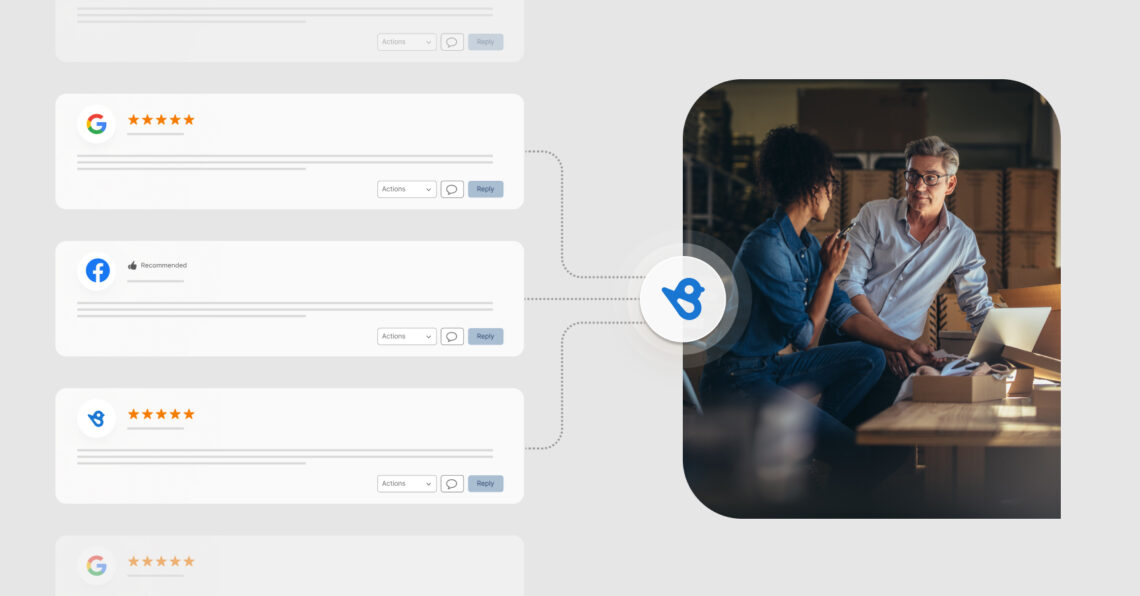
Review monitoring helps brands track, analyze, and respond to customer feedback across review sites, listings, and other online channels. For multi-location brands, it brings consistency to how reviews are handled across hundreds of locations while ensuring no feedback goes unnoticed.
Summary

Customer feedback now shapes brand perception before a prospect ever visits your website or speaks to your team. Review monitoring helps brands track customer feedback across Google, Facebook, and industry-specific review sites to understand sentiment, respond faster, and strengthen trust. By combining real-time alerts, analytics, and consistent response workflows, multi-location brands can protect their reputation, improve local search visibility, and convert more high-intent customers. This blog breaks down the benefits of review monitoring, best practices, and top tools to help you scale it efficiently.
Table of contents
- What the data reveals about review behavior
- What is review monitoring?
- Why is review monitoring essential for enterprise brands?
- How can large brands improve review monitoring and management?
- How do you choose the best review monitoring tool for your business?
- How do the top review monitoring tools compare for enterprise brands?
- Frequently asked questions about review monitoring
- Monitor reviews with Birdeye: #1 Agentic Marketing Platform
What the data reveals about review behavior
While most brands know reviews matter, consumer behavior shows just how quickly trust is formed, or lost, based on online feedback. Online reviews don’t just influence buying decisions; they actively drive customer acquisition. In fact, according to Birdeye’s State of Online Reviews 2025 report:
- Online review volume grew by 13% in 2024. For multi-location brands, this means customer sentiment is scaling rapidly, requiring systems that can track and respond to feedback in real time across every location.
- 81% of all reviews occur on Google. For enterprise brands, this means a single platform disproportionately shapes brand perception across every location, making centralized Google monitoring non-negotiable.
- Review requests increased by 25%. For brands, this means more feedback is being actively generated, increasing the need for streamlined workflows to manage, analyze, and respond at scale.
- 73% of reviews now receive responses (up from 63%). For brands, this means consistent engagement is now a baseline expectation customers use to judge credibility.
For growing, multi-location brands, this creates a critical challenge: customer perception is shaped across many channels, often before a business even knows a review has been posted. That’s why tracking, analyzing, and acting on reviews in real time is essential.
What is review monitoring?
Review monitoring is the process of tracking, monitoring, and analyzing online customer reviews about a brand on popular channels such as Google, Facebook, and other industry-specific review sites.
It involves monitoring brand mentions, negative reviews, positive reviews, customer feedback, ratings on review sites, and more. Monitoring customer reviews and feedback can help businesses gauge market sentiment, understand potential issues, manage online reputation, and improve customer experience.
Why is review monitoring essential for enterprise brands?
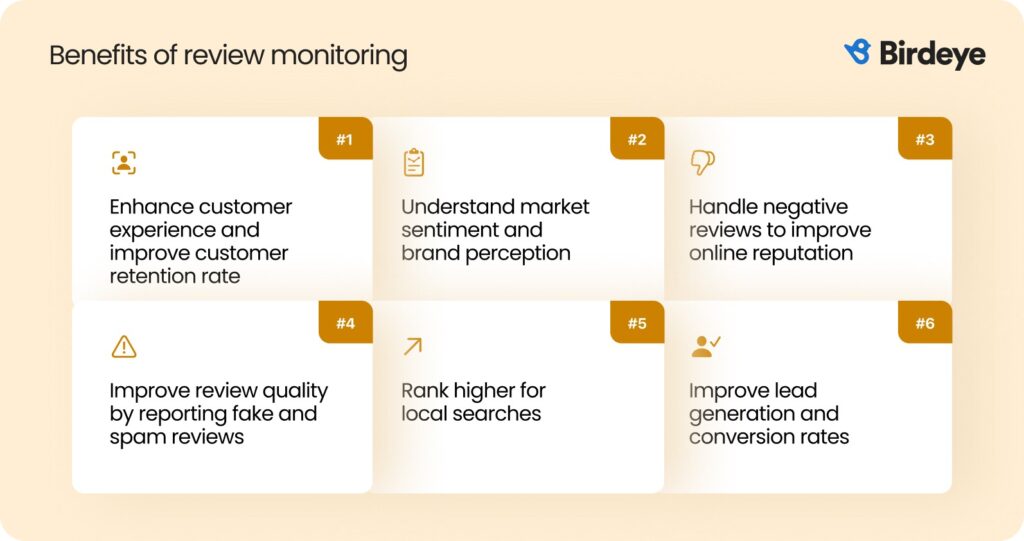
Review monitoring is important because it directly improves customer experience, handles negative reviews, and identifies and reports fake/spam reviews. Additionally, tracking recurring trends in reviews allows companies to uncover customer needs and dramatically boost lead generation and conversion rates.
The top benefits of review monitoring include:
- Enhance customer experience and improve customer retention rate
- Understand market sentiment and brand perception
- Handle negative reviews to improve online reputation
- Strengthen review quality by reporting fake and spam reviews
- Rank higher for local searches
- Improve lead generation and conversion rates
Let’s explore the benefits in detail.
1. Enhance customer experience and improve customer retention rate
Research indicates that 42% of respondents report more negative customer experiences than before. These customers often move on to competitors after leaving a review. However, you can change this by proactively monitoring online reviews and taking appropriate action.
Businesses that invest in online review monitoring can:
- Quickly identify customer pain points
- Reach out to the customer
- Turn that negative review into a positive customer experience
This will help retain that customer and improve the overall customer experience.
2. Understand market sentiment and brand perception
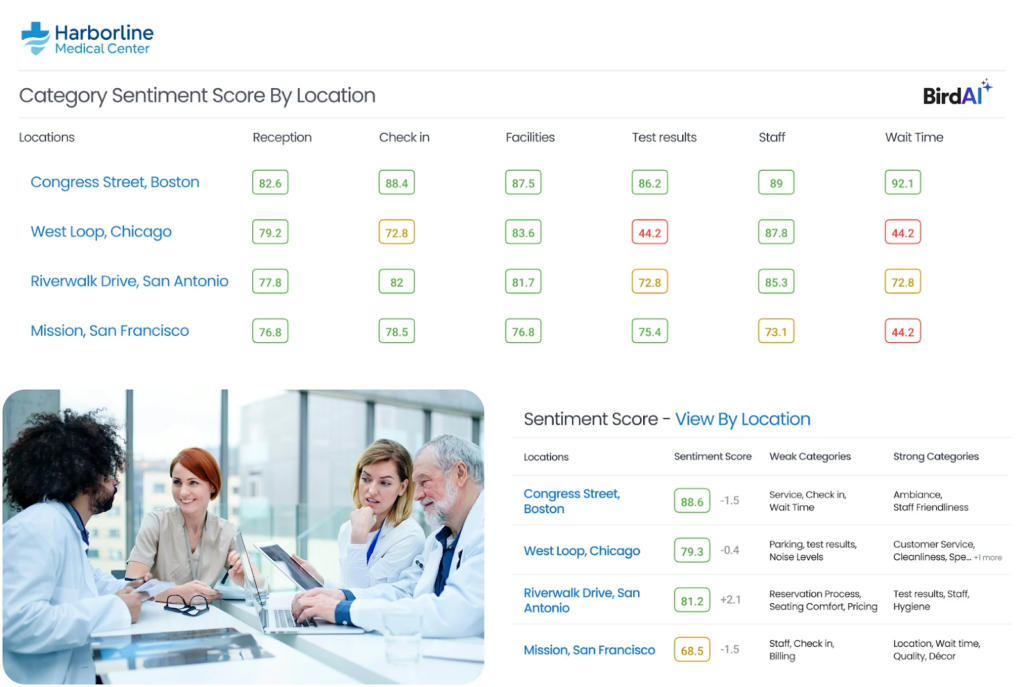
Monitoring and analyzing customer reviews across platforms can help you better understand brand perception, market sentiment, and positioning. While businesses usually hire data analysts and external consultants, they can also turn to customers and know directly from reviews about business performance.
Recurring keywords, phrases, and overall sentiment in reviews (positive or negative) can effectively guide business decisions.
3. Handle negative reviews to improve online reputation
Business owners can only solve a problem when they know it exists. Most businesses learn about negative reviews only when they run PR campaigns or when potential customers point them out. This does not bode well for the business.
Monitoring reviews helps you flag negative brand/product reviews, respond quickly, and solve the issue immediately. This has a profound impact on your online reputation.
Additionally, proactive review monitoring ensures your team is aware of the latest customer feedback and can confidently address any concerns during sales discussions.
4. Strengthen review quality by reporting fake and spam reviews
Not all negative reviews are genuine. Most businesses face the challenge of ongoing spam reviews or fake reviews left by bots or competitors. With efficient online review tracking, you can instantly report them and improve the quality of your reviews.
Removing fake and spam reviews ensures that your potential customers see an accurate depiction of your business.
5. Rank higher for local searches
Review quality, review volume, and review recency are important factors in determining your local search ranking. Monitoring online Google reviews can help you understand where you stand across different channels. Your business can then run appropriate campaigns to generate more reviews wherever needed and boost local search rankings.
How AI search engines interpret your reviews and local presence

AI search platforms analyze reviews, listings data, and third-party sources to surface businesses in AI answers. Birdeye Search AI helps brands understand how their locations are surfaced across generative search platforms by analyzing reviews, listings data, and third-party sources.

According to Birdeye’s State of AI Search 2026, AI-generated answers are now replacing traditional rankings with citation-backed responses that directly influence customer decisions.

Birdeye Search AI highlights gaps and inaccuracies that may impact AI visibility, giving businesses clearer insight into how trust signals shape discovery wherever customers search. By combining review monitoring with Search AI insights, enterprise teams can strengthen trust signals, fix inconsistencies, and stay visible wherever customers search, on Maps, Search, and AI-powered platforms.
6. Improve lead generation and conversion rates
Negative reviews can discourage potential customers from engaging with your business, directly impacting lead generation and conversion rates. Ignoring such feedback often signals a lack of accountability, which can push prospects toward competitors.
With review monitoring tools like Birdeye, you can quickly address customer concerns, request updates once issues are resolved, and publicly demonstrate your commitment to customer satisfaction. This builds trust with prospective customers and increases the likelihood they will engage with your business.
“We don’t have time to monitor all the multiple platforms we use to engage with our customers, so Birdeye has been a valuable tool for monitoring reviews and sending review requests. It’s vital to request reviews through different methods because it gives people more opportunity to leave feedback. The only way to grow your business is by learning what you are doing well and what needs improvements.”
Heather Schwenk, Missoula Property Management LLC
How can large brands improve review monitoring and management?
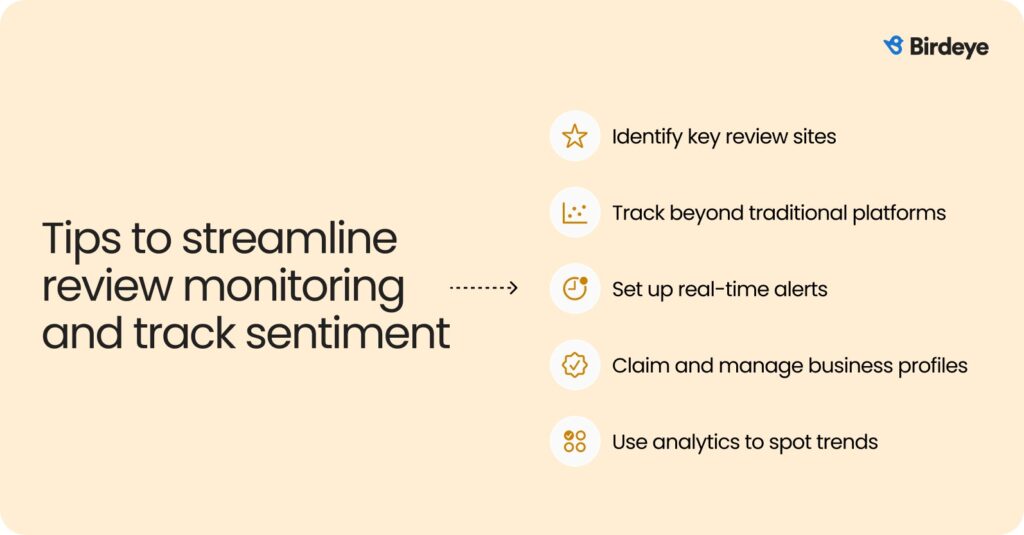
To maximize the benefits of review monitoring for your business, it is important to streamline your approach. This means covering all your bases: tracking reviews across multiple locations, setting up your online profiles, scanning social media, and so on.
Here are our top tips to streamline review monitoring and stay on top of customer sentiment:
1. Identify top review sites
The idea of review monitoring can be overwhelming at first, as businesses often try to monitor all review sites at once. But here’s the good news: customers aren’t scattered across every platform. Our studies reveal that most customers focus on only a few core sites, such as Google, Apple, Bing, Facebook, and other niche-specific sites.
Therefore, you should streamline your process and focus on the big ones instead of overextending resources by monitoring 100+ sites.
2. Go beyond traditional review sites
While we expect them to, customers don’t always stick to the authorized forums to talk about a business. They use social media platforms, online forums, blogs, emails, and more to share their experience.
It is important for businesses to incorporate these offbeat channels into their review monitoring process to fully capture consumer sentiment.
3. Set up notifications
Ensuring you never miss a review or comment is the very basic tenet of review monitoring. However, it is easier said than done. Businesses with manual review monitoring and management processes should begin by setting up notifications, email alerts, and more. This way, you have a record of every review that goes live, and can quickly identify if reviews are not appearing as expected or if access to Google reviews changes.
Or, you can streamline the process by using a review monitoring tool like Birdeye that automates notifications, records all reviews, and lets you track them from a centralized dashboard.
4. Claim business profiles
Managing your reviews is the essential flip side of the review monitoring coin. Execution is what makes the monitoring worthwhile. However, businesses can’t respond, report, or block a customer review (if necessary) without claiming the profile on the respective review site.
Claiming the business profile also allows you to edit business information, avoid any misinformation, and take charge of your online presence.
5. Focus on analytics
You can take your review management campaign a notch above by going beyond just monitoring reviews and handling them as they come in. Businesses need a strategy that allows them to shore up their online reputation.
And that comes from using a review monitoring tool that provides in-depth insights into customer behavior, trending topics in reviews, average rating for multiple locations, and more.
To put these strategies into action, the next step is choosing a tool that can simplify and support your review monitoring efforts.
How do you choose the best review monitoring tool for your business?
Manual review monitoring leaves room for errors, which is why it is important for enterprise businesses to employ the best review monitoring tool to protect their reputation. The ideal review monitoring tool helps you track reviews across platforms with real-time notifications, provides in-depth analytics, and aids in comprehensive review management.
Critical factors to consider while choosing a review monitoring tool are:
- Review sourcing platforms
- Reporting and analytics
- Review response features
- Collaboration features
- On-the-go/real-time notifications
- Automation
Let’s explore them in detail so that you can make an informed decision.
1. Review sourcing platforms
This is one of the most essential and distinguishing features for choosing the right review monitoring tool.
Every industry has a few essential global and niche-specific review sites to monitor. The tool you choose must support the review platforms you have a strong presence on.
Carefully check if the tool you choose can source reviews from those platforms before deciding.
2. Reporting and analytics
Monitoring reviews won’t help you understand customer sentiment or outshine your competitors without robust reporting features.
Businesses need visualized analytics, robust reporting models, and insights to make sense of the vast data collected from customer reviews and social media conversations.
Review monitoring tools that double as Google review analyzer, product review monitoring tools, and brand perception analysis can come in handy.
Choose a review monitoring tool that allows you to customize reports, build custom dashboards, and analyze as many keywords/categories as needed.
3. Review responses
Responding to reviews instantly helps businesses improve their online reputation, local search ranking, and customer satisfaction. It is a critical part of the review management process.
Businesses can greatly benefit from choosing a review monitoring tool that allows them to respond to customer reviews instantly from the dashboard. This saves time and improves productivity by eliminating the need to click hundreds of individual links.
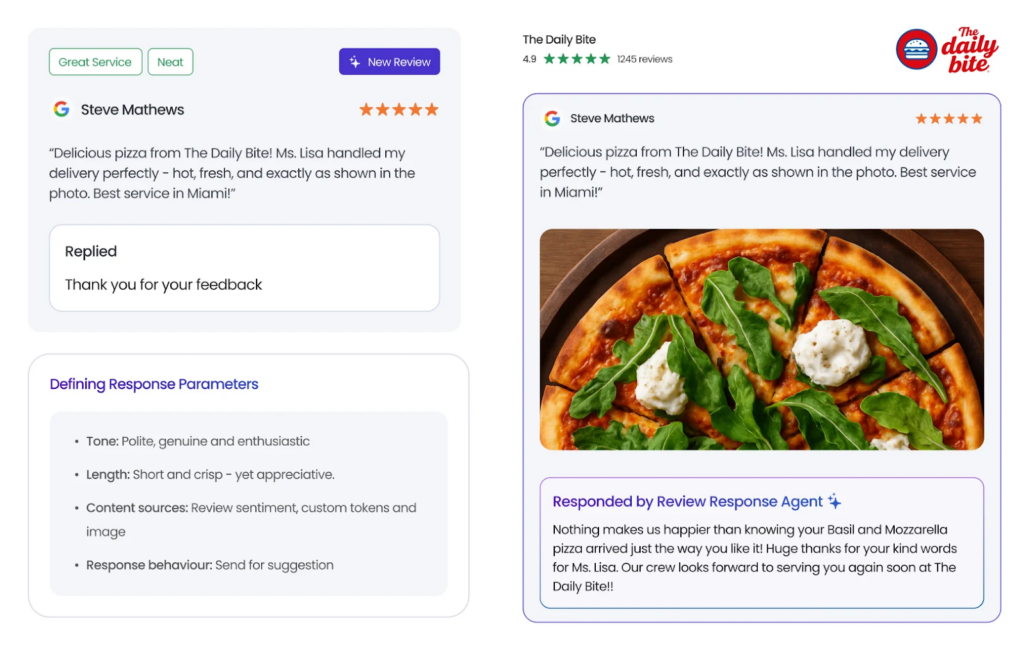
Choose integrated solutions like Birdeye that help businesses respond to reviews directly from the dashboard, set up response templates, use AI to craft/proofread review responses, translate reviews from other languages, and make overall review management easy.
4. Collaboration features
Review monitoring is a complex and resource-intensive process. Businesses need all team members invested in monitoring reviews, responding to them, flagging issues, and raising tickets for the best results.
And that is why collaboration features are essential in review monitoring tools. The best tool is the one that lets you add users, assign varying permissions, and accelerate review management.
5. On-the-go/real-time notifications
Review monitoring is not a process where you can just donate a few hours a week and expect great results. Constant monitoring and getting real-time alerts are critical for a successful review monitoring program.
Choose a tool that gives instant alerts when a customer adds a review, responds to your comment, or posts something online about your brand.
Review monitoring tools should allow you to get notifications via desktop apps, mobile apps, emails, and SMS channels for the best coverage.
6. Automation
Automation features in a review monitoring tool significantly improve how businesses track and respond to feedback. As AI adoption continues to grow, Gartner projects that worldwide spending on AI and automation software will reach $2.5 trillion by 2026, a 44% year-over-year increase.
Automation in review monitoring now includes AI agents that continuously track sentiment, generate context-aware responses, and optimize review generation without manual intervention. These systems turn feedback into real-time action, improving response speed, consistency, and overall reputation performance.
These capabilities are becoming essential, not optional. Some key automation features to consider include automated keyword tracking, alerts for negative reviews and review responses, and automated ticket creation.
Explore Top Review Monitoring Tools
Want to see the impact of Birdeye on your business? Watch the Free Demo Now.
How do the top review monitoring tools compare for enterprise brands?
Every brand needs to invest in review monitoring, irrespective of its size. While you can monitor online reviews manually, it becomes challenging to do so effectively for an extended period.
Here are some of the top review monitoring tools you can explore for your brand:
| Tool | Key features | Supported platforms | Unique strengths |
| Birdeye | – AI-generated responses at scale – Real-time sentiment analysis and alerts – Unified dashboard across directories – CRM-triggered workflows | Google, Facebook, Yelp, TripAdvisor, industry directories, and 200+ review sites | Enterprise-ready platform with AI agents, centralized control, and multi-location scalability |
| Reviewflowz | – Review aggregation and monitoring – Real-time alerts and notifications – AI-assisted replies and sentiment analysis | Google, Trustpilot, Yelp, G2, Capterra, app stores, niche platforms | Strong platform coverage (150–200+ sources) with flexible reporting and integrations |
| Grade.us | – Review monitoring with alerts – Automated review requests – Response workflows | Google, Facebook, Yelp, G2, Capterra, TrustRadius | Combines monitoring with review generation and white-label support |
| Review Monitoring | – Centralized review tracking – Real-time notifications – Basic sentiment insights – Simple reporting tools | Google, Facebook, Yelp | Lightweight solution focused on core monitoring needs (limited advanced capabilities) |
| Appbot | – AI review categorization – Sentiment analysis – Keyword/topic tagging – Integrations for issue tracking | Apple App Store, Google Play, and SaaS review platforms | Built for product and app teams with detailed feedback tagging |
| ReviewTrackers | – Multi-site review tracking – Location-level insights – Sentiment and trend analysis – Review response tools | Google, Facebook, Yelp, TripAdvisor, 100+ sites | Strong focus on location benchmarking and customer experience insights |
| LLM Pulse | – LLM-based sentiment and theme extraction – Trend detection and summaries – Multi-source feedback aggregation | Varies by integration | Focuses on contextual analysis using large language models (emerging category) |
Let us explore these online review monitoring products in detail to help you choose the best one for your brand.
1. Birdeye

Birdeye leads the pack with a full-cycle Agentic Marketing Platform for review monitoring, moving beyond basic tracking to an AI-powered model that actively manages customer feedback with intelligent automation. It continuously monitors reviews across platforms, analyzes sentiment, and flags issues in real time. With a centralized dashboard, brands can track feedback trends, respond consistently, and maintain control over their online reputation across 100-10,000+ locations.
1. AI agents and intelligent automation capabilities
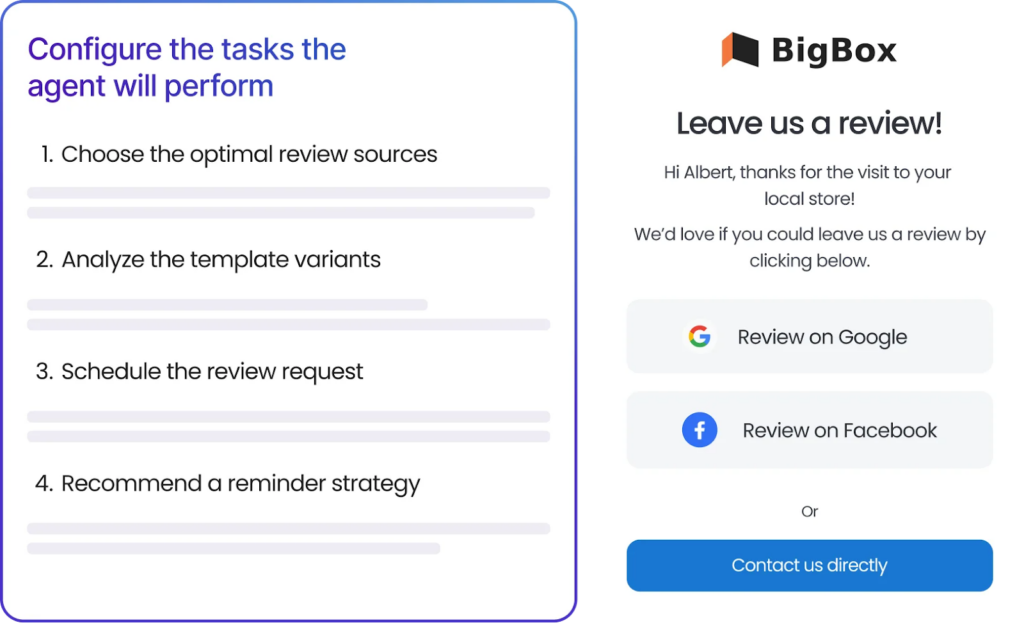
Birdeye’s agents act as a powerful extension of the marketing team, going beyond simple automation to deliver intelligent decision support and execution.
- Review Response Agent: Analyzes the nuance of every incoming review and drafts hyper-personalized, brand-consistent responses. It understands context, such as specific product mentions or location-based issues, without relying on rigid templates.
- Insights AI: Scans thousands of reviews across hundreds of locations to identify hidden operational trends. It surfaces at-risk locations and emerging shifts in customer sentiment before they impact performance.
- Review Generation Agent: Intelligently determines the best time, channel, and tone to request customer feedback, ensuring a steady stream of fresh, high-quality reviews that support local search visibility.
2. Platform scale and enterprise governance
The platform is designed for enterprises that require both local flexibility and centralized control. Birdeye integrates review monitoring into the broader marketing ecosystem to support measurable growth.
- Unified multi-location dashboard: Consolidates reviews from 200+ sites into a single source of truth, providing a clear view of reputation health across thousands of locations.
- Governance with roles and permissions: Enables admins to define access levels across teams, ensuring the right users can view, respond to, and manage reviews while maintaining brand consistency across all locations.
- Compliance-ready workflows: Standardize review responses, data handling, and audit trails to align with internal policies and regulatory requirements, ensuring every interaction follows approved guidelines.
- Automated action triggers: Negative sentiment can trigger tickets in integrated CRMs such as Salesforce CRM or HubSpot, ensuring feedback is addressed through structured workflows.
- Fraud and spam guardrails: The platform helps identify and manage suspicious or inappropriate reviews, protecting the integrity of brand ratings.
3. Social media monitoring with Birdeye Social AI
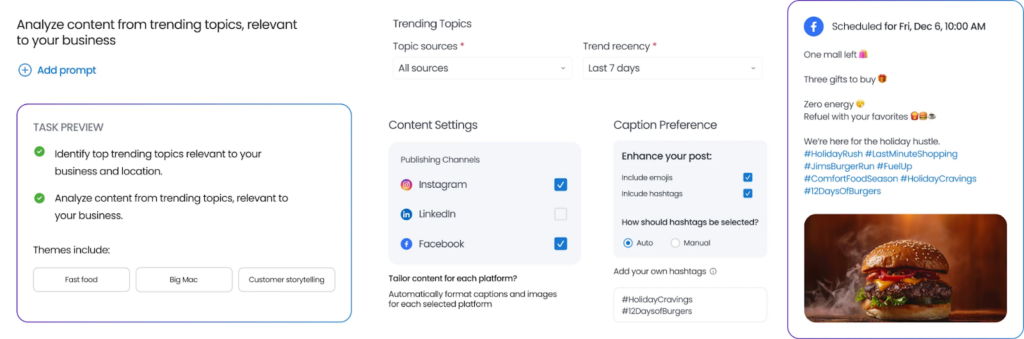
Birdeye Social AI extends review monitoring beyond traditional platforms by capturing and analyzing customer conversations across social media channels.
- Centralized social listening: Monitor brand mentions, comments, and conversations across social platforms alongside reviews in a single dashboard.
- AI-powered content and response support: Generate on-brand social posts and replies using AI, ensuring consistency across locations and channels.
- Engagement and scheduling tools: Plan, schedule, and publish content across multiple locations while maintaining control over messaging and timelines.
- Unified sentiment insights: Combine social and review data to understand customer perception more comprehensively and identify trends across all digital touchpoints.
4. AI search visibility
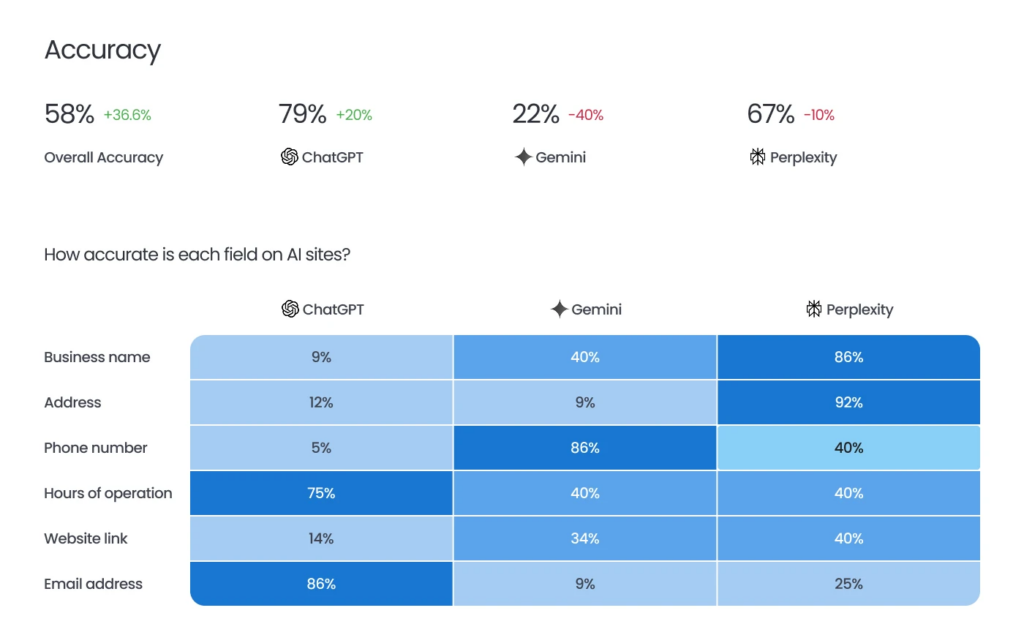
Birdeye Search AI helps brands improve how they appear in AI-generated answers by strengthening review-driven signals such as sentiment, recency, and customer feedback, factors that directly influence how AI platforms mention and recommend businesses.
- AI visibility tracking: Monitor how often your brand is mentioned in AI-generated answers and how review signals influence those mentions across locations.
- Competitor benchmarking: Compare review volume, sentiment, and engagement against competitors to identify gaps in AI visibility.
- Citations intelligence: Identify the review platforms and sources that AI engines rely on when generating answers, ensuring strong, consistent feedback across those channels.
- Sentiment and perception analysis: Understand how AI describes your brand based on recurring themes, strengths, and weaknesses derived from customer feedback.
- Agent-led review optimization: AI agents generate reviews, improve response strategies, and strengthen feedback signals that influence AI recommendations.
- Actionable recommendations: Prioritize suggestions to increase review volume and address negative sentiment to strengthen visibility in AI search.
- Location-level insights: Identify locations with weak review signals that may limit their inclusion in AI-generated answers.
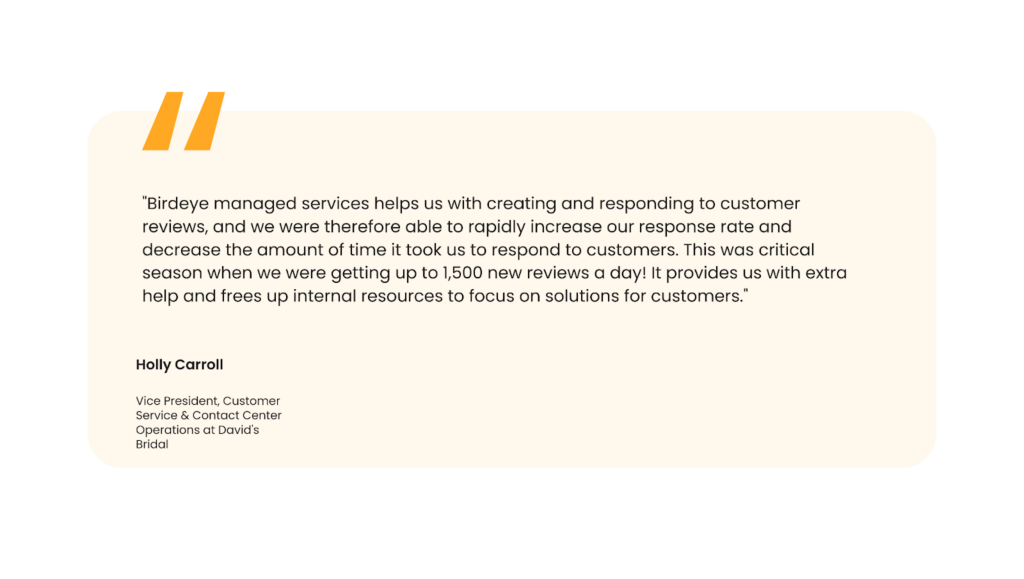
5. Birdeye enabled enterprise outcomes for David’s Bridal

- The Challenge: With 300+ stores across the US, Canada, Mexico, and the UK, David’s Bridal struggled to maintain accurate local listings and capture a representative sample of customer feedback. They were only hearing from a tiny subset of customers, which didn’t reflect the true brand experience.
- The Implementation: David’s Bridal deployed Birdeye to automate the feedback loop across their entire store network. They utilized Birdeye’s listing management to instantly update location-specific data and used automated review requests to capture the “silent majority” of happy customers.
- The Outcome: The brand successfully scaled its digital presence, ensuring 100% listing accuracy across hundreds of locations. By automating the feedback process, they gained the “actionable insights” needed to improve the in-store journey, maintaining their status as the most modern and digitally relevant brand in the bridal industry.
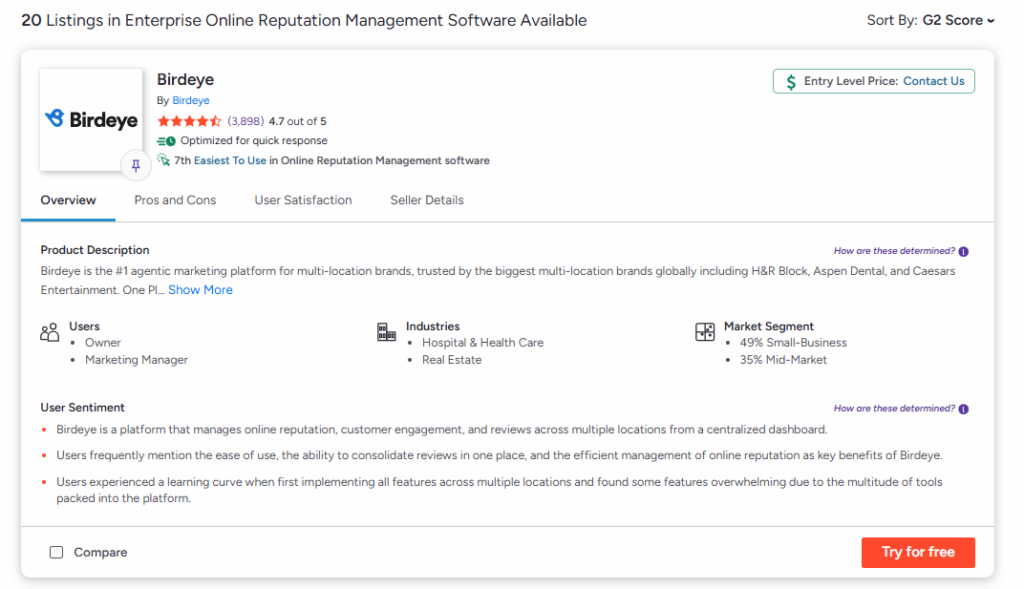
As per G2, Birdeye is the No. 1 Enterprise Online Reputation Management Software. 4.7/5 with 3,900+ reviews.
2. Reviewflowz
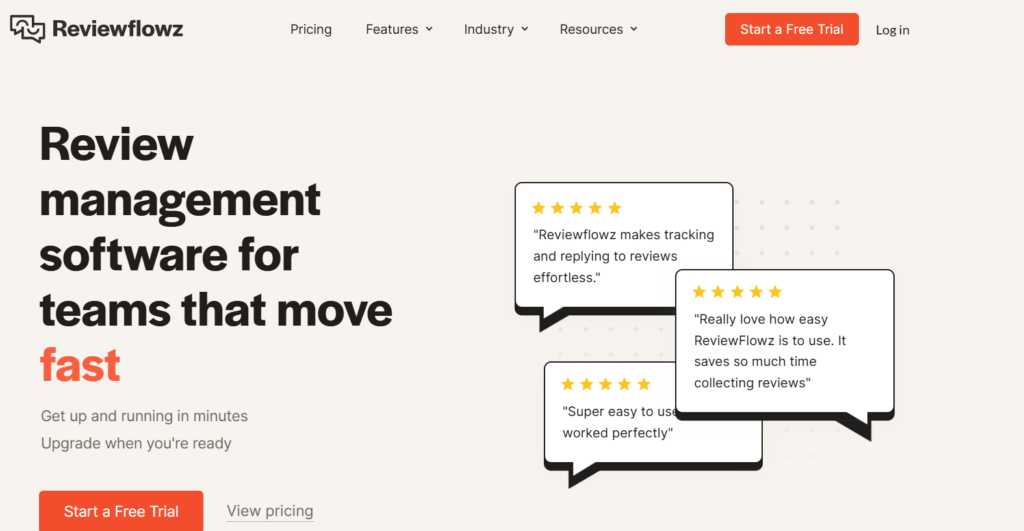
Reviewflowz is designed for businesses that want flexible, data-driven review monitoring with strong reporting capabilities. It aggregates reviews from multiple platforms and turns them into structured insights that marketing and product teams can act on. The platform is especially useful for tracking trends over time and integrating review data into internal workflows.
Features:
- Aggregates reviews from major platforms like Google, G2, Capterra, and more into a centralized dashboard.
- Sends real-time alerts for new reviews, helping teams respond quickly to customer feedback.
- Provides customizable reporting with filters for rating, keywords, and locations.
- Integrates with tools like Slack, Notion, and Google Sheets to streamline workflows and data sharing.
3. Grade.us
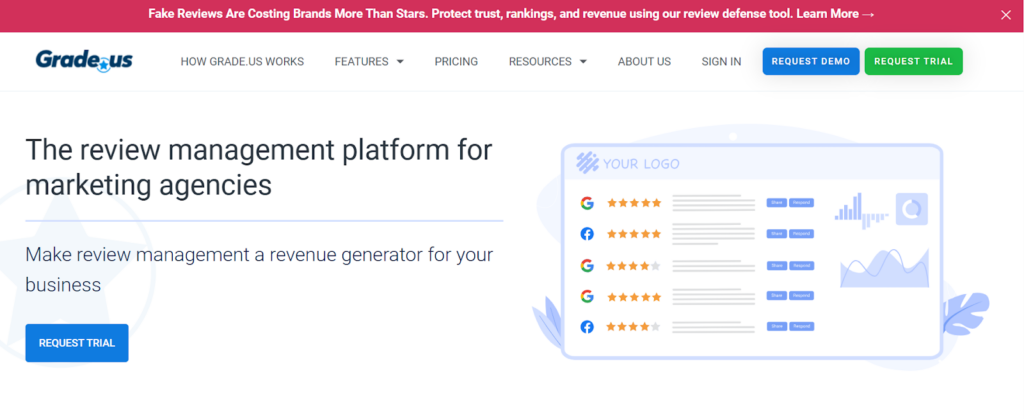
Grade.us helps multi-location businesses monitor and manage reviews and improve ratings through consistent engagement. It combines review tracking with generation workflows, making it easier for brands to maintain a steady flow of feedback and respond at scale.
Features:
- Monitors reviews across key platforms and organizes them by location for easy tracking.
- Offers white-label dashboards for agencies and enterprise teams managing multiple brands.
- Includes automated review request campaigns via email and SMS to increase review volume.
- Provides response management tools to handle customer feedback efficiently across locations.
4. Review Monitoring
Review Monitoring is a straightforward solution built for businesses that need visibility into customer feedback without complex setup. It focuses on collecting and organizing reviews across platforms while ensuring teams stay informed about new activity and changes in sentiment.
Features:
- Tracks reviews from multiple platforms and consolidates them into a single interface.
- Delivers instant notifications for new reviews and rating changes.
- Offers basic sentiment tracking to identify trends in positive and negative feedback.
- Provides simple reporting tools to monitor performance across locations or business units.
5. Appbot
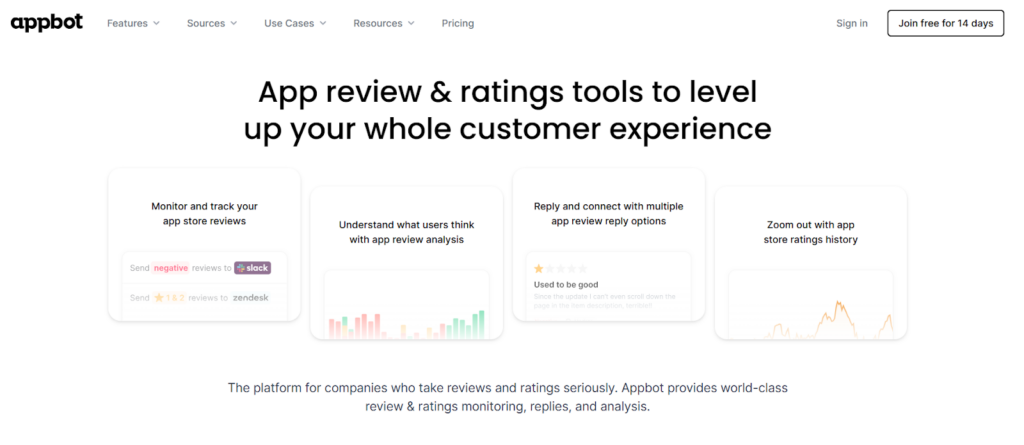
Appbot specializes in review monitoring for mobile apps and SaaS products, helping teams understand user feedback from app stores and review platforms. It uses AI to categorize and analyze reviews, making it easier to identify product issues and feature requests.
Features:
- Collects and analyzes reviews from platforms like Apple App Store, Google Play, and SaaS review sites.
- Uses AI to tag and categorize feedback by themes such as bugs, UX issues, and feature requests.
- Provides sentiment analysis to track user satisfaction over time.
- Integrates with tools like Slack, Zendesk, and Jira to route feedback to product and support teams.
6. ReviewTrackers
ReviewTrackers is built for multi-location brands that need centralized review monitoring with a strong focus on customer experience insights. It helps organizations track feedback across locations, benchmark performance, and improve response strategies.
Features:
- Monitors reviews across platforms and consolidates them into a unified dashboard.
- Provides location-level insights to compare performance across different branches.
- Includes sentiment analysis and trend tracking to uncover recurring issues.
- Offers response management tools and workflows to maintain consistency across teams.
7. LLM Pulse
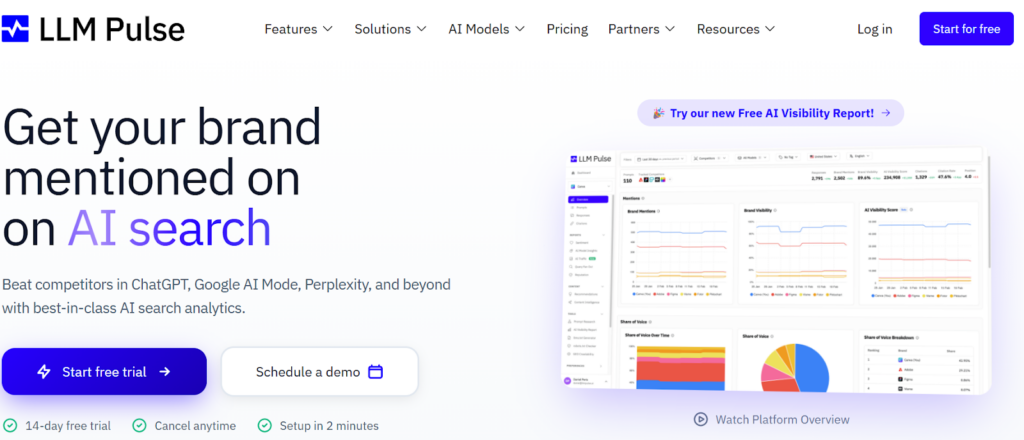
LLM Pulse is a newer entrant focused on analyzing customer feedback through large language models. It goes beyond traditional monitoring by interpreting reviews in a more contextual way, helping brands uncover deeper insights from unstructured feedback.
Features:
- Uses LLM-based analysis to extract themes, intent, and nuanced sentiment from reviews.
- Aggregates feedback from multiple sources into a unified intelligence layer.
- Highlights emerging issues and customer expectations through contextual insights.
- Supports strategic decision-making with summarized reports and trend analysis.
Review monitoring is a continuous, complex, and essential part of online reputation management. The more you know about brand perception and customer sentiment, the better you can scale your brand. It involves constantly monitoring review sites, tracking keywords, brand mentions, and checking what customers say about your brand.
Birdeye stands out for offering a complete, full-cycle platform that goes beyond basic review monitoring. While other tools focus on specific functions such as aggregation or reporting, Birdeye combines review tracking, response management, sentiment insights, and social listening into a single system. This makes it a reliable choice for enterprise brands managing multiple locations and high volumes of customer feedback.
Frequently asked questions about review monitoring
Review monitoring is the process of tracking customer reviews across platforms to stay aware of feedback and respond in a timely manner.
Review monitoring focuses on tracking feedback, while review management includes responding to it, analyzing sentiment, and improving the customer experience.
Start with high-impact platforms like Google, Facebook, and Yelp, where most customers search and leave feedback.
Yes, responding to both negative and positive reviews shows customers you value feedback and helps build trust and credibility.
Use a centralized platform like Birdeye Reviews AI to track, filter, and manage reviews across all locations from a single dashboard.
Look for real-time alerts, multi-location tracking, sentiment analysis, response management, and reporting capabilities.
Free tools can help with basic tracking, but lack the depth, automation, and scalability needed for multi-location brands.
Use review monitoring software like Birdeye Reviews AI or platform notifications to receive real-time alerts whenever a new review is posted.
Birdeye stands out for multi-location brands with its unified dashboard, real-time alerts, and scalable review management capabilities.
Monitor reviews with Birdeye: #1 Agentic Marketing Platform
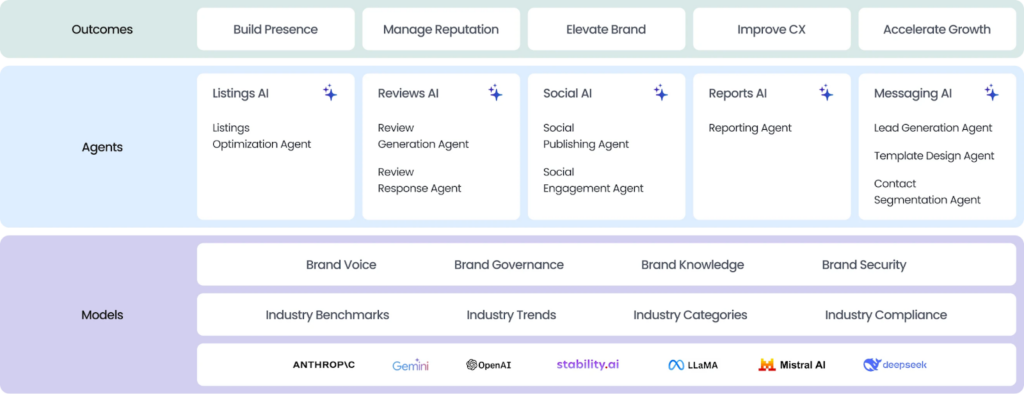
Managing a brand’s presence across hundreds of sites is no longer just a challenge; it’s an enterprise-scale operation. In a world where AI-driven search results and community voices dictate customer choice, monitoring feedback is not enough. You need a platform that moves beyond reactive tools. That is why industry leaders trust Birdeye’s Agentic Marketing Platform.
Birdeye Reviews AI is powered by sophisticated AI Agents that transform the way multi-location brands manage their reputation. Instead of manual workflows, Birdeye utilizes custom LLMs and autonomous agents to:
- Generate & distribute: Automatically trigger review requests via SMS and email, integrated with your CRM to reach customers at the perfect moment.
- Monitor & manage: Gain real-time visibility across 200+ review sites from a single, unified dashboard.
- Autonomous response: Deploy Review Response Agents that draft tailored, on-brand replies using industry-specific context and human-in-the-loop controls.
- Analyze with Insights AI: Turn thousands of reviews into actionable intelligence with AI-assisted sentiment analysis and competitive benchmarking.
Consolidate your fragmented marketing stack and future-proof your brand. Step up your customer experience and dominate the local market with Birdeye Reviews AI, the leading AI platform for the modern enterprise.

About the Author

Vanjana Sharma
Originally published