Dentist reviews help patients compare dental practices and help dental groups understand patient experience across locations. Managing reviews across multiple practices requires consistent feedback collection, appropriate responses, and visibility into recurring issues.
For UK dental groups, that work also involves platform policies, professional confidentiality, consumer protection law, and data protection requirements. This guide explains which review platforms matter, what UK rules apply, and how groups can turn patient feedback into practical improvements across their network.
Read on to understand how to manage dentist reviews across the UK, protect patient confidentiality, and build a consistent approach across every practice.
Table of contents
- How do dentist reviews affect UK dental groups?
- Which UK review platforms should dental groups monitor?
- What UK regulations apply to dental reviews and responses?
- How can dental groups manage and measure reviews across multiple locations?
- How does mydentist use Birdeye to manage reviews across 530 UK locations?
- How does Birdeye’s AI coworker approach support multi-location dental brands?
- FAQs on dentist reviews in the UK
- Birdeye helps UK dental groups manage reviews at scale
How do dentist reviews affect UK dental groups?
Online dentist reviews affect a dental group in three ways. They shape how each practice appears in local search, they influence whether patients book, and they show where service is falling short. Each effect is measured at practice level, so a group has to manage it at every location.
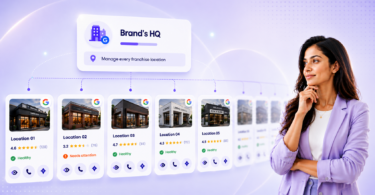
For a group, the challenge is consistency. One practice may be praised for its reception team while three others in the same region receive repeated complaints about appointment availability. Reading reviews one at a time hides that pattern. A group needs to know whether an issue is isolated, regional or network-wide, and the value comes from understanding the feedback, not from raising the star rating.
What do patients check before booking a UK dentist?
Patients compare star rating, review count, how recent the reviews are, and whether the practice replies. According to Whito’s UK dentist marketing data, 72% of patients search online before choosing a dentist. Each of these signals is set at practice level, so a group needs the same standard at every location.
- Review count: A 4.9 rating from 12 reviews gives a patient less to go on than a 4.6 from 300.
- Recency: Reviews older than 12 months may no longer describe the practice.
- Replies: A reply to each review shows the practice reads its feedback.
- Accurate details: A wrong address or phone number sends patients to the wrong practice. This matters most after a relocation or acquisition.
These signals sit on different platforms, so the next step is knowing where reviews appear and what each source tells the group.
Which UK review platforms should dental groups monitor?
UK dental groups should monitor platforms that reflect how patients discover and assess their practices. Google Business Profile is important for local discovery, while healthcare-focused platforms and public inspection records provide different kinds of information.
No single platform gives a complete picture. A Google review describes a reviewer’s reported experience, while an inspection report records findings from a regulator’s inspection process. Assess these sources on their own terms.
| Platform or source | What it can tell a dental group | What to keep in mind |
| Google Business Profile | Local reviews, star ratings, practice details, and public responses | Keep each eligible practice’s profile accurate and monitor reviews at location level. |
| Doctify | Patient feedback and profiles for healthcare professionals and providers | Check the platform’s current review and verification process before describing a review as verified. |
| iWantGreatCare | Patient feedback about healthcare services and experiences | Review the available provider coverage and feedback for the relevant locations. |
| Trustpilot | Public feedback about a dental brand or business where a profile exists | Reviews may concern the wider organisation, not just treatment at one practice. |
| WhatClinic | Clinic discovery and comparison, including dental services | Check how listings and reviews are presented, and distinguish paid visibility from patient feedback. |
| Public comments, recommendations, and other feedback associated with a practice page | Feedback may appear in comments or posts rather than a dedicated review format. | |
| CQC inspection reports | Regulatory findings about services in England | Inspection reports are not customer-review pages and should not be treated as star ratings. |
The Care Quality Commission (CQC) publishes information about dental services in England, including inspection reports. It states that it inspects a sample of dentists each year and does not rate dental services. Its reports can help people understand whether a service meets the regulator’s standards.
Note: The dental regulation differs in Scotland (Healthcare Improvement Scotland), Wales (Healthcare Inspectorate Wales), and Northern Ireland (RQIA).
What UK regulations apply to dental reviews and responses?
UK dental groups must consider consumer protection law, professional confidentiality, advertising rules, and data protection when collecting, replying to, or promoting reviews. These requirements apply alongside each review platform’s own policies, so an operationally effective process may still need a compliance check.
Four bodies set the rules for dental review programmes: the CMA, the GDC, the ASA and the ICO.
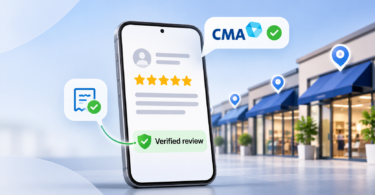
The Digital Markets, Competition and Consumers Act 2024 bans fake reviews and reviews that conceal incentives. It has applied since 6 April 2025, and the CMA can fine a business up to 10% of global turnover. A group cannot pay for positive reviews or hide negative ones.
The General Dental Council (GDC) confidentiality standard applies to public replies. A reply cannot confirm the reviewer is a patient or mention treatment, even if the reviewer has shared it.
The Advertising Standards Authority (ASA) CAP Code requires documentary evidence that any testimonial used in marketing is genuine.
The ICO enforces UK GDPR and PECR. A review request sent by email or SMS review request can count as direct marketing and requires consent unless an exception applies. Record the lawful basis before rolling out a request process.
How can dental groups manage and measure reviews across multiple locations?
Dental groups need one operating process for collecting reviews, monitoring them, responding, escalating, and reporting. They also need location-level measures to show whether that process is working. Combining the two prevents review management from becoming a series of disconnected tasks across practices.
How should a multi-location review process work?
A practical dental reputation management process has five parts:
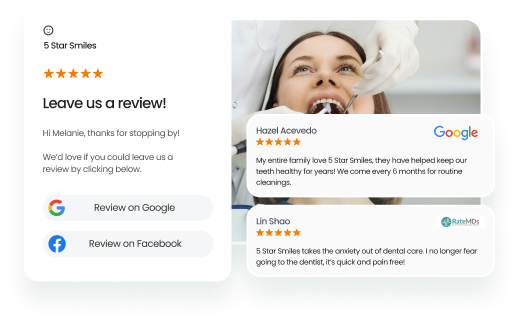
- Request feedback consistently. Set a neutral, approved message and decide when patients should receive it. Apply the same principles across practices, without pressuring patients to leave positive feedback.
- Monitor the right platforms. Assign responsibility for Google Business Profile and any other relevant review sites. Make it clear who owns each location and who covers unresolved or urgent feedback.
- Triage reviews. Separate routine feedback from dental complaints, potential patient-safety concerns, allegations about clinical care, and possible confidentiality issues. Define escalation routes before a difficult review appears.
- Respond within an agreed service level. Set internal targets for acknowledgement and resolution. Use approved response guidance, and avoid disclosing patient information publicly.
- Feed themes back to operations. Share recurring issues with practice managers and the relevant regional or central teams. Track whether agreed actions lead to changes in later feedback.
A central process creates consistency, but local context still matters. A group should not give every practice the same response to a local complaint. Central teams can set the standards and monitor completion, while authorised local teams provide context and follow up appropriately.
How do you detect and report fake reviews across many locations?
Assign one central owner to monitor all practice profiles, flag suspected fake reviews through each platform’s report function, and log every case. Under the DMCC Act 2024, a business must take reasonable and proportionate steps to prevent and remove prohibited reviews.
The process has four steps:
- Flag any review from an account with no history, a name that does not match a patient, or a treatment the practice does not offer.
- Flag any cluster of reviews on one practice within a short window, for example, 20 in a week against a usual two.
- Report the review through the platform, such as the flag option on the Google Business Profile.
- Record the date, the platform, and the outcome, so the group can show what it did.
Secure impactful dentist reviews in the UK with Birdeye
Want to see the impact of Birdeye on your business? Watch the Free Demo Now.
How does mydentist use Birdeye to manage reviews across 530 UK locations?
Managing reviews across hundreds of dental practices requires more than collecting patient feedback. Dental groups need accurate listings, consistent review responses, and visibility into patient sentiment across locations. mydentist, the UK’s largest dental care provider, partnered with Birdeye to strengthen its listings management and review operations across 530 locations.
How did mydentist address fragmented listings and review management?
Before Birdeye, mydentist struggled to manage more than 1,500 online listings. Duplicate entries and inaccurate details, including listings created by patients or competitors, made it harder to maintain a reliable digital presence. These problems became particularly challenging during practice relocations, when incorrect information could confuse patients.
The group also lacked a centralised view of reviews across platforms such as Google, Trustpilot, NHS platforms, and Indeed. This was a significant gap because 25% of mydentist’s web traffic originated from Google Business listings.
mydentist needed a more consistent way to maintain practice information, monitor patient feedback, and manage reviews across its network.
How did Birdeye help mydentist manage listings and reviews at scale?
mydentist started with a 25-location pilot. After seeing progress, the group onboarded another 25 locations within 60 days. It then migrated all 530 locations in just a few days, completing a rollout that had proved difficult with its previous provider.
Birdeye supported two connected areas of work: listings management and review management.
Listings management helped mydentist consolidate duplicate listings, correct inaccurate information, and maintain greater control over practice details across platforms. This was particularly useful during relocations, when outdated addresses or conflicting information could make it harder for patients to find the right practice.
Reviews management gave the group a centralised way to monitor feedback and respond across review sources. Four dedicated team members were trained on Birdeye, and alerts helped them identify feedback that needed attention. Mobile access also made it easier for the team to monitor patient sentiment and flag emerging issues.
Together, these workflows helped mydentist connect accurate location information with more consistent review engagement.
What results did mydentist report after implementing Birdeye?
- 99% response rate to Google reviews
- 98% response rate across review sources
- 50% year-on-year increase in reviews
- Average rating increased from 4.4 to 4.6 in six months
- 10% year-on-year uplift in Google Business listing interactions
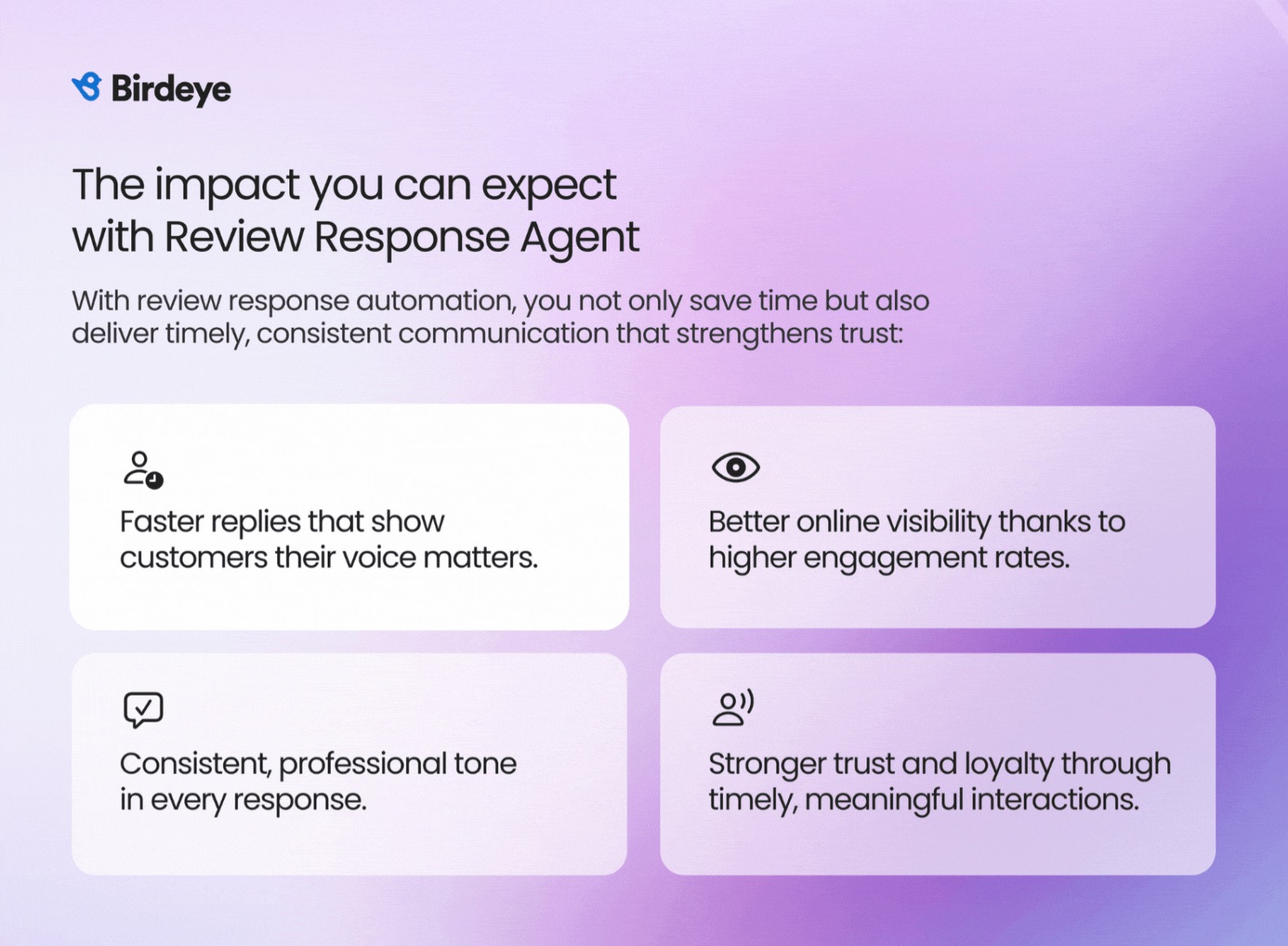
How does Birdeye’s AI coworker approach support multi-location dental brands?
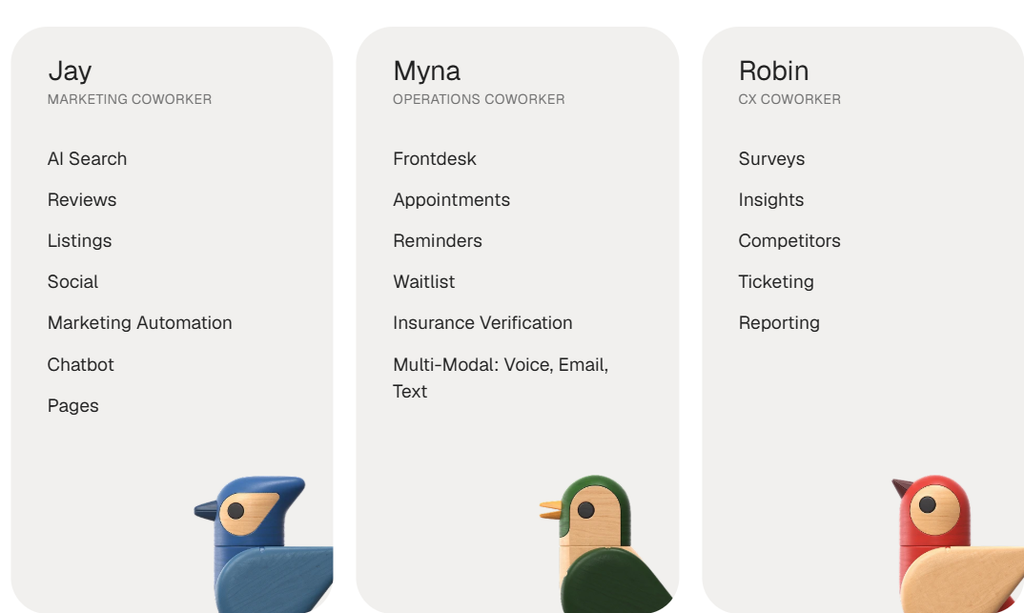
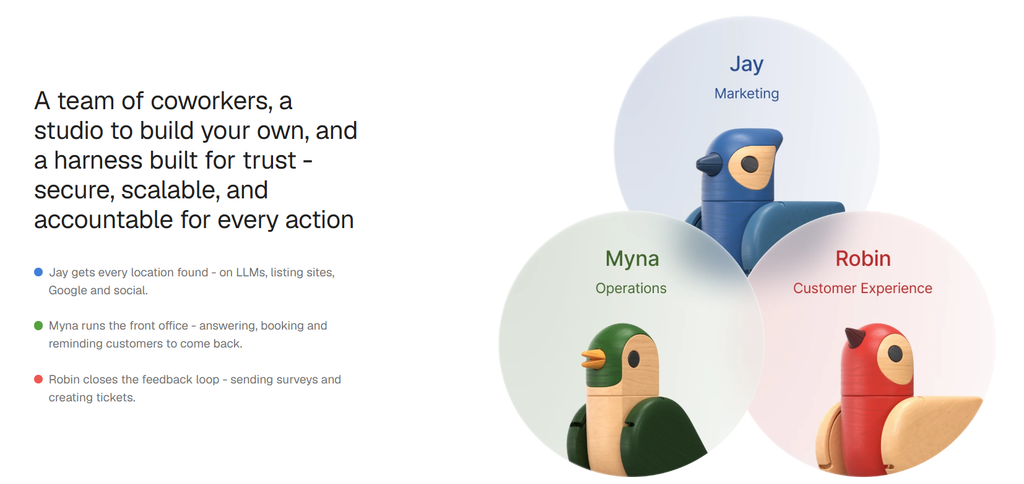
Birdeye builds AI coworkers for multi-location brands. An agent carries out an action, but a coworker holds a job. Each coworker orchestrates the agents underneath it, so a dental group manages three coworkers instead of dozens of agents.
All three run on BirdAI, the Agent OS built on 13 years of multi-location data infrastructure and 3,000+ integrations. BirdAI consolidates signals from every practice, including reviews, listings, and practice management data. It reasons with industry, brand, and location context, then acts autonomously or with a human in the loop. The group chooses which option to use for each workflow.
For enterprise teams, Birdeye supports SSO, audit logging, role-based access, tiered approvals, and location-level reporting. It also supports GDPR and SOC 2. Birdeye has teams in the U.K., the U.S., Australia, and India.
For a dental group, the three Birdeye AI agent coworkers divide the work like this:
- Jay (marketing) owns patient-facing visibility. That covers reviews, listings, social, and AI search visibility. Jay sends a review request by SMS or email when an appointment ends, and drafts replies to new reviews. Jay also keeps practice names, addresses, and opening hours consistent across Google, Apple Maps, Facebook, and Bing, and flags duplicate profiles.
- Robin (customer experience) works on surveys, ticketing, and insights. For a dental group, that includes grouping feedback themes by practice and region so teams can see whether an issue is isolated or network-wide.
- Myna (operations) is the front desk coworker. She answers calls, identifies the patient, asks screening questions, books the appointment, and confirms by text. This helps practices improve access without adding front desk staff.
For dental groups, this approach matters because listings, reviews, and patient experience influence one another. Incorrect location details can send patients to the wrong practice. Unanswered feedback leaves concerns unresolved. Repeated comments across practices can point to operational issues that deserve attention.
What can other UK dental groups learn from mydentist?
The mydentist case study highlights three practical lessons for groups managing reviews across multiple locations:
- Connect listings and reviews. Accurate practice information helps patients find the right location, while reviews help teams understand reported experiences.
- Centralise oversight and assign clear responsibility. A shared workflow makes it easier for central teams to monitor activity while designated staff handle feedback that needs attention.
- Measure several outcomes together. Response rates show whether teams are engaging with reviews. Review volume, ratings, and listing interactions add context, but none alone measures clinical quality.
For dental groups operating across the UK, the objective is to replace fragmented processes with a consistent way to manage location information and patient feedback. mydentist’s reported results show what that effort can look like at scale, while Birdeye addresses the challenge of coordinating work across multiple locations.
FAQs on dentist reviews in the UK
Start with Google Business Profile for local discovery, then identify other platforms relevant to your patients and services, such as Doctify, iWantGreatCare, Trustpilot, or WhatClinic. Monitor regulator inspection reports separately because they serve a different purpose from public reviews.
Groups should not offer incentives in exchange for positive reviews or conceal that a review was incentivised. The Digital Markets, Competition and Consumers Act 2024 prohibits fake reviews and reviews that conceal incentives. Asking patients for honest feedback without directing the rating is a different practice.
Yes, but the response must protect patient confidentiality. A practice should not confirm that someone is a patient or disclose treatment details. Acknowledge the concern in general terms and invite the reviewer to contact the practice through an appropriate private channel.
Birdeye’s AI coworkers run on BirdAI and connect to a group’s practice management system through 3,000+ integrations. Jay sends a review request when an appointment ends and drafts replies to new reviews. Robin groups feedback themes by practice and region. The group sets whether a person approves each reply before it is published.
No change needed. You could add “Robin surfaces the themes” if you want to credit the coworker.
Google says local results are mainly based on relevance, distance, and prominence. Review count and ratings can contribute to prominence, but reviews do not guarantee a particular ranking. Accurate practice information and a useful, current profile also matter.
Birdeye helps UK dental groups manage reviews at scale
For multi-location dental groups, review management is more than monitoring star ratings. It means collecting feedback consistently, protecting patient confidentiality, responding appropriately, and spotting patterns that individual practices may not see on their own.
A clear process gives central teams a reliable view of performance while helping local teams respond to the issues patients actually raise. Birdeye is built for multi-location complexity, bringing review workflows and wider location-level visibility into a more connected operating model.
Want to see how Birdeye can support your dental group? Explore its reviews and listings capabilities, and book a demo to discuss your multi-location requirements.

About the Author

Shruti Dugar
Birdeye
Originally published