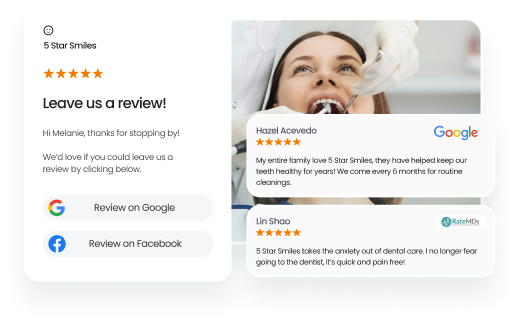
Hotel reputation management is the process of monitoring, influencing, and improving how guests perceive your property across reviews, search results, listings, and guest interactions to increase bookings, build trust, and maintain consistent performance.
Summary

Hotel reputation now plays a direct role in how travelers discover and choose properties across both traditional booking platforms and AI-driven travel search. Stronger guest perception translates into better visibility, higher trust, and improved conversion rates.
This blog discusses the core elements of hotel reputation management, including strategies, tools, and best practices to improve review quality, strengthen guest perception, and turn feedback into measurable business results.
Table of contents
- What is hotel reputation management
- Why online reputation management for hotels matters in 2026
- What are the 10 proven ways to improve hotel reputation and guest trust
- How AI is transforming hospitality reputation management
- What are the top 4 hotel reputation management software tools
- How Palmetto Dunes used online reputation management for hotels to unify guest experience across 13 resort locations with Birdeye
- FAQs on hotel online reputation management
- How Birdeye helps hotels manage their online reputation
What is hotel reputation management
Hotel reputation management is the strategic process of monitoring, influencing, and improving how a hotel is perceived online. It includes managing guest reviews, responding to their feedback, maintaining accurate listings across Google Business Profile, OTAs, etc., and using these insights to drive improvements in guest experience, service quality, trust, and booking conversions through a consistent digital presence.
In 2026, it will also shape AI search visibility. For example, when a traveler searches ChatGPT or Gemini for “best hotels in New York for business travel,” recommendations are influenced by reviews, ratings, sentiment, and structured listings, not just traditional SEO.
Why online reputation management for hotels matters in 2026

In 2026, online reputation management for hotels has shifted from a marketing activity to a key driver of discovery and bookings. Travelers now evaluate hotels through AI-generated recommendations, ratings, and guest feedback before they ever visit a booking page.
Here’s why it matters in 2026.
1. AI search increasingly influences hotel visibility
According to a BCG study, 37% of travelers already use AI-powered tools embedded in travel platforms to plan and book trips, showing a clear shift toward AI-assisted discovery. As AI-generated travel answers become more common, hotel visibility is increasingly influenced by reputation signals such as review quality, recency, and consistency. Hotels with detailed, experience-rich reviews are more likely to appear in AI-generated recommendations and summaries.
2. Ratings directly affect pricing power
Higher guest ratings are consistently linked with stronger average daily rates without reducing occupancy. For example, a hotel improving its rating from 4.0 to 4.5 can often justify higher room prices while still maintaining booking volume. This makes online reputation a direct driver of both revenue potential and pricing flexibility.
3. Authenticity now affects trust and visibility
According to industry estimates, an average of 30% of online reviews are considered fake or inauthentic, making trust harder to maintain across travel platforms. As AI-generated content proliferates and review platforms strengthen fraud-detection systems, hotels with inconsistent review patterns or suspicious spikes in activity risk losing visibility and credibility. Maintaining authentic, consistent guest feedback has become an important way to protect brand trust and influence booking decisions.
4. Online interactions have become the digital front desk
According to Hilton’s 2026 Trends Report, 27% of travelers now communicate with hotels more than they used to and increasingly expect quick, seamless responses online. This high expectation means that public review responses, response speed, and digital guest interactions now function as a hotel’s digital front desk, shaping perceptions around service quality, professionalism, and accountability before a booking is made.
5. Guest feedback now shapes service recovery and personalization
According to Amadeus’ Travel Dreams 2026 report, 74% of travelers now expect personalized experiences from hospitality brands. To meet this demand, hotels are increasingly using guest feedback and review insights to identify service gaps, resolve recurring issues, and better understand traveler preferences. Detailed, consistent reviews now support both service recovery efforts and more personalized guest experiences throughout the booking journey.
Hotels that actively manage guest feedback are better positioned to adapt to changing traveler expectations and digital booking behavior. As AI, personalization, and online trust continue to shape hospitality, reputation management is becoming a long-term operational priority rather than a reactive task.
What are the key metrics to track in hospitality reputation management?
Reputation isn't just stars on a screen; it's a measurable system. These are the key metrics that drive it.

✓ Global review index (GRI) & average rating trend
Track overall reputation score along with rating trends across online travel agencies and review platforms
Use both to benchmark brand perception and monitor long-term improvement

✓ Review volume and market share
Track total guest reviews received and compare volume against competitors in the same market to assess overall visibility
Assess share of voice and consistency of guest feedback

✓ Sentiment analysis and review ratio
Analyze guest reviews to identify recurring themes in service quality across departments
Track the balance between positive and negative reviews to measure experience quality

✓ Net promoter score (NPS)
Measure hotel guest loyalty and likelihood to recommend the property
Track changes in promoters, passives, and detractors over time

✓ Response rate and response time
Measure how many guest reviews receive a response and how quickly hotel teams reply
Maintain consistent engagement to improve guest trust and satisfaction

✓ Guest satisfaction scores (GSS) and complaint ratio
Use in-stay and post-stay surveys to measure service quality across key touchpoints
Track complaints per occupied room to identify operational gaps early

✓ Competitive positioning (hotel benchmarking)
Compare reputation performance with direct competitors in the market
Monitor ranking, visibility, and perception shifts over time

✓ Revenue impact metrics (ADR, RevPAR, direct bookings)
Track how hotel reputation influences average daily rate, revenue per available room, and direct booking conversions
Connect guest sentiment improvements with financial performance outcomes
What are the 10 proven ways to improve hotel reputation and guest trust

A strong hotel reputation does not happen by chance; it’s built through consistent monitoring, engagement, and guest feedback management. These 10 steps outline practical ways hotels can strengthen their online reputation and improve guest trust across every touchpoint.
1. Build presence on key OTA review platforms
Ensure hotel information is consistent and up to date across key hotel review websites, including Google, Booking.com, TripAdvisor, and other OTAs. Guests compare ratings, photos, and amenities before booking, so inconsistencies can impact trust and conversions. Even minor mismatches, such as outdated images or missing services, can lead to negative reviews. Keep listings aligned with the actual guest experience.
2. Set up real-time review monitoring
Monitor reviews across OTAs, Google, and social media platforms to avoid delayed responses. Centralized review monitoring ensures every new review is captured instantly and routed to the right team for action. This helps identify service issues early and ensures no guest feedback is missed during peak occupancy periods.
3. Craft hotel review response templates
Use structured response frameworks to maintain consistency in tone and messaging across all reviews. Define clear rules for positive, neutral, and negative feedback, including escalation paths. Instead of generic replies, responses should address specific guest concerns, such as delays or service issues. Platforms like Birdeye’s Review Response Agent help generate personalized, on-brand responses at scale.
4. Build a proactive review generation system
Automate post-stay review requests via SMS or email immediately after checkout, with a follow-up reminder if needed. For example, a guest checking out on Sunday gets a request within hours and a reminder the next day if they do not respond. Tools like Birdeye’s Review Generation Agent optimize timing, channels, and messaging to improve response rates while reducing manual effort, helping hotels consistently generate more high-quality reviews.
5. Manage social media & untagged mentions
Track guest feedback beyond review platforms like Instagram, Facebook, and travel forums. Many guests share experiences without tagging the hotel, which still impacts reputation (e.g., noting slow service while praising the property in the same post). Social listening helps capture these untagged mentions in real time by tracking brand keywords and sentiment, enabling hotels to respond quickly and spot recurring issues.
6. Respond to all guest reviews within 24-48 hours
Consistent response times (ideally within 24–48 hours) help reinforce trust and reliability. Prioritize urgent complaints within hours, while standard feedback can be addressed within a day or two. For example, a cleanliness issue should be acknowledged quickly and moved to offline resolution, while positive reviews should include a personalized thank-you. Structured responses ensure consistency across all guest interactions.
7. Audit and fix hotel listings across directories
Ensure all listings are accurate and consistent across platforms to avoid guest confusion. Incorrect details, such as outdated amenities or discontinued services, can lead to negative experiences. Regular audits help maintain alignment across names, visuals, and offerings. Tools like Birdeye’s Listings AI help automate updates across multiple directories from one system.
8. Benchmark against competing hotels
Compare guest experience and sentiment with competitors, not just ratings. Analyze recurring themes like service speed, cleanliness, and staff behavior. If competitors are consistently praised for faster check-ins, it highlights a clear improvement area. Birdeye’s Competitors AI helps track these insights in real time.
9. Leverage positive reviews in marketing
Positive reviews should be treated as marketing assets, not just feedback. Hotels can strategically place guest testimonials on websites, booking pages, email campaigns, and social media to build trust at key decision-making points. Combining reviews with real visuals from guest experiences increases authenticity and strengthens conversion rates, especially for first-time visitors evaluating the property.
10. Use AI to scale your hotel online reputation management
Use AI to unify reviews, listings, and sentiment data into one view for faster insights. It helps identify recurring operational issues and track reputation trends across properties. For example, repeated complaints about breakfast timing can be flagged as a system issue. In such a scenario,
By consistently following these steps, hotels can build a more reliable, guest-focused reputation strategy. Over time, this leads to stronger reviews, better visibility, and increased bookings driven by trust and credibility.
How AI is transforming hospitality reputation management
AI is reshaping hotel reputation management by converting guest feedback into structured insights to improve service and operations. According to Birdeye’s State of AI Search 2026 report, discovery is shifting from traditional rankings to AI-generated, citation-backed answers that directly shape customer decisions.
Here’s how AI is changing hotel reputation management:
Structure guest feedback into usable signals
Guest reviews across multiple platforms are analyzed to identify recurring themes such as service speed, cleanliness, and staff behavior. These insights are organized into measurable patterns that help hotels identify operational areas where guest experience issues are developing.
Spot service issues before they escalate
Feedback trends are monitored to detect early signs of operational strain, such as rising complaints around check-in delays or room readiness. These signals appear before they impact ratings or booking decisions, allowing issues to be addressed while they are still emerging.
Generate context-aware guest responses
Responses are created based on sentiment, urgency, and issue type rather than fixed templates. A service delay, billing concern, or positive review each triggers a different response approach. This makes responses more relevant to the guest’s specific experience.
Connect reputation insights to visibility and messaging
Guest feedback is compared with listing performance and search visibility across booking platforms. This highlights gaps between real experience and how the property is presented online. Insights are used to refine listings, FAQs, and service descriptions.
Pro tip: As travel discovery increasingly shifts toward platforms like ChatGPT, Gemini, and Perplexity, Birdeye's Search AI helps hotels track brand mentions, identify which citations influence visibility, and uncover gaps in reviews, listings, and content that affect AI-generated recommendations.
AI connects guest feedback, operations, and online visibility to support faster decision-making. This helps hotels understand experience gaps more clearly and align service delivery with external perception.
What are the top 4 hotel reputation management software tools
To make your reputation management plan more effective, brands can use tools designed specifically for hotels. These platforms simplify collecting feedback, responding to reviews, and tracking online performance.
Here are the best 7 hotel reputation management tools to consider:
| Tool | Best for | Key features | Pricing |
| Birdeye | Enterprise and multi-location hotel brands with 100-10000+ locations | Reviews AI, Listings AI, Search AI, Social AI, Insights AI, Competitors AI, Surveys AI, AI-powered review generation and responses, AI search optimization, social publishing, listings management, competitor benchmarking, 3,000+ integrations | Custom enterprise pricing based on locations, modules, and integrations |
| Revinate | Guest engagement and retention for hotel groups | Guest CRM, guest feedback management, email marketing, guest surveys, sentiment analysis, audience segmentation, personalized guest communication workflows | Custom pricing based on property size and modules |
| TrustYou | Guest sentiment analysis and benchmarking for hotel groups | Review aggregation, sentiment analysis, benchmarking, guest surveys, centralized reputation dashboards, AI-assisted review responses, market comparison reporting | Custom pricing |
| ReviewPro (Shiji Group) | Guest experience analytics and operational reporting | Global Review Index (GRI), guest satisfaction analytics, surveys, competitor benchmarking, operational reporting dashboards | Custom pricing for hotel groups |
*****Pricing tiers are indicative and based on publicly available positioning; most providers offer tailored pricing depending on scope, locations, and services.
Each tool plays a distinct role in hotel reputation management, with some focusing on guest engagement and feedback collection, while others emphasize review analytics, OTA monitoring, or AI-driven automation.
Birdeye
Best for: Enterprise and multi-location brands (100-10,000+ locations)
Description
Global multi-location hotel brands trust Birdeye to govern their brand experience across properties. You set the rules, and Birdeye AI agents execute them safely across 100 to 10,000+ locations. Birdeye is a full-cycle agentic marketing platform that helps hotels manage listings, guest reviews, AI search visibility, social publishing, and online reputation from a single system.
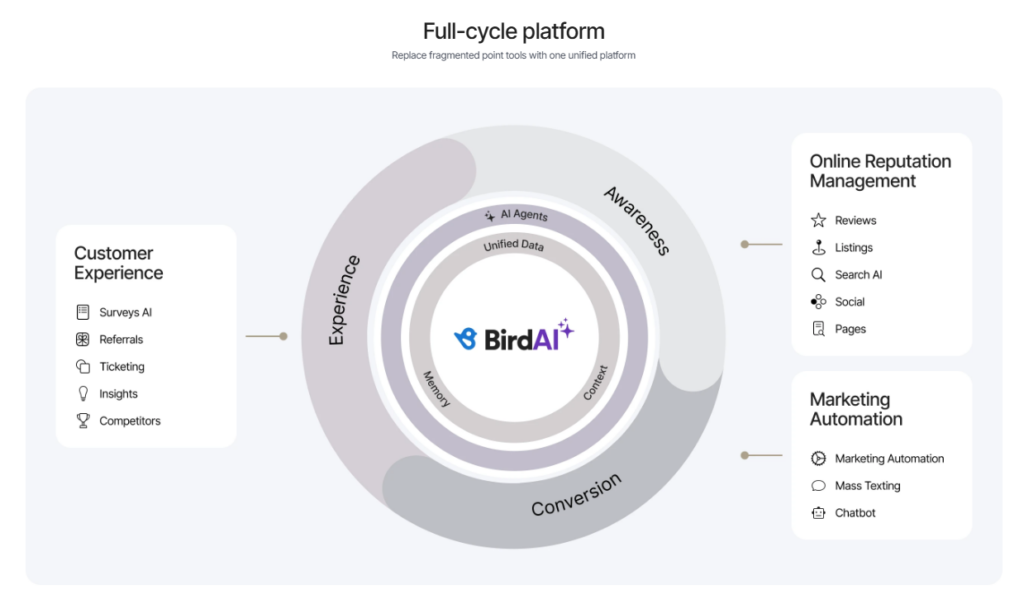
Full-cycle platform
Birdeye unifies guest experience, reputation, and digital engagement workflows into one governed platform, helping hotel brands reduce fragmentation and improve consistency across properties.
- Connects reviews, messaging, surveys, social engagement, listings, and customer feedback in one system
- Integrates with 3,000+ business applications, including CRM, PMS, POS, and operational tools
- Gives enterprise teams visibility, governance, and control across all hotel locations
Local intelligence
Birdeye helps hotel brands improve discoverability, maintain listing accuracy, and strengthen visibility across local search and AI-driven discovery platforms.
- Brand AI and Industry AI help maintain accurate, on-brand, and hospitality-specific content across locations
- Search AI helps hotels improve visibility across AI search platforms like ChatGPT, Gemini, and Perplexity
- Competitors AI tracks ratings, sentiment, and market positioning against nearby competitors
Marketing agents
Birdeye’s AI agents automate guest engagement, reputation workflows, and communication at scale while protecting brand consistency.
- Review Generation Agent automatically sends review requests after guest stays to increase review volume
- Review Response Agent creates personalized, brand-aligned responses using sentiment and guest context
- Listings Optimization Agent identifies SEO gaps, duplicate listings, and missing details that impact visibility
- Social Publishing Agent generates and schedules location-specific content across hotel properties
- Social Engagement Agent monitors interactions and supports timely responses to guest comments and messages
- Messaging AI centralizes SMS, web chat, Google, and Facebook conversations with smart routing and suggested replies
- Surveys AI captures post-stay guest feedback and uncovers service gaps before they become public reviews
“We looked at a lot of tools, but Birdeye was the only solution that helped us manage online reputation and guest experiences across all our locations. Their open API made integrating with our business systems very easy. Birdeye’s deep reporting and insights are imperative to our business needs.”
Erica Sheets, Digital Marketing Manager at Palmetto Dunes
Birdeye agentic approach

Consolidate: Birdeye brings guest, property, and operational data into one platform to reduce silos across locations.
Think: BirdAI turns reviews, feedback, and interactions into insights that help teams identify trends and act faster.
Act: Birdeye uses AI agents to automate workflows while maintaining governance and brand control across locations.
Pros
- Built for enterprise reputation management with strong governance, visibility, and control across multiple hotel and hospitality locations
- Brings reviews, listings, and guest interactions together in one unified platform for easier management
- AI agents not only analyze guest feedback but also take automated actions to improve outcomes in real time
- Extends reputation management into modern search discovery channels to improve visibility across emerging platforms
- Designed to scale efficiently across hundreds or even thousands of locations without loss of consistency
Cons
- Initial configuration may require time, depending on the complexity of the organization’s workflows and location setup
G2 has ranked Birdeye as the No. 1 Enterprise Online Reputation Management Software with a 4.7/5 rating based on 4,035+ reviews.

2. Revinate
Best for: Guest data-driven engagement and retention for hotel groups

Description
Revinate helps hotels use guest data, reviews, and surveys to improve communication and drive repeat bookings. It connects guest feedback with CRM and marketing tools to support personalized outreach across the guest journey. The platform is designed to turn guest insights into engagement and revenue opportunities for hotels.
Features
- Centralizes guest reviews from multiple travel and review platforms into a single dashboard for easier management
- Collects guest feedback through customizable in-stay and post-stay surveys to improve experience insights
- Enables segmentation of guest data for targeted email marketing and personalized communication
- Provides sentiment analysis to help hotels understand guest satisfaction trends across properties
Pros
- Strong integration between guest feedback and marketing automation
- Helps hotels improve guest retention through personalized communication
- Offers detailed guest data segmentation for targeted campaigns
Cons
- More focused on CRM and marketing than full reputation execution
- Review response workflows are less specialized compared to dedicated ORM platforms
3. TrustYou
Best for: Guest sentiment analysis and reputation benchmarking for hotel groups

Description
TrustYou aggregates guest reviews and feedback from multiple platforms to help hotels understand sentiment and performance at scale. It is widely used for benchmarking and analyzing guest experience trends across properties. The platform is more insight-focused than execution-driven.
Features
- Aggregates guest reviews from OTAs, surveys, and review platforms into a unified system
- Provides sentiment analysis to identify strengths and weaknesses in guest experience
- Enables benchmarking of hotel performance against competitors and industry standards
- Generates reporting dashboards for multi-property performance tracking
Pros
- Strong reputation analytics and sentiment tracking capabilities
- Useful for large hotel groups needing benchmarking insights
- Helps identify recurring guest experience trends
Cons
- Limited automation for review responses and engagement
- Less focus on operational execution compared to analytics
4. ReviewPro (Shiji Group)
Best for: Guest experience measurement and operational improvement insights

Description
ReviewPro helps hotels collect and analyze guest feedback from reviews and surveys to improve service quality. It is widely used by hospitality brands to measure guest satisfaction and identify operational gaps. The platform focuses on turning feedback into structured performance insights.
Features
- Collects guest reviews and survey feedback across multiple channels and platforms
- Provides guest satisfaction scoring and performance dashboards for hotels
- Tracks service quality trends across individual properties and groups
- Enables benchmarking against competitors and industry averages
Pros
- Strong focus on guest experience measurement and reporting
- Useful for identifying operational improvement areas
- Supports multi-property performance tracking
Cons
- Limited automation for review responses
- More analytics-focused than execution-oriented
From review responses and guest surveys to sentiment tracking and operational reporting, these tools help hotels manage reputation more efficiently across multiple channels and properties.
How Palmetto Dunes used online reputation management for hotels to unify guest experience across 13 resort locations with Birdeye
Palmetto Dunes is a multi-experience resort destination spanning hotels, golf courses, dining, and recreational activities across 13 locations. Managing guest experience across so many touchpoints required a unified way to track feedback, respond quickly, and understand sentiment across the entire guest journey.
Challenge:
Guest interactions and feedback were spread across multiple channels and business units, making it difficult for small teams to maintain visibility, respond consistently, and identify service issues in real time, especially as guest engagement increasingly shifted online.
Outcome:
With Birdeye, Palmetto Dunes centralized reviews, feedback, and guest sentiment into a single system, enabling teams to monitor experiences across locations, improve response workflows, and take faster action on guest concerns. Insights from aggregated feedback also helped leadership understand recurring themes and improve operational decisions across properties.
Results:
- Improved visibility across 13 resort locations and multiple guest experience touchpoints
- Faster response to guest feedback through centralized alerts and workflows
- Stronger ability to track sentiment trends and identify service improvement areas
- Better decision-making through structured reporting and experience insights
- Enhanced consistency in guest experience across the resort network
FAQs on hotel online reputation management
Hotels should focus on high-traffic platforms like Booking.com, Expedia, Airbnb, TripAdvisor, and Google Reviews, where most travelers make booking decisions.
Ideally, respond to all reviews within 24–48 hours to show attentiveness and care toward guest feedback.
Is it okay to ask guests for reviews?
Yes, politely asking satisfied guests for reviews is encouraged and helps build credibility and visibility.
Track metrics like star ratings, review volume, response rate, sentiment trends, and booking conversions from review platforms.
Deliver excellent service, ask happy guests for feedback, and make it easy to leave reviews through follow-up messages.
Audit listings monthly to ensure your hotel’s name, address, phone number, and links are accurate across all platforms.
Yes, AI tools like Birdeye automate review monitoring, generate personalized responses, and analyze guest sentiment at scale.
High-quality images of rooms, amenities, dining areas, and local attractions help build trust and influence booking decisions.
Yes. Modern AI tools can generate personalized responses using guest names, stay details, sentiment analysis, and brand tone guidelines while helping hotel teams save time.
AI sentiment analysis identifies recurring themes across guest reviews, such as cleanliness, staff behavior, amenities, or check-in experiences. This helps hotels spot operational issues faster and improve guest satisfaction.
Yes. Better ratings, recent reviews, active responses, and accurate listings improve traveler trust and visibility across search engines and booking platforms, which can increase direct reservations.
How Birdeye helps hotels manage their online reputation

In hospitality, reputation now shapes every stage of the guest journey, from AI-driven discovery to booking decisions and repeat stays. Birdeye is a full-cycle platform and the best hotel reputation management software that helps hotels and hospitality brands unify fragmented guest signals into a single, connected system, enabling reputation to be managed as a continuous, intelligent layer across every property.
Instead of relying on disconnected tools and manual coordination, Birdeye uses AI agents to connect systems, understand guest signals, and take action across locations. With integrations across 3,000+ systems, including CRM, booking systems, and tools such as Google, Yelp, OpenTable, and POS systems like Toast and Square, it helps hotels maintain consistency, improve responsiveness, and strengthen visibility across both traditional and AI-driven search.
Watch a demo to see how Birdeye can support your hotel reputation strategy in action.

About the Author

Vanjana Sharma
Originally published






![[Feature image] The Best Marketing Platforms for Multi-Location Brands](https://birdeye.com/blog/wp-content/uploads/Feature-image-The-Best-Marketing-Platforms-for-Multi-Location-Brands-375x195.png)